G2, Capterra, and TrustRadius collectively hold thousands of verified CRM reviews.
When you filter for AI capabilities and cross-reference rating consistency across platforms, a clear shortlist emerges… and it's shorter than most comparison articles suggest. This list covers the tools that earn strong ratings not just at launch, but months and years into daily use.
Ratings and review counts are current as of mid-2026.
1. Capsule CRM
G2: 4.7/5 (449 reviews) · Capterra: 4.8/5 · Trustpilot: 4.1/5
Capsule sits at the top of this list not because it has the most extensive AI feature set, but because its ratings hold up over time and across platforms – a consistency that's harder to achieve than a strong launch score.

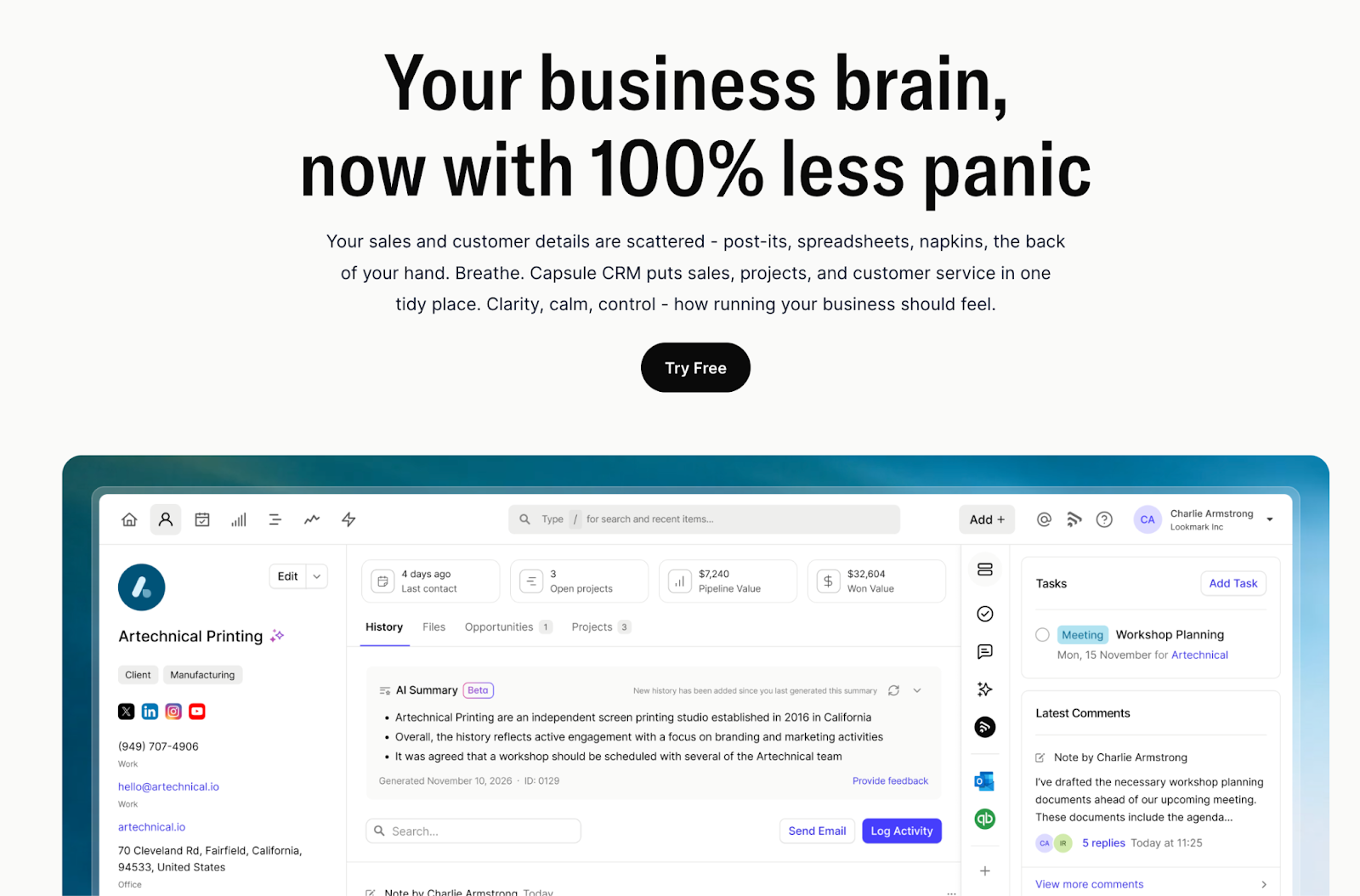
The pattern in its reviews is specific: users describe it as a CRM they actually use every day, which is the prerequisite for any AI feature delivering real value.






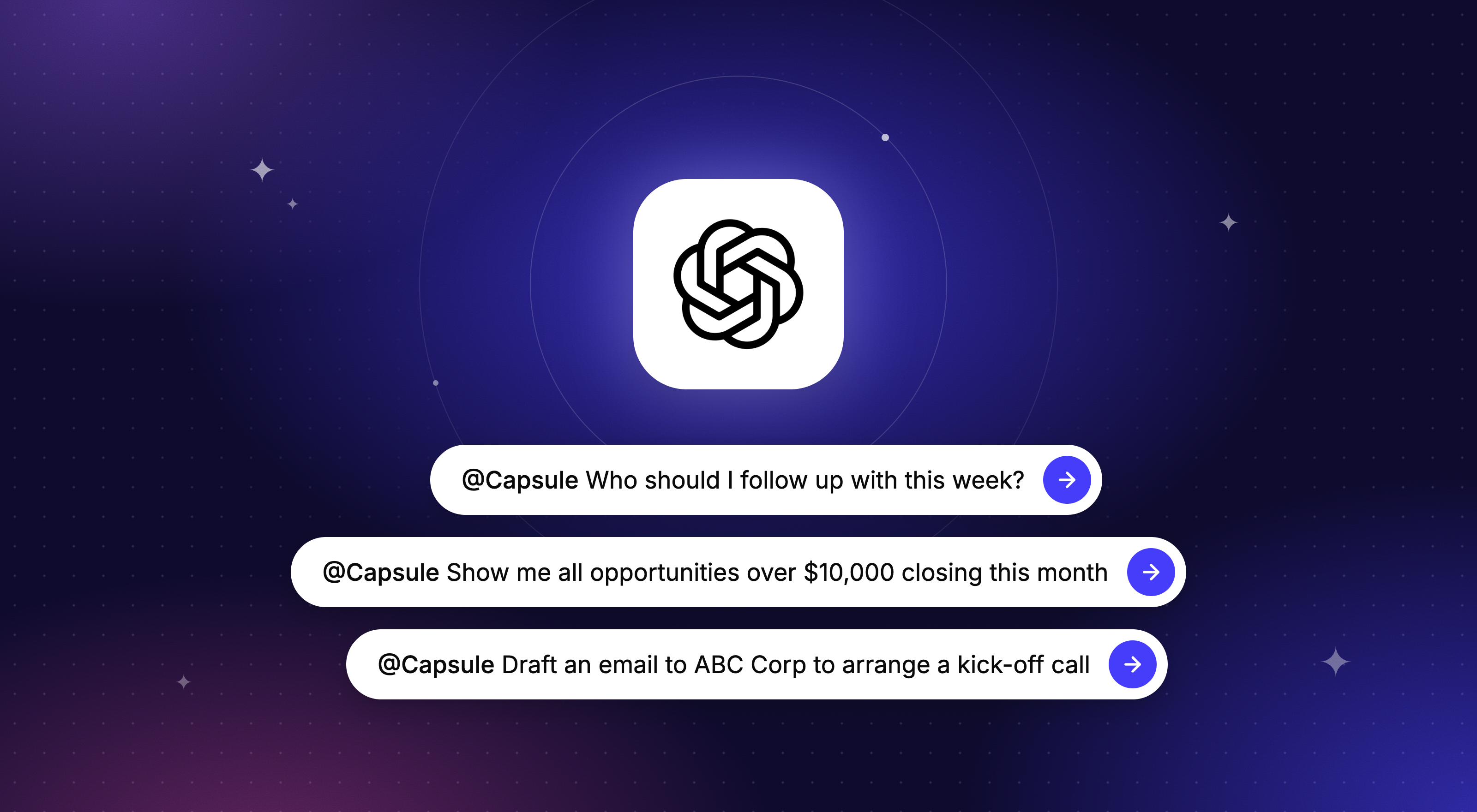
The AI capabilities are focused and practical:
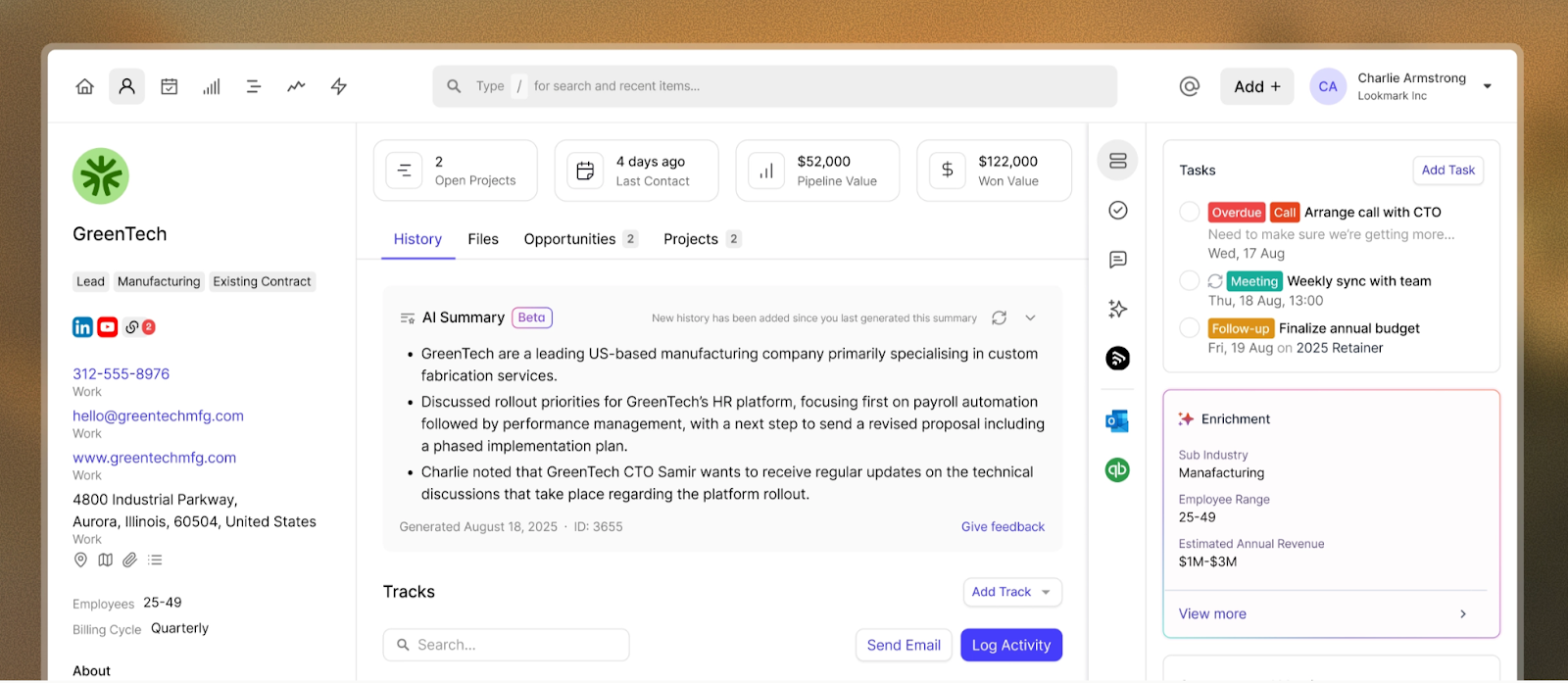
- AI Summaries condense the full history of any customer relationship into a brief before a call. Every interaction associated with a contact is distilled into something a sales rep can absorb in thirty seconds.
- AI Contact Enrichment pulls company and contact data from public sources automatically, keeping records current as a byproduct of normal work.
- AI Email Assist drafts follow-up messages within the CRM, drawing on the full context of the relationship.
- The AI Pipeline Generator builds a customized sales pipeline from a plain-language description of the business, removing the blank-slate setup problem that causes many CRM implementations to stall.
- Workflow automation via Tracks handles repeating processes — onboarding sequences, follow-up cadences, task assignment at each pipeline stage — so the sales process keeps moving.

Capsule isn't built for enterprise sales operations that need deep predictive analytics or AI forecasting across large datasets. It's perfect for small and mid-sized teams that want AI capabilities working from the get-go.
Pricing: Free plan available. Starter from $18/user/month; AI features from $36/user/month (Growth).

2. HubSpot CRM with Breeze AI
G2: 4.4/5 (12,914 reviews) · Ease of use: 8.7/10

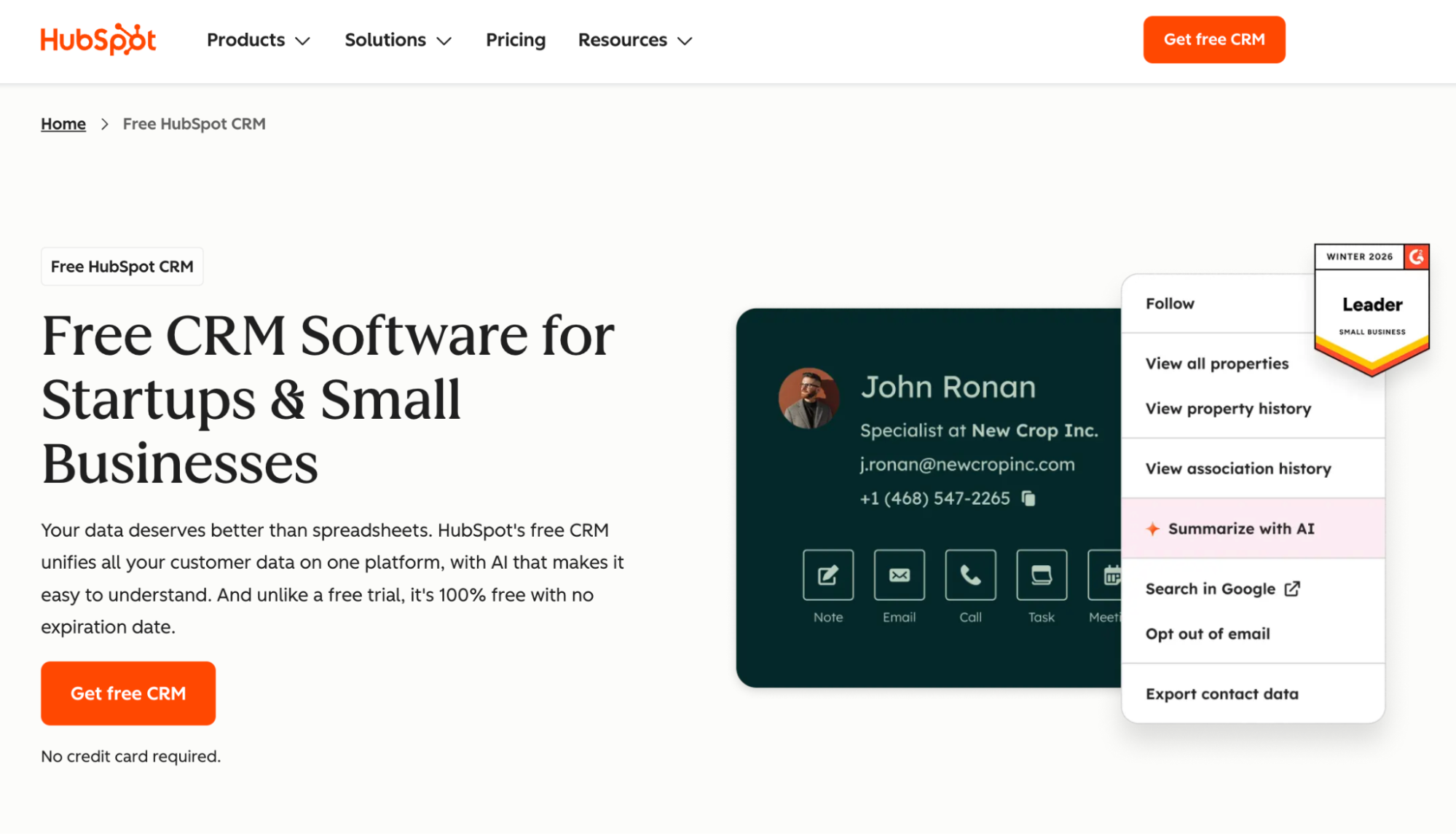
Twelve thousand reviews is a sample size that reveals things a launch score never will. What HubSpot's reviews reveal, consistently, is that ease of use is really good at this scale – and that the pricing model surprises a meaningful number of buyers in the wrong direction.
Breeze AI spans the full customer journey: contact enrichment, buyer intent signals, AI-assisted task completion, and generative tools for content and outreach. The breadth is real – and so is the gap between what the free plan offers and what it costs to access the features that make Breeze competitive. Several G2 reviewers describe arriving at a paid tier that bore little resemblance to what the free plan suggested.
For sales and marketing teams that need both functions in one platform, HubSpot's integrated approach is hard to match.
For teams whose primary problem is sales CRM, the cost-to-value equation deserves a closer look before signing.
Worth it for teams that need sales and marketing in one platform. Worth scrutinizing carefully on cost if the use case is primarily sales CRM.
Pricing: Free plan available. Paid tiers from $20/user/month; AI features on higher tiers.
3. Salesforce with Einstein AI
G2: 4.4/5 (24,266 reviews) · Ease of use: 8.0/10

No CRM has more reviews on G2, and no CRM has more comprehensive AI. Einstein covers predictive lead scoring, opportunity insights, conversation intelligence, automated activity capture, and generative AI across the full platform. If there's an AI capability a sales team might need, Salesforce either has it or has it on the roadmap.
The 8.0/10 ease of use score – the lowest on this list – tells you what 24,000 reviewers have learned firsthand: that accessing what Salesforce can do requires dedicated admin support, large configuration investment, and ongoing maintenance.
The platform rewards organizations that can resource it properly. The reviews are candid about what happens when teams can't – a recurring pattern of paying for depth they never reach.
Enterprise sales operations with the budget and administrative capacity to match are likely to enjoy Salesforce, since Einstein is the benchmark against which everything else is compared. However, for everyone else, the question worth asking before a demo is whether the ceiling justifies the climb.
Pricing: Essentials from $25/user/month; Einstein AI features on higher tiers.
4. Freshsales with Freddy AI
G2: 4.5/5 (3,000+ reviews) · Capterra: 4.5/5

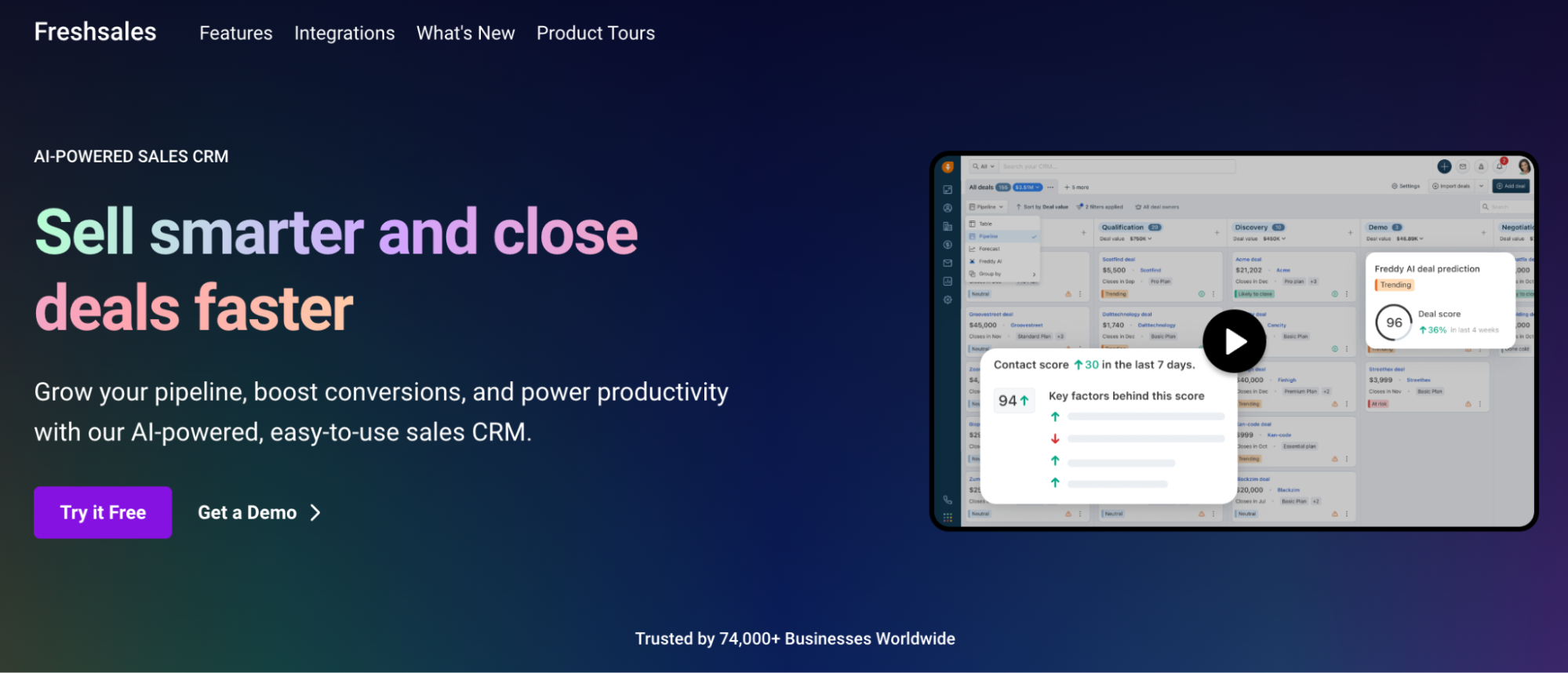
A 4.5 across two platforms and 3,000+ reviews is a signal worth taking seriously, and for Freshsales it holds up under scrutiny. Freddy AI's deal insights get specific praise in reviews – not for complexity, but for practical utility. Freddy is flagging deals that have gone quiet, surfacing next-action recommendations based on actual engagement signals.
The native Freshdesk connection is a good differentiator for businesses where sales and support teams share customer data. Built-in calling, SMS, and email reduce the integration stack further. For teams that want more of the workflow inside one platform, the architecture supports that.
The thing that appears most frequently on the negative side: support responsiveness once the free trial ends. It shows up across both G2 and Capterra with enough consistency that it's worth factoring in before committing, particularly if your team is likely to need help during setup or edge cases later.
Pricing: Free plan available. Growth from $15/user/month; Freddy AI on higher tiers.
5. Zoho CRM with Zia
G2: 4.1/5 · Overall across platforms: ~4.2–4.3

Zoho's G2 rating is the lowest on this list, and it doesn't tell the whole story. What the reviews actually show is a platform that delivers considerable AI depth, at a price point that makes most competitors look overpriced. For businesses already embedded in the Zoho ecosystem, the value case is hard to argue with.
Zia rewards configuration. Teams that invest in setup get a CRM that shows helpful signals. Teams that expect it to work out of the box tend to underuse it and rate it accordingly, which likely explains some of the variance in ratings across tiers and regions. Support quality follows the same pattern – reviewers on higher tiers report a meaningfully different experience.
Pricing: Standard from $14/user/month; Zia from $40/user/month on the Professional plan.
6. Pipedrive with AI Sales Assistant
G2: 4.3/5 (2,000+ reviews) · Capterra: 4.5/5

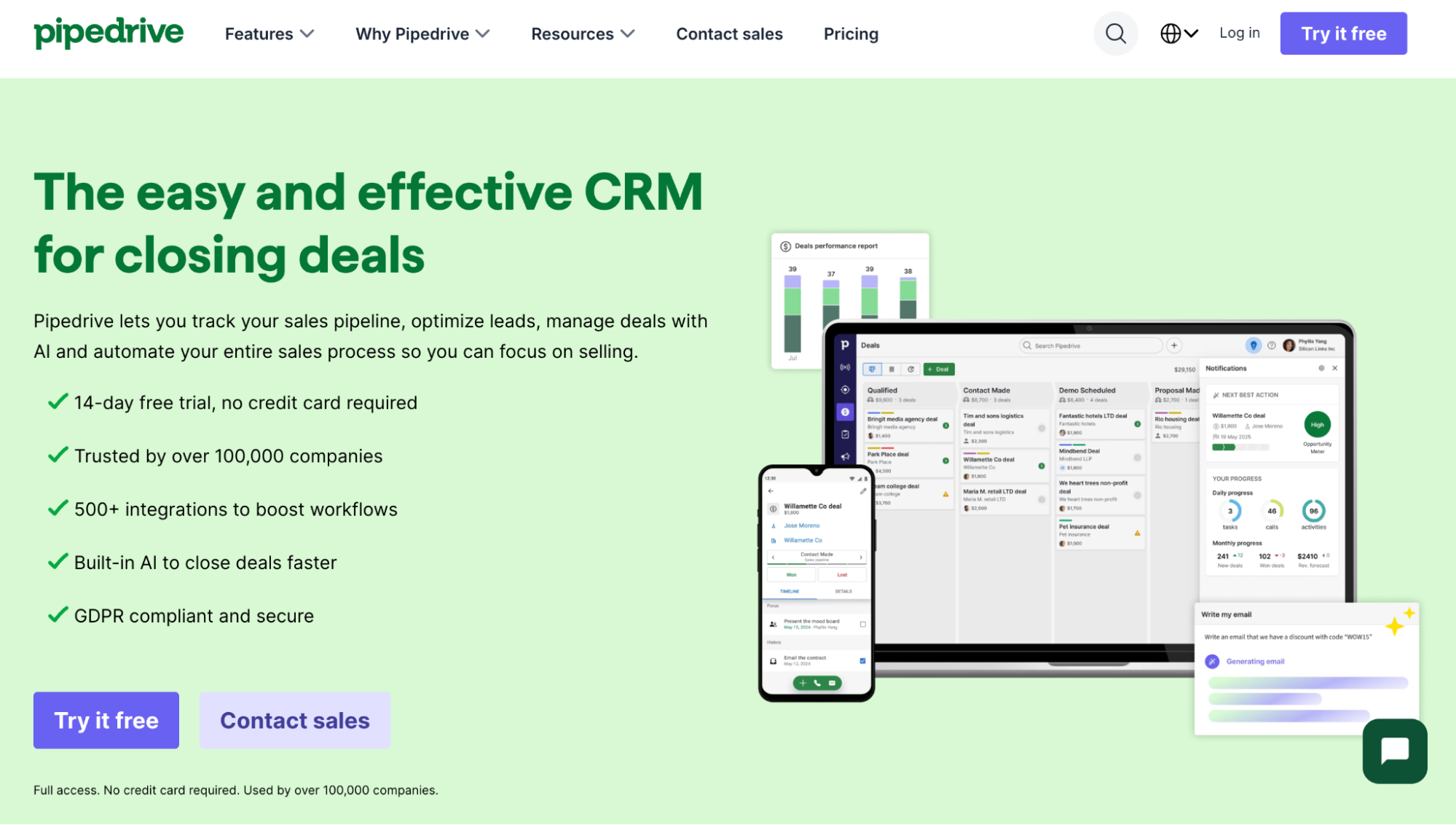
Pipedrive has always been a pipeline tool first, and its AI doesn't try to be anything else. The AI Sales Assistant provides deal recommendations and performance tips inside the daily workflow. That’s a design choice that keeps adoption high, because the AI shows up where sales reps already are instead of requiring a separate dashboard visit.
Deal health flagging and pipeline-based revenue forecasting are what reviewers call out most. None of it is technically complex. All of it is embedded where it gets used.
The ceiling is real and worth naming upfront: teams that grow into needing marketing automation or workflow logic beyond sales will find Pipedrive's scope limiting. As a focused sales pipeline tool with AI that matches that focus, the reviews reflect a product that does what it says. As a platform to grow a broader go-to-market operation on, it's a different conversation.
Pricing: Essential from $14/user/month; AI features from $49/user/month on the Professional plan.
7. Salesflare
G2: 4.7/5 · Capterra: 4.7/5

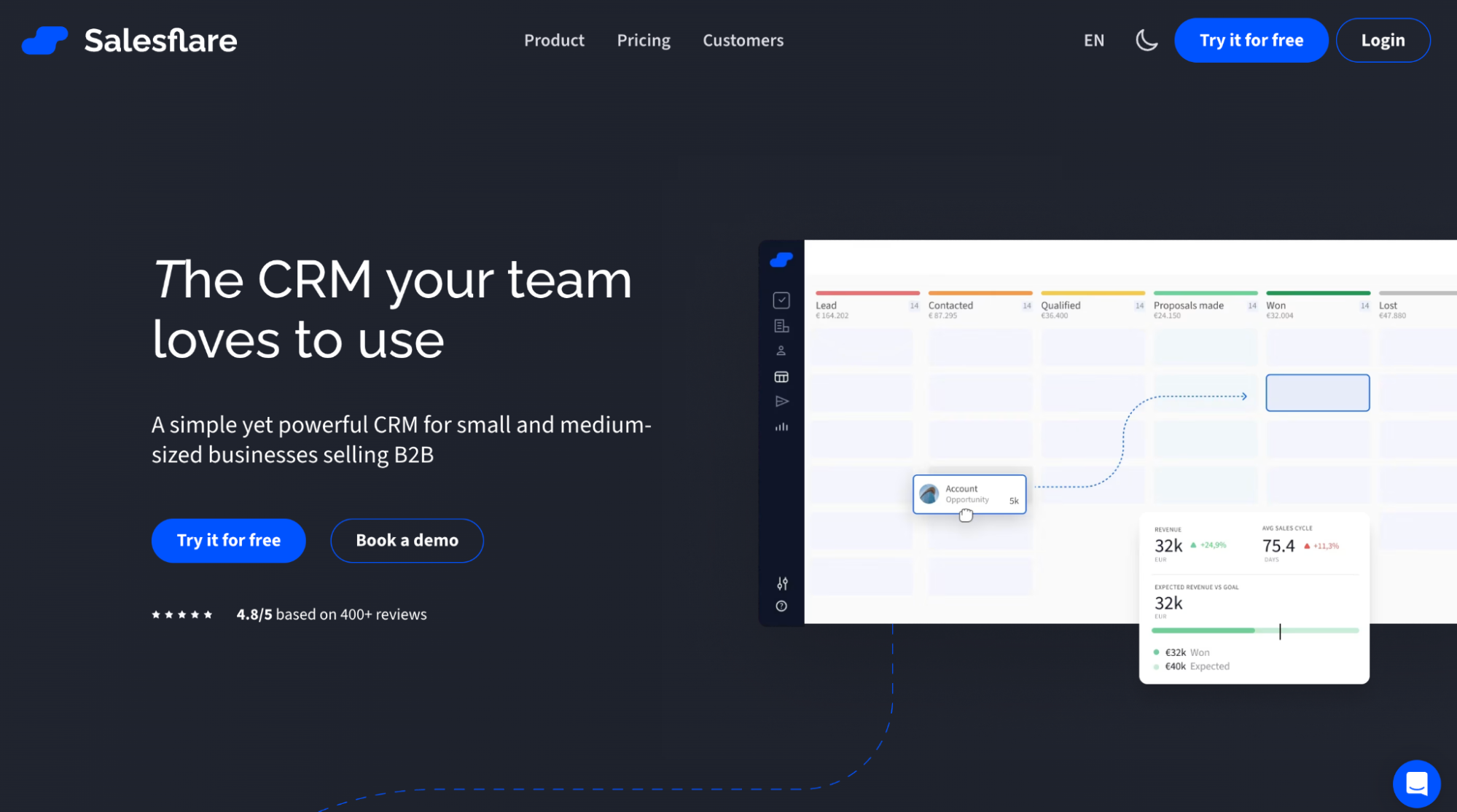
Salesflare's rating consistency is notable given its smaller review base – 4.7 across both major platforms, matching Capsule. The platform captures customer data automatically from email, calendar, LinkedIn, and company databases, building contact profiles that update in real time.
That focus makes it genuinely strong for small B2B sales teams where data entry burden is the primary CRM problem. Several reviewers on G2 note that once they outgrew the core data-capture use case, the platform's limitations became apparent.
Pricing: From $29/user/month.
8. Attio
G2: 4.5/5 (158 reviews)

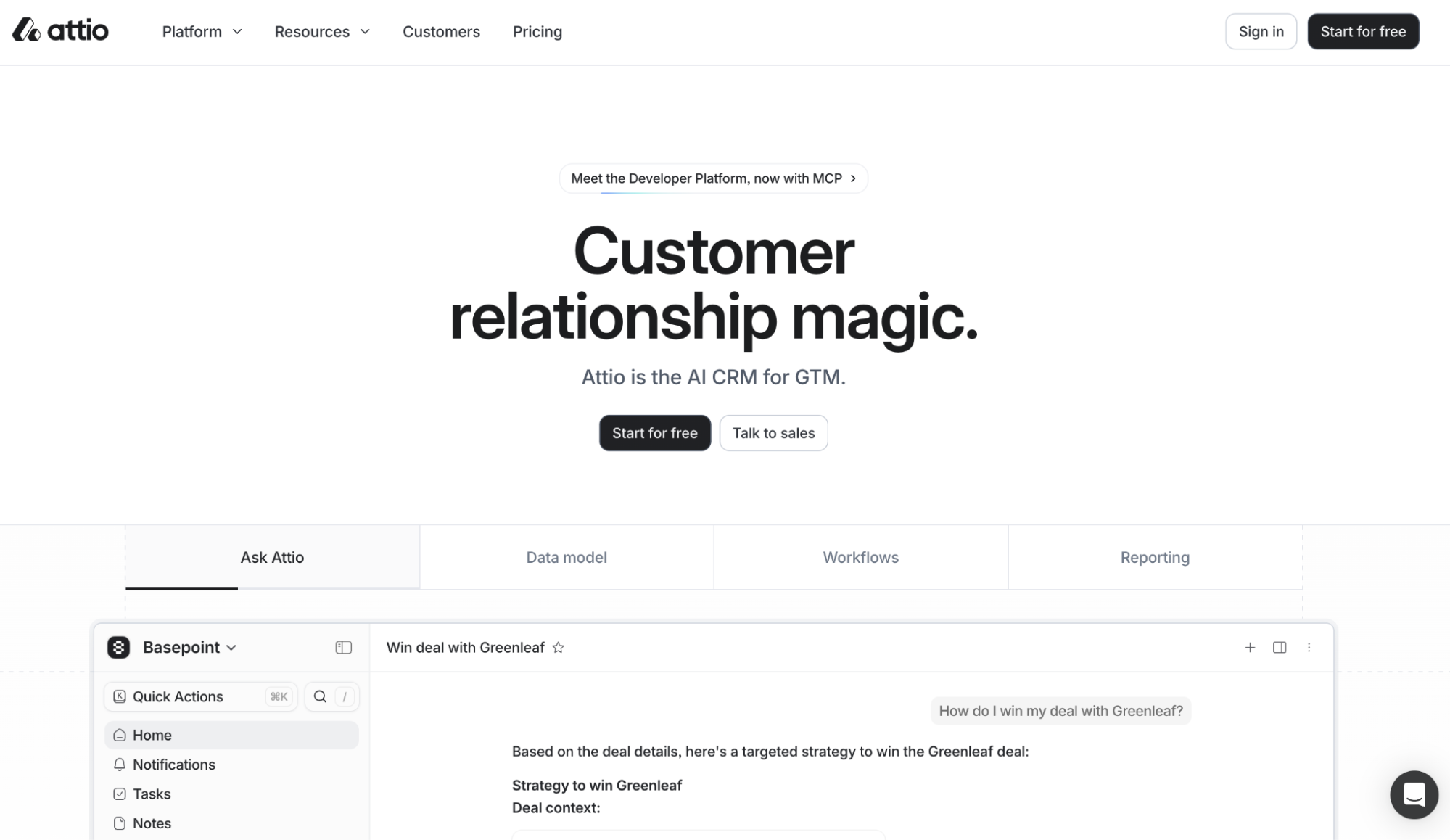
158 reviews is a small sample, and buyers who need the confidence of a large, stable review history should weigh that honestly. What those 158 reviews do show is an unusually consistent level of enthusiasm… and a specific reason for it.
Most CRMs assume your sales process looks like a standard sales funnel: contacts, deals, companies, pipeline stages. Attio doesn't make that assumption. It lets teams define their own objects and relationships, which sounds like a technical detail until you're trying to manage a partnership program, a product-led growth motion, or a customer lifecycle that doesn't map cleanly to "lead → opportunity → closed." For those use cases, the flexibility is very valuable.
The AI handles automated enrichment and behavior-triggered workflows. Reviewers don't highlight it as the main draw: the data model flexibility and interface quality come up more often. The setup investment is real. Teams that configure Attio to match how they actually work get considerably more from it than those who treat it as a plug-and-play option.
Pricing: Plus from $34/user/month; Pro from $59/user/month.
9. Close CRM
G2: 4.7/5 (1,000+ reviews) · Capterra: 4.7/5

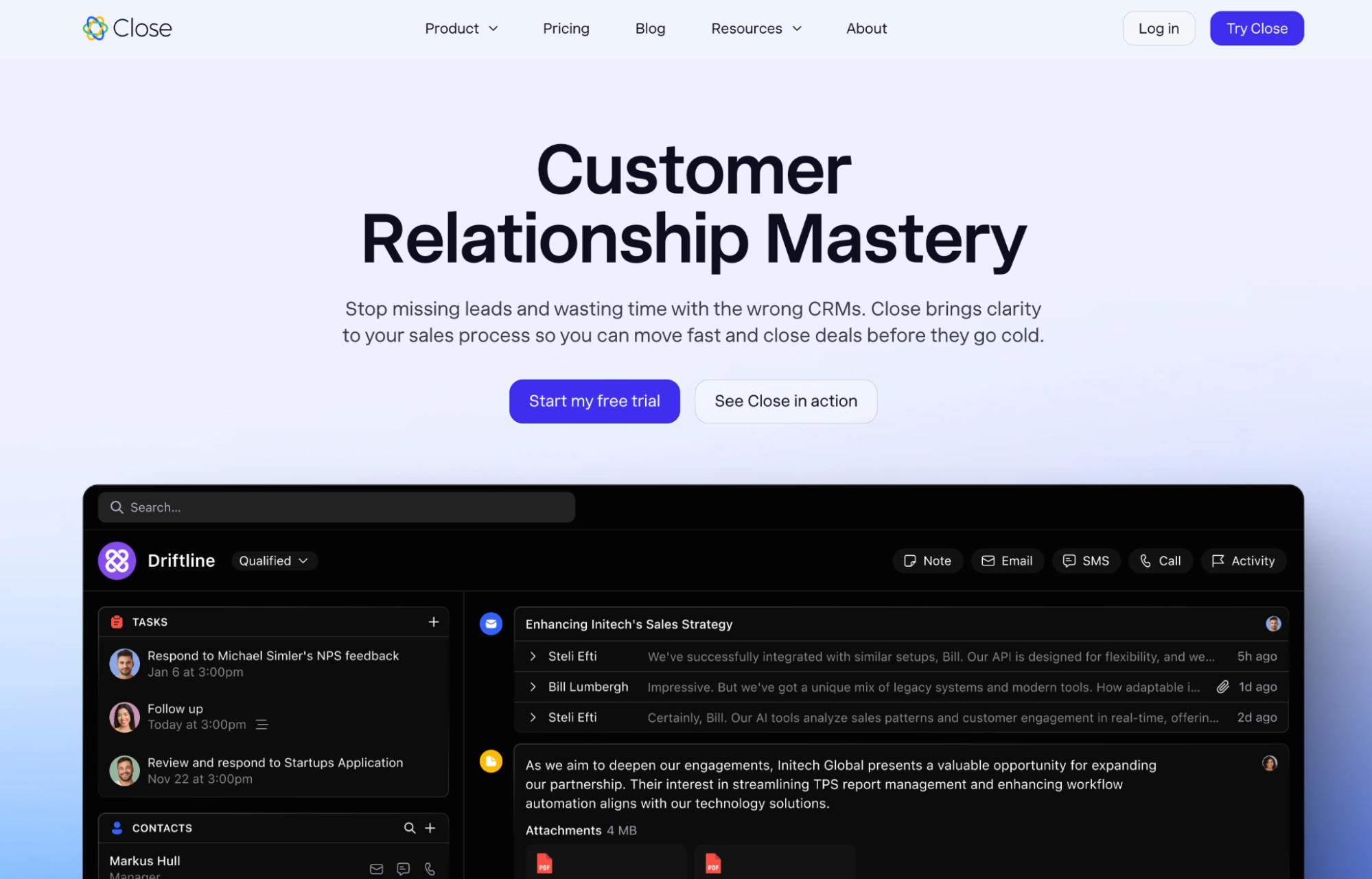
Close is one of the few CRMs on this list where the product scope is a deliberate choice rather than a limitation to apologize for. It's built for outbound sales teams, and everything in the platform – including the AI – reflects that decision.
Built-in calling, SMS, and email mean every interaction gets captured automatically, without relying on reps to log anything. AI transcription and call summarization feed that activity data back into the CRM in real time. AI-powered workflows trigger follow-up sequences based on what prospects actually did, and the call script drafting tools appear repeatedly in reviews as something people use daily.
The 4.7 across two platforms with 1,000+ reviews is the strongest consistency signal on this list outside of Capsule and Salesflare. Reviews are candid about what Close isn't: marketing automation, post-sale customer management, and complex reporting are outside its scope. For outbound-heavy teams where the primary problem is follow-up consistency and call volume, that trade-off is exactly the point.
Pricing: Startup from $49/month (3 users); Professional from $99/user/month.
10. Copper CRM
G2: 4.5/5 (1,142 reviews) · Capterra: 4.⅘

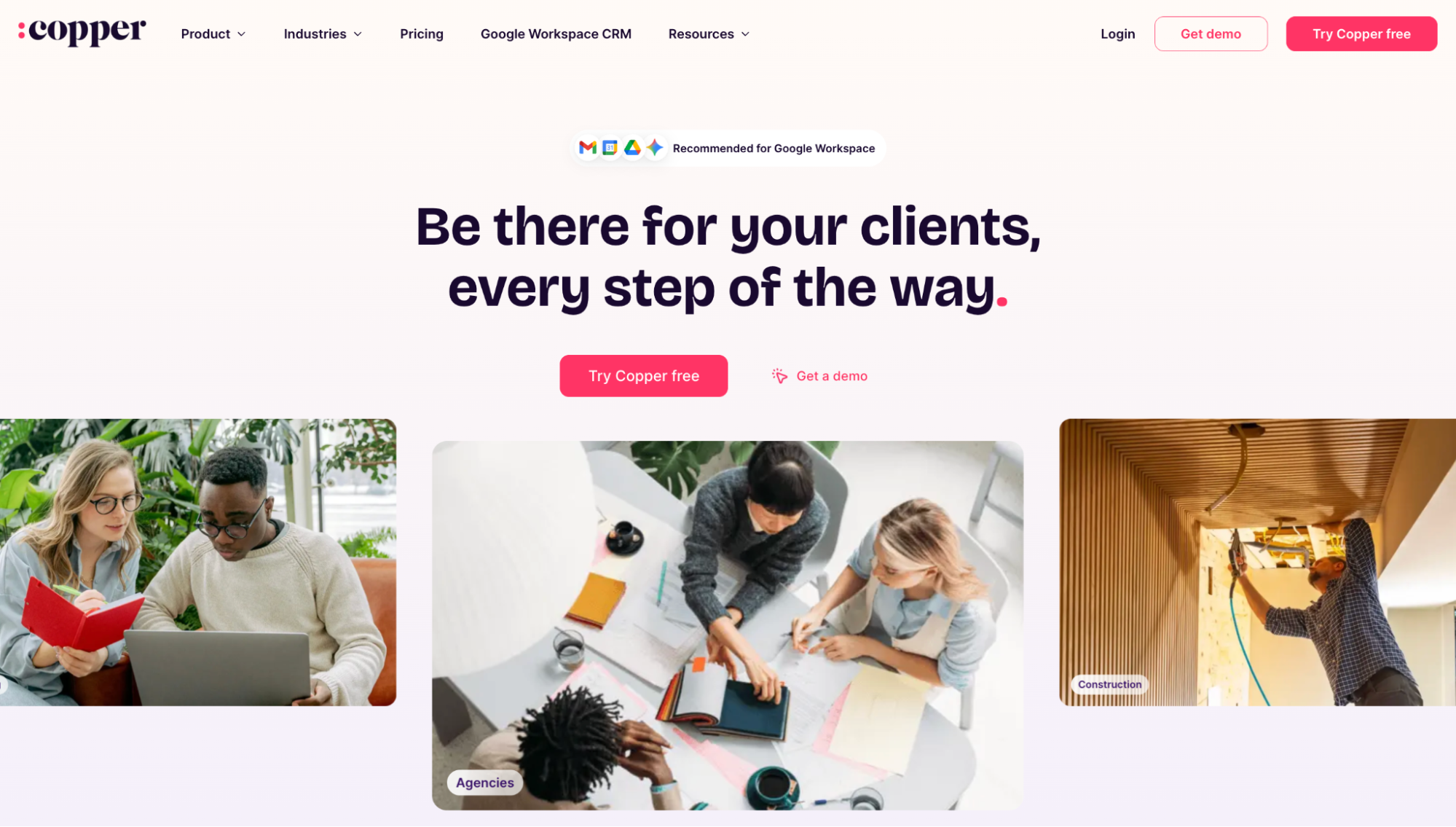
Copper's value proposition is one of the more honest on this list: if your team lives in Google Workspace and your CRM keeps pulling people out of Gmail, Copper solves that problem better than anything else here. Contact records, pipeline updates, email history, and task management all operate inside Gmail itself – and not in a sidebar that competes for attention, but as part of the interface.
The AI is fairly functional. Email rewriting on higher plans helps draft and refine outreach; automated enrichment keeps contact data current from email signatures and public sources. G2 reviewers tend to see it as solid but not a differentiator – a feature set that delivers on its promises and doesn’t try to do more than it needs to.
Reporting depth and workflow complexity are the most cited shortcomings, appearing across both platforms with enough frequency to take seriously. When CRM needs are more relational than analytical, the compromise is manageable; when both are required, it won’t be.
Pricing: Starter from $9/user/month; AI features on Professional plan from $69/user/month.
11. Monday CRM
G2: 4.7/5 (14,000+ reviews as part of monday.com platform)

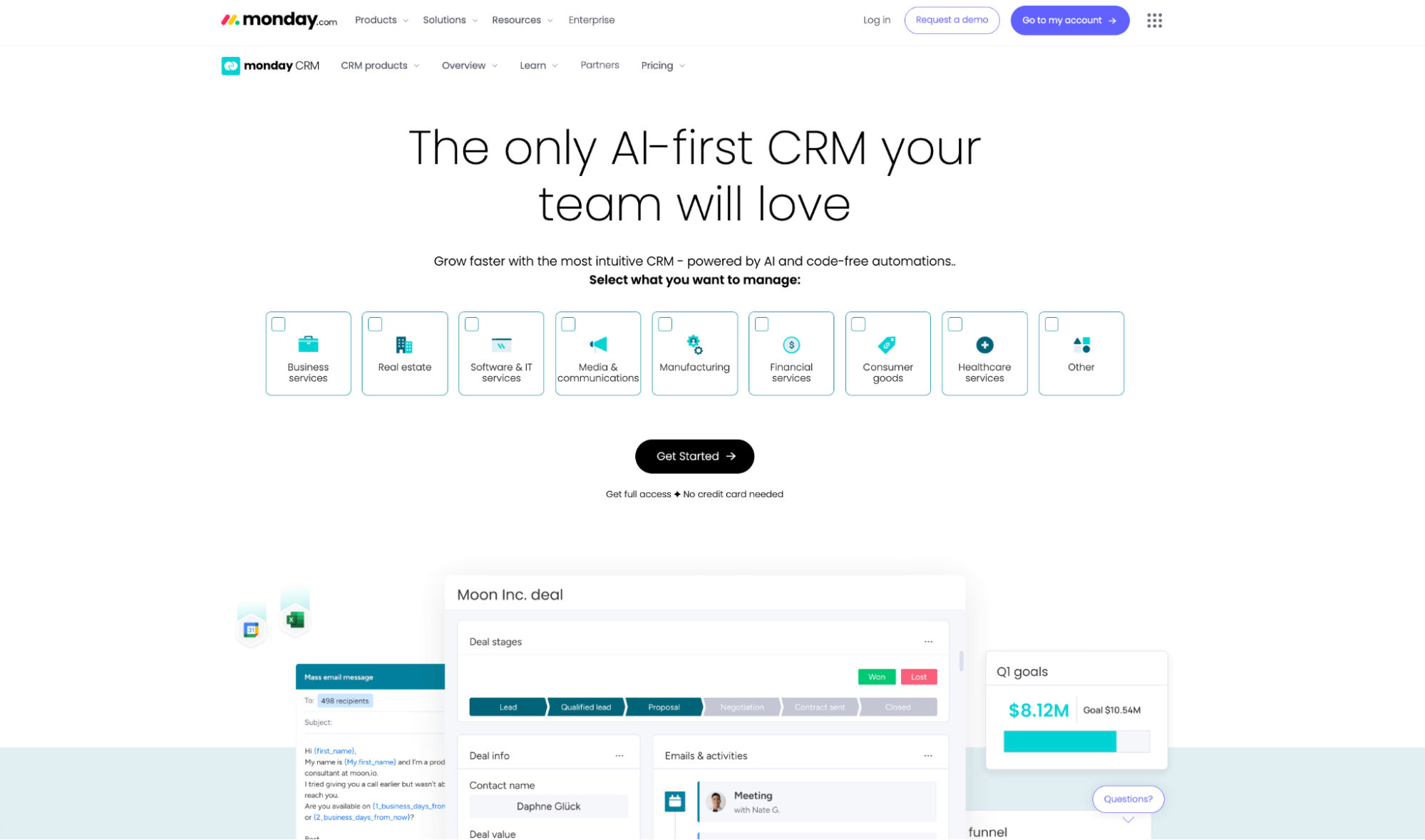
The 4.7 score comes with an asterisk worth reading: the review base spans the broader monday.com suite, and not all of those reviewers are evaluating the CRM specifically. Within the CRM-focused feedback, the recurring positives are visual clarity, customization, and automation flexibility – which aligns with what monday.com has always done well.
The AI feature set expanded considerably in 2025: an AI Notetaker for call summaries and next steps, sales agents for lead qualification, generative tools for email drafting, and AI-driven pipeline forecasting. The Notetaker launched in September 2025 and hasn't accumulated enough reviews yet to assess meaningfully – this matters if that feature is central to the evaluation.
Pricing is the most consistent friction point. Seat-based scaling catches teams off guard as they grow, and the gap between the entry plan and the tier where the platform becomes powerful is wider than the starting price suggests.
Pricing: Basic from $12/user/month; Pro from $28/user/month (AI features included on most paid plans).
How to read these ratings
A 4.7 from 449 reviews and a 4.7 from 12,000 reviews tell different stories.
Large review samples show the full range of user experience, including the friction that early adopters rarely report. Platforms with smaller but enthusiastic review bases often score well early and show more variation as the user base grows.
The most reliable signal across all these platforms is ease of use. In every dataset, ease of use correlates more strongly with long-term satisfaction than AI feature depth. The AI tools that actually change how teams work are the ones embedded in daily workflows.
For most small and mid-sized businesses, Capsule CRM stands out as the most sensible choice – built around how teams actually manage relationships, without unnecessary complexity.
Try Capsule free for 14 days — no credit card required.