Running a machinery manufacturing business requires a lot of moving parts. That's why you need to invest in the right tools and systems to keep everything running smoothly.
Most machinery manufacturers will eventually need to invest in both a CRM and an ERP to manage all aspects of their business, like production planning and inventory management. But knowing which one to prioritize, and understanding the difference between them can save you a lot of time, money, and frustration.
In this post, we'll break down the key differences between CRM and ERP, where they overlap, and how to decide which one your business needs right now.
CRM vs ERP
Before diving into the comparison, it helps to understand what each system is actually designed to do.
What is a CRM?
A CRM, or customer relationship management system, is a tool for managing your relationships with customers, prospects, and partners. It's where your sales team tracks leads, manages pipelines, logs customer communications, follows up on quotes, and keeps everyone aligned on account activity.
CRM software focuses on the commercial side of your business. For machinery manufacturers, that means managing customer interactions from the first inquiry through to signed contract, and building the kind of customer relationships that lead to repeat business and long-term customer lifetime value.
It gives your whole team visibility into where every opportunity stands, who owns it, and what needs to happen next. That makes it much easier to deliver a consistent customer experience at every stage.
What is an ERP?
An ERP, or enterprise resource planning system, manages your internal business operations. That includes production scheduling, inventory management, procurement, financial management, compliance, and supply chain management.
ERP systems serve as a central database for financial and operational data across the business, giving multiple departments a single source of truth for everything from resource management to audit trails. Common ERP solutions used in machinery manufacturing include SAP Business One, Epicor Kinetic, Infor CloudSuite Industrial, and Sage X3. Cloud ERP systems are increasingly popular for businesses that want simpler deployment and ongoing upgrades.
In short: CRM helps you win the order. ERP helps you fulfill it profitably. They solve different stages of the same revenue process, which is why most manufacturers eventually need both, and why integrated ERP and CRM systems are increasingly seen as best practice.

Key differences between CRM and ERP in manufacturing
The main difference between CRM and ERP software comes down to relationships versus operations.
CRM systems manage dealer and direct buyer contacts, pipeline stages, quote history, follow-up reminders, customer communications, and shared account notes. ERP systems manage production planning, inventory management, supply chain management, invoicing, financial management, compliance, and internal business operations.
Confusion often arises because many ERP systems include basic contact records and customer orders. That can make an ERP look like it handles customer relationship management, but ERP systems aren't designed for pipeline visibility, pre-sale follow-up, or managing customer interactions over a long sales cycle.
The commercial gap usually appears before the operational one. Quotes go unanswered, sales reps lose context, dealer activity becomes invisible, and customer information ends up scattered across inboxes.
Production planning and inventory management
ERP and CRM handle very different parts of the production and sales process. ERP owns what happens on the factory floor; CRM owns what happens in the sales team. Here's how each one contributes.
How ERP supports manufacturing operations
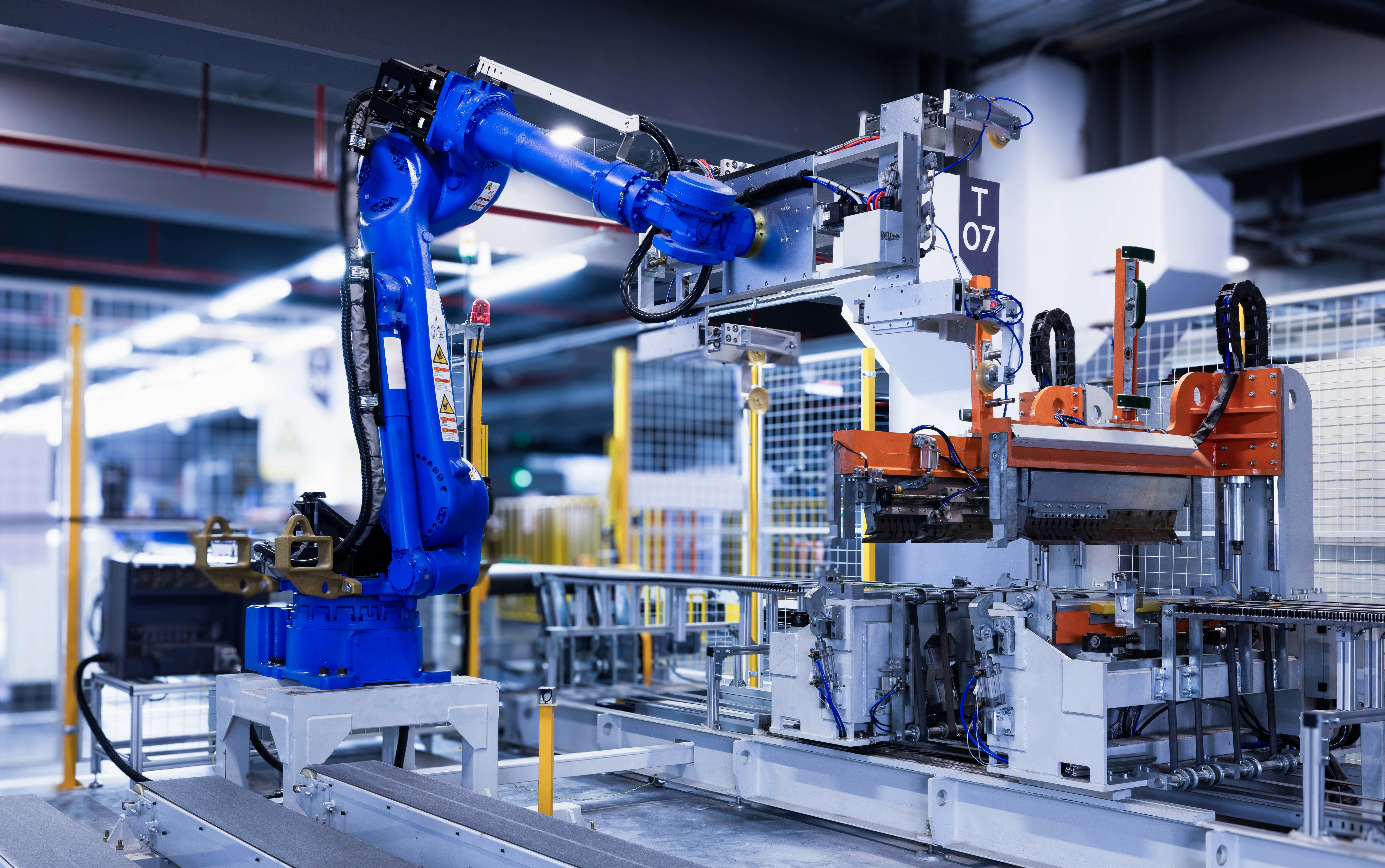
ERP is where production planning lives. Once a sale is made, a manufacturing ERP handles everything needed to engineer and build the machinery: production scheduling, Material Requirements Planning (MRP), work order management, procurement, inventory management, cost tracking, quality management, and compliance.
MRP automatically schedules purchasing for critical components to ensure timely delivery. Bill of Materials (BOM) translates engineering models into multi-tiered lists of components, fasteners, and sub-assemblies. Shop floor and capacity scheduling coordinates the plant schedule, factoring in the availability of CNC machines and skilled labor to prevent bottlenecks.
ERP also handles real-time inventory tracking from raw materials through to finished machinery, and automates repeatable business processes like payroll, invoicing, and supply chain coordination. By consolidating financial data and operational data across departments, ERP systems improve visibility and support more informed business decisions.
Research suggests ERP systems can reduce decision-making time by up to 35% for small and medium-sized businesses, enabling quicker responses to operational challenges and better operational efficiency overall.
Customer and dealer relationship management
Customer data lives in both systems, but it serves a very different purpose in each. Understanding that distinction is key to getting the most out of both tools.
How CRM supports sales operations
While ERP manages what happens after the deal, CRM software focuses on the sales process itself: qualifying leads, managing opportunities, tracking quote follow-up, and keeping sales and marketing teams aligned.
Machinery manufacturing typically involves high-value assets, multi-month sales cycles, and complex configurations. Sales teams use CRM tools to manage opportunity stages from initial inquiry through to RFQ, proposal, negotiation, and signed contract.
Capsule gives your team a clear view of every deal in the pipeline: who owns it, what's been promised, which quote version is current, and when the next follow-up is due.
CRM doesn't replace production planning. CRM integration with your ERP means that delivery dates, inventory availability, and order status flow through to your sales team automatically. Your sales reps can give customers accurate answers without chasing down the operations team, and customer satisfaction doesn't suffer because of avoidable communication delays.


How ERP and CRM systems manage dealer and customer relationships
ERP customer data is primarily transactional. It supports invoicing, shipping, order fulfillment, financial reporting, and risk management. ERP records typically include billing addresses, payment history, purchase orders, delivery status, service contract details, and warranty information.
This transactional data is essential for internal operations, but it rarely gives sales teams the relationship context they need. ERP isn't the right place for managing customer interactions, organizing customer data around relationship history, or running marketing campaigns. That's why a business can have a strong ERP and still have a real gap in customer engagement.
CRM systems centralize customer information, including contact details, communication history, account notes, and relationship context, in a way that's accessible to everyone on the team.
In machinery manufacturing, a single account might span engineering, maintenance, finance, procurement, and dealer contacts across multiple departments. Capsule keeps all of that organized in one place, so nothing gets lost and no one goes into a customer interaction without the full picture.
Capsule also records every touchpoint: sales calls, emails, demos, design discussions, trade show meetings, and quote feedback. For dealer networks, it tracks dealer performance, quote activity, and shared account notes.
Managing customer data this way, with full visibility across the team, turns your CRM from a digital address book into the engine behind stronger customer relationships, lower customer acquisition costs, and higher customer lifetime value.
Quote management and sales pipeline
Quotes sit right at the intersection of CRM and ERP, which is often where the confusion between the two systems starts. Both play a role, but at different points in the process.
ERP quote tools are most valuable when cost accuracy is the priority. ERP systems can draw on material costs, labor rates, routings, inventory availability, and financial data to calculate whether a quote is profitable.
Once a deal is won, ERP converts the accepted quote into a production order, triggers work orders, reserves inventory, schedules purchasing, and connects fulfillment with financial reporting. This handoff matters because engineering, procurement, and production all need clean operational data once a customer signs. ERP integration at this stage ensures that core business processes run smoothly and that financial data stays accurate.
The limitation is that ERP quote modules often lack sales-friendly pipeline management. They won't show you which quotes are stuck, who needs a follow-up, what objections the buyer raised, or how likely a deal is to close. That makes sales forecasting very difficult.
This is where Capsule CRM earns its place. Complex machinery deals can involve months of negotiation, multiple stakeholders, and several quote revisions. Capsule tracks all of it: client feedback, design requirements, stakeholder approvals, and every version of the proposal.
Sales reps get a visual pipeline showing lead status, opportunity probability, quote versions, follow-up tasks, decision-makers, and expected close dates. Automated reminders keep deals moving even when they slow down.
And because everything is logged, sales teams can analyze data across the pipeline, forecast accurately, and act before deals go cold, without relying on manual data entry or memory.
The real difference in ERP vs CRM for quoting is this: ERP protects cost accuracy and order execution, while CRM protects follow-up discipline, customer engagement, and deal momentum.
When to invest in each system
Small operations with two or three people can often manage with ERP solutions alone, especially if customer tracking is basic and most customer information lives in orders and invoices. At that stage, an ERP customer record and a spreadsheet may be enough.
The need for CRM systems usually becomes clear once more than two or three people are managing accounts. As soon as there are four or more salespeople, dealer managers, estimators, or account owners involved, customer data starts to fragment. Follow-ups get missed, quote versions multiply, customer communications become hard to trace, and managers lose visibility into sales forecasting.
Consider prioritizing ERP if your biggest challenge is:
- Complex production with Engineer-to-Order, Configure-to-Order, or CPQ-driven machinery
- Long lead-time components and volatile supply chain management requirements
- Multi-level BOMs, routings, and work centers
- Compliance, traceability, quality management, and audit trails
- Cost control, financial reporting, and profitability tracking
Consider prioritizing CRM if your biggest challenge is:
- Dealer networks or direct sales teams that need better coordination
- Long-cycle opportunities that require repeated follow-up and contact management
- Quote history and proposal versions that are hard to manage
- Sales and marketing teams that need better visibility into customer data
- Customer relationships that involve multiple decision-makers and customer service interactions
Most machinery manufacturers find the commercial gap before the operational one. The factory may still be running fine, but sales teams are already losing time to manual data entry, unclear ownership, and inconsistent follow-up.

Which should you choose?
If your biggest constraint right now is production, inventory management, supply chain management, compliance, or financial management, lead with ERP. A manufacturing ERP is the operational backbone that helps you build, ship, invoice, and service machinery reliably, and it's where your core business processes live.
If your biggest constraint is pipeline visibility, dealer coordination, quote follow-up, customer engagement, or managing customer relationships, lead with Capsule CRM. CRM focuses on the work that happens before and around the order: managing customer data, improving customer interactions, supporting marketing efforts, and helping sales teams stay on top of every opportunity.
If you're already wondering whether your ERP should be doing more on the sales side, that's a sign the commercial gap has arrived. The answer is to address it directly with CRM software, rather than trying to stretch your ERP into a role it wasn't designed for.
Wrapping up
Most machinery manufacturers eventually need both. CRM and ERP aren't competing systems. They solve different problems at different stages of the same revenue process.
When you have integrated ERP and CRM working together, business data flows cleanly between the two. Capsule captures the relationship and pipeline data, and your ERP handles production, inventory, financial data, and fulfillment. Process automation connects the two, eliminating redundant manual data entry and reducing errors across the business.
Ready to see how Capsule can support your machinery sales team? Sign up for a free trial and be up and running within the hour.