
One in five new sales hires quits within the first 90 days, and poor onboarding is usually the reason. At a big company, that's a statistic. At a small business hiring its first sales rep, it's a crisis: months of salary and every deal that rep never closed, gone.
You've always done the selling yourself. Now you're handing it to someone else, with no enablement team and no playbook to inherit. Our guide gives you a 30-60-90 day structure that takes a first hire from lost to closing, with nothing but you and a CRM.
Why sales onboarding hits harder at a small business
In a small business, your first sales rep is most of your sales capacity, so their ramp time is your revenue. In a large sales organization, one slow ramp barely registers.
The average rep takes three to four months to reach full productivity, and a sink-or-swim start stretches that past six. Every extra month is salary with no return on it.
Structured onboarding cuts ramp time by roughly a third and lifts retention sharply – no small thing when replacing a sales rep can cost up to three times their salary. The best onboarding programs are just a process, and any founder can copy one. At an SMB, effective sales onboarding is the difference between a hire who pays for themselves by month four and one who quietly drains cash until they leave.
There's a softer cost, too. A first rep who flounders sours you on hiring again, and you slide back into doing all the sales yourself for another year. Onboarding done well protects the decision to hire at all.
Before day one: YOU are the enablement team
The work starts before your new hire walks in. At a big company, a sales enablement team hands a new rep a playbook, a territory, and a stack of tools. At an SMB, that team is you.
The good news: you already hold everything the rep needs, because you've been doing the job. The task is to get it out of your head and onto paper. Before day one, write down:
- Who you sell to: your ideal customer profile.
- Why they buy: the pitch and the pain points.
- How you sell: your rough sales process, stage by stage.
- What "good" looks like: the targets, the timeline, and how the OTE is structured.
Then set up a CRM login, a clean contact list, a few warm leads to start on, and the sales tools they'll live in. A new sales rep who inherits a CRM full of dead leads and no written pitch spends their first month on cleanup… when they should be selling. 15 minutes of prep per item saves weeks of drift. If you're formalizing more than the sales side, our employee handbook template covers the rest.
Block out the first day, too. A simple agenda – a product walkthrough in the morning, a couple of recorded calls after lunch, then a coffee where you tell the story of your best and worst customers – beats an empty calendar and a 50-tab knowledge base. The onboarding a new hire remembers is the human part; the document dump is forgotten by lunch.
Hire for the right sales motion first
The best onboarding can't save the wrong hire. Before you build the plan, make sure the timing is right (hiring your first employee is its own decision) and that the sales role matches the person you bring in.
A rep who closed small transactional deals will struggle with long B2B sales cycles, and a relationship-driven closer can flounder at high-volume outreach. Sales talent isn't generic, so match the motion to your business. Look past the impressive logo on the resume and find someone who's sold in a motion like yours. Adaptable sales representatives who've handled different sales scenarios ramp faster than narrow specialists.
Get the fit right and onboarding becomes teaching a capable person your specifics. Get it wrong, and no 30-60-90 plan will rescue it.
The 30-60-90 day sales onboarding plan
"Shadow me for two weeks" shouldn’t be your plan. A 30-60-90 day structure gives a first hire clear milestones and gives you a way to tell early if the hire is working.
Each phase has one theme: learn, then do, then own. Adjust the dates to your sales cycle. A longer, complex sale calls for a stretched learn phase, and a transactional one compresses it. The shape holds either way.
Days 1-30: learn
The first 30 days are for absorbing the business. The numbers come later.
The rep should learn the product cold, join your sales calls, study won and lost deals, and get fluent in your CRM. By day 30, the new hire should be able to give the pitch, map your sales process end to end, and log a deal in the pipeline with no help. Set one concrete goal: shadow ten real calls and deliver a flawless demo back to you.
The signal you want by week four is simple: the new hire explains your product to a real prospect, and you'd have said it the same way. That's product mastery, the foundation everything else stands on. Rush them onto the phones early, and you'll pay for it in months to come, when they're improvising answers to objections they should have rehearsed.
Days 31-60: do
Now the rep starts selling, with a net. They take real sales calls with you listening, work a small set of leads through the pipeline, and get feedback after every conversation. This is where sales coaching pays off most: a weekly review of their calls and their deals.
By day 60, the new hire should run discovery and qualification on their own, with you stepping in only on the tougher stages of the sales cycle. The target is a handful of self-sourced opportunities and a deal or two near closing.
Resist the urge to grab the wheel on a wobbling call. Reps learn the sales process by running it, and a lost deal in month two is cheap tuition next to a rep who never learns to fly solo.
Days 61-90: own
In the last stretch, the rep carries their own number. They run the full sales process solo, manage their own pipeline, and you shift from coach to sales manager: weekly check-ins in place of daily ones.
By day 90, the new hire should be hitting a ramped quota and closing with your hands off the deal – the point where they start to contribute to your forecast in earnest. That's a successful sales onboarding: a rep who sells your product the way you would, with you out of the room.
If they're not there by day 90, extend with a focused plan on the stage that's lagging, and set a clear date to reassess.
A first-90-day sales onboarding checklist
Here's a compact checklist you can run against the plan. Our downloadable version turns it into a tracker with owners and due dates.
- By day 7: CRM access granted, ICP and pitch documents shared, first warm leads assigned, shadowing booked.
- By day 30: product mastered, pitch delivered back to you, 10-plus calls shadowed, comfortable in the pipeline.
- By day 60: running own discovery calls, self-sourcing leads, weekly coaching rhythm set, first opportunities created.
- By day 90: carrying a ramped quota, managing own pipeline, first deals closed, clear on the metrics that define the role.
Print it, or better, put it somewhere the new hire can watch their own progress. Onboarding checklists work when the rep owns them, and fail when they live only in your head. Treat the checklist as a shared contract: you commit to the support, they commit to the milestones.
Sales onboarding best practices for a team of one
A few principles separate onboarding that works from onboarding that drifts, and they hold with a sales enablement platform or just a shared doc.
- Write it down. A one-page playbook beats tribal knowledge. The best onboarding programs put "how we sell" on paper so a new hire isn't reverse-engineering it from your calls.
- Front-load practice. Reps who run mock calls in week one ramp far faster than those thrown straight at live deals. Roleplay the top objections before they're real.
- Give early wins. Hand the rep a few warm leads so they close something in the first month. Confidence compounds, and a first win does more for a new hire than a week of theory.
- Coach weekly. Effective sales onboarding is mostly feedback. A 30-minute weekly review of real calls beats any course, and it beats an annual review by a mile.
- Measure ramp, hours can wait. Track progress against the 30-60-90 milestones, using your sales reports to see what's real.
These practices cost nothing but attention, and attention is something a founder can give that a big company's program often can't. At an SMB, strong onboarding runs on care. Budget is optional.
How do you tell your onboarding is working?
Watch engagement first, activity second, quota last.
You don't have to wait until day 90 to know if the hire is landing.
In the first 30 days, watch engagement. Is the new hire asking sharp questions and volunteering for more calls, or going quiet? By day 60, watch leading activity: calls made, opportunities created, pipeline built. Closed revenue always lags. By day 90, watch quota progress against the ramped target you set.
Track these in your reports so the read stays objective, and lean on a habit of reviewing the data every week. If the signals stall, that's your cue to coach. Many ramp problems are a fixable gap in one stage of the process, and weekly review is how you catch the gap while it's still cheap.
Common sales onboarding mistakes
The failures are predictable.
Sink-or-swim, where the rep gets a login and a "good luck," tops the list and explains most of those 90-day quits. Product-only training comes next: a rep who knows every feature but never practiced a real sales call. Then there's the missing scorecard, where "ramp" has no definition, so nobody can tell if the onboarding is working until the quarter is already blown.
Each one is cheap to avoid with a written plan, and ruinous to ignore when your whole sales team is one person. Poor onboarding doesn't announce itself. It shows up three months later as a quiet resignation and a pipeline of half-worked deals.
The cure costs nothing: a written plan and an hour a week of your attention. That's a trade any founder can make, and the payoff is a sales department that runs with you out of every deal.
Set your new rep up in your CRM
A sales onboarding plan lives or dies on follow-through, and the place to anchor it is your CRM. Capsule suits an SMB first hire: light enough to learn in a day, structured enough to run a real sales process.

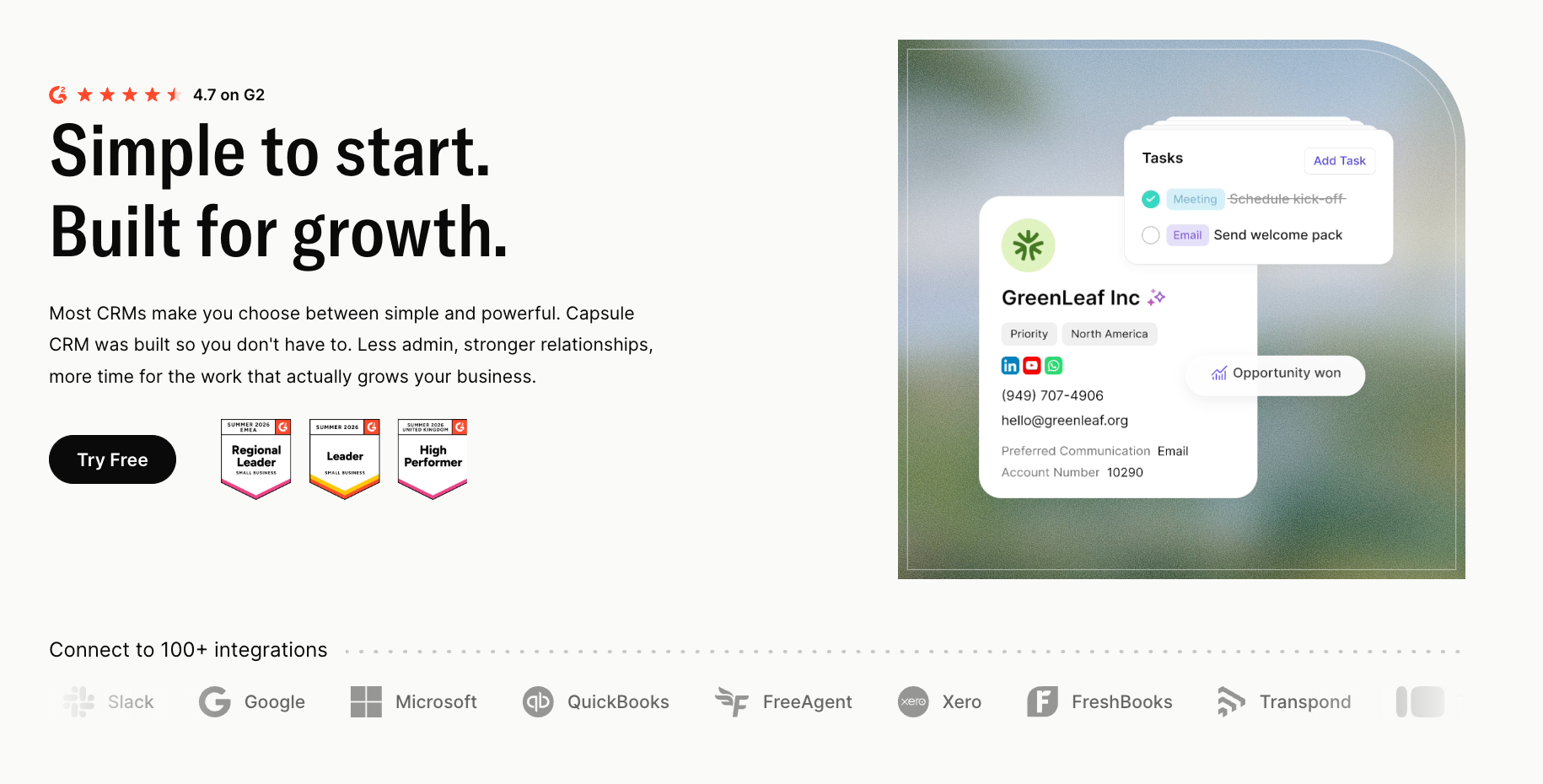
On day one, give the rep their own login and a clean pipeline with your stages already built, so they learn your process by using it. Capsule's Tracks turn your repeatable steps – the onboarding sequence and the sales motion alike – into checklists that fire on their own with workflow automation, which is as close to a sales enablement tool as a small team needs. As the new hire ramps, the reports show their activity, their pipeline, and their first deals, so "how's it going?" becomes a number.
The free plan has room for exactly this setup – you, your new rep, and 250 contacts – so the whole ramp runs at no cost. Tag and segment contacts so the rep starts on warm leads from day one, and set the stages and probabilities to match your sales cycle. Because Capsule is quick to learn, the CRM becomes the place the training happens. Set it up once, and every future hire inherits a system.
Beyond day 90: onboarding doesn't really end
Day 90 is a milestone, and the reps who keep improving get coaching long after the formal plan ends. Once the basics are solid, layer in deeper sales methodology training and the objection-handling that only live deals teach. A standing weekly review where you listen to a call together does more over a year than any single onboarding week.
A great onboarding experience is one of the top reasons new people stay, and in sales, where ramp is long and turnover is brutal, retention is everything. Keep refining the plan with each hire, and your second rep ramps faster than the first, because you've written down what you learned the first time. Before long, a one-founder sales effort quietly becomes a real team to manage.
Give your first hire a real shot
Hiring your first sales rep is a bet on someone selling the thing you built. A 30-60-90 plan is how you stack the odds. Build it this week, before your new rep's first day.