Using Sage for accounting doesn't mean you have to use Sage for CRM.
That's an important distinction when comparing Sage CRM alternatives. Sage CRM can connect customer management with Sage accounting products and remains actively supported, including a new 2026 R1 release. But companies with simpler sales processes may prefer a newer, more focused CRM while leaving finance exactly where it is.
Some keep things refreshingly simple. Others go further with built-in marketing, communication, and project management tools. We’ve narrowed the field to seven standout options – here’s how they compare and which one might be the best fit for you.
Why look for a Sage CRM alternative?
Sage CRM isn't disappearing.
Sage released version 2026 R1 on March 30, 2026, with security improvements, updated Microsoft Exchange integration and reporting performance work. Sage also maintains integration paths with products including Sage 100, Sage 200 and Sage 300.

So the case for switching isn't “Sage CRM is obsolete.”
The better reasons are usually closer to usability, implementation or changing requirements.
Sage CRM currently has a 3.8/5 rating from around 144 G2 reviews. Reviewers praise its ability to centralize customer information, customize workflows, and connect sales data with Sage. Complaints include an interface some users find dated, technical configuration for more advanced workflows, and relatively basic marketing automation. Capterra shows a similar mixed picture at 3.6/5 from 73 reviews.
For a smaller business, that can lead to a simple question:
Do we still need Sage CRM, or do we just need Sage Accounting plus a better-fitting CRM?
Those aren't the same software decision.
Best alternatives to Sage CRM
1. Capsule CRM: best for keeping Sage Accounting and changing the CRM
Capsule has a particularly strong case here because switching CRM doesn't necessarily mean touching the accounting setup.

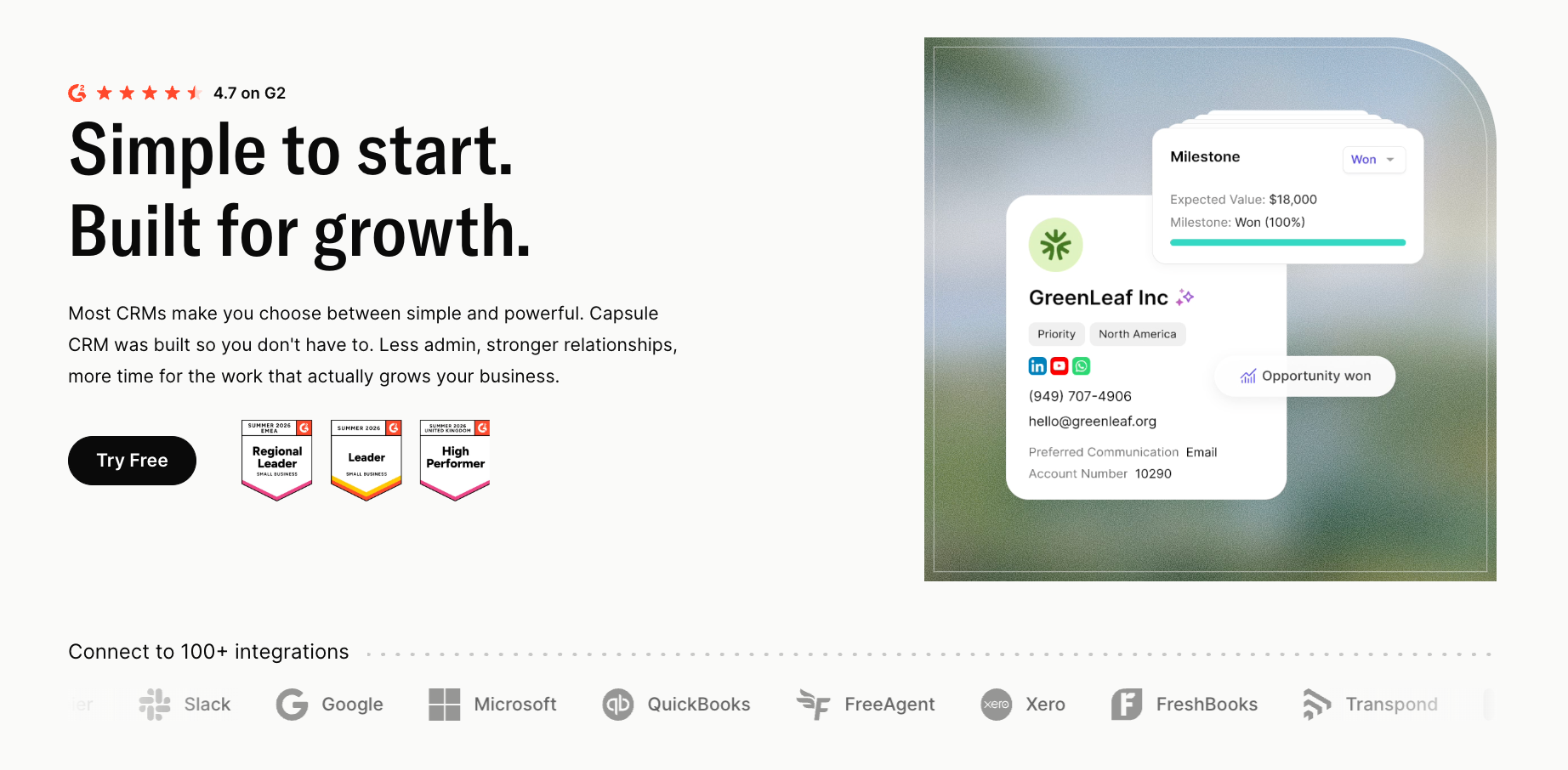
Capsule integrates directly with Sage Business Cloud Accounting. Customer records can sync between the two systems and invoice information, including payment status, due dates and overdue amounts, can appear alongside the customer record in Capsule. New contacts can also be sent from Capsule into Sage when they're ready to be invoiced.
The sales experience itself is much more focused.
Contacts, companies and opportunities sit around a visual sales pipeline. Teams can add custom fields, create tasks and automate repeatable processes without turning every CRM change into a technical project.
That gives businesses a clean division:
Capsule manages the customer relationship. Sage manages the accounts.
A consultancy, agency, or service company can take a prospect through qualification, proposal, and close in Capsule, then continue invoicing through Sage without moving finance into another ecosystem.
Current user feedback supports the simplicity angle. Capsule scores 4.7/5 from 488 G2 reviews, with ease of use, intuitive navigation, and quick onboarding among its strongest recurring themes. Limited advanced customization appears more often among the negatives.
Best for: Small and midsize businesses that like Sage Accounting but want a simpler sales CRM.
Pricing: Free for up to two users. Starter costs $18/user/month annually, Growth $36, Advanced $54 and Ultimate $72.
Watch out for: Capsule's direct Sage Business Cloud integration currently supports Sage Business Cloud Accounting users in the UK only and doesn't cover Sage Payroll. Businesses using another Sage product or region should check the integration path before migrating.
For eligible UK businesses, the Capsule Sage integration is the key reason you don't have to treat CRM and accounting as one migration.
2. Freshsales
Freshsales solves a different Sage CRM complaint: too many separate communication tools.

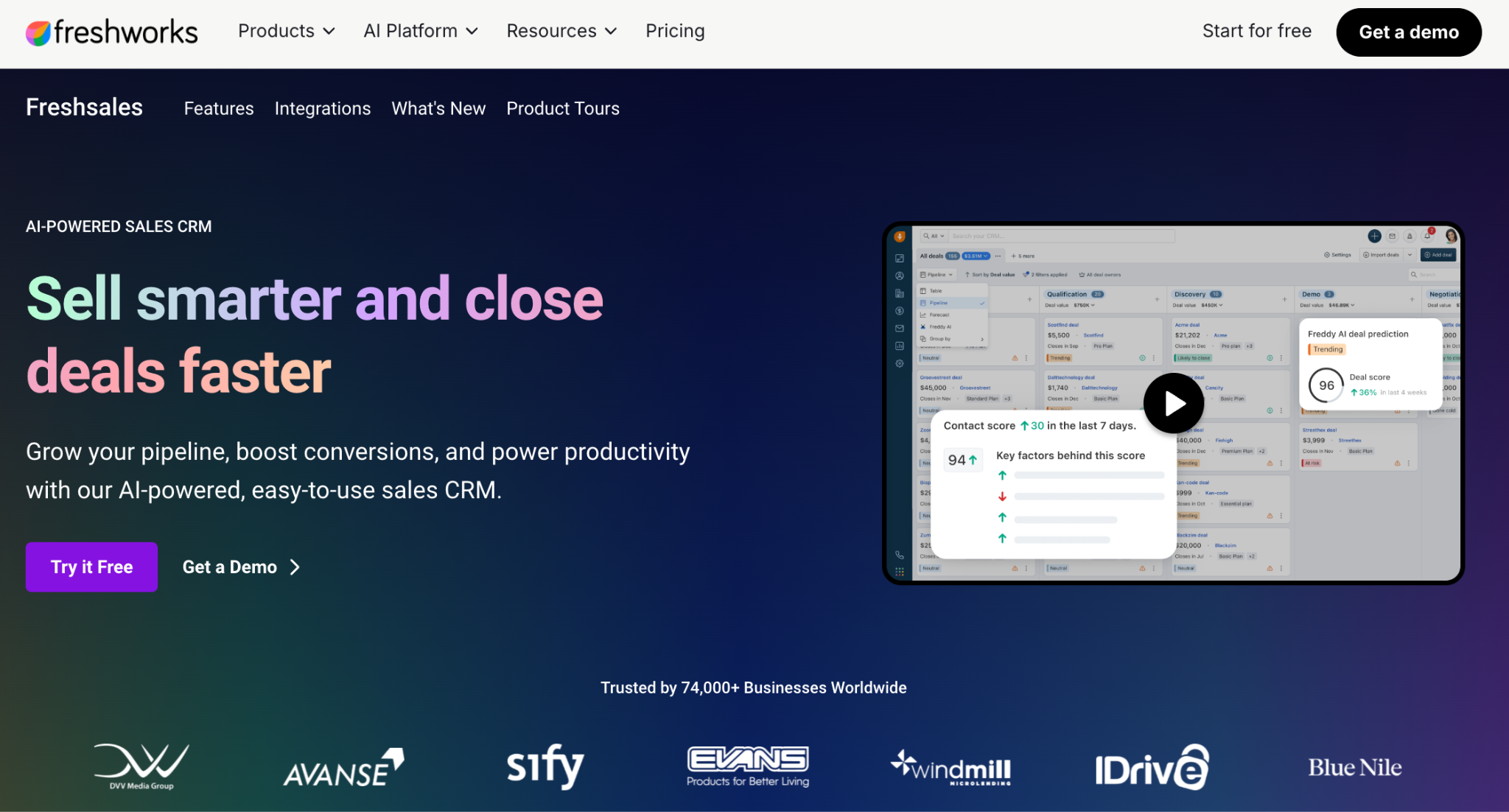
Its Growth plan puts chat, email and phone beside contact and pipeline management. Pro adds scoring, deal insights, territory management and sales sequences, while Enterprise introduces forecasting, custom modules and stronger controls.
That setup works well for sales teams that want prospect conversations close to the customer record.
Instead of keeping CRM open in one window, calling software in another and email somewhere else, more of the rep's workflow can happen in Freshsales.
Users generally respond well to that accessibility.
Freshsales holds 4.5/5 across more than 1,200 G2 reviews. Ease of use and automation appear repeatedly among the positives. Reporting depth, missing features and customization limitations feature more often among the drawbacks.
One limitation may be especially relevant for Sage users: there are some user reports pointing to a lack of direct integrations with accounting platforms, including Sage.
If accounting integration is central to your current setup, investigate that workflow before assuming the CRM migration will be isolated.
Best for: Sales teams that want communication tools embedded into CRM.
Pricing: Growth starts at $9/user/month annually, Pro at $39 and Enterprise at $59.
Watch out for: A stronger built-in communication layer doesn't automatically mean better connectivity with your existing Sage accounting setup.
3. HubSpot Sales Hub
HubSpot makes sense when your frustration with Sage CRM comes from wanting more customer-facing functionality, not less.

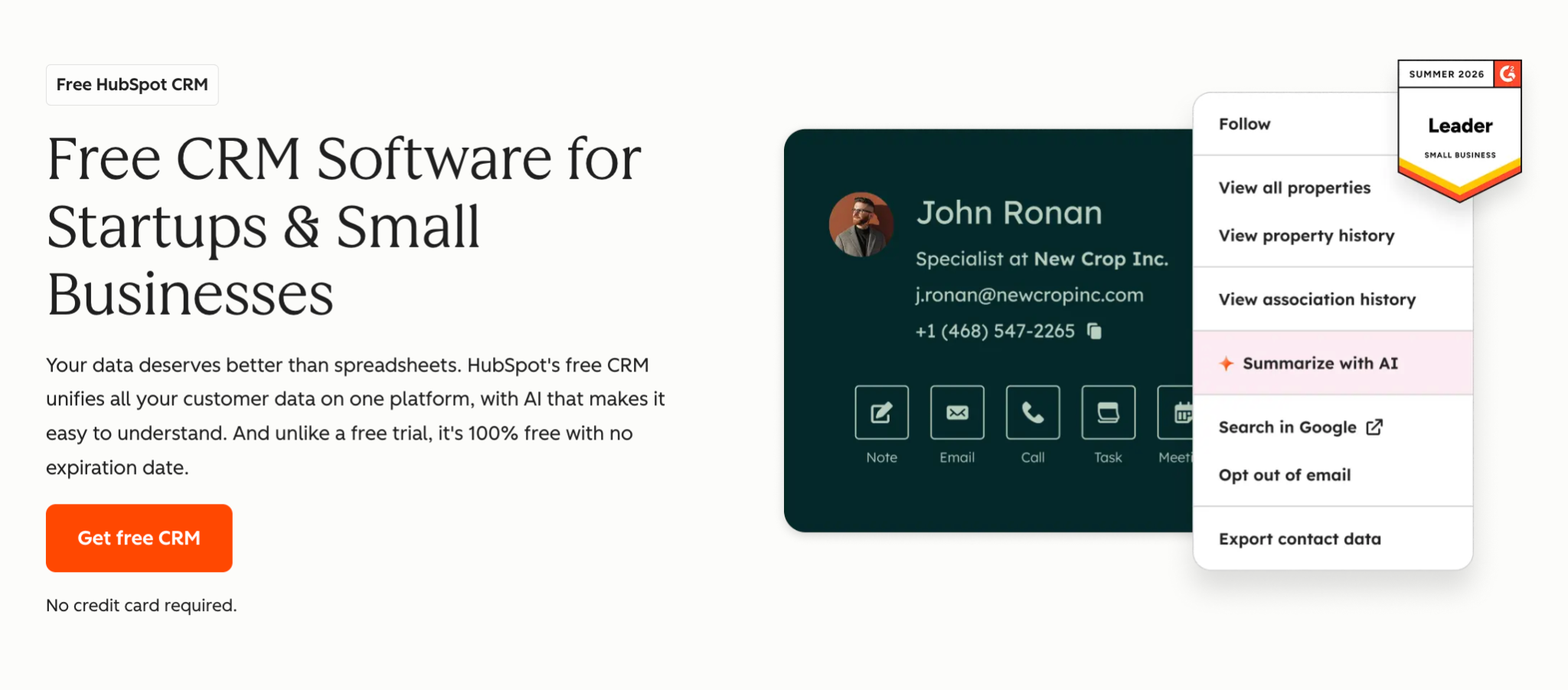
Sales Hub sits inside a wider platform spanning marketing, service and other customer operations. A company can start with contacts and deals, then add email automation, prospecting, sequences, reporting and marketing tools as requirements expand.
That's a different direction from Capsule.
Capsule keeps CRM focused and connects external systems around it. HubSpot encourages more of the customer lifecycle to move into HubSpot.
Its review profile is strong. Sales Hub has 4.4/5 from more than 13,700 G2 reviews. Ease of use, automation and lead management appear frequently in positive feedback. Cost escalation and advanced functionality moving into higher plans appear repeatedly on the negative side.
That pricing pattern deserves attention for Sage CRM users.
A team moving because it wants a cleaner pipeline may not need the wider HubSpot environment. A team that also wants marketing automation, campaign tracking and customer service connected to the same database has a much stronger reason to consider it.
Best for: Businesses trying to combine sales CRM with marketing and service.
Pricing: HubSpot offers free CRM tools, with paid Sales Hub tiers adding more automation, reporting and sales functionality.
Watch out for: Calculate the cost around the features you'll actually need in two years, not the attractive entry point.
4. Insightly
Sage CRM alternatives often focus almost entirely on pipeline.
Insightly adds another useful dimension: projects.

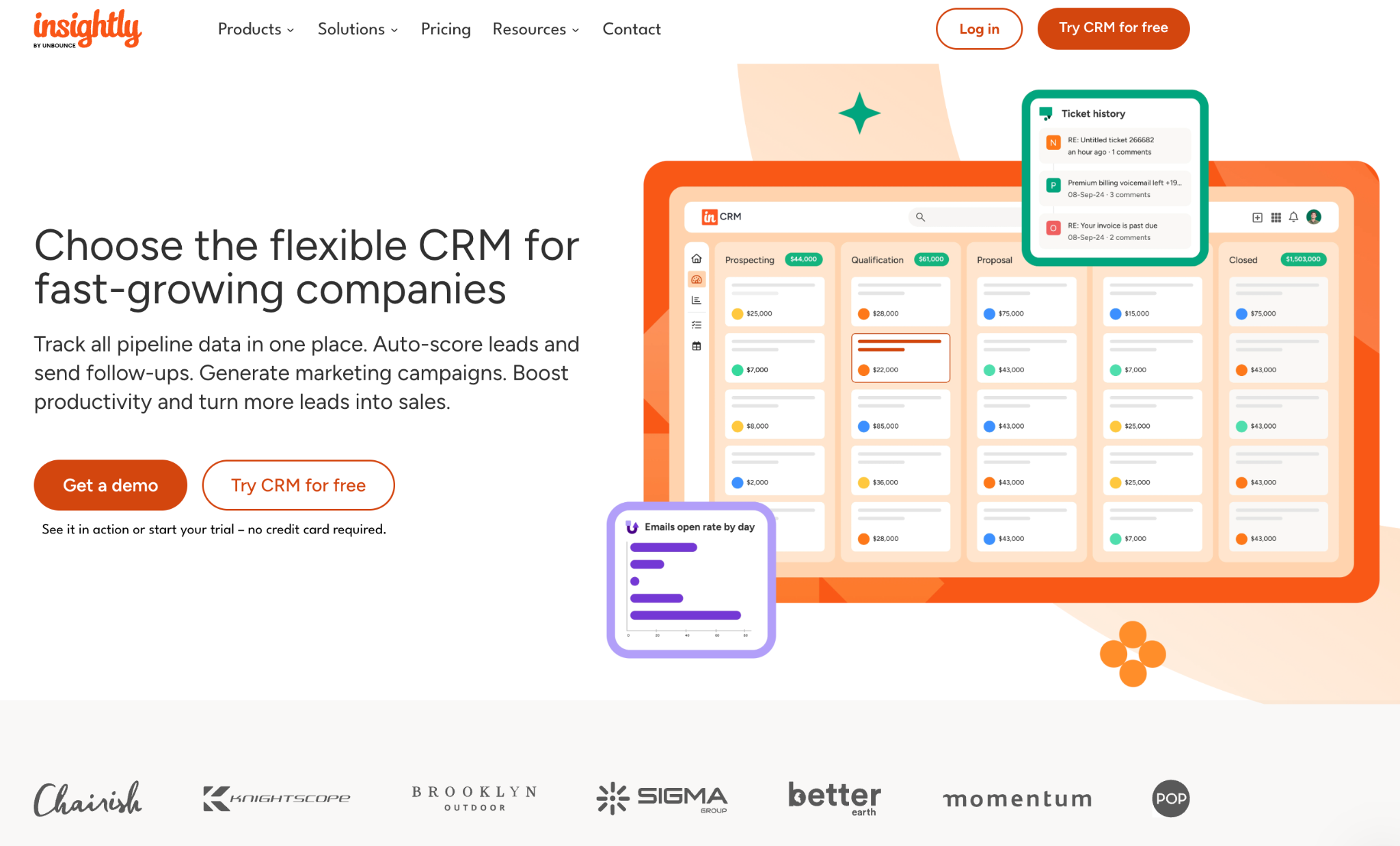
Its CRM plans include project management from the entry Plus tier. That makes it particularly interesting for professional services businesses where closing the opportunity starts the next workflow rather than ending it.
Think about a consultancy.
A prospect becomes a client, but the relationship then moves into onboarding, deliverables, deadlines and account management. Keeping sales and that first layer of delivery together reduces the abrupt handoff between a CRM record and a separate project database.
Capsule handles a similar workflow through its project management CRM, so Insightly and Capsule often make more sense for service businesses than a pure pipeline CRM.
Recent Insightly reviews describe the interface as clean and straightforward and highlight reminders and relationship tracking as useful parts of the system.
The pricing sits above several SMB-focused options.
Plus currently costs $29/user/month annually, Professional $49 and Enterprise $99. Workflow automation starts at Professional.
Best for: Consulting, professional services and other companies where won business quickly becomes client work.
Pricing: From $29/user/month annually.
Watch out for: Entry pricing is higher than Capsule, Pipedrive, Zoho and Freshsales, and more advanced automation requires Professional.
5. Pipedrive
Pipedrive is a much easier alternative to understand. It wants salespeople to work from the pipeline.

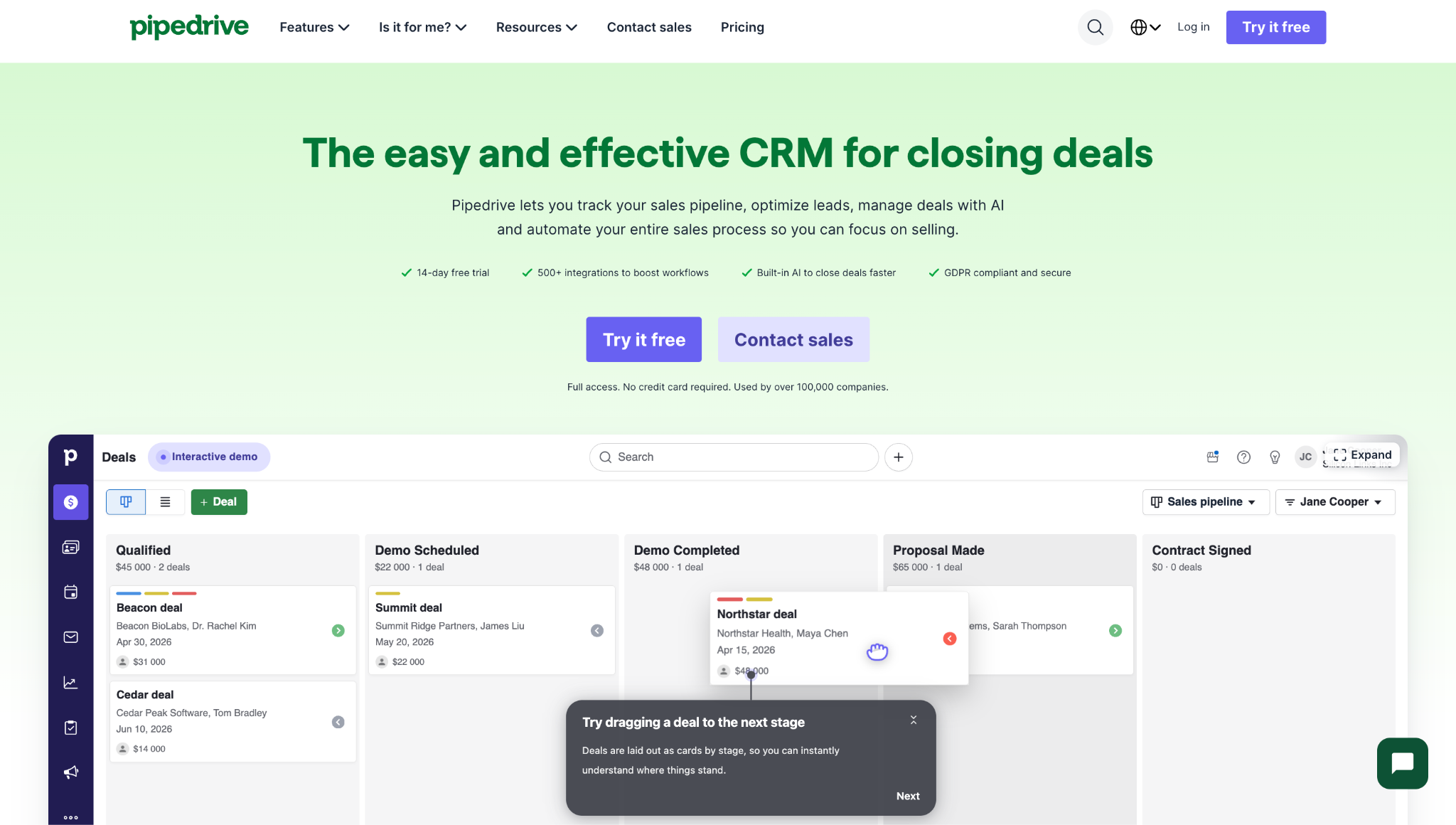
Deals sit visibly in stages, activities show what needs to happen next and reps can drag opportunities forward as conversations progress. Automation and reporting grow around that core workflow rather than hiding it behind broader business-management functionality.
For Sage CRM users who find themselves spending too much time navigating the system, that simplicity can be compelling.
G2 currently rates Pipedrive 4.3/5 from more than 3,000 reviews. Ease of use and the visual pipeline dominate positive feedback. Reviews also flag missing advanced functionality, integration issues and features reserved for more expensive plans.
Its current Lite plan starts at $14 per seat per month on annual billing and includes leads, deals, contacts, calendar and pipeline management. Pipedrive also advertises 500+ integrations.
That gives a business another version of the specialist-stack model: keep Sage for finance, Pipedrive for sales and connect other tools as required.
Best for: Sales-led teams that want reps spending more time on opportunities and less time administering CRM.
Pricing: Lite starts at $14/user/month annually, with Growth, Premium and Ultimate adding more automation and functionality.
Watch out for: Pipedrive is highly sales-centric. Businesses that want CRM to manage wider customer projects or several departments may need additional software.
6. Zoho CRM
Not every Sage CRM buyer wants to simplify all the way down.
Some want to retain custom processes, approval flows and more advanced automation but move to another platform.
Zoho CRM is well suited to that middle ground.

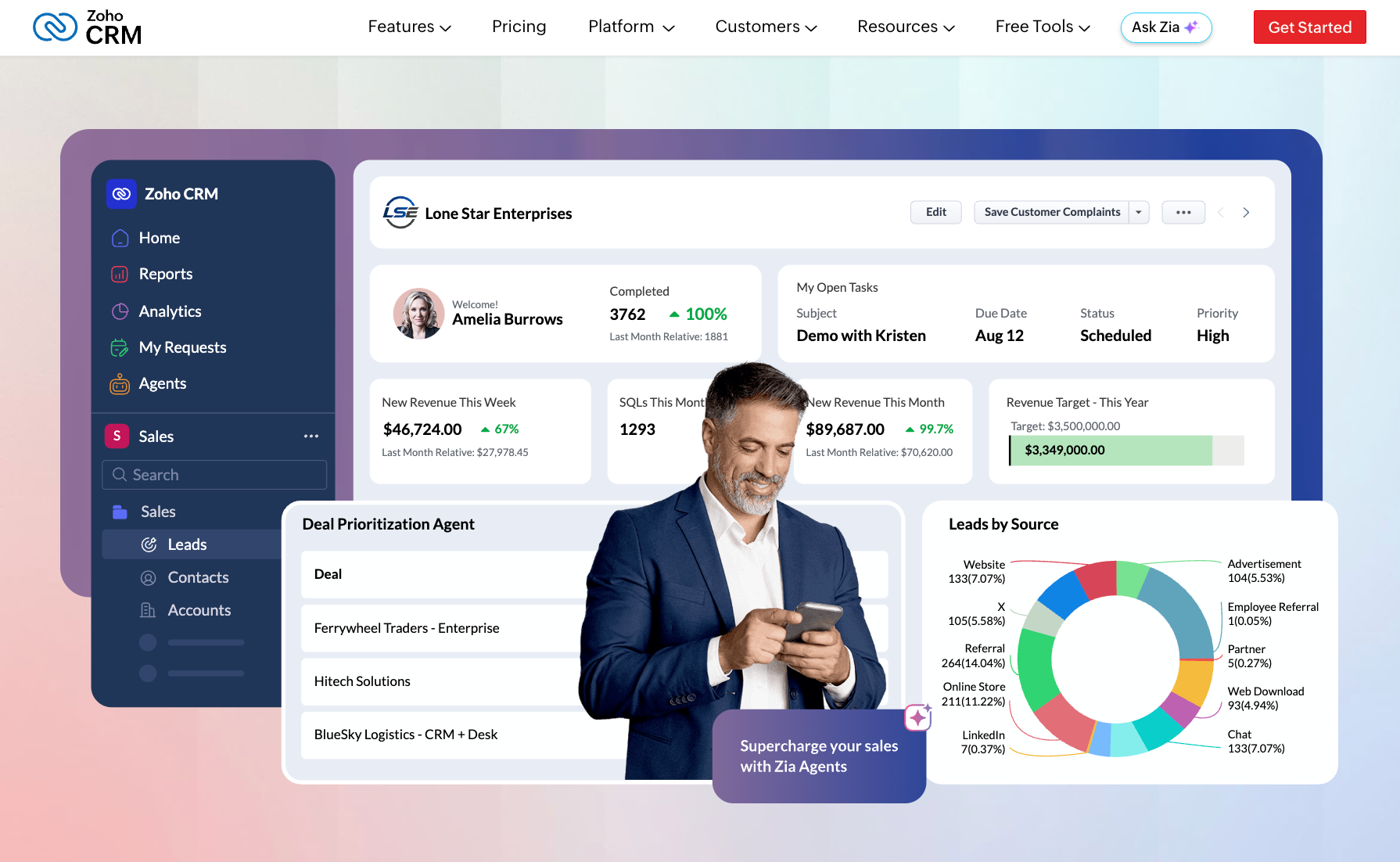
Its paid editions progressively add custom modules, workflows, cadences, process enforcement through Blueprint, inventory functionality and broader automation. Professional and higher tiers give administrators considerably more room to shape CRM around a company's process.
The pricing remains relatively accessible.
Standard starts at $14/user/month annually, Professional at $23, Enterprise at $40 and Ultimate at $52.
G2 rates Zoho CRM 4.1/5 from more than 2,900 reviews. Customization and its broad feature set are major attractions, while more complex configuration brings a steeper learning curve.
For a Sage CRM administrator, that trade-off may feel familiar. You're not escaping configuration. You're getting a different toolkit for it.
Best for: SMB and mid-market companies that still need custom workflows and processes.
Pricing: From $14/user/month annually for Standard.
Watch out for: Zoho can become much more involved than its entry price suggests once several modules and workflows are customized.
Do you need to migrate away from Sage Accounting too?
Usually, no. CRM and accounting solve different problems.
A CRM owns prospects, customers, opportunities, follow-ups and relationship history. Accounting software owns invoices, transactions and financial records.
If Sage Accounting works well, there isn't much logic in replacing it simply because Sage CRM no longer fits the sales team.
That's especially true for eligible Sage Business Cloud Accounting users in the UK. Capsule's integration keeps contacts synchronized and brings Sage invoice status into CRM without making salespeople work inside the accounting product.
The stack can stay deliberately boring:
- Capsule → sales and relationships
- Sage → accounting
- Transpond or another marketing platform → campaigns
- specialist software → whatever else your company actually needs
A simpler stack can also make future changes easier. You're replacing one component rather than untangling several departments from one platform.
Moving from Sage CRM to another platform
Before switching, decide what data deserves to move.
Most businesses want contacts, companies, open opportunities and enough historical context for reps to understand existing relationships. Old tasks, dead leads, outdated fields and years of low-value activity can make the new CRM messy on day one.
Cleaning before migration is usually easier than cleaning afterward.
Capsule's process for importing data from another CRM covers the practical side of moving records.
This is also a good point to question fields that exist simply because the old system allowed them.
The new CRM doesn't need to reproduce Sage CRM exactly – but It needs to support the sales process you use now.
If Sage still handles accounting well, keep it.
Then choose CRM around the people who actually use CRM every day.
For smaller companies, Capsule CRM offers a cleaner route: manage prospects, opportunities and customer relationships in one focused system and connect Sage Accounting where the integration is supported.