
HoneyBook makes a lot of sense when winning a client and delivering the work are part of the same compact process. A new enquiry can move through a proposal, agreement and payment without the business having to stitch several platforms together.
But the software a freelancer needs at the beginning isn't always the software a growing consultancy or agency needs later.
Sales may become more structured, and repeat business may matter more than individual bookings. At that point, the right HoneyBook alternative depends less on matching its feature list and more on deciding which part of the client relationship deserves a better tool.
What is HoneyBook?
HoneyBook is a client flow management platform built primarily for independent service businesses.

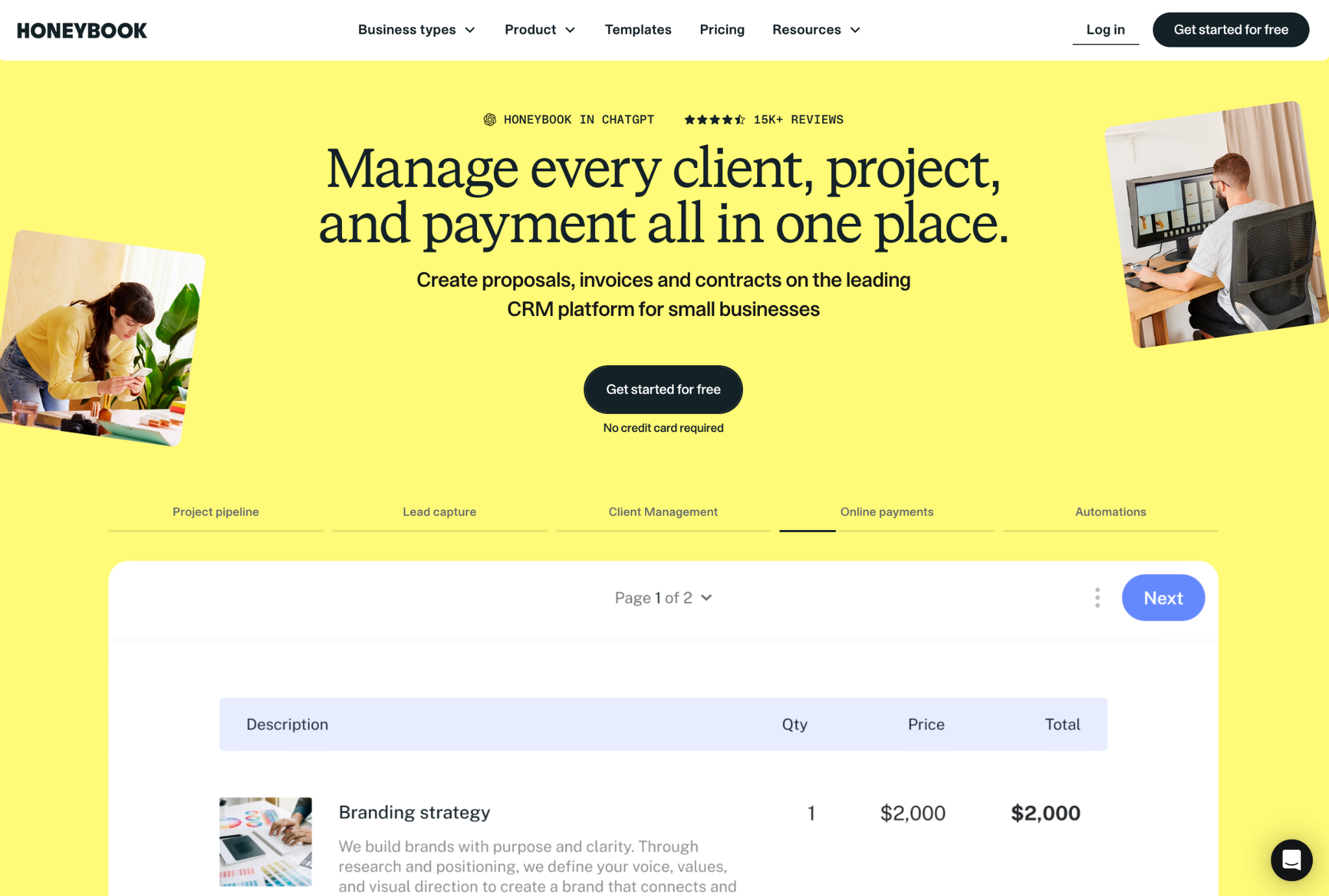
It brings several parts of the client journey into one system. Businesses can manage enquiries and client records, prepare proposals and contracts, schedule meetings, send invoices and collect payments.
That combination puts HoneyBook somewhere between CRM, booking software and client management software.
Its appeal is easy to understand. A freelancer doesn't necessarily want separate platforms for every step between a first enquiry and a paid project. Keeping those jobs together can reduce admin and give clients a more consistent experience.
HoneyBook becomes less like a conventional CRM once the sales process grows more complex, though. A company managing longer deal cycles, several decision-makers or repeat opportunities with the same account may need more depth before the booking stage.
The same applies after the sale. Once project delivery, team capacity or financial management becomes more demanding, another part of the software stack may need to take over.
What is HoneyBook best for?
HoneyBook is particularly well suited to independent professionals and smaller service businesses with a fairly clear path from enquiry to paid work.
That could include photographers, consultants, coaches, designers and other businesses where one person or a small team manages most of the customer journey.
It also works well when proposals, contracts and payments are closely connected to the booking process. Keeping them in one place can be much easier than moving the client between several specialist applications.
The fit starts to change when CRM itself becomes a bigger job:
- A consultancy generating repeat business may need to track opportunities long before a proposal exists.
- An agency with several salespeople may want clearer pipeline visibility.
- A larger service team may already use specialist accounting and project software, reducing the value of having those functions bundled with client management.
That is where the alternatives below start to look more interesting.
Best HoneyBook alternatives in 2026
1. Capsule CRM
Best for: Businesses that want stronger CRM and longer-term client relationship management.
HoneyBook is very good at moving a new enquiry toward a booked project. Capsule is a stronger fit when the relationship starts earlier and continues long after the first piece of work is finished.

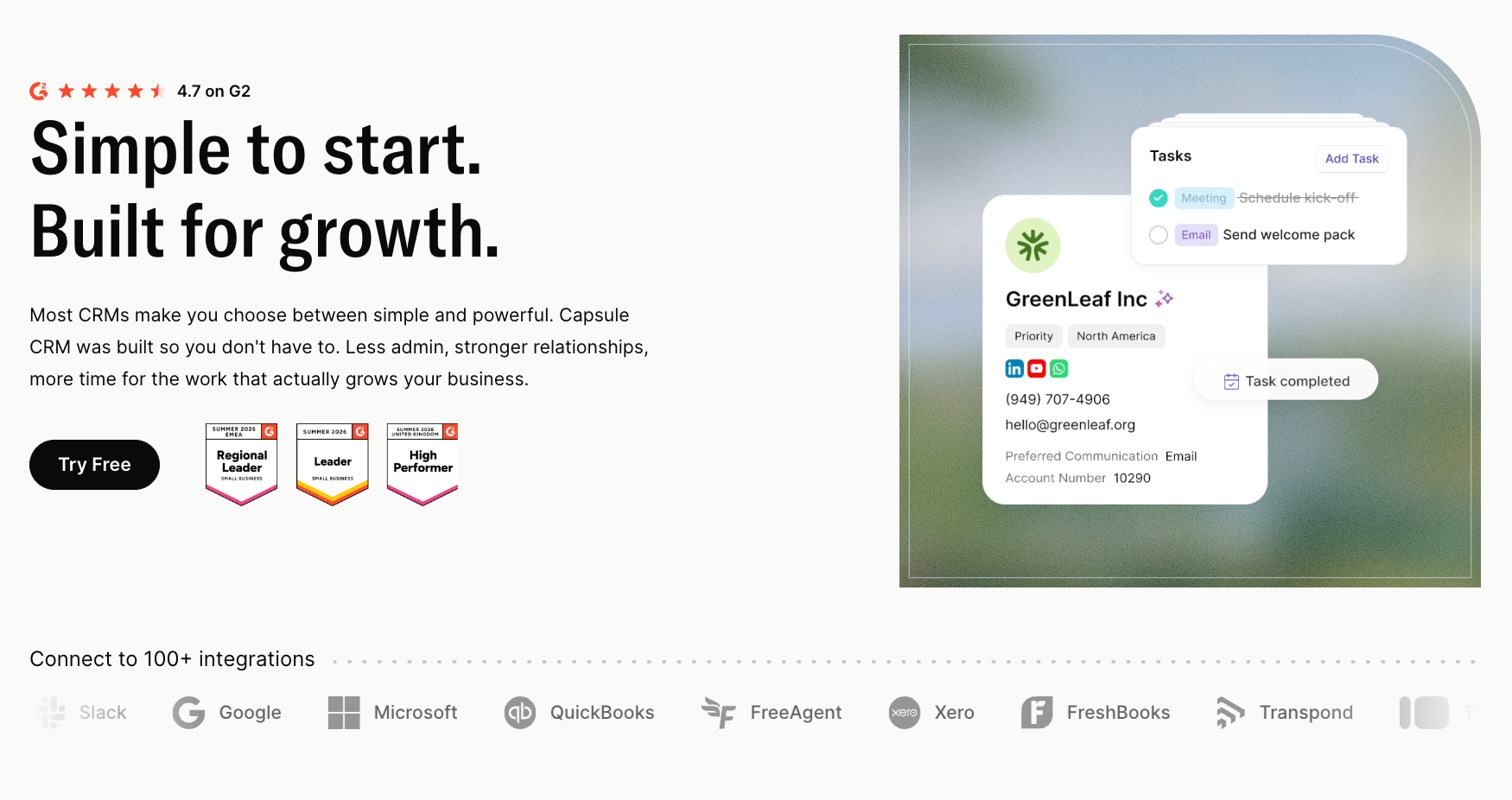
Think about a consultancy that gets most of its business through referrals. A prospect might have a discovery call, disappear for a few months and return when budget opens up. An agency may have several people involved in the same account or more than one opportunity with an existing customer.
Those relationships need more context than a single booking flow.
Capsule connects people, companies and opportunities, so sales history stays easy to follow as the relationship develops. A custom sales pipeline can match the way the team sells, from an early referral through to negotiation and close.
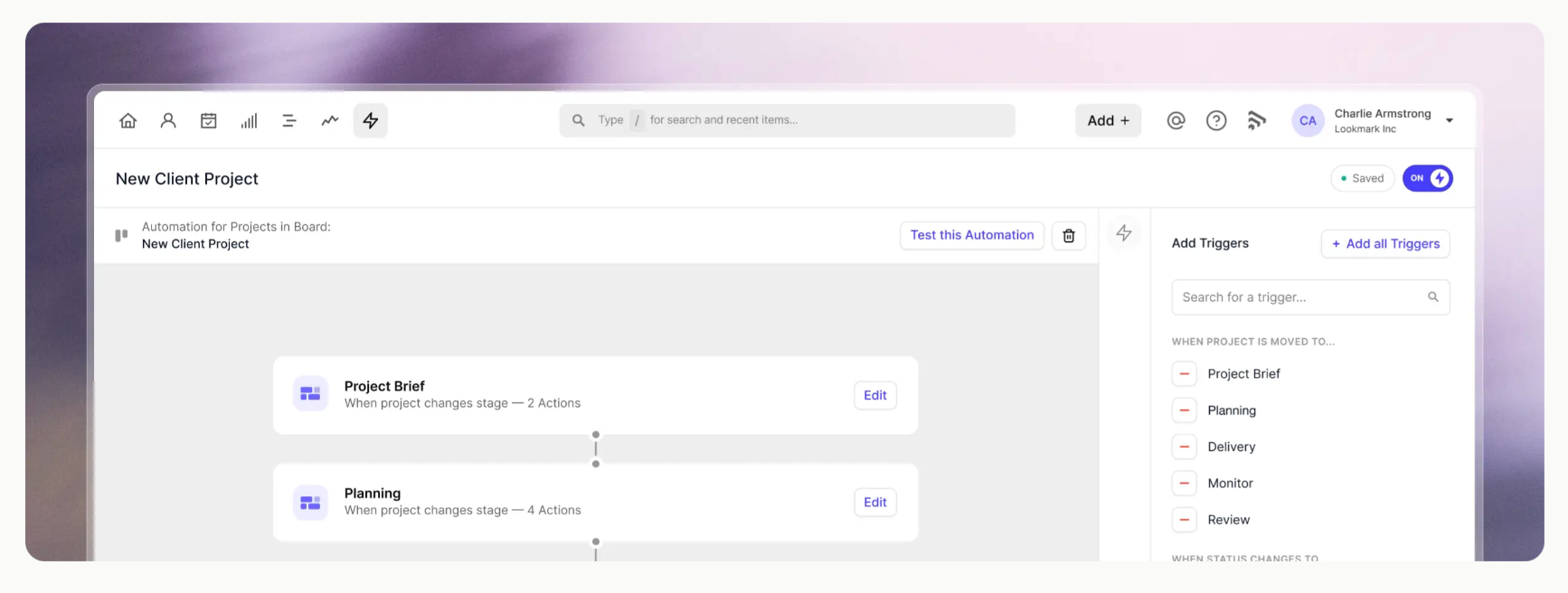
Follow-up doesn't need to depend on someone remembering to check an old email thread. Teams can use workflow automation for recurring sales actions, while tasks keep the next step visible.

Won business can remain connected to CRM, too. Projects can handle lighter client delivery when the work still depends heavily on communication and relationship history.
Capsule also works well for businesses that already have software they want to keep. Accounting can remain in Xero or QuickBooks, while specialist marketing or delivery tools connect around CRM.
The free plan supports up to two users. Starter costs $18 per user per month when billed annually.
2. Dubsado
Best for: Service businesses that like the HoneyBook model but want more control over client workflows.
Dubsado is probably the closest alternative on this list to the way HoneyBook works.

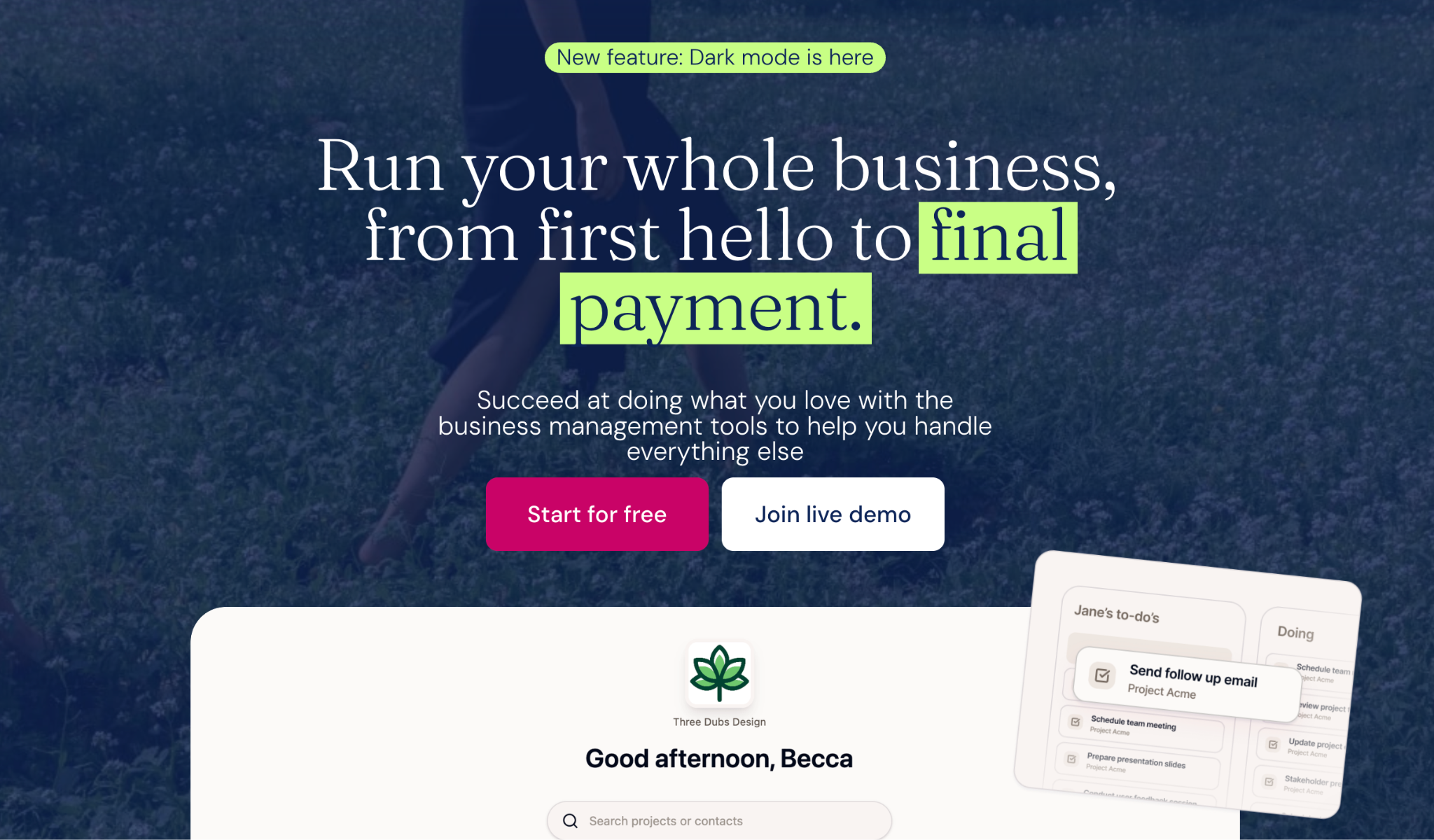
Clients can move through forms, agreements, invoices and a portal while automations handle parts of the onboarding process. The biggest difference is how much control businesses get over those workflows.
A wedding photographer, for example, may not want commercial clients going through the same process as couples booking a wedding. A coach may have one onboarding sequence for group programs and another for private clients.
Dubsado gives businesses more room to build those differences into the system. Workflows can trigger emails, create tasks and move clients through a more customized process. The Premier plan also adds scheduling and automated Flows.
More flexibility does mean more setup, though. HoneyBook can feel quicker to start with because more of the experience is already shaped for the user. Dubsado is better suited to businesses willing to spend more time configuring the workflow in exchange for greater control later.
Starter costs $35 per month, while Premier costs $55 monthly. Annual plans reduce the effective monthly cost.
3. Bonsai
Best for: Freelancers who want client management to extend further into project delivery.

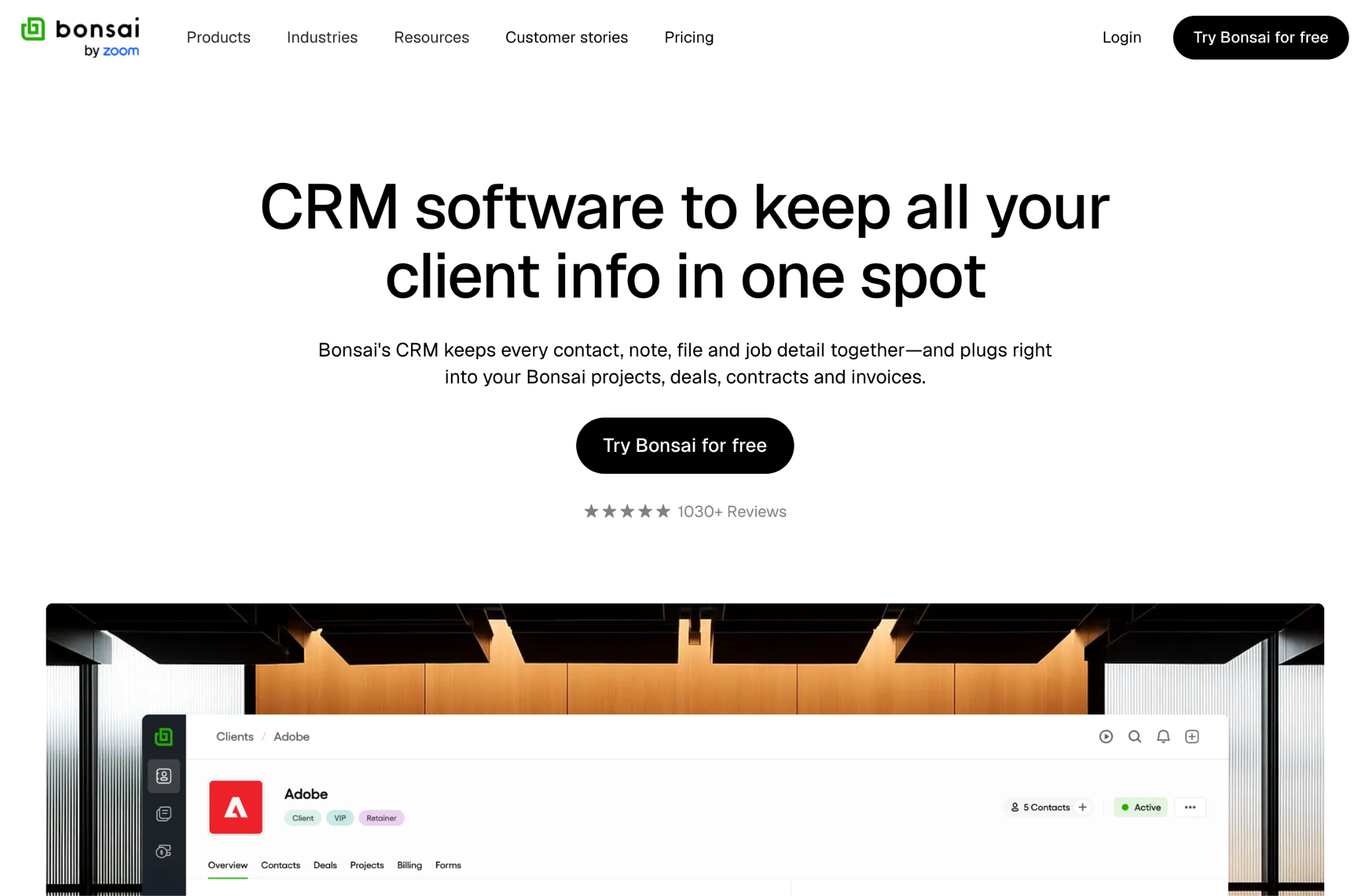
Bonsai shares a lot of HoneyBook's audience, but it gives more attention to the work that happens after a client books. Freelancers can manage client records alongside projects, time tracking, contracts and billing.
For example, a designer might win a project, create the agreement and then spend the next month managing tasks and tracking hours. Keeping more of that process in Bonsai can reduce the need for another project platform.
The entry-level Basic plan already includes CRM and project management. Essentials adds proposals, contracts, invoicing and other client-management features.
Annual pricing starts at $9 per user per month for Basic, with Essentials at $19.
Bonsai deserves a closer look when HoneyBook still works well at the booking stage but the client work feels disconnected afterwards.
4. Pipedrive
Best for: Teams that have outgrown a simple enquiry pipeline and need stronger sales management.

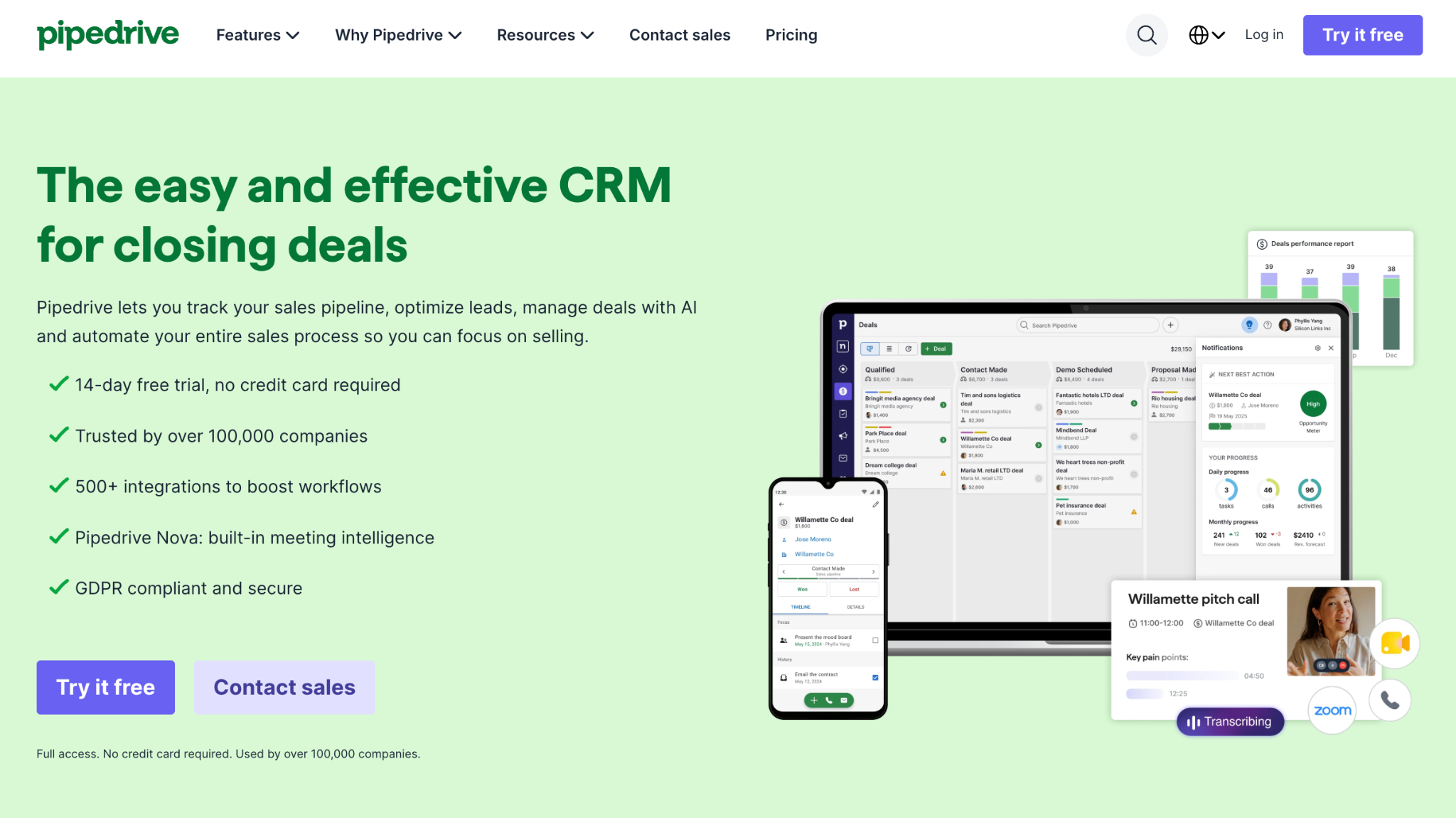
Pipedrive makes sense when the biggest change in the business has happened before the client becomes a client.
A solo business owner can often manage new enquiries through a fairly simple set of stages. Once several people are selling, there are more deals to watch, more follow-ups to coordinate and more opportunities that can quietly sit untouched.
Pipedrive is built around that problem. Its visual pipeline makes open opportunities easy to scan, while activities keep salespeople focused on what should happen next. Managers get a clearer picture of where deals are slowing down and which opportunities need attention.
Compared with HoneyBook, Pipedrive gives far more space to sales and less to client onboarding or project delivery. Contracts, invoicing and ongoing client work may therefore need separate tools.
For a growing sales team, that separation can be preferable to asking one system to cover the whole client journey.
Annual pricing starts at $14 per seat per month for Lite.
Our Capsule vs Pipedrive comparison looks at how Pipedrive's deal-first model differs from relationship-led CRM. The Pipedrive pricing guide covers the paid tiers in more detail.
5. HubSpot
Best for: Growing companies that want customer data shared across several departments.

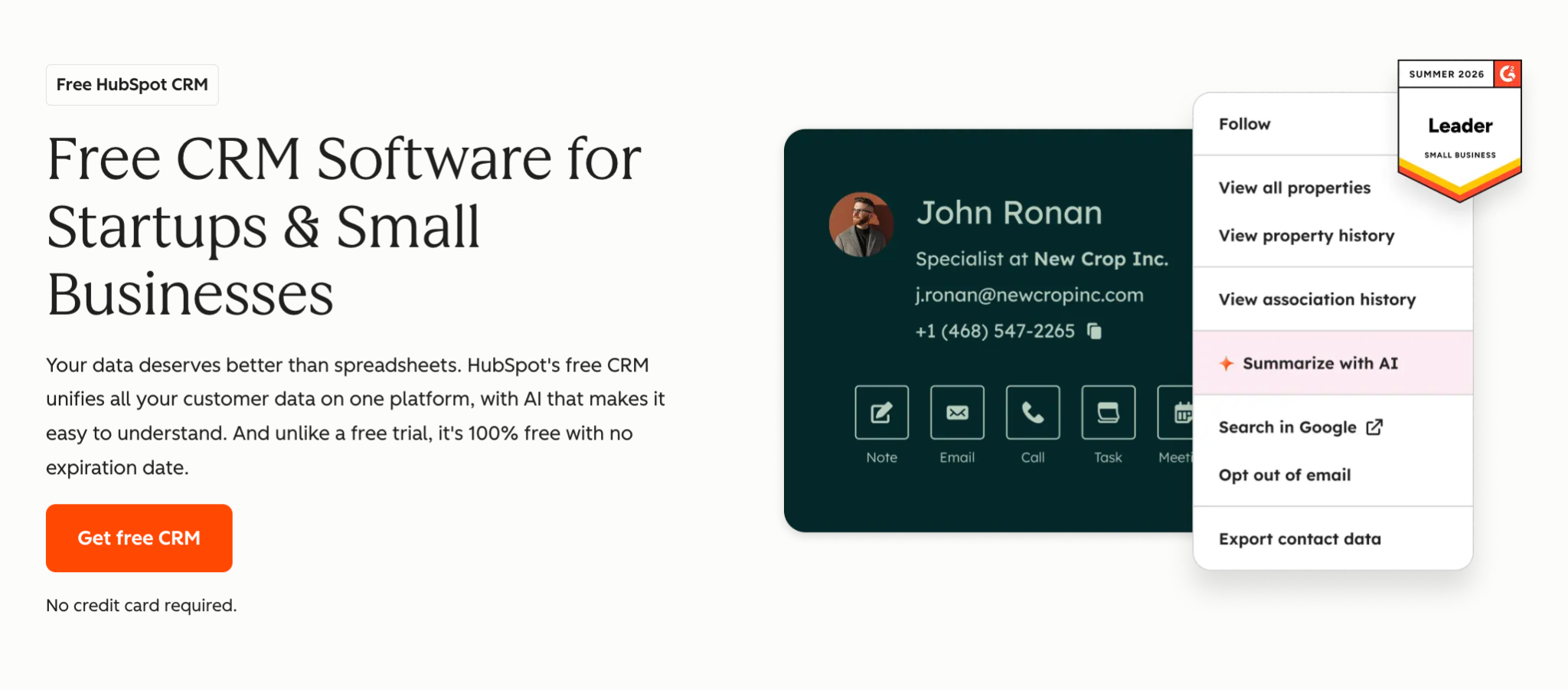
HoneyBook is largely built around independent service businesses and smaller teams. HubSpot goes much further into company-wide customer management.
HubSpot CRM connects with a wider collection of sales, marketing and service products, allowing customer information to move across different teams. Imagine an agency that now has a dedicated marketer bringing in leads, salespeople managing opportunities and an account team supporting customers after the deal. HoneyBook starts to look less natural in that environment because the customer journey has become a shared company process.
HubSpot can support that kind of growth, but it also brings more software and a higher cost. A business can start with free CRM tools, while Sales Hub Professional currently starts at $90 per seat per month on annual billing, plus onboarding.
Moving into the wider HubSpot ecosystem makes more sense when several departments will use it. If only the sales team needs a better CRM, a smaller platform may be easier to run.
6. FreshBooks
Best for: Businesses where invoicing and accounting have become the main source of admin.
FreshBooks isn't the closest HoneyBook alternative in terms of features, but it can be a better replacement when the reason for switching has little to do with CRM.


A consultant may already have enough leads and a simple sales process, yet spend far too much time dealing with invoices, expenses and financial admin. A more powerful pipeline won't solve that problem.
FreshBooks puts the financial side first. Tools are built around invoicing, expenses and accounting, with project features supporting the work around them. It can suit independent professionals whose priority has shifted from winning clients to managing the money attached to the work.
FreshBooks isn’t a dedicated sales CRM, so businesses with an active pipeline may prefer to separate the two jobs.
One option is to run CRM in Capsule while accounting stays in specialist software. Capsule connects with both Xero and QuickBooks. FreshBooks' regular US pricing currently starts at $23 per month for Lite, although promotional pricing may lower the initial cost.
HoneyBook alternatives compared
There isn't one direct replacement that wins every part of the HoneyBook workflow. The better choice depends on which part of the business now needs more attention.
HoneyBook still makes sense when the business wants most of its enquiry-to-payment workflow in one place. The alternatives become stronger when one part of that workflow deserves more depth than HoneyBook provides.
Choose software around the relationship, not the old workflow
Moving away from HoneyBook doesn't mean recreating every feature somewhere else. The better move is to look at how the business works now.
If sales has become more complex, give CRM more space. If client onboarding still drives the workflow, a platform such as Dubsado may feel familiar while offering more control. Agencies struggling with delivery may need an operational platform instead of another clientflow tool.
For businesses where the customer relationship has become the part worth managing more closely, Capsule CRM gives contacts, companies and opportunities a clear home while letting accounting, marketing and delivery stay in the tools that already work.
Try Capsule for free and see how a more focused CRM fits your client relationships.
Frequently Asked Questions
HoneyBook includes CRM functionality, but it does more than a traditional CRM. It combines client records and pipeline-style management with proposals, contracts, scheduling, invoicing and payments.
It depends on why you're leaving HoneyBook. Capsule is a strong choice when CRM and long-term client relationships are the priority. Dubsado stays closer to HoneyBook's clientflow model, while Bonsai gives freelancers more project functionality.
Yes. Capsule, Pipedrive and HubSpot are all more CRM-focused alternatives.
Capsule works particularly well for smaller service businesses that need to manage contacts, companies and opportunities over a longer customer relationship. HoneyBook covers more of the booking, contract and payment process inside the same platform.