
Contractor Foreman connects the journey from a new lead to an estimate, active project, schedule and final invoice. Contractors that want sales and delivery in the same system can get a lot from that setup.
Switching doesn't always mean finding another platform with the same feature list, though.
Some businesses need stronger project controls or better field management. Smaller teams can have a different problem altogether: leads aren't followed up, estimates go quiet and nobody has a reliable view of the sales pipeline.
The alternatives below solve different parts of that workflow.
Which part of Contractor Foreman do you need to replace?
Contractor Foreman's workflow begins before a job becomes a project.

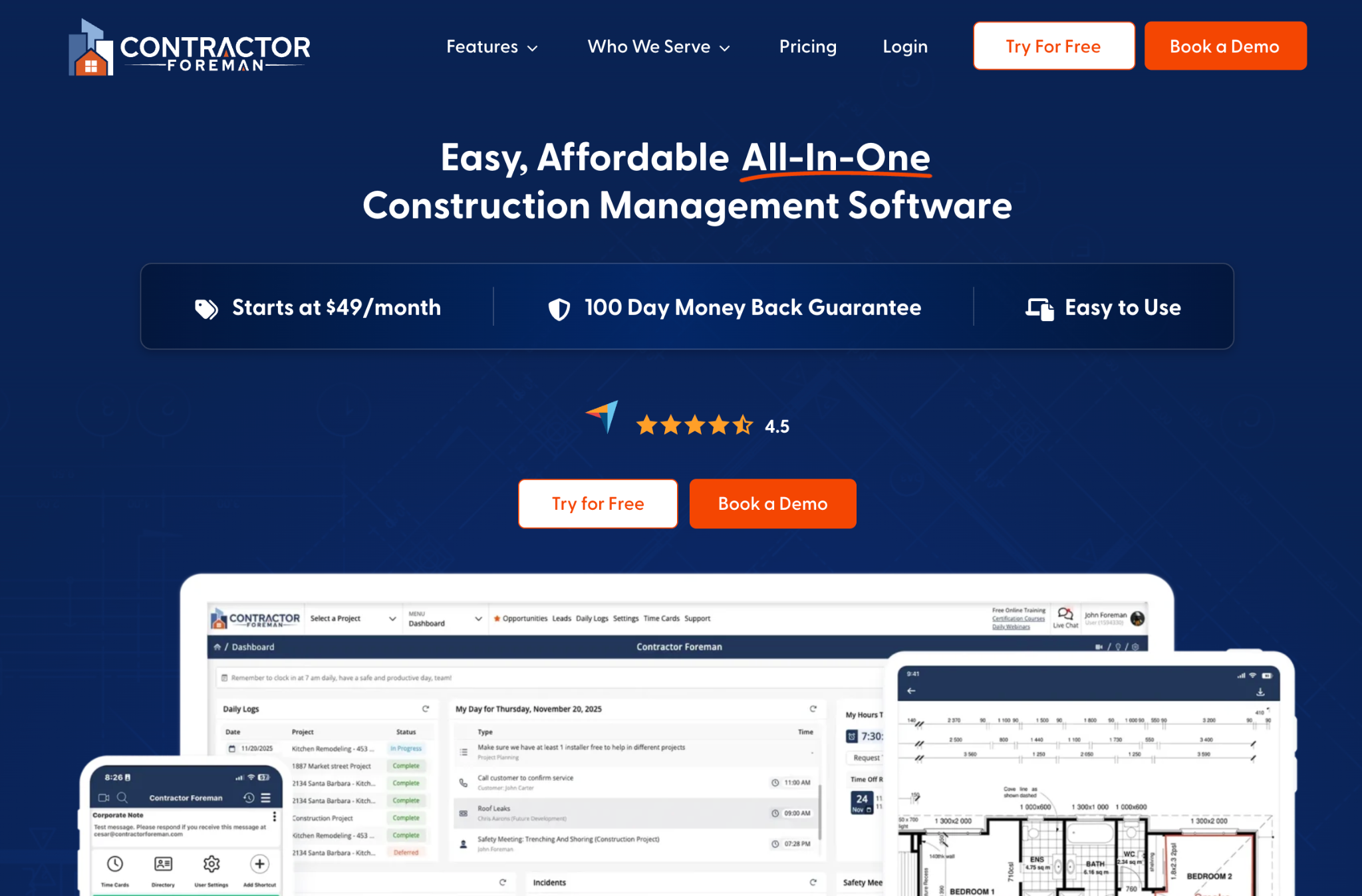
A lead enters the CRM, moves into an opportunity, and can be linked to an estimate. Once the estimate is approved, the work can move into project delivery, scheduling, and billing.
Businesses usually look elsewhere for one of two reasons:
- Some still want estimating, scheduling, field updates, job costing and project controls connected, but prefer a different construction platform.
- Others have a commercial problem. Leads or quotes aren't followed up, and sales activity is difficult to see before the project begins.
Replacing one construction suite with another won't necessarily fix that second problem. A dedicated construction CRM gives the sales side of the business its own structure while project software stays focused on delivery.
The split becomes easier as roles become more specialized. Sales teams can manage prospects and bids in CRM, while operations work in construction software and finance remains in the accounting system already used by the business.
Best alternatives to Contractor Foreman
1. Capsule CRM: best for contractors that want sales separated from project delivery
Best for: Construction businesses that need stronger lead, bid, and relationship management while keeping estimating and field operations in specialist tools.

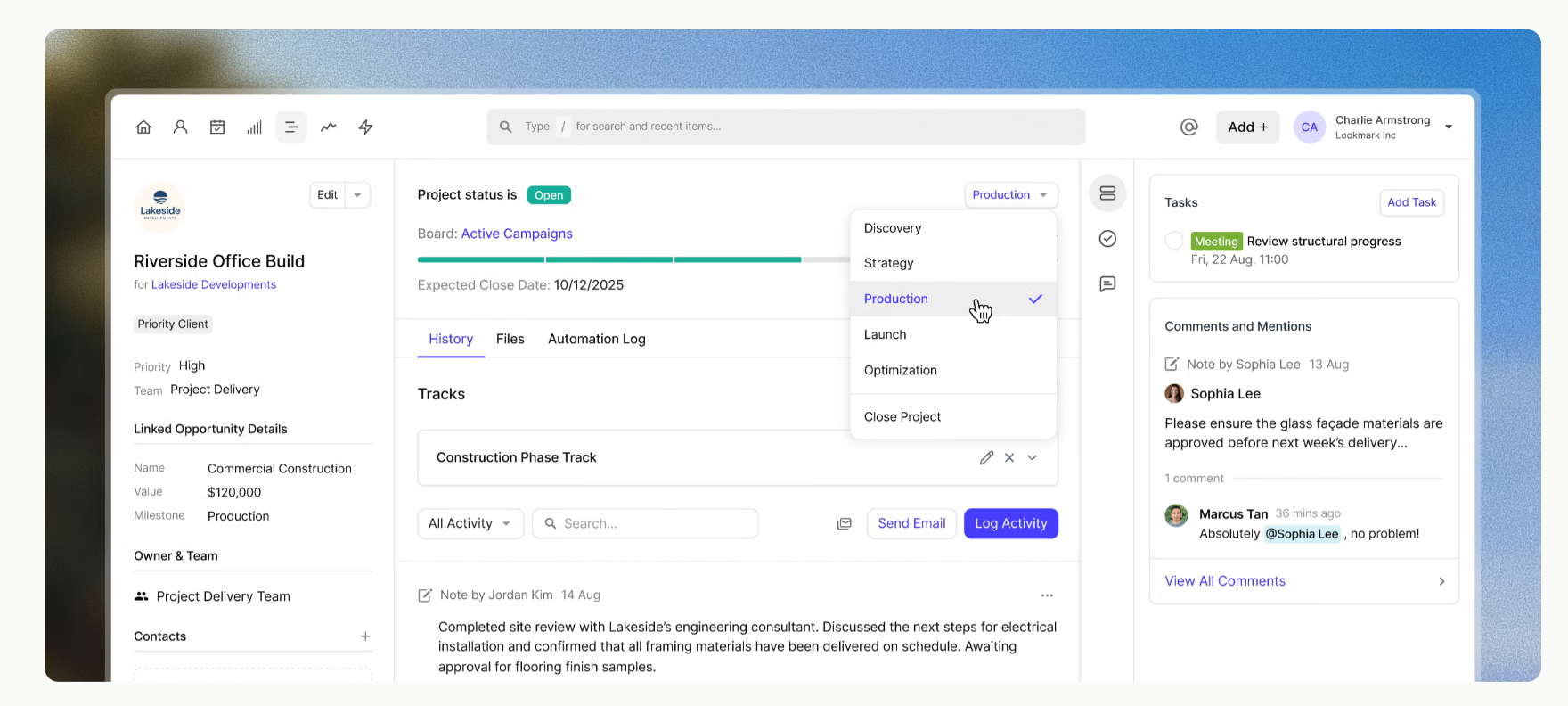
Capsule solves a different problem from Contractor Foreman.
Contractor Foreman connects CRM directly with estimating and operational delivery. Capsule keeps CRM focused on customers, opportunities, communication, and follow-up.
A contractor can use a sales pipeline to track work from initial inquiry through qualification, site visit, estimate sent, negotiation, and final outcome. The team can see which jobs may be coming in before they become active projects.
This setup works especially well when estimating already happens elsewhere.
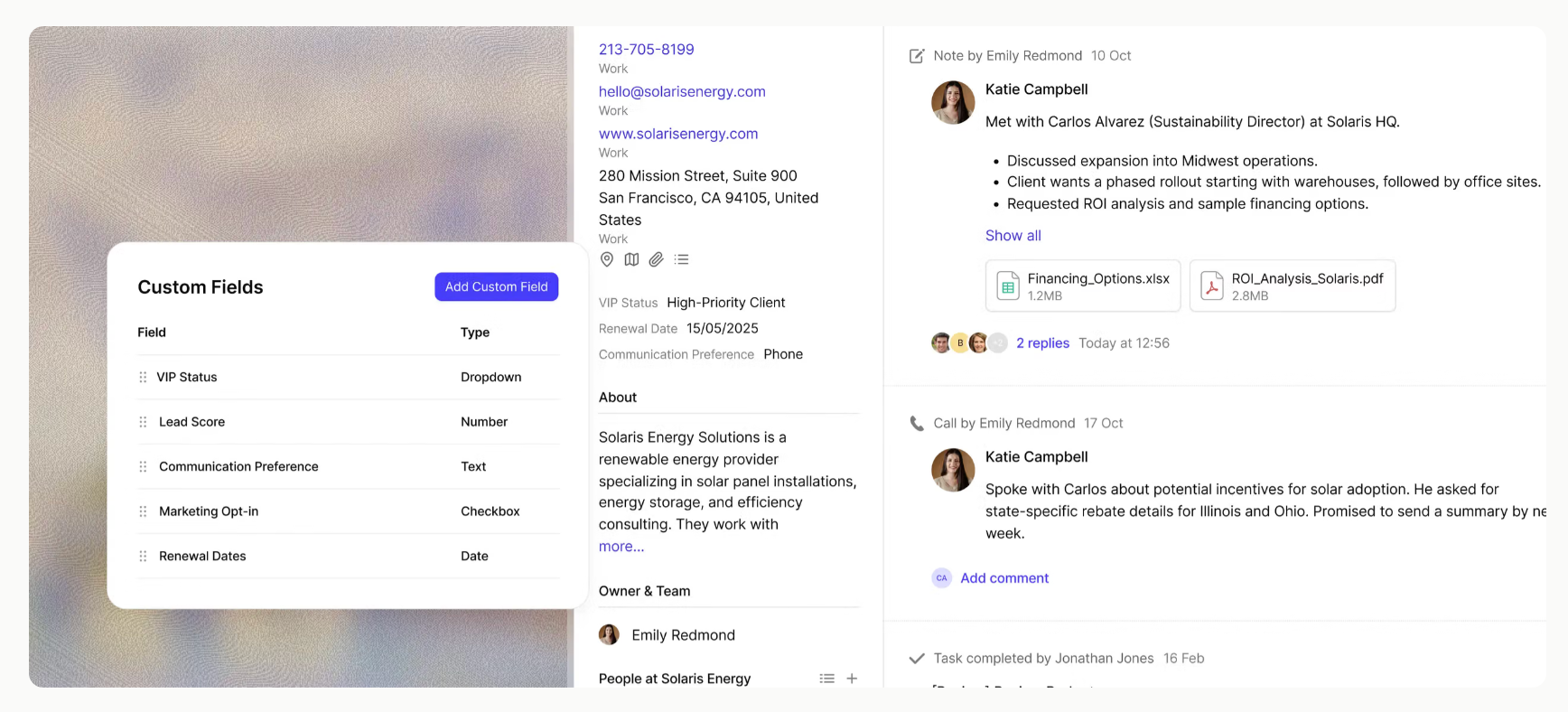
CRM can hold the opportunity value, customer details, deadline, and sales history. Workflow automation can create follow-up tasks as an opportunity moves through the pipeline, while custom fields keep trade, project type or expected start date attached to the record.
Once a job is won, lighter post-sale work can continue in Projects. More operationally demanding jobs can move into dedicated construction software.
Capsule doesn't replace Contractor Foreman's estimating, takeoff, detailed scheduling or job-costing workflows. It fits businesses that want CRM to stop where specialist construction operations begin.
2. JobTread: best for contractors that still want one connected construction system
Best for: Contractors replacing Contractor Foreman but keeping CRM, estimating, project management, and financial workflows together.

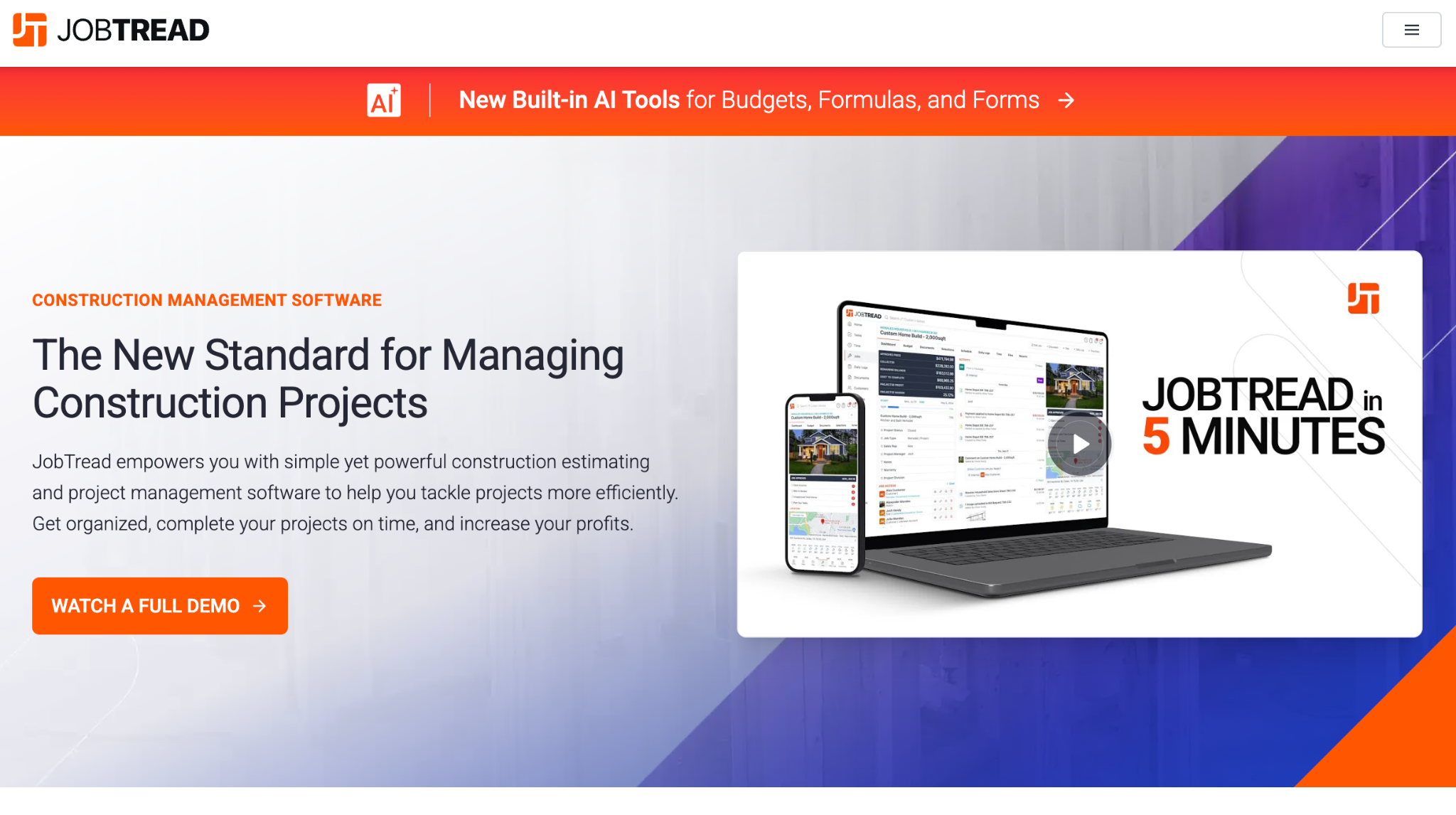
JobTread is a much closer feature-for-feature alternative.
Its platform combines construction CRM and lead management with estimating, takeoff, contracts, bid requests, and e-signatures. Project workflows extend into scheduling, logs, and subcontractor management, while financial tools cover areas such as budgeting, job costing, and invoicing.
Moving from Contractor Foreman to JobTread doesn't require changing the overall software philosophy. Sales can feed estimating, and approved work can move directly into delivery.
That can reduce duplicate entry when the same team handles preconstruction and project operations. The trade-off is scope. A company trying to simplify down to CRM is still replacing one broad construction system with another.
Contractors should start with the workflow they use most often. A remodeler may focus more on estimates and change orders. A specialty contractor, on the other hand, may prioritize job costing or subcontractor coordination.
If sales itself is becoming harder to manage, separate that requirement first. A clear lead management process should start before the project exists.
3. Buildertrend: best for residential builders and remodelers
Best for: Residential construction businesses that want sales, client management and project delivery in the same environment.

Buildertrend sits in the same broad category as Contractor Foreman, with a strong focus on residential construction.
Its platform connects sales tools with estimating, schedules, daily logs, change orders and financial workflows. Home builders and remodelers can keep customer information connected from the early sales stage through active construction.
That can suit businesses with long customer journeys.
A custom home builder may spend months progressing a client before work starts, then manage a long period of approvals, schedule changes and financial activity after the contract is signed.
Smaller contractors may not need that depth.
A compact team sharing responsibility across sales, estimating, and project management can end up spending too much time maintaining software breadth. Our guide to construction CRM requirements by company size can help separate the features a team will use from the ones that only add administration.
Buildertrend fits businesses that want one construction-specific environment. Capsule is better suited to companies that want sales CRM to have its own lane.
4. Procore: best for complex commercial construction
Best for: Larger contractors managing complex project delivery, financials and field operations.

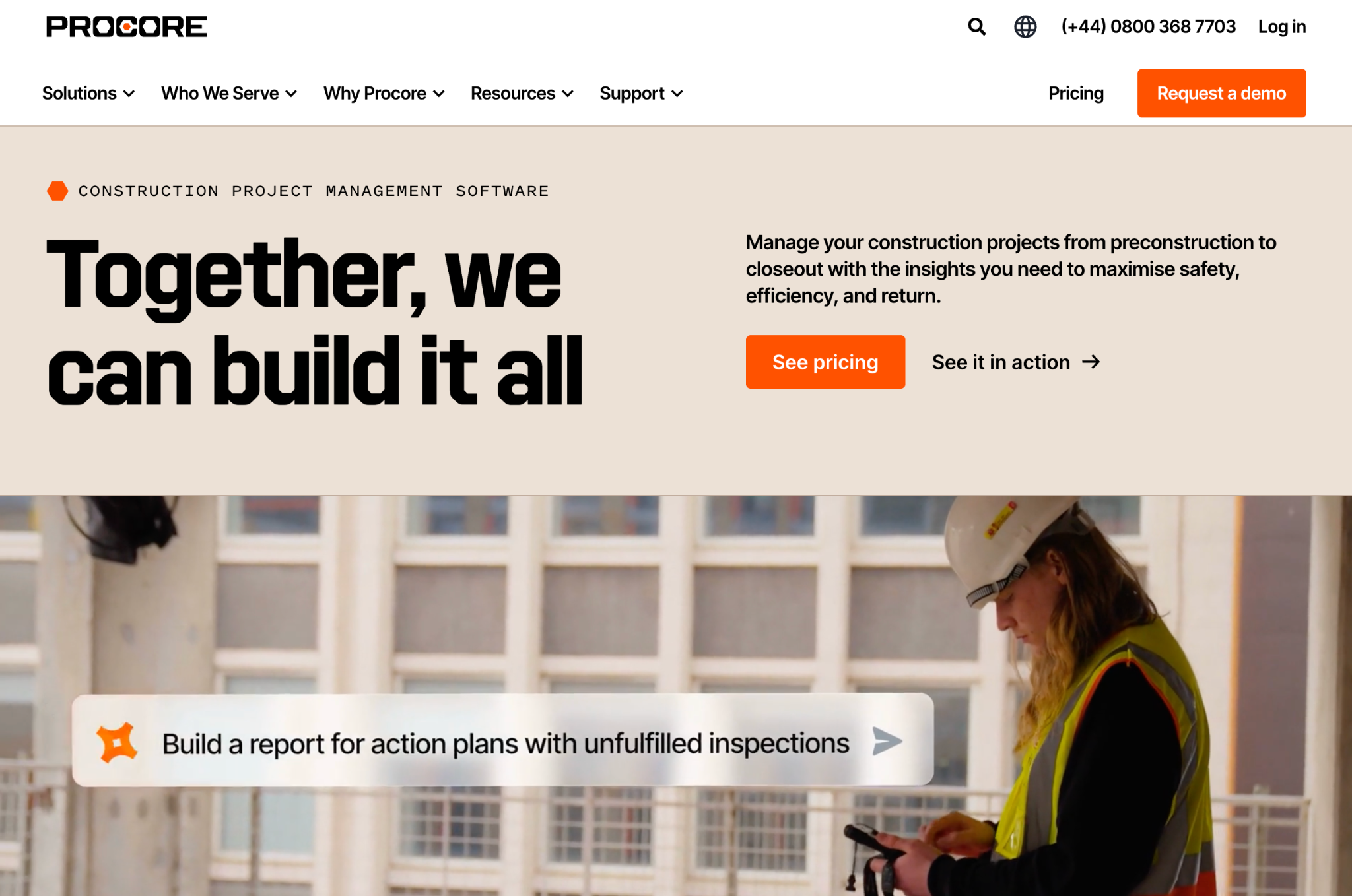
Procore moves further into construction operations than Contractor Foreman.
The platform brings project execution, cost management and resource planning into one place, alongside the broader workflows construction teams rely on every day. Its financial tools connect budgets and job data with what’s happening across each project.
That level of depth is aimed at companies managing substantial operational complexity.
A contractor looking for stronger portfolio oversight or tighter field-to-office coordination has a different problem from a small business missing quote follow-ups.
Weak construction cost control needs better visibility into budgets, scope changes, and delivery. CRM belongs elsewhere in that process.
Procore is most relevant when project risk, scale, and financial control are driving the software decision.
5. Fieldwire: best when the bottleneck is on the jobsite
Best for: Contractors that need stronger field coordination more than broader business management.

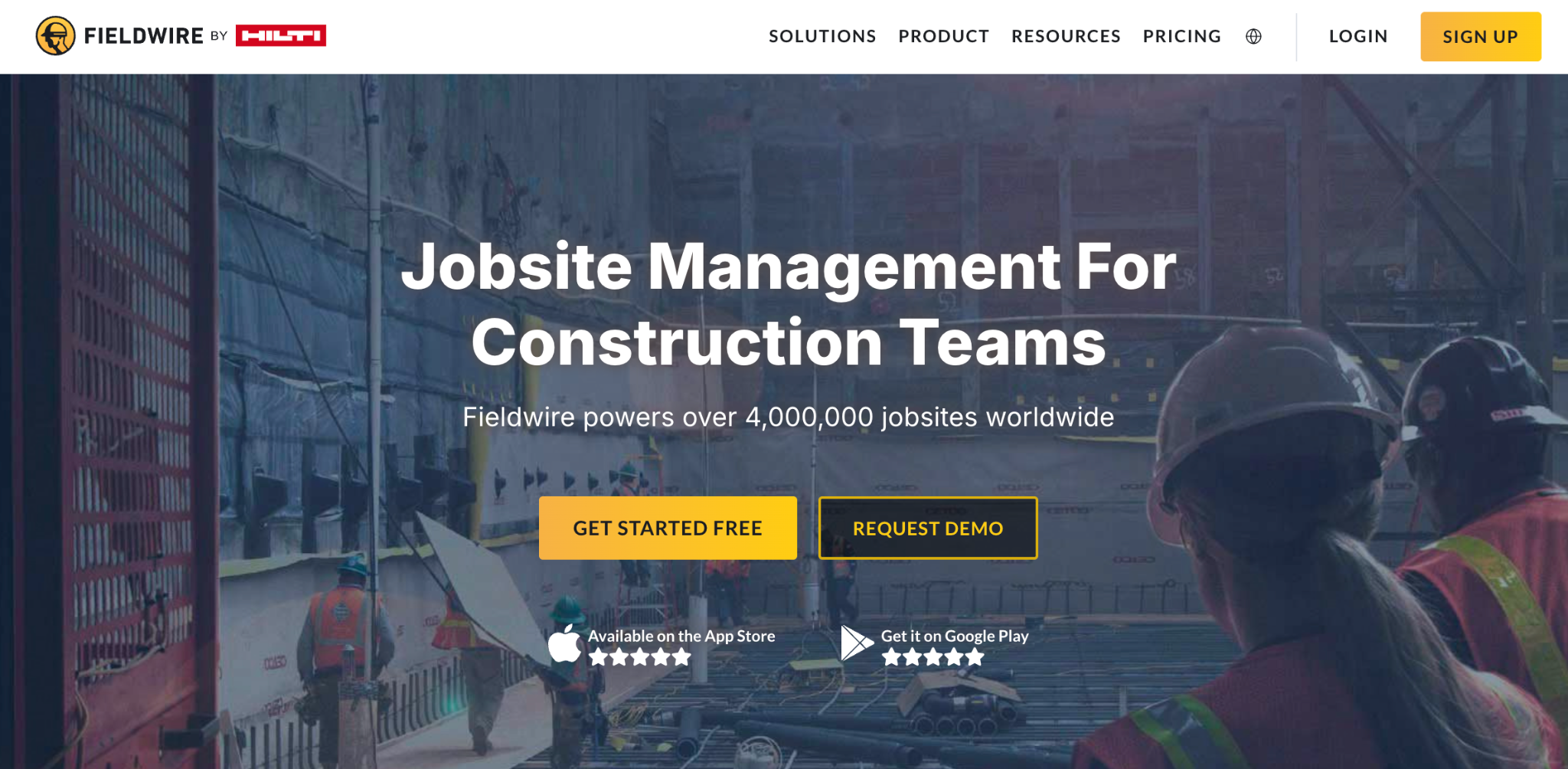
Fieldwire narrows the focus compared with Contractor Foreman.
It puts field execution at the center, with tools for plans, tasks, inspections, forms, punch lists and communication between office and jobsite teams. It’s a strong fit for teams looking to improve day-to-day site coordination beyond Contractor Foreman.
A general contractor may already have accounting and CRM software that works well. Replacing both systems just to improve field execution creates unnecessary disruption.
A specialist stack can be cleaner. CRM manages sales and customer relationships, while Fieldwire takes over site execution, and the accounting system stays responsible for finance.
Capsule can cover the commercial side through contact management, pipelines and follow-up. Companies running service crews can use the same model with a CRM for field services alongside specialist scheduling or dispatch software.
Won work should move cleanly into the delivery phase, with each system supporting a distinct part of the workflow.
6. Simpro: best for trade contractors running service and project work
Best for: Electrical, plumbing, HVAC and other trade businesses combining field service with larger projects.

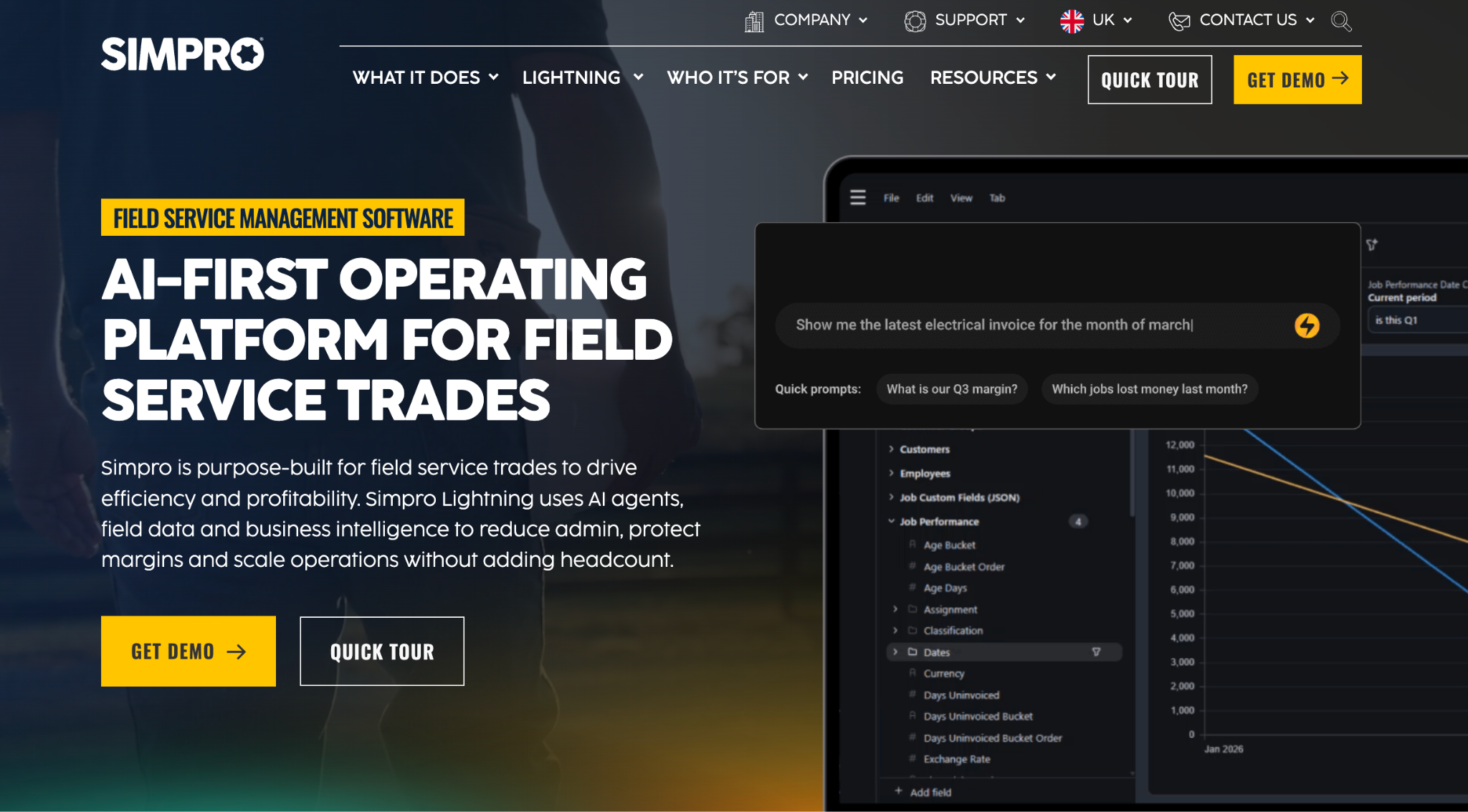
Simpro is particularly relevant when a contractor handles both planned project work and ongoing service calls.
CRM is only one part of the platform. It also covers estimating, scheduling, dispatch, work orders, inventory, invoicing and reporting, so teams can follow a job from the first enquiry through to the work itself. That’s handy for trade businesses that mix project work with ongoing service. HVAC teams may be planning installations one day and dealing with callouts or maintenance visits the next.
Contractor Foreman covers broad construction needs, while Simpro leans further into field-service operations.
A business centered on standalone construction projects may not use much of that service depth. Companies running technicians and repeat service work have a stronger reason to consider it.
7. Projul: best for contractors that want CRM tightly connected to estimating
Best for: Contractors that want lead management, estimating, scheduling and job costing connected in one workflow.

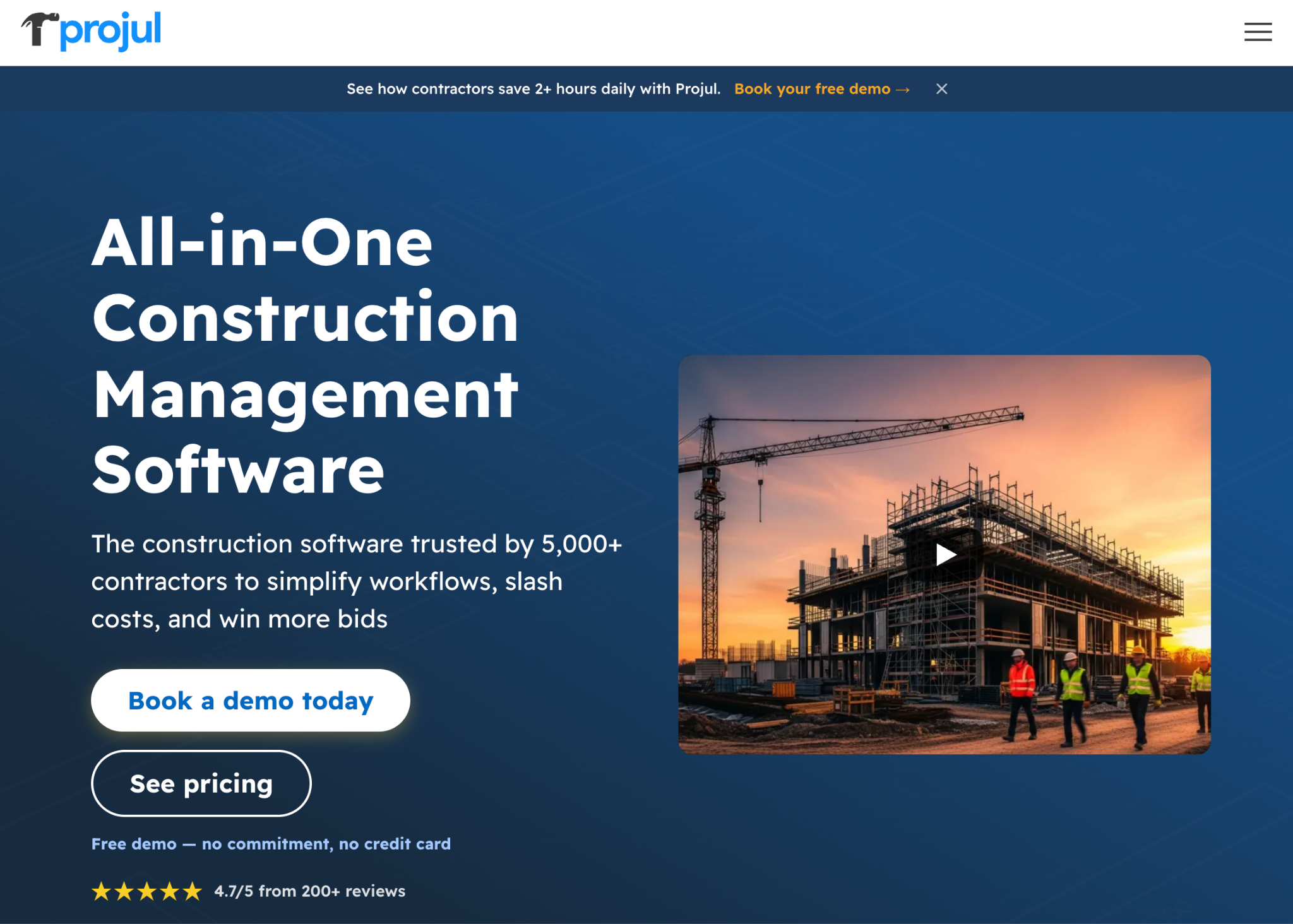
Projul takes almost the opposite position from Capsule.
Its CRM feeds directly into the construction process. Leads can move into estimates, approved work can become projects, and customer information stays connected through scheduling, invoicing, and job costing.
The broader platform includes CRM, estimating, scheduling, time tracking, and project management. Projul belongs on this list because CRM is only the start of its workflow. The product competes with Contractor Foreman across sales and construction delivery instead of stopping at customer management.
The choice between Projul and Capsule comes down to where you want the system boundary.
Projul keeps sales and delivery inside the same product. Capsule lets specialist construction software take over once CRM has done its job.
A small team sharing sales and project responsibilities may prefer one connected workflow. Businesses with dedicated sales staff can have more reason to separate the systems.
The real choice: one workflow or a specialist stack?
Contractor Foreman is built around continuity from sales into delivery.
An opportunity can become an estimate, approved work can move into a project and project data can continue into schedules and billing.
Replacing that setup with specialist tools introduces more boundaries between systems, but each part of the business gets software built more closely around its own work.
A small contractor may prefer fewer systems because the same people handle sales and delivery. JobTread, Buildertrend, Contractor Foreman or Projul all support that connected model.
As roles become more specialized, separating the stack becomes easier to justify. Sales staff may only need the pipeline and customer history, while project teams work in estimating, scheduling and delivery software.
Our project management features can cover simpler work after a sale. Larger jobs can move into specialist software while CRM keeps the customer history and commercial relationship intact.
The main cost of a specialist stack is the handoff. The team needs a clear rule for what happens when an opportunity becomes live work and which system owns the project from that point.
When Capsule makes more sense than Contractor Foreman
Capsule is a better fit when the biggest problem sits on the sales side of the business.

Common signs include:
- quotes go out, but follow-up is inconsistent
- nobody has a reliable view of open opportunities
- sales information is spread across email, spreadsheets, and individual phones
- customer history gets lost after projects finish
- repeat and referral opportunities aren't tracked
A broad construction platform can include CRM features and still leave these processes weak if nobody owns them. A defined sales process gives every opportunity a stage, owner, and next action. Automated tasks can keep deals moving when follow-up would otherwise depend on memory.
The customer relationship also continues after the final invoice. Construction businesses can use CRM to keep past clients visible for future work, referrals, and longer-term account management.
Capsule doesn't replace Contractor Foreman for detailed estimating or jobsite operations. It gives the commercial side of the business its own system when sales no longer needs to live inside construction management software.
Choose around the handoff, not the feature count
Contractor Foreman keeps sales and project delivery closely connected – and plenty of contractors will prefer that setup.
Others reach a point where the two processes work better in separate systems.
JobTread, Buildertrend and Projul are worth comparing when the team wants another connected construction platform. Procore goes much deeper into complex project operations, while Simpro and Fieldwire solve more specialized field requirements.
If leads and bids need more attention than schedules or job costs, our construction CRM gives the sales process its own home while the rest of the business keeps the construction tools it already needs.
The best alternative depends on where you want the handoff from winning the job to running the job to happen.