
If you're researching CRMs, there's a good chance Freshsales has already appeared on your shortlist. It's a well-known option with a broad feature set, competitive pricing, and enough functionality to cover most standard sales workflows.
But being a popular choice doesn't automatically make it the right one.
Freshsales has plenty going for it, yet there are several strong alternatives worth comparing before you commit. Some take a simpler route, others go deeper in specific areas, and a few may simply be a better fit for how your team prefers to work.
Here's how the best Freshsales alternatives compare.
Which Freshsales alternative fits the problem you're trying to solve?
Freshsales already covers several of these needs reasonably well. The alternatives become more interesting when one part of the sales process starts to outweigh the rest.
1. Capsule CRM: when you want the CRM to stay out of the way
Freshsales tries to bring more sales activity into the CRM itself. Capsule takes the opposite route: it keeps the core product fairly lean.
You still get everything needed to run a sales process. Deals live in a visual pipeline, customer history stays attached to the contact record, and custom sales pipelines let you match stages to the way your team already works. Workflow automation can take care of repetitive admin without adding another layer of process for reps to manage.

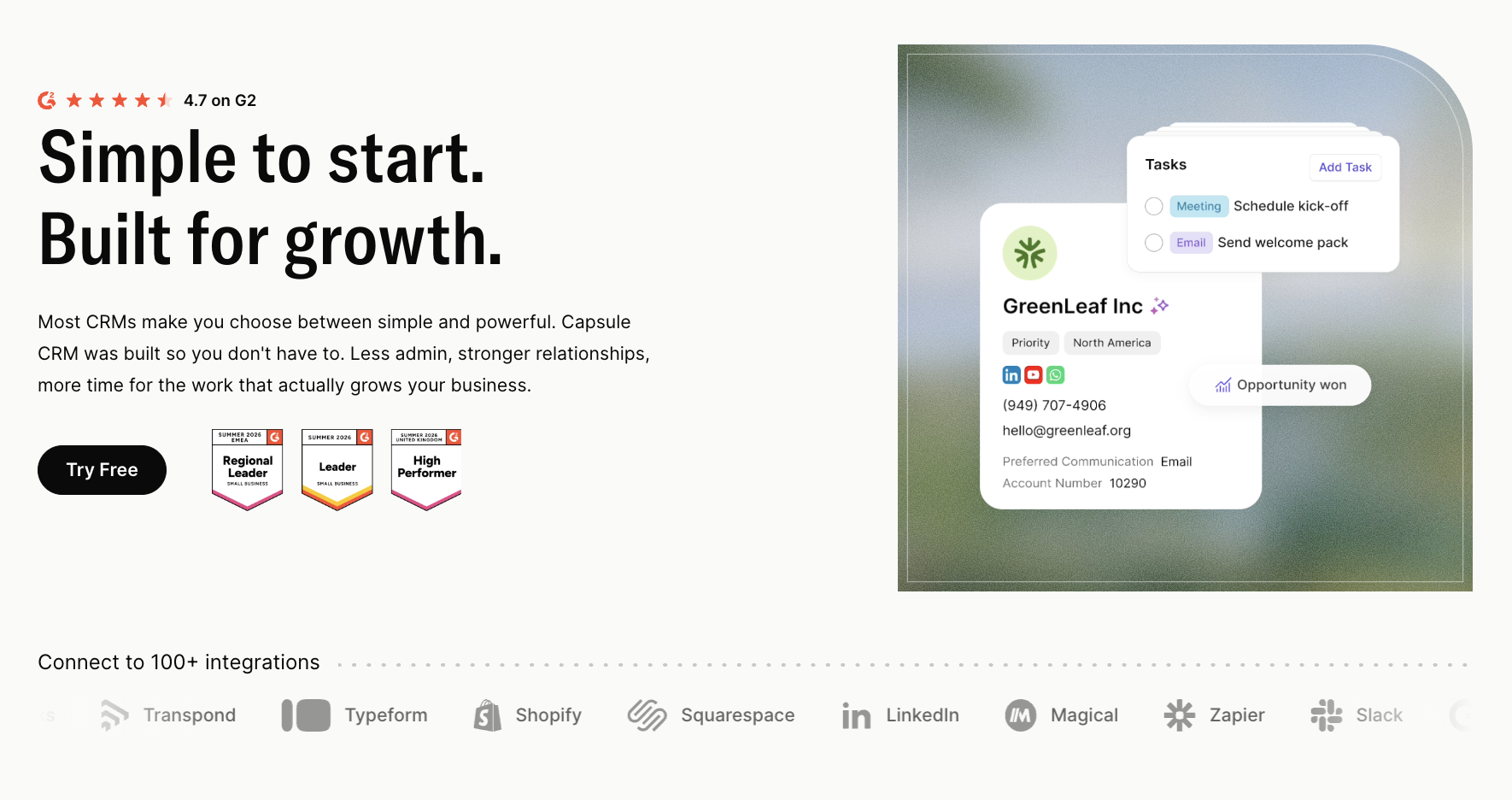
The more meaningful difference appears after a deal is won.
Capsule can move the relationship into Projects, which works well when sales is only the start of the customer journey. An agency can keep delivery connected to the original opportunity. A consultancy can track work without rebuilding the client record somewhere else.
Capsule also assumes you may already have tools you like. It doesn’t need to become your calling platform, support desk or marketing suite to be useful.
That’s probably its clearest advantage over Freshsales: less functionality inside the CRM can actually be a benefit when the team mainly needs a clean place to manage relationships and deals.
A typical Capsule team: a small or midsize business that wants CRM to support the sales process, not dictate it.
Reviews often point to ease of use as one of Capsule’s strengths.


On the other hand, teams looking for deeper customization or more built-in sales engagement features may find Freshsales closer to what they need.
Capsule has a free plan for up to two users. Starter costs $18 per user per month when billed annually.
2. Pipedrive: put the pipeline at the center
Pipedrive is an obvious alternative for teams that like Freshsales as a sales CRM but want the pipeline to dominate the experience.

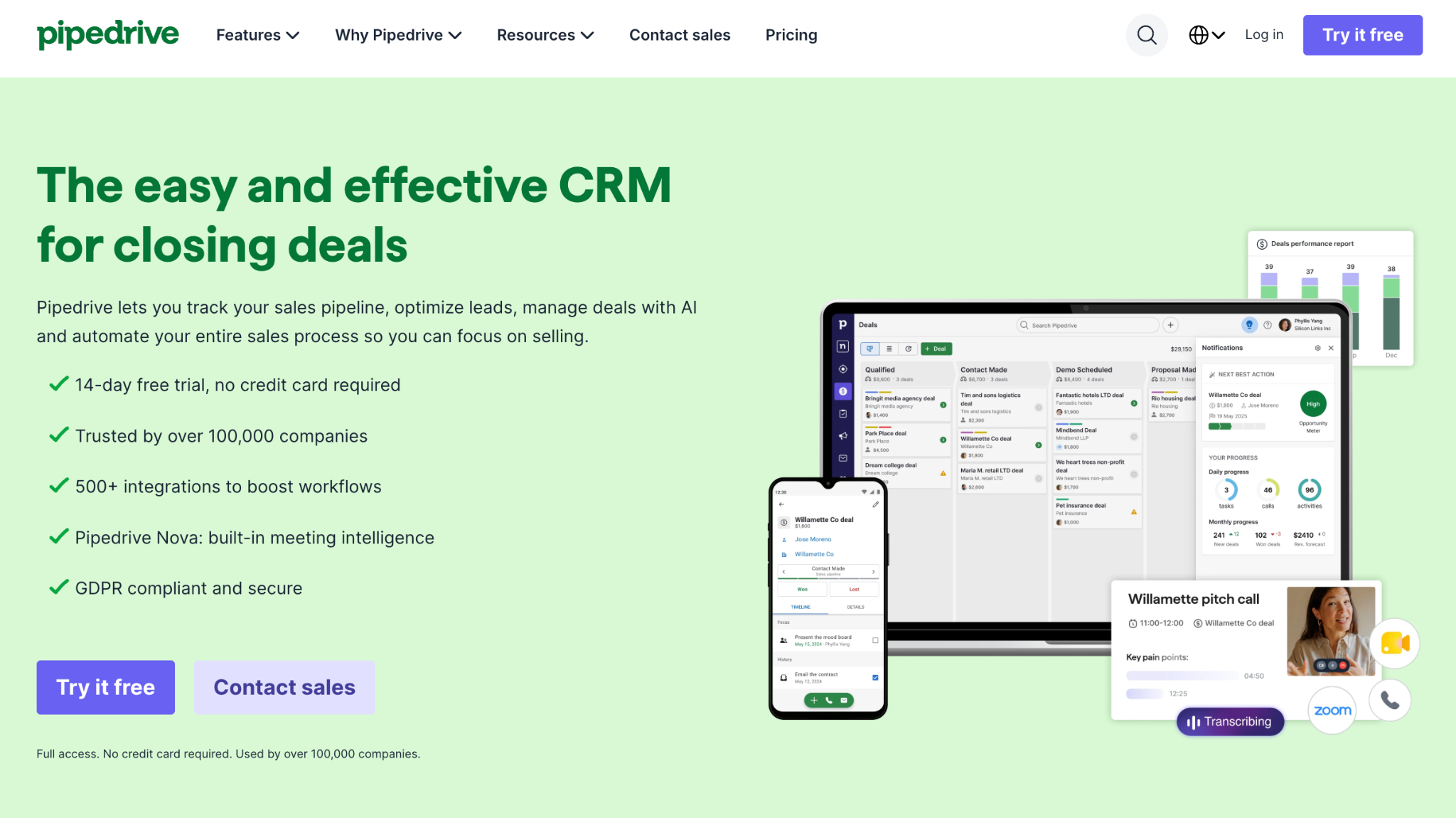
Open Pipedrive and you can quickly see where deals stand, what activity is due and which opportunities need attention.
The product has expanded over time, but deal progression is still a big part of how it works. Freshsales spreads more functionality around the pipeline, especially communication. Pipedrive keeps more attention on the opportunity itself. Sales teams that don't need every conversation channel inside CRM may prefer that setup.
The trade-off is fairly simple. If your reps rely heavily on Freshsales calling or chat, some of that work may need another tool. Pipedrive supports more than 500 integrations, so companies can build those extra pieces around CRM instead of expecting one application to cover the entire sales stack.
Annual pricing starts at $14 per seat per month for Lite, with Growth at $39 and Premium at $59.
3. HubSpot Sales Hub: when Freshsales isn't big enough
Not every team leaves Freshsales because it wants something simpler.

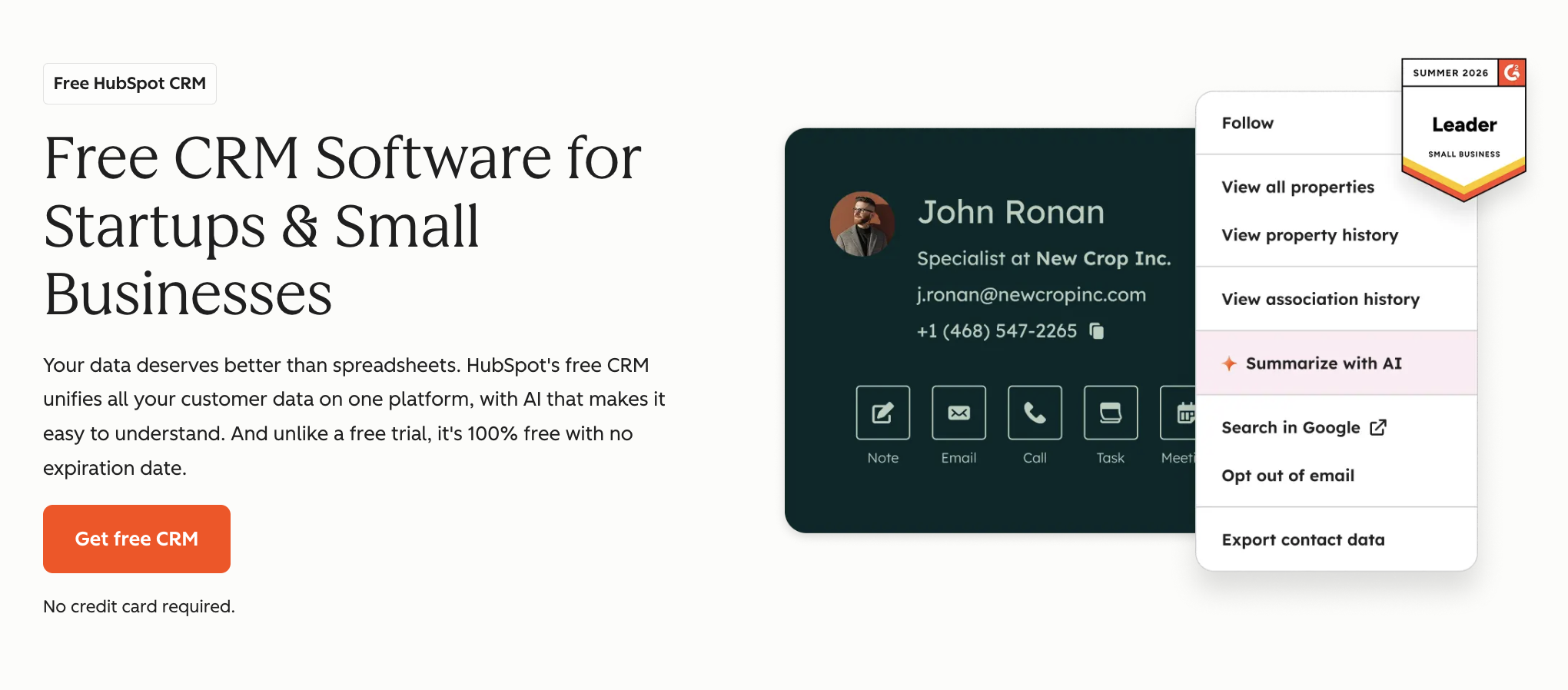
Some have outgrown a sales-focused CRM and want customer data shared across more of the business.
HubSpot Sales Hub connects with HubSpot's marketing and service products, so the CRM can become a shared customer platform instead of staying mostly with sales. A lead generated through marketing can move into the sales process with its history intact. Customer-facing teams can keep working from the same wider environment after the deal closes.
HubSpot is a stronger option when CRM is becoming shared infrastructure across several departments. However, it is also a bigger software commitment.
The free and Starter products make HubSpot easy to try, but pricing changes considerably once a company needs Professional functionality. Sales Hub Professional currently costs $90 per seat per month on annual billing, plus onboarding.
If Freshsales feels too limited, it is worth looking beyond the CRM feature list and asking which HubSpot products the business would use. A larger ecosystem is easier to justify when several teams will benefit from it.
4. Zoho CRM: for teams that want more control
Freshsales can feel restrictive when the sales process has unusual rules or several layers of approval.

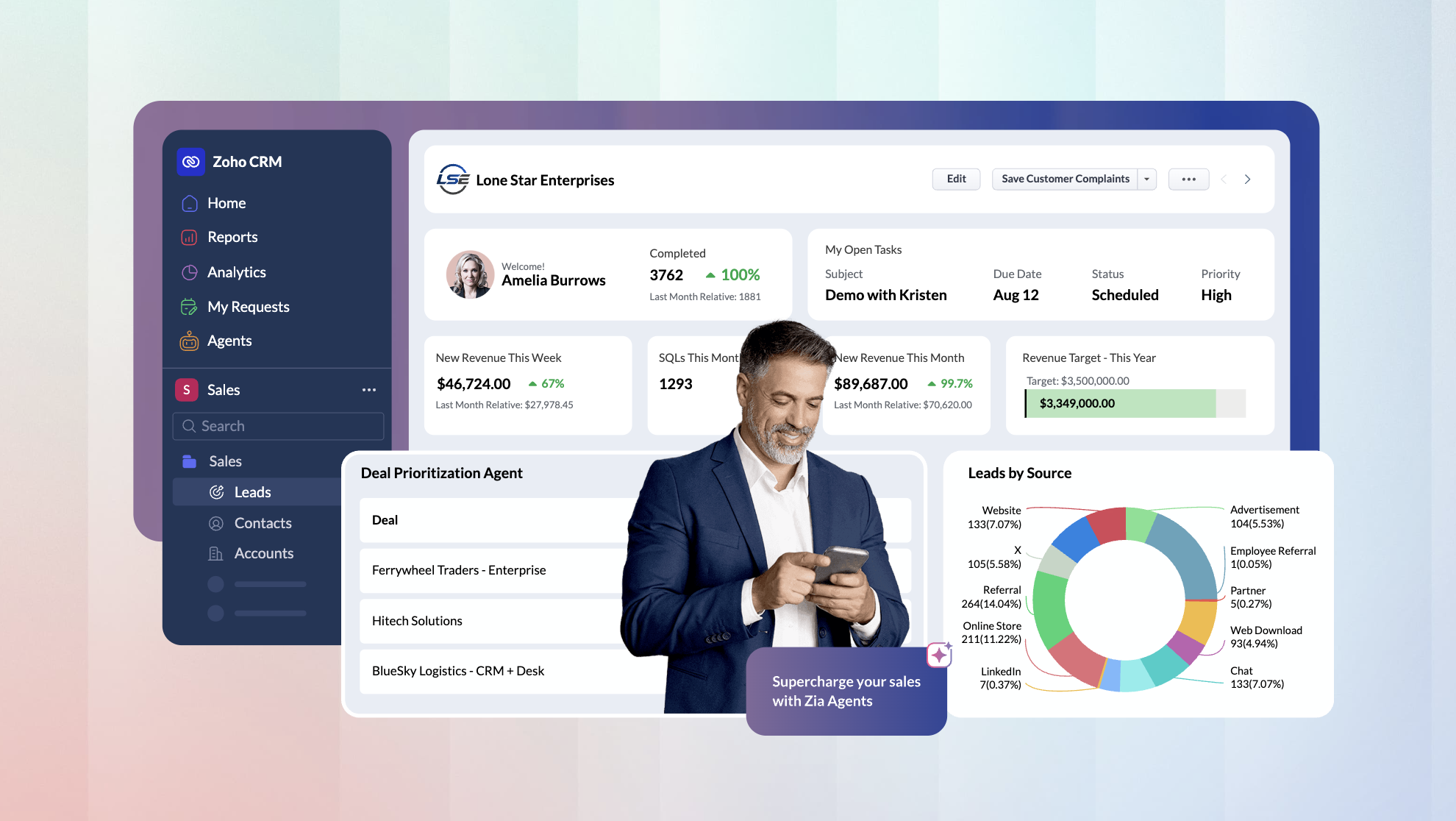
Zoho CRM gives administrators much more room to shape the system.
Teams can create custom modules and build detailed workflows around their own sales process. Blueprint can guide users through defined steps, while territory and approval tools support companies with more complex structures.
Imagine a business where larger deals need a different approval route or separate teams work by territory. The problem isn't that the pipeline needs a better-looking board. The process itself has more moving parts.
Zoho gives the business more control over how CRM reflects those rules.
Of course, more configuration also means more work.
A team with a simple sales process can spend time setting up options it doesn't need. Zoho reviews often reflect both sides of the product: customers value flexibility, but the learning curve comes up regularly too.
Annual pricing starts at $14 per user per month for Standard, with Professional at $23 and Enterprise at $40.
5. Close: built for teams that spend the day doing outbound
Close takes one of Freshsales' strengths and pushes much further into outbound sales.

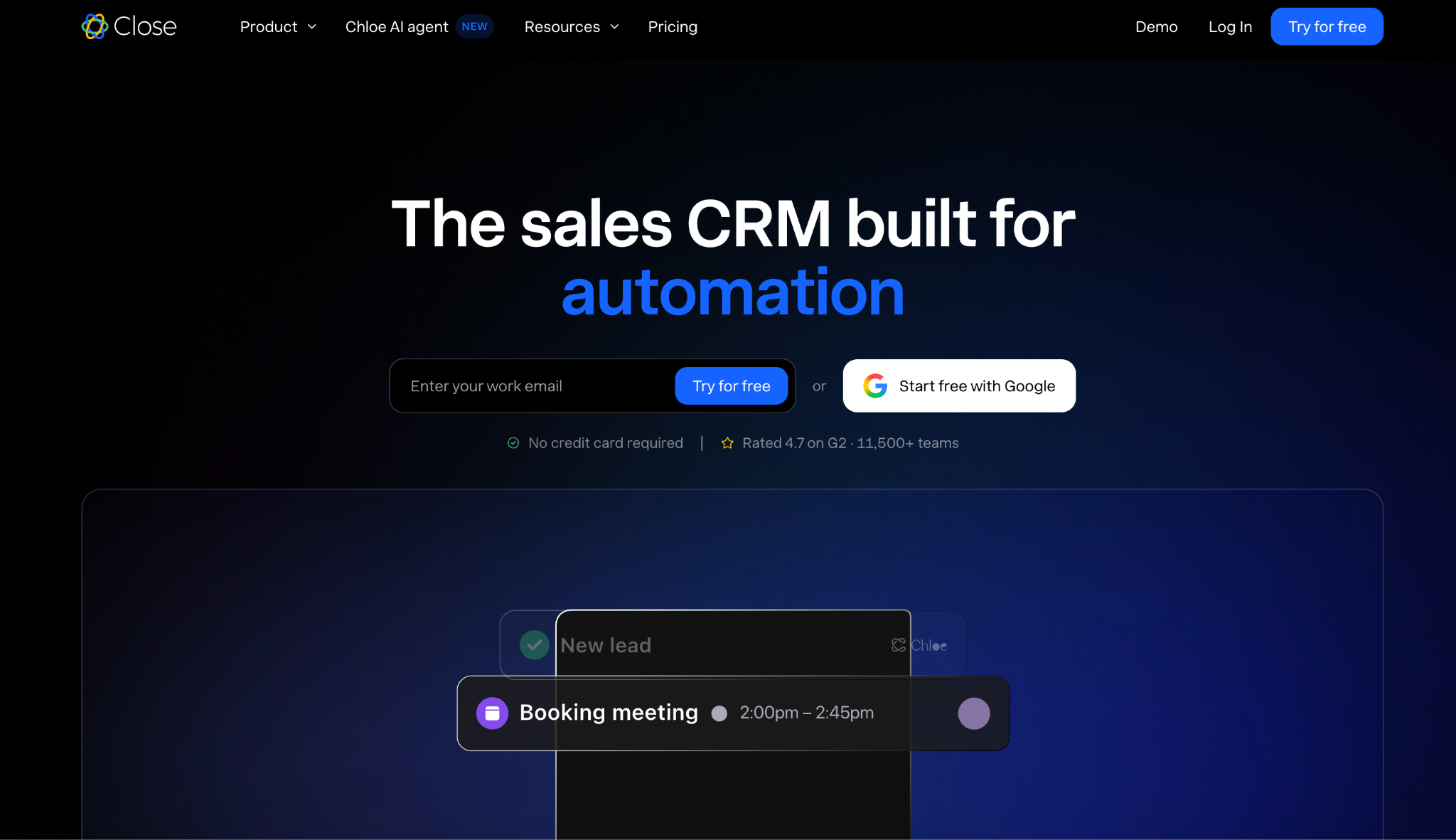
Calling isn't an extra feature around the CRM. It is part of the normal sales workflow.
Email and SMS stay close to the lead record, while higher plans add stronger dialing tools and more automation. Close has also expanded its AI functionality with Chloe.
Picture an SDR opening CRM in the morning with a long lead list to work through. Much of the day will be spent contacting prospects, recording what happened and moving on to the next opportunity.
Switching between CRM and separate calling software adds friction every time.
Close is built for this kind of sales team.
It is less compelling when sales is driven by referrals, longer relationships or a lower volume of outreach. Those teams may never get enough value from the outbound layer to justify paying for it.
Solo starts at $9 per user per month annually, although the plan is limited to one user. Essentials costs $35, Growth $99, and Scale $139. Calling and SMS usage are charged separately.
Current G2 reviews are particularly positive about ease of use and keeping communication in one place. Limited customization appears more often among the negatives.
6. Copper: choose it when Gmail is already home
Copper has the clearest ecosystem bet on this list: Google Workspace.

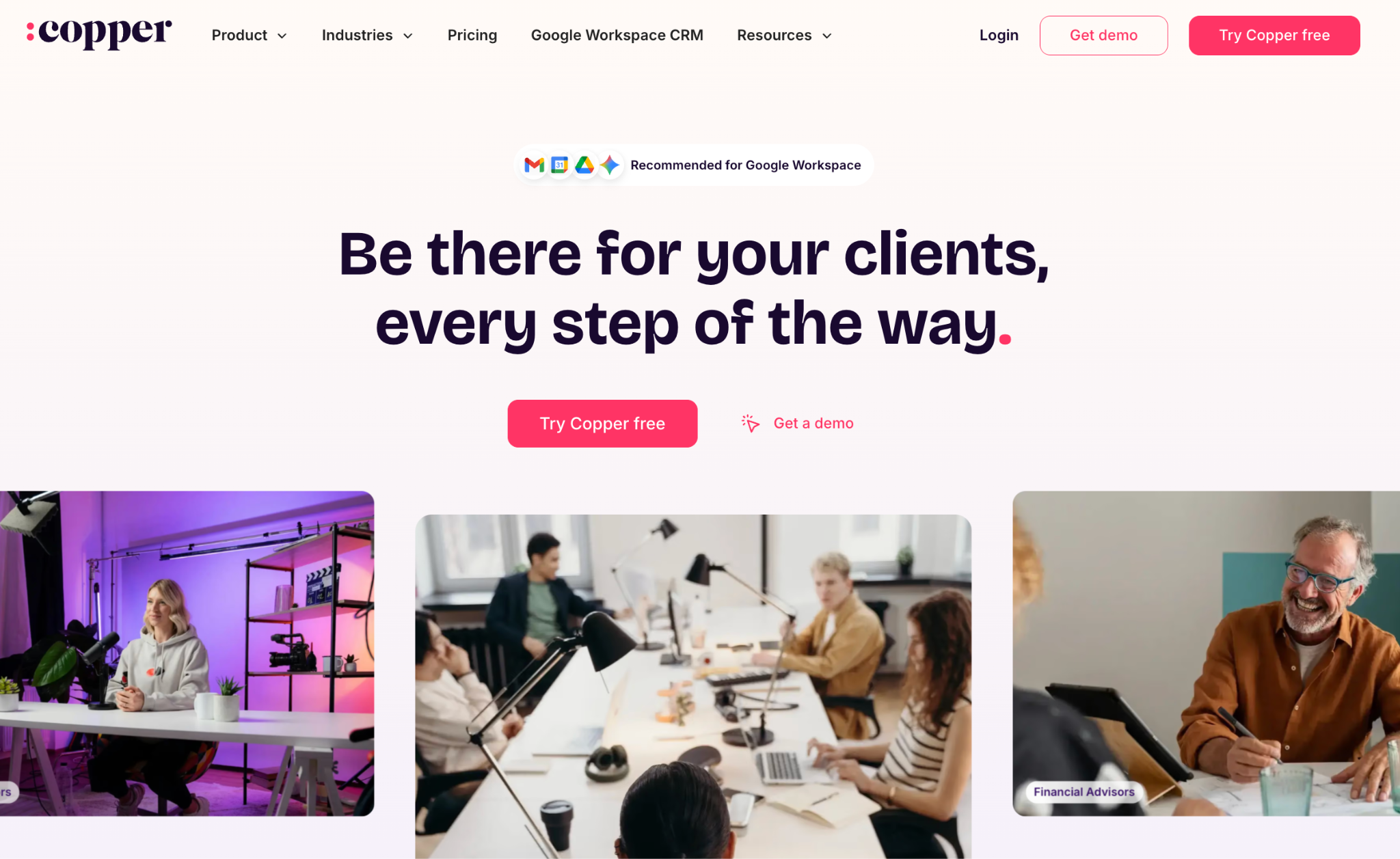
The CRM is designed to work closely with Gmail, Calendar and the tools teams already use across Google Workspace. For companies that spend most of the working day there, this can make adoption easier.
Reps don't need to keep jumping into a completely separate environment every time they want to update customer information or check the history of a relationship. Google Workspace integration appears as a strength, along with reduced manual data entry.
The value drops when a company's software stack is more mixed.
A team using Microsoft products alongside Google Workspace and several specialist platforms may get less from a CRM built so closely around the Google ecosystem.
Copper's annual pricing starts at $23 per seat per month for Basic. Professional costs $59 and Business $99.
Freshsales vs. the alternatives: what are you changing?
The products above aren't simply different versions of Freshsales. Each one shifts attention toward a different part of the sales process.Freshsales sits somewhere in the middle. It combines pipeline management with communication and automation at a relatively accessible starting price.
Moving away from it should solve a clear problem.
A CRM doesn’t have to run everything
There’s a point where putting more functionality inside one platform stops making work simpler.
Capsule draws that line earlier than Freshsales. It keeps deals and customer relationships at the centre, while leaving specialist work to specialist tools. Once a deal closes, Projects can keep the relationship moving without losing its history. And if your team already has software it likes, Capsule CRM can fit around it instead of forcing a reset.
That’s a meaningful difference if the reason you’re switching CRM is complexity in the first place.