Around 10 to 15% of dental appointments end in no-shows, and roughly 15% of insurance claims get denied on first submission. Both numbers are quietly draining revenue from practices that don't have the systems to catch them. On top of that, more than half of U.S. dentists name shrinking reimbursements as their biggest concern heading into 2026.
Practices that grow through these conditions are the ones running tight operational systems. Practices that don't, are working harder than they need to. A CRM is one part of that operational layer, and it covers the work that practice management software usually handles poorly: patient acquisition, recall outreach, treatment plan follow-up, and marketing-driven growth.
Choosing the right CRM for a dental practice can feel overwhelming, especially when every platform promises to make patient management easier. Our guide walks through six solid options, including tools built specifically for dental teams, and flexible CRMs that can be shaped around dental workflows.
Core CRM needs of a dental practice
Dental CRM needs to sit at the intersection of three workflows that many generic CRMs don't handle natively.
- Patient acquisition. New patient inquiries through forms, phone calls, and referrals all need to land in one system, with a response within minutes for the highest conversion rates. Most practices lose new patients to slow follow-up.
- Recall and reactivation. Patients who haven't been seen in 6 to 18 months represent the largest reactivation opportunity in any practice. The CRM needs to identify them automatically and run outreach campaigns that don't feel templated.
- Treatment plan follow-through. A presented treatment plan that doesn't get accepted is recurring lost revenue. The CRM has to track which patients have outstanding plans, when they were presented, and what the follow-up cadence looks like.
A platform that handles these three workflows well is a real dental CRM. A platform that handles one of them and assumes the practice management software covers the rest is a partial solution that creates handoff problems.
How CRM needs vary by dental practice type
Not all dental practices need the same CRM features. The shape of the patient journey differs meaningfully between general practice on one side and specialty work, like cosmetic or implant practices, on the other.
- General dentistry practices lean heavily on recall and reactivation. The dominant CRM job is keeping current patients on a six-month cleaning cadence and reactivating those who've drifted off. Patient acquisition is important, but most growth comes from referrals and retention. The CRM needs strong recall automation and referral source tracking, with lighter requirements on pipeline complexity.
- Cosmetic dentistry practices look more like a B2B sales operation. Veneer cases and smile makeovers involve multi-touch consultations and treatment plan presentations, with decision cycles that can stretch over months. The CRM has to track each prospective case through clear stages and run nurture sequences for patients who haven't yet committed. Acquisition cost per case is high, so every inquiry counts.
- Orthodontic practices sit between the two. Patient acquisition matters because each case represents 12 to 24 months of recurring revenue, but the workflow inside the practice is more clinical than sales-driven. The CRM needs treatment plan tracking and reactivation outreach for adults considering Invisalign, with parent communication built in for adolescent cases.
- Implant and oral surgery practices are closest to cosmetic in CRM terms. High case value and long decision cycles meet significant referral relationships with general dentists. The CRM has to manage both patient pipelines and referral source relationships, with a clear view of which referring dentists produce the most cases.
A practice that picks a CRM with no match to these patterns ends up with the wrong tool. A high-volume general practice doesn't need elaborate pipeline tracking, while a cosmetic practice does. The CRM that fits is the one shaped around the specific practice type.
Leading CRM solutions for dental practice in 2026
#1 Capsule CRM
Capsule is the strongest fit for dental practices that want a clean, flexible CRM running alongside their practice management software, focused on patient acquisition and treatment plan follow-through.

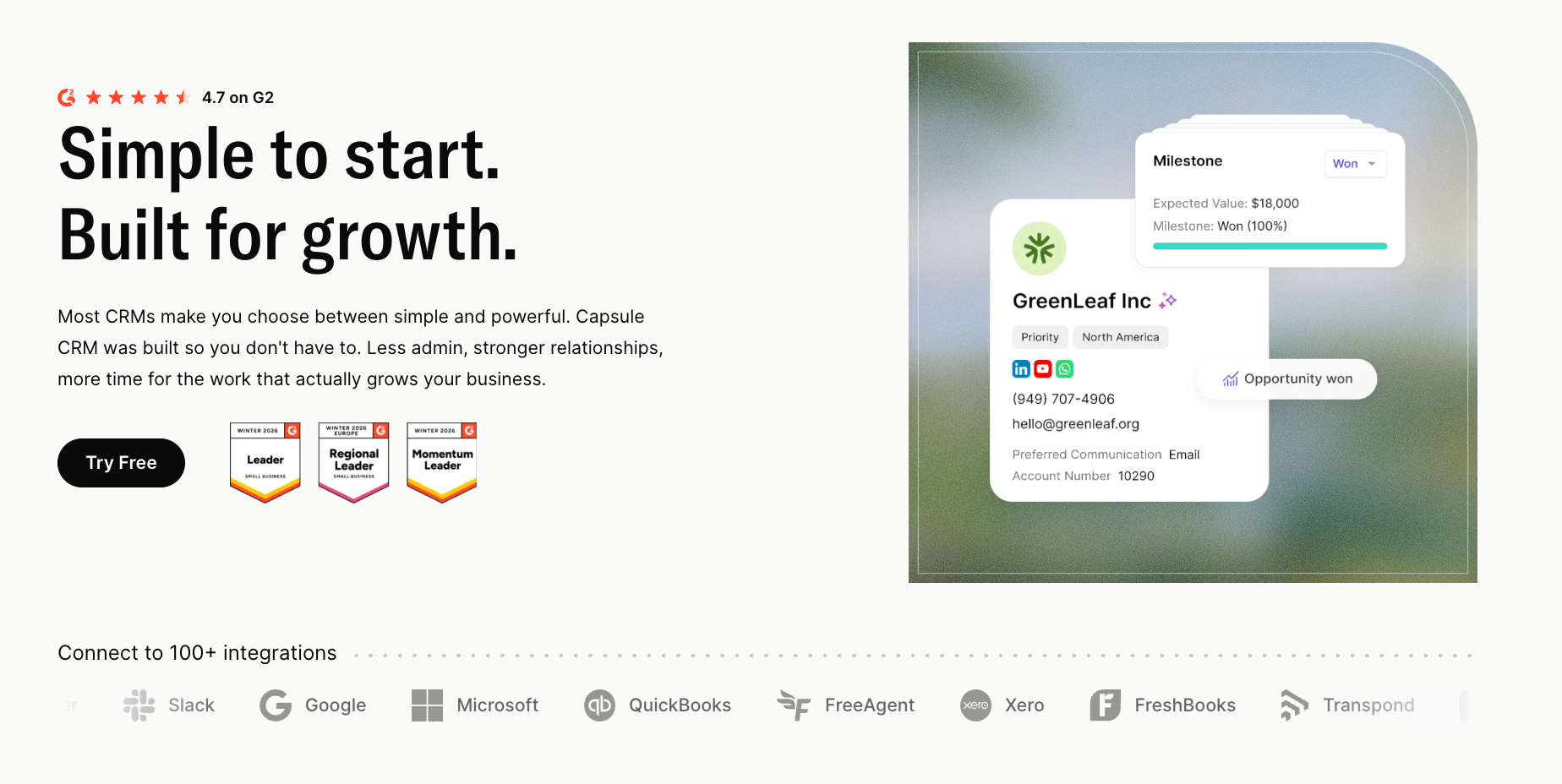
Most practice management platforms handle clinical operations and billing well, but their CRM and marketing depth is shallow. This is exactly where a dedicated CRM earns its place. Capsule keeps the patient relationship layer separate from the clinical layer, so the front desk and treatment coordinator can manage outreach with no disruption to the clinical workflow.
Capsule's contact management gives every patient and prospective patient a full timeline of communication and notes, with active treatment opportunities attached to the record. When a prospective patient who inquired six months ago calls back about your services, the practice has the original conversation and the quoted price, along with the reason they didn't move forward.
The Capsule features dental practices rely on every day:
- Pipelines track every prospective patient and every outstanding treatment plan through clear stages. A "new patient" pipeline runs from initial inquiry to first appointment booked. Then, a "treatment plan" pipeline runs from plan presented to accepted or declined. Multiple pipelines mean the front desk and the treatment coordinator each see what they need.
- Tracks automate the recall and follow-up cadence. When a new patient gets in touch, the team can start an outreach sequence right away. After a treatment plan is presented, Capsule can prompt a follow-up call three days later and an email two weeks after that. For six-month recalls, patients receive a personalized message instead of a generic blast.
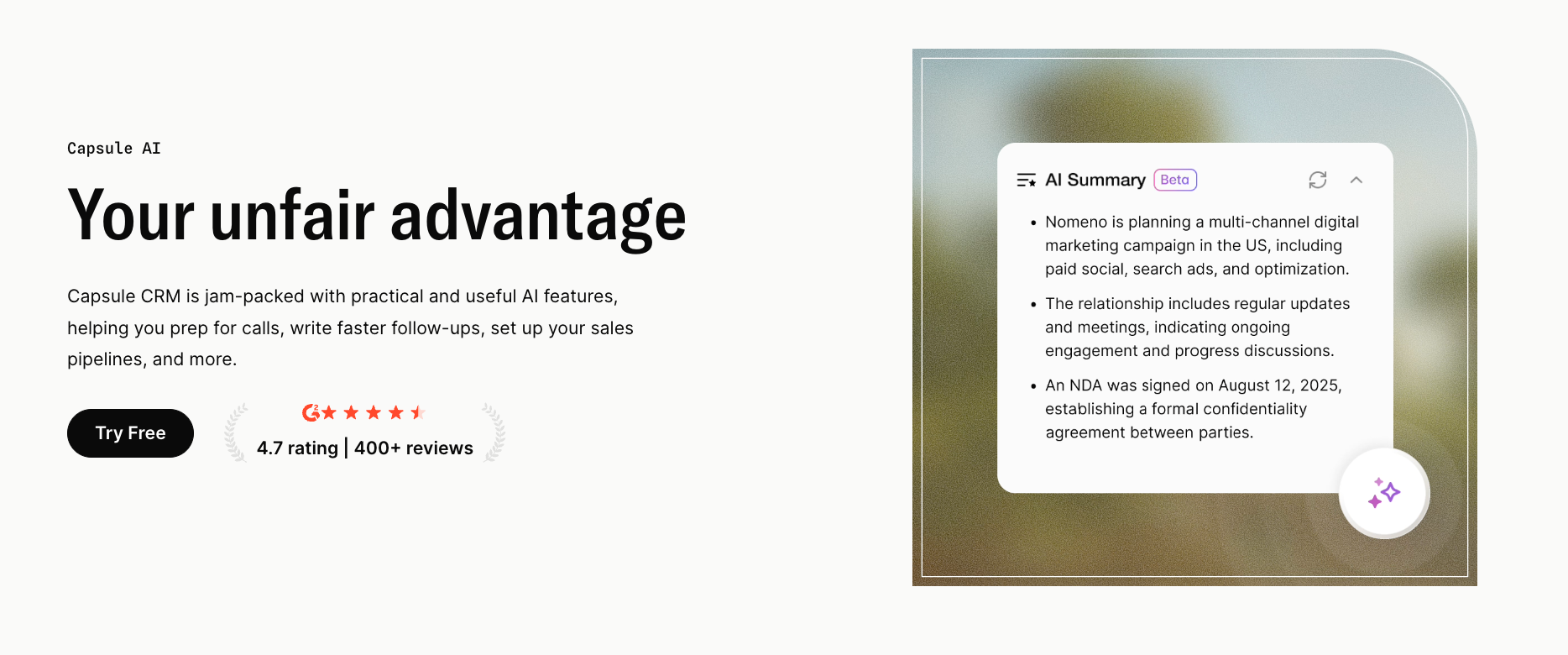
- Capsule AI helps teams move faster with the context already in the CRM. AI Summaries give staff a quick view of recent patient history, including emails or calls, so they can prepare before a conversation. AI Email Assist can then turn that context into patient-facing communication, from recall messages and treatment plan follow-ups to post-visit notes.

Sales analytics answers the questions a practice owner needs to track over time.
Which referral sources produce the most new patients? Which treatment plans get accepted, and which sit in the pipeline? How long does a typical patient acquisition take from first contact to first appointment?
Capsule doesn’t try to be your clinical system. It doesn't handle clinical charting, insurance verification, or claims processing. Practices use it alongside other clinical platforms they're on. For marketing automation beyond basic outreach, Capsule integrates with Transpond.
Pricing: Free plan for up to two users and 250 contacts. Starter from $18/user/month. AI features from $36/user/month.

#2 Dentrix
Dentrix is the most widely-deployed practice management platform in U.S. dentistry, with built-in patient communication and recall features that function as a basic CRM layer.

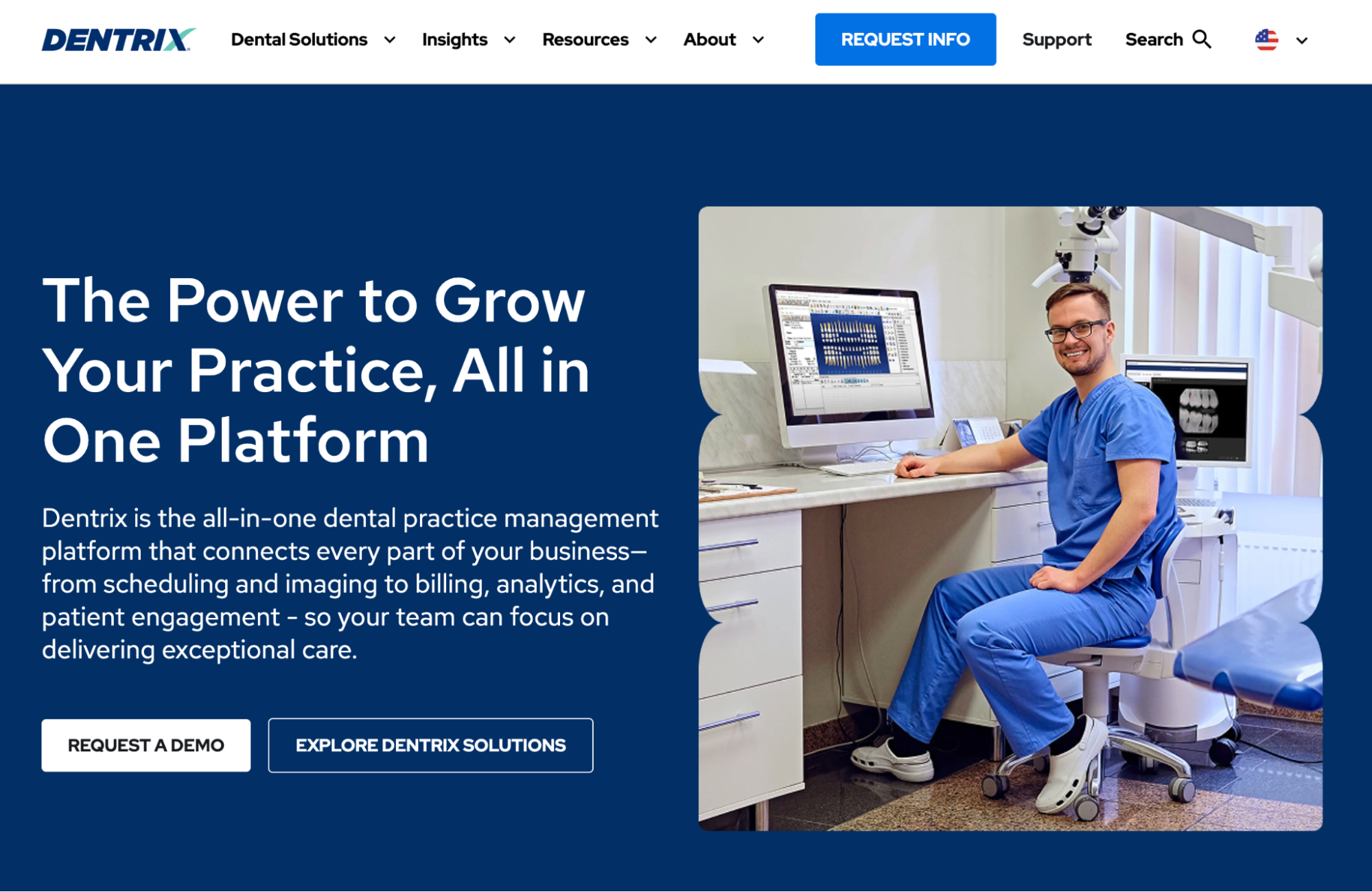
It connects scheduling, imaging, billing, analytics, and patient engagement in one practice management platform.
That breadth is Dentrix’s biggest advantage. It gives dental teams a central place to manage the daily work of the practice, from clinical charting and treatment planning through to insurance workflows, claims, billing, and reporting. Patient communication sits around that core. Dentrix includes tools for reminders, recalls, online booking, and other engagement workflows, so practices can stay in touch with patients at all times.
The limitation is that Dentrix is still a practice management software first. Its patient engagement features come in handy for keeping existing patients on track. They aren’t built with the same flexibility as a dedicated CRM for lead capture, campaign segmentation, long-term nurture, or tracking prospective patients through a sales-style pipeline.
Dentrix makes the most sense when the priority is running the dental practice itself. It can cover a lot of patient communication needs, especially for established patient relationships, but it isn’t the strongest fit for teams that want CRM-led growth workflows outside the clinical and administrative system.
Pricing: Dentrix doesn’t publish simple self-serve pricing. Henry Schein One directs practices toward demo or contact-based pricing, with packages depending on the practice’s setup, selected modules, and implementation needs.
#3 Open Dental
Open Dental is a highly customizable dental practice management platform known for strong clinical tools, affordable pricing, and a large ecosystem of integrations.

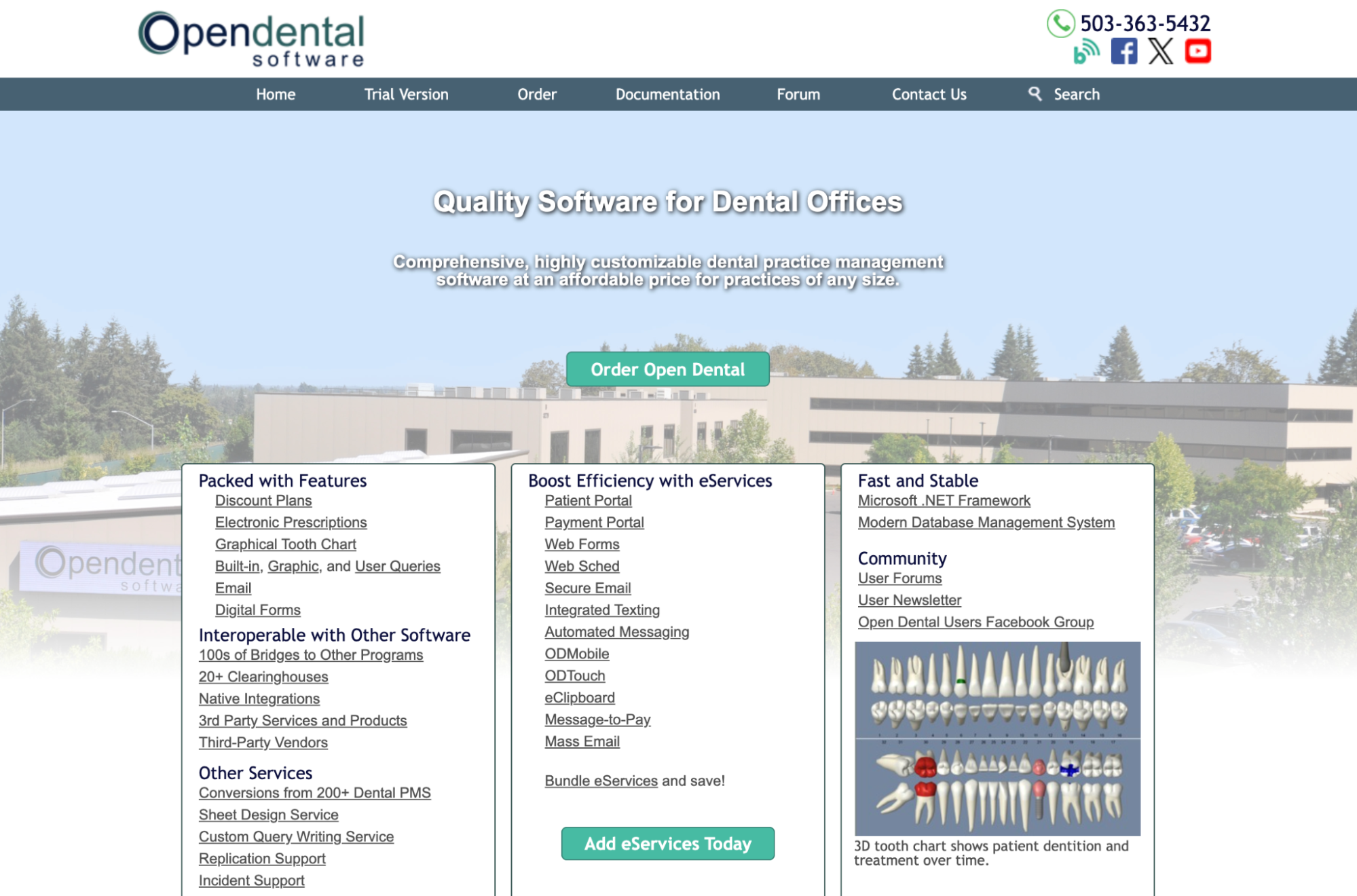
It is often described as open-source, but that wording needs care. Open Dental provides access to source code resources, though it doesn’t operate like a typical open-source project that accepts outside code contributions.
The platform supports many of the same core practice workflows as Dentrix, including charting, scheduling, billing, treatment planning, reporting, and patient communication tools.
Its biggest advantage is flexibility. Practices that want more control over their setup, data, workflows, and connected tools often find Open Dental easier to adapt than more closed practice management systems. Open Dental also promotes itself as comprehensive and highly customizable software for dental offices.
For CRM-specific work, Open Dental usually depends on integrations. Patient acquisition, advanced marketing automation, reactivation campaigns, and more complex recall workflows are often handled through connected tools rather than fully inside Open Dental. That can be a strength for practices that already use outside marketing or communication platforms, but it also means the office needs someone who can manage integrations and keep systems working together.
Open Dental is a strong fit for practices that prioritize clinical depth, customization, and transparent system control. It works especially well for teams that are comfortable building a tech stack around their practice management software. Practices looking for a simple all-in-one CRM and practice management platform may find the extra integration work heavier than expected. Open Dental has a long track record and a broad feature set, but some practices may find the interface and workflow less modern than newer cloud-based CRMs.
Pricing: Open Dental’s current U.S. ordering page lists the monthly support fee at $199 per month per location or office with a 12-month contract, including the software, support, and updates. Additional costs may apply depending on providers, locations, and extra functionality.
#4 Adit
Adit helps dental practices run the front office from one place, combining calls, texts, scheduling, forms, payments, reviews, analytics, and AI-powered automation.

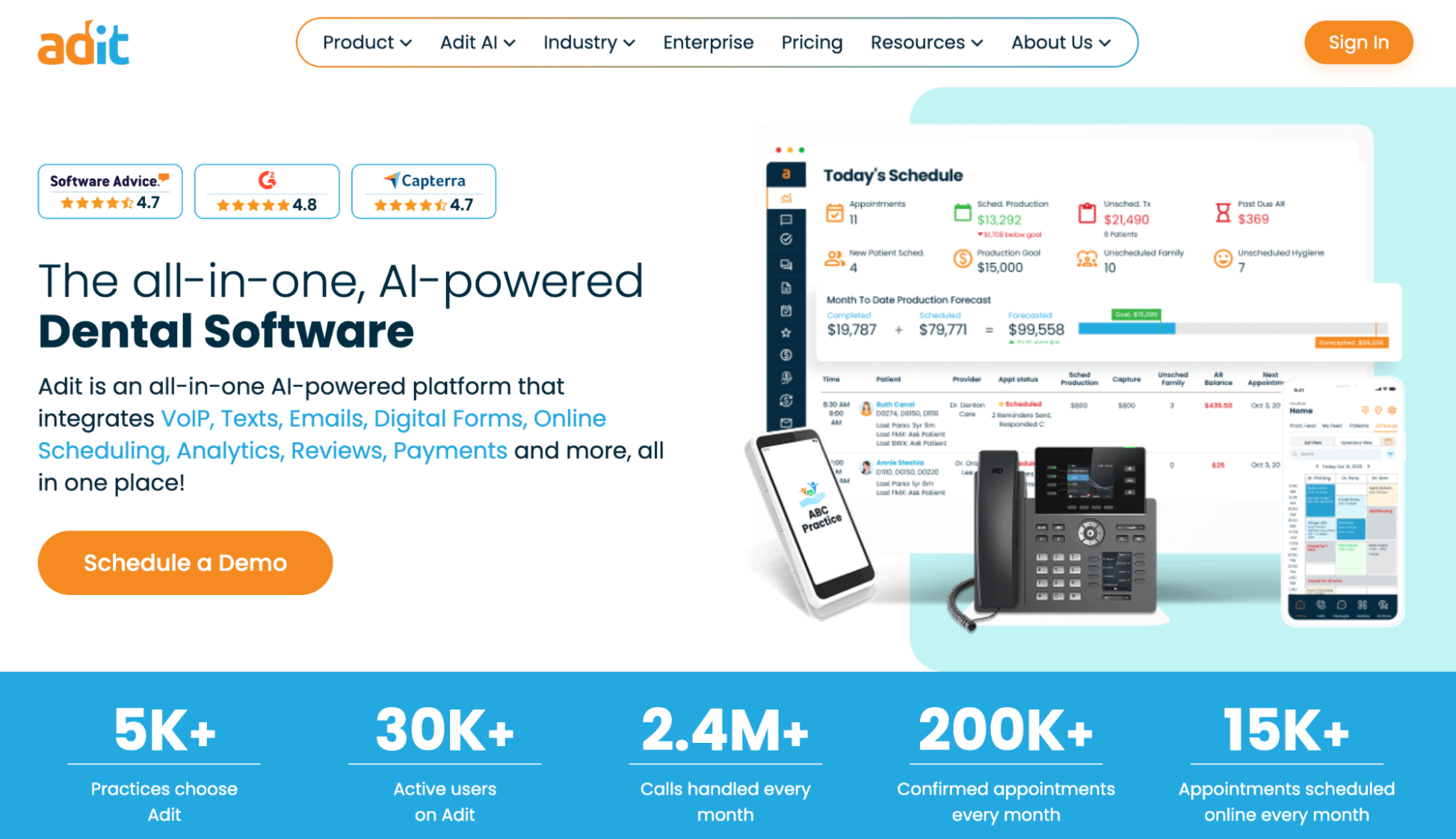
Its main value is consolidation: instead of running separate tools for calls, texting, reminders, online scheduling, reviews, and reporting, practices can manage much of that activity from one platform. Adit describes its dental software as an all-in-one platform that combines VoIP, texts, emails, digital forms, online scheduling, analytics, reviews, payments, and more.
The product is especially strong around front-office workflow. Adit’s AI features include call intelligence, missed-booking recovery, automated follow-ups, AI front-desk support, and performance scoring, which makes it useful for practices trying to capture more opportunities from phone calls and patient inquiries.
The trade-off is depth. Adit covers a wide range of patient engagement and operational needs, but practices looking for highly advanced CRM reporting, complex campaign automation, or deep sales pipeline management may still prefer a dedicated CRM or marketing automation platform. Adit fits best when the goal is to reduce software clutter, modernize the front desk, and centralize communication. Practices that want the deepest possible CRM layer may pair a specialized CRM with their existing practice management software instead.
Pricing: Adit lists pricing on request rather than publishing standard plan costs. Its pricing page positions the product around practice growth, patient communication, and operational consolidation, with plans tailored to each practice’s needs.
#5 Doctible
Doctible is a patient communication and reputation management platform for dental and healthcare practices. It is best understood as the engagement layer between the practice management system and the patient experience.

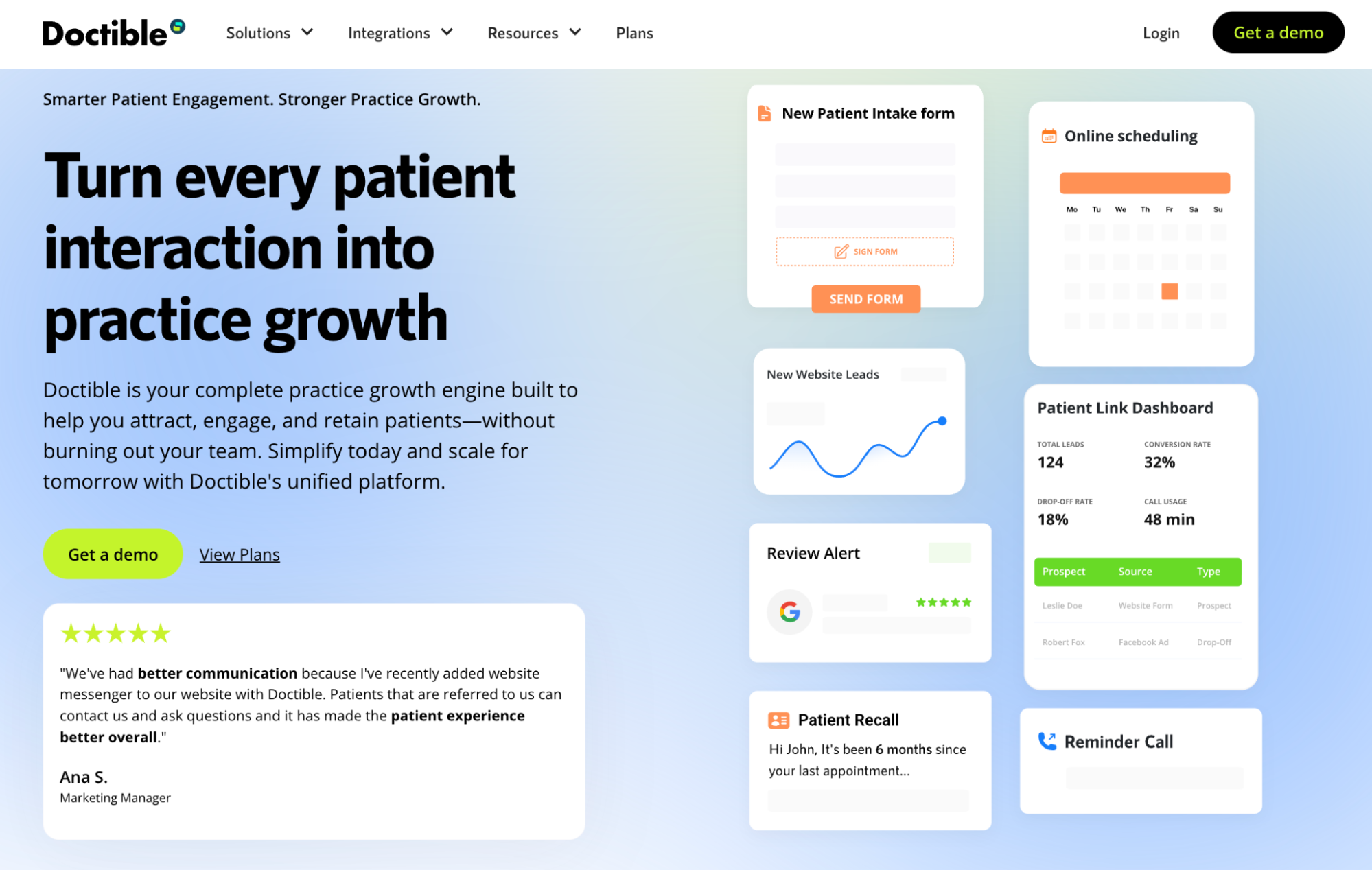
The platform covers automated appointment reminders, recall messaging, two-way HIPAA-compliant texting, digital forms, patient payments, online scheduling, and review management. Doctible also integrates with practice management and EHR systems to automate review collection and patient outreach workflows.
Doctible is a strong fit for practices that already have their core operations in place but need fewer missed appointments and a more reliable review process. When the problem is weak outreach rather than weak clinical or billing workflows, Doctible fills that gap cleanly.
The main limitation is CRM depth. Doctible supports communication, reminders, reviews, and engagement, but it isn’t built to manage complex acquisition pipelines, detailed referral-source attribution, advanced sales reporting, or treatment-plan follow-through in the way a dedicated CRM would. Practices that need those features may pair Doctible with a separate CRM or choose a broader growth platform.
Pricing: Doctible lists patient engagement plans starting at $199/month with an annual agreement, while higher tiers add tools such as online appointment requests, digital forms, voice reminders, and an automated waitlist. Some pricing may vary based on plan structure and practice needs.
#6 RevenueWell
RevenueWell is a dental marketing and patient communication platform built to help practices attract patients, keep schedules full, and improve front-office efficiency. It combines tools for reminders, texting, online scheduling, digital forms, reviews, marketing campaigns, analytics, and patient follow-up.

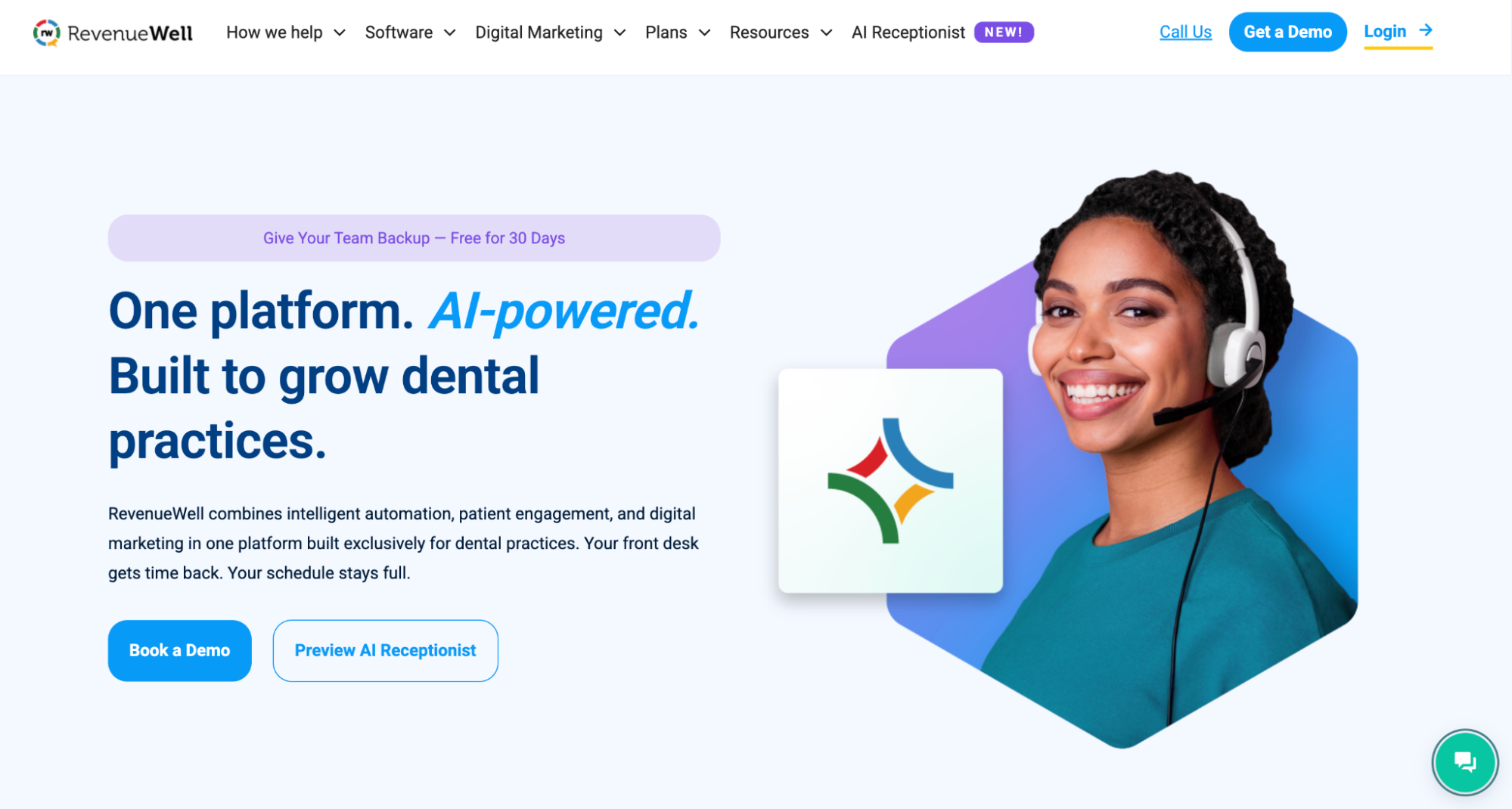
The platform is strongest when a practice wants more than basic reminders but doesn’t need a full enterprise CRM. RevenueWell supports the full patient journey, from finding the practice online to booking an appointment, completing forms, receiving follow-ups, and leaving a review.
RevenueWell works well for practices that want stronger marketing and communication without replacing their main practice management software. It can help teams reduce manual outreach and make follow-up more consistent.
RevenueWell is strongest as a growth and patient engagement tool, not a heavy-duty CRM. It helps practices stay in touch with patients, automate outreach, support marketing, and keep the schedule active. Practices that need deeper lead tracking, referral reporting, or sales-style pipeline management may still need a dedicated CRM alongside it.
Pricing: RevenueWell doesn’t publish clear standard pricing on its own plans page. Third-party directories list a Starter plan at about $189/month, while higher tiers are usually listed as quote-based. Practices should confirm current pricing, included features, and add-on costs directly with RevenueWell before signing.
#7 Pabau
Pabau is an all-in-one practice management platform for clinics, including dental practices that want to keep patient records, scheduling, communication, payments, and reporting in one place.

It combines online booking, forms and charting, patient records, payments, campaigns, inventory, and reporting around a single patient record. It also works well for growing practices with multiple practitioners or locations that don’t want to manage separate systems for every part of the patient journey.
One of Pabau’s strengths is that it covers both the clinical and business side of running a practice. Alongside day-to-day practice management, teams can use it for recalls, rebooking, email and SMS campaigns, lead management, and patient communication. More than 4,000 practices across 40+ countries use the platform.
Pabau is not a dental-only system, so practices with very specialist dental requirements may still prefer software built specifically around those workflows. For clinics looking for broader practice management, however, it can reduce the need for a separate CRM, scheduling tool, marketing platform, and reporting setup.
Pabau is a good fit for growing dental practices that want patient engagement and practice management to work together, especially across larger teams or multiple locations.
Pricing: Pabau prices its core platform by team size, with the complete core platform included in every plan. Current pricing is available on Pabau’s website.
Choose the right CRM for dental practice
A good dental CRM has to earn daily use by the front desk and treatment coordinator. It needs to make recall outreach easier to manage, treatment plan follow-up easier to track, and new patient inquiries impossible to miss.
It also has to fit into the existing practice management stack.
Capsule leads the list because it gives practices a lightweight CRM layer that is easier to run than a full dental software system.
It gives dental teams a simple place to manage patient relationships outside their clinical software. A new patient inquiry can move from first contact to booked consultation, then into treatment follow-up. Practices can also add custom fields for details such as treatment interest, insurance status, or recall timing. Capsule’s free plan includes contacts, opportunities, one pipeline, and custom fields, while AI features are available on paid plans.
Try it today.