
Most real estate CRM software is either too simple to be useful past the first month or complex enough that solo agents and small teams spend more time managing the tool than managing their clients. The sweet spot – a platform that handles lead management, client communication, follow ups, and deal tracking in one place, and actually gets used every day - is harder to find than the marketing suggests.
This guide covers the easiest CRM for realtors in 2026, what to look for before you choose, and how the right real estate CRM software changes the day-to-day reality of running a real estate business.
Why most real estate agents struggle with CRM adoption
The real estate industry has no shortage of CRM software options. What it does have is a persistent adoption problem. And a CRM that sits unused after the first few weeks isn't a productivity tool; it's a sunk cost.
The reasons agents abandon CRM software are consistent:
- The setup takes too long.
- The interface requires too many clicks to log a basic interaction.
- Lead data doesn't flow in automatically, so any data entry becomes a recurring chore.
- The system was designed for a large sales team with a dedicated admin, and the agent or small residential real estate team has neither the time nor the support to configure it properly.
The easiest CRM for realtors is the one that fits the way real estate professionals actually work: mobile-first and relationship-driven, with clear visibility into where every lead stands at any given moment.
What a real estate CRM actually needs to do well
Before comparing platforms, it's worth being specific about what matters most in a CRM for real estate. The core jobs are:
- Lead capture and lead management. New leads come in from multiple sources simultaneously: portals, referrals, social media, and website forms. A real estate CRM needs to capture leads from these channels centrally, assign them correctly, and make it easy to see which leads are warm, which need nurturing, and which have gone quiet.
- Client communication history. Real estate professionals manage long, complex relationships across multiple transactions. The ability to see every email, call, note, and document associated with a contact in one place is what separates a CRM from a glorified address book.
- Task management and follow ups. A missed follow-up in real estate has a direct cost. The best real estate CRM software makes it impossible to forget with automated reminders and workflow triggers that keep the sales process moving.
- Pipeline visibility. Real estate teams need to see at a glance where every active deal stands, what's needed to progress it, and where revenue is likely to come from in the next 30 to 90 days. Good reporting tools and a clean visual sales pipeline make this possible across a team of any size.
- Integrations with the tools agents already use. Calendar sync, email integration, social media tools, and marketing automation platforms need to connect cleanly. A CRM that sits in isolation from the rest of the workflow creates more friction than it removes.
The best real estate CRMs in 2025
1. Capsule CRM
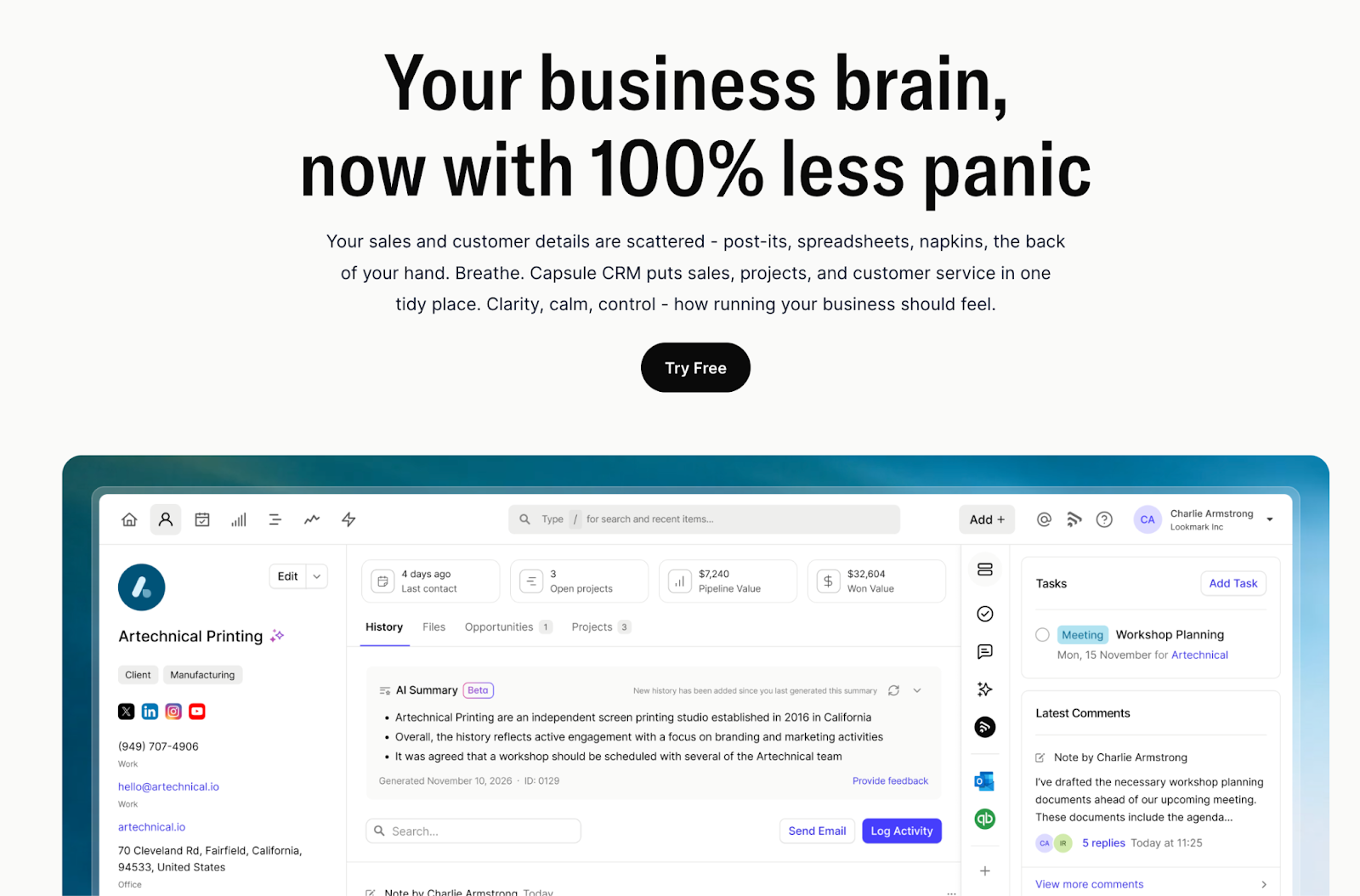
Capsule isn't marketed exclusively as real estate software, but it's a strong fit for real estate agents and small real estate teams because it prioritizes simplicity and relationship management over feature bloat.

Why it works for realtors:
- Contact management gives every client, lead, and referral source a full activity timeline: emails, calls, property details discussed, documents shared, and notes from every interaction, all in one place. No more piecing together a client relationship from memory before a call.
- The visual sales pipeline is clean and drag-and-drop intuitive. Agents can track deals from first enquiry through to completion across multiple pipelines – buyer leads, seller listings, and rental management can each run separately.
- Workflow automation via Tracks handles the repeating processes: new buyer onboarding, listing preparation steps, and post-completion follow up sequences. Build it once, run it every time.
- Google Calendar integration and Microsoft 365 sync mean appointments, viewings, and follow up calls appear in whichever calendar the agent already uses.
- AI Contact Enrichment automatically fills in company and contact information, reducing the manual data entry that kills CRM adoption in practice.
- AI Summaries pull together the full history of any client relationship before a call or meeting, so agents arrive fully prepared.
- The mobile app is genuinely usable in the field. Log a call, update a deal, set a follow up reminder, all from a phone between viewings.
- Email templates speed up client communication for the messages agents send repeatedly: viewing confirmations, offer updates, and completion chasers.
Pricing: Free plan covers 2 users and 250 contacts. Starter from $18/user/month, Growth from $36/user/month (includes AI features). Free trial available.
Best for: Small real estate teams that want an easy-to-use platform with strong relationship management and enough automation to handle repeating workflows – without paying for features they'll never touch.
Read how small businesses use Capsule in customer stories or explore CRM for property management and CRM for real estate on the Capsule blog.
2. Wise Agent CRM
Wise Agent is one of the most established real estate CRMs on the market, built specifically for residential real estate professionals.

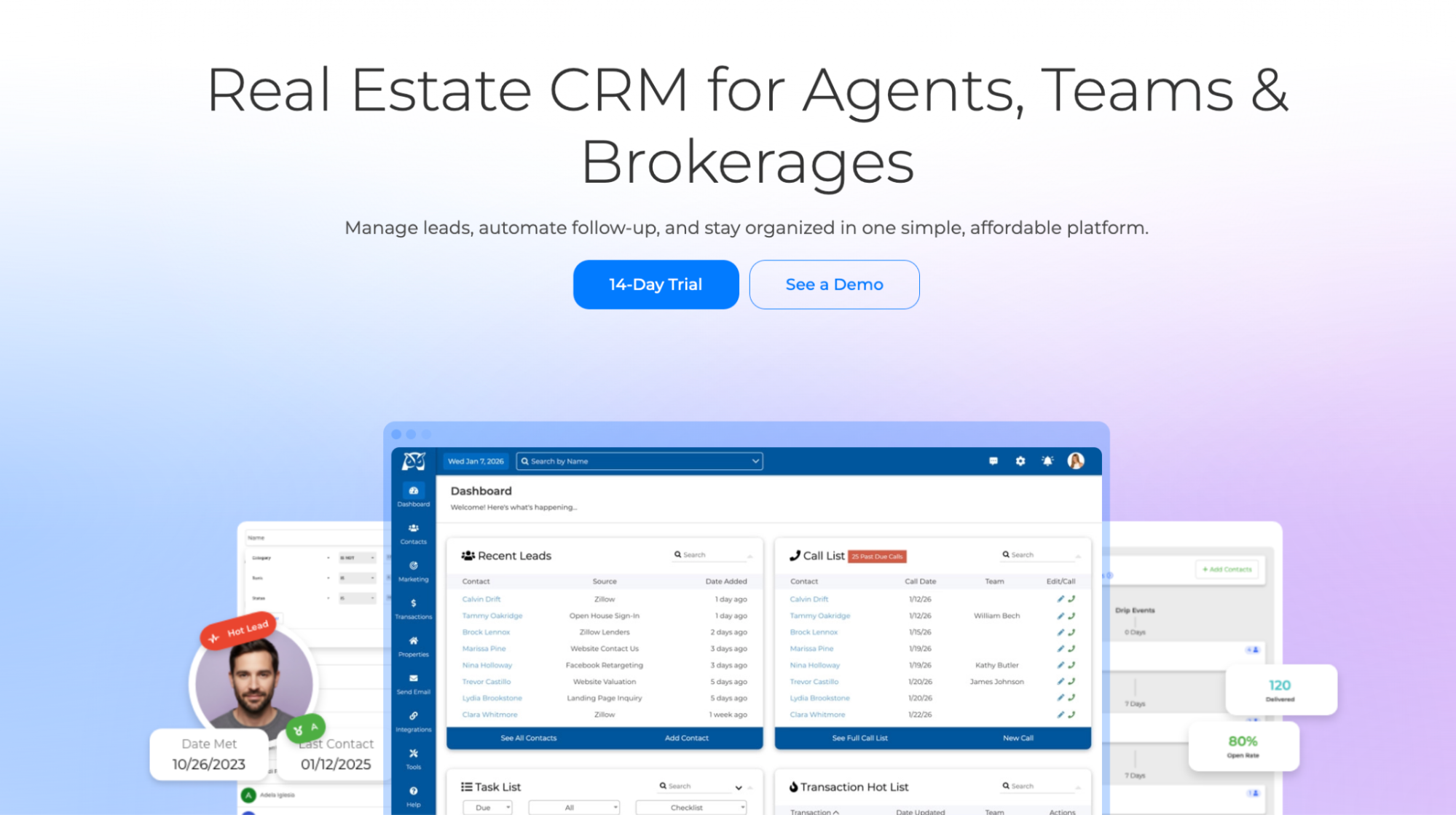
It covers the full spectrum of what agents need: lead capture forms, drip campaigns, and marketing automation – all at a flat monthly price.
Key features:
- Built-in lead nurturing sequences designed around real estate workflows
- Drip campaigns and email marketing campaigns pre-built for common scenarios: new buyer follow up, listing anniversary, market update sequences
- One-on-one onboarding is included with all plans, which meaningfully improves initial adoption compared to self-serve tools
- Wise Agent integrates with major lead sources, including Zillow, Realtor.com, and Facebook Lead Ads
Wise Agent pricing: Flat rate of $49/month for unlimited contacts, which makes the real estate CRM cost predictable regardless of database size. A 14-day free trial is available.
Best for: Residential real estate agents who want a purpose-built agent CRM with pre-built drip campaigns and hands-on onboarding support. The flat pricing model is an advantage for agents with large contact databases.
Worth noting: The interface shows its age compared to more modern platforms, and the depth of marketing tools comes with a corresponding complexity. Agents who want to use everything Wise Agent offers will get value from it; those who want something lean may find it overpowered.
3. Follow Up Boss
Follow Up Boss has built a strong reputation among real estate teams for its lead management and automated follow-up capabilities.

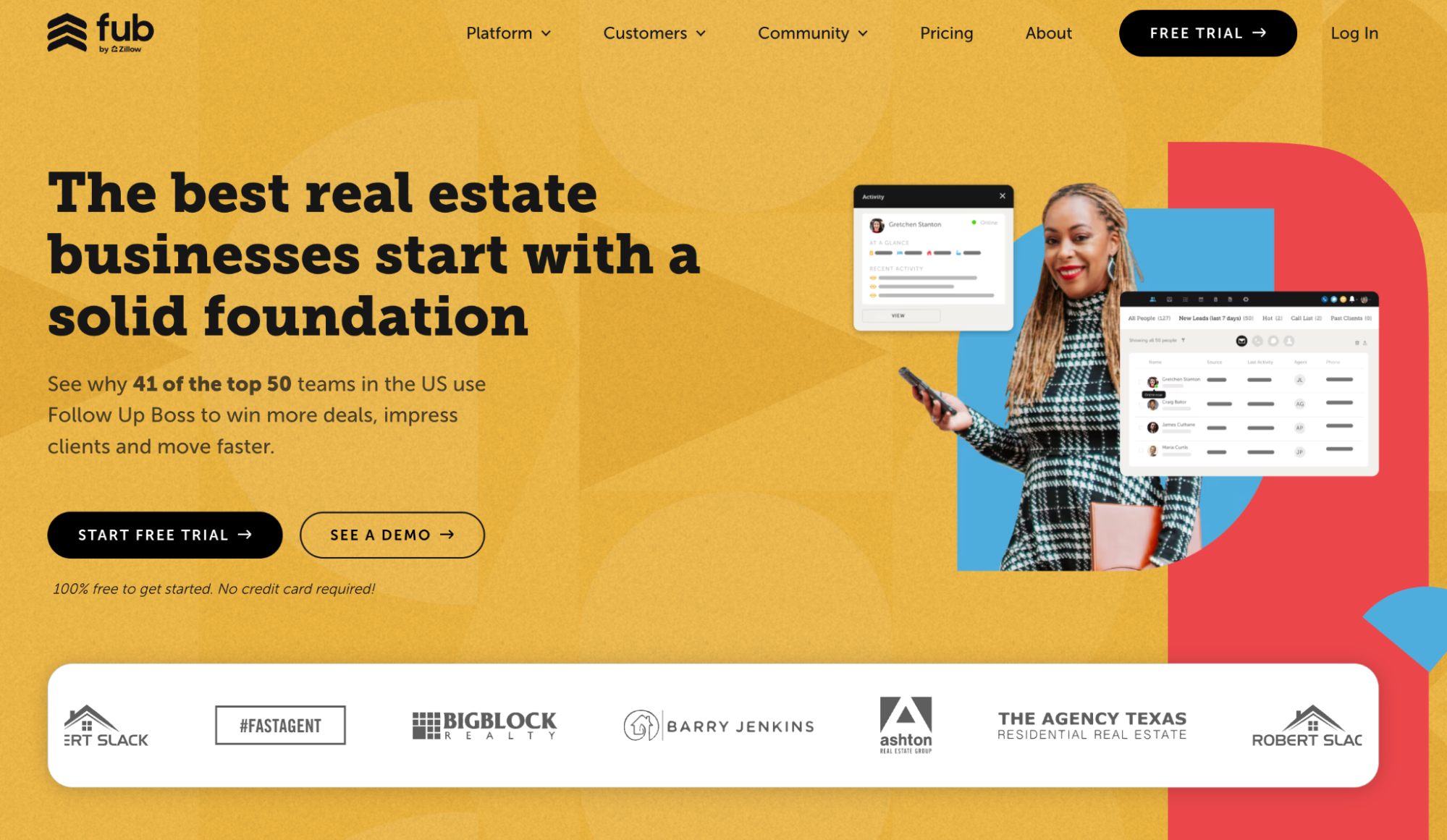
The core premise is simple: leads come in, get routed to the right agent automatically, and trigger a follow-up sequence immediately. The platform is particularly strong for real estate teams managing high volumes of inbound leads across multiple channels.
Key features:
- Automatic lead routing from 200+ lead sources directly into the CRM
- Built-in calling and texting from within the platform, with all communication logged automatically
- Team-level reporting that gives managers visibility into agent activity
- Integrates with most major real estate software, including MLS data feeds
Best for: Growing real estate teams with high lead volume. Less suited to those whose business is primarily referral-based.
4. Zoho CRM
Zoho CRM isn't a real estate-specific platform, but its breadth of customization makes it adaptable for real estate workflows that don't fit neatly into the templates provided by purpose-built tools.

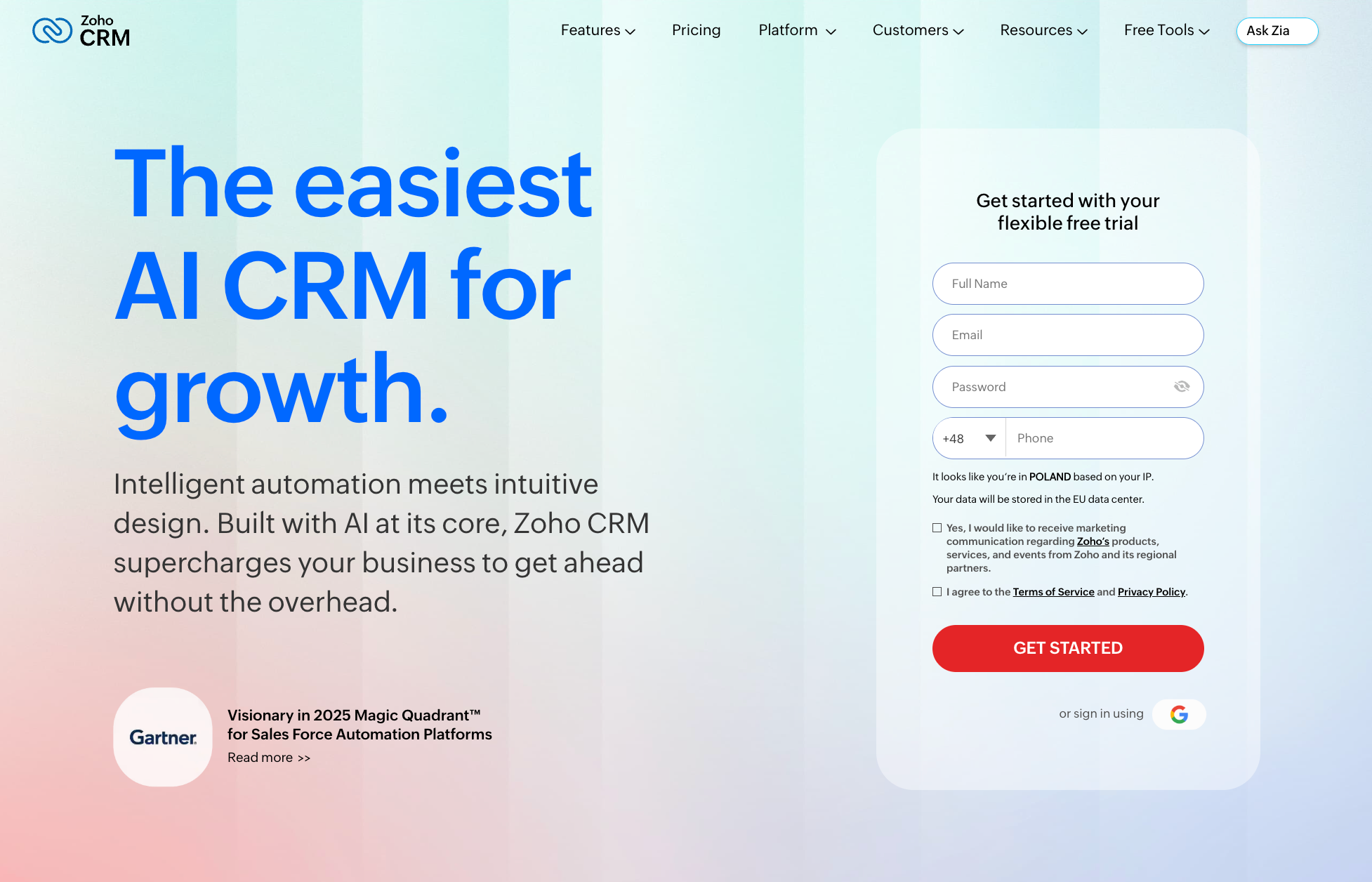
Agents and teams willing to invest in configuration get a highly capable system; those who want something ready to use on day one will find it demanding.
Key features:
- Highly configurable pipelines and workflows that can be shaped around specific real estate processes
- AI-powered lead scoring and sales forecasting are built into higher-tier plans
- Extensive integration library covering most tools real estate professionals use
- Reporting tools and dashboards that provide detailed pipeline analytics
Zoho CRM pricing: Free plan for up to 3 users; paid plans start from $14/user/month. Full Zoho CRM pricing comparison here.
Best for: Tech-comfortable agents with specific workflow requirements that off-the-shelf real estate CRMs don't accommodate. The configuration investment is real, and the value is proportional to the effort put in upfront.
5. Real Geeks
Real Geeks is a real estate platform rather than a pure CRM, combining a lead generation website, IDX property search, and CRM in one package.

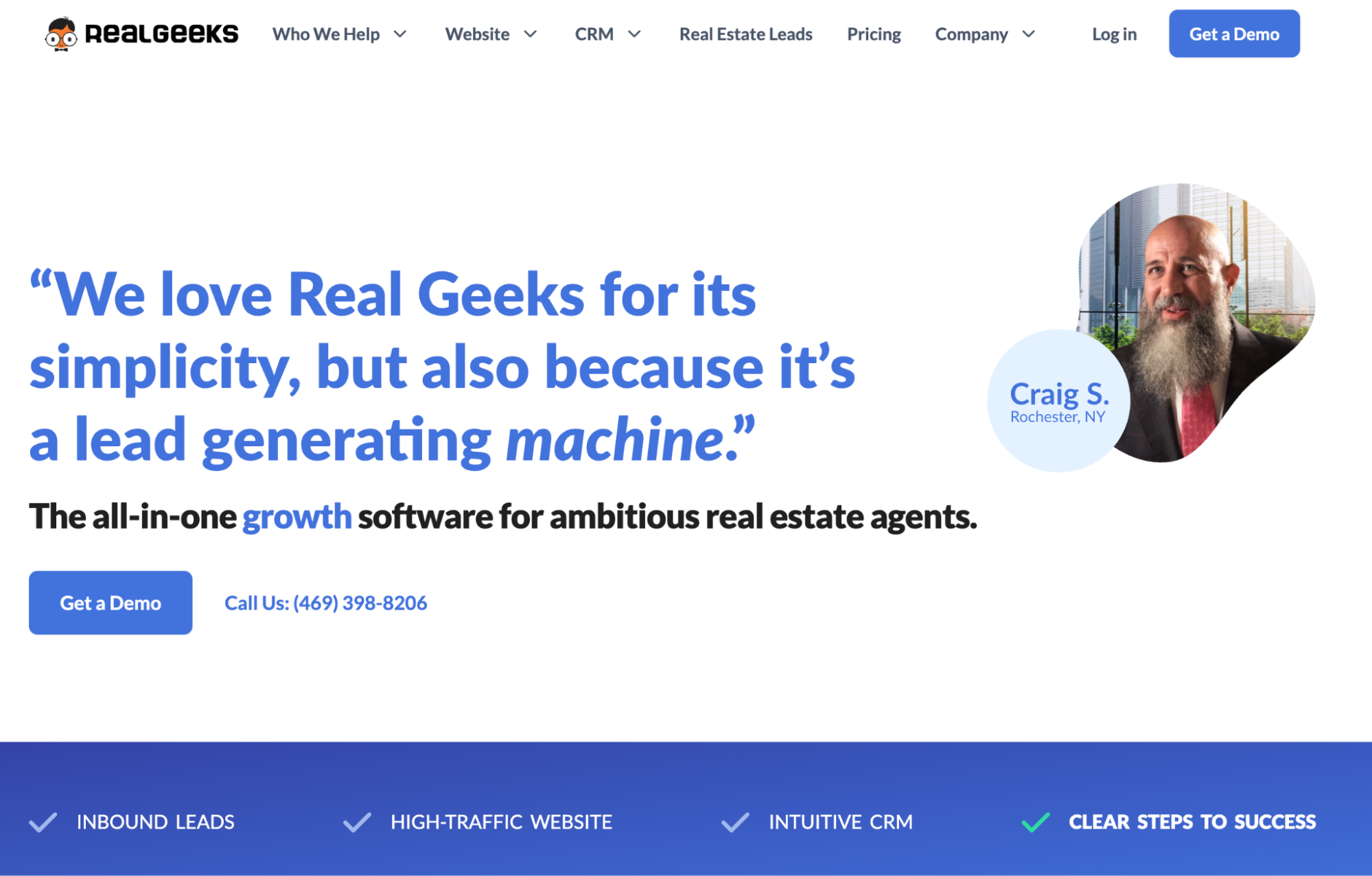
If your primary lead source is your own website, the tight integration between the site and the CRM is a genuine advantage at Real Geeks: lead data flows directly from property search activity into the CRM, with browsing behaviour visible on the lead record.
Key features:
- IDX website and lead capture built in, so leads from property searches enter the CRM automatically
- Behavioural lead scoring based on property search activity, helping agents prioritize which new leads to call first
- Automated text and email follow-up triggered by specific lead behaviours
- Social media marketing tools for Facebook and Google ad campaigns, integrated with lead capture
Best for: agents who rely on their own website as the core driver of lead generation. It’s less compelling for those whose business comes primarily from referrals or offline channels, where a built-in website can add unnecessary cost.
6. Pipedrive
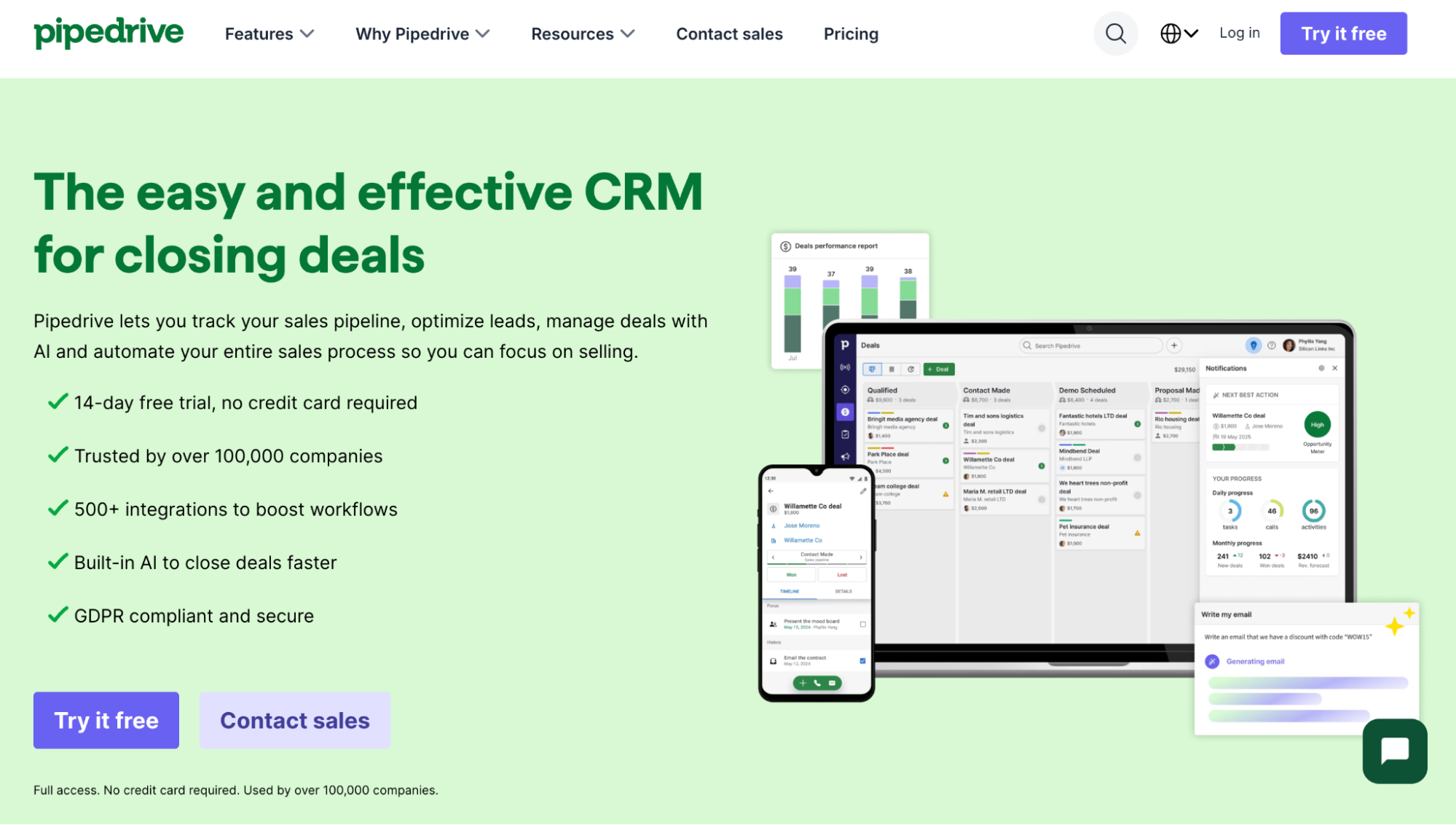
Pipedrive is a sales-focused CRM, but its deal management capabilities make it a reasonable fit for agents who find purpose-built real estate CRMs either too expensive or too rigid.

Key features:
- Visual drag-and-drop pipeline that maps cleanly to a real estate sales process
- Strong activity-based selling approach: the system prompts agents on what to do next on every deal
- Good email integration with automatic email logging and templates
- Extensive integration library, though real estate-specific integrations are thinner than on dedicated platforms
Best for: Agents who've tried real estate-specific CRMs and found them overly complex or overpriced, and who want an intuitive sales tool they can adapt to their workflow.
See how Pipedrive compares to Capsule.
Four mistakes real estate agents make when choosing a CRM
Choosing features, over company fit
It's easy to get drawn in by the most fully-loaded platform on the market – the one with a built-in website builder, drip campaigns, social media tools, and lead scoring all under one roof.
The problem is that more features mean more setup, more decisions, and more things to maintain. Most agents use a fraction of what they pay for. The right question isn't "does this CRM have everything?" but "will I actually use this every day?"
Treating the free trial as a demo rather than a test
A free trial is only useful if you run real data through it. Import your actual contacts, log a real client interaction, build one real estate workflow, and track a live deal through the pipeline. Clicking around an empty system tells you nothing about whether the tool fits your process. The agents who switch CRMs repeatedly are usually the ones who never tested with real work during the trial period.
Underestimating the cost of switching later
Real estate CRM cost isn't just the monthly subscription. When you've spent six months building out your pipelines, nurture leads sequences, and client history in one platform, moving to another means either migrating that data or starting over.
Choosing a tool you can grow with – one that handles the essential features a solo agent needs today but scales to support a team later – saves a huge amount of disruption down the line.
Ignoring how other real estate CRMs handle the client side versus the lead side
Most agents evaluate CRM software on lead management: how fast leads come in, how automated the follow up is, and how easy it is to capture leads from multiple sources. It’s not entirely wrong, but customer relationship management is equally about the clients you already have.
The top real estate CRMs make it easy to manage leads coming in and to maintain the long-term client interactions that generate referrals and valuable insights about your market over time. Tools that optimize only for lead volume at the top of the funnel often neglect the relationship depth that drives most deals in residential real estate.
How to choose the right real estate CRM
Not every agent needs the same tool. A few questions that sharpen the decision:
- Where do your leads come from? If your business is referral-based, a clean contact management and follow-up system matters most. If you're running paid portal or social media advertising, built-in lead capture and routing capabilities earn their cost.
- Are you a solo agent or part of a team? Solo agents benefit from simplicity and a low real estate CRM cost. Larger real estate teams need reporting tools, role-based visibility, and the ability to assign and track leads across multiple agents.
- How much time can you invest in setup? Purpose-built platforms like Wise Agent come with onboarding support. More flexible tools reward configuration effort but require it upfront. If the goal is to be up and running within a day, simpler platforms like Capsule are a better starting point.
- What does your current workflow look like? A CRM that connects cleanly with the tools you already use – Google Calendar, your email client, your lead sources – will get adopted. One that requires a parallel workflow alongside existing habits usually won't.
The right CRM makes the difference
Real estate is a relationship business, and the tools you use to manage those relationships either compound your marketing efforts or quietly undermine them.
Basic tools get you organized. The best CRM software for real estate goes further – it keeps your pipeline moving and makes client management feel systematic.
When you compare real estate CRMs, the differences that matter most aren't on the feature list. They show up in how quickly a new lead gets a response, how well an agent knows a client's history before a call, and how reliably the process runs when the market gets busy. The right platform gives you back the time and headspace to focus on closing deals.
Whether you need sophisticated lead generation tools or simply a more reliable way to stay in touch with past clients, there's a real estate CRM on this list that fits. Start with a free trial, test it with real data, and see which one you'll actually use.