Buying, selling or leasing property is rarely one transaction. A landlord you speak to this spring might not be ready until next year. A seller who chose another agent might come back to you in 18 months. A CRM is how you keep track of all of it, so the right conversation happens at the right time.
This guide walks through how to use a CRM in real estate, step by step: how to set up your contacts and properties, track deals, keep follow-up on schedule and see what's working. We use Capsule for the examples, but the principles apply to any CRM.
Do you need a specialist real estate CRM?
Some CRMs are built only for real estate. They can suit high-volume residential teams, but they often come with features you won't use and a price to match. For many small firms, a general CRM you can tailor to the way you work is simpler to set up and easier to get the whole team using.
If you're still running things from a spreadsheet, our guide to spreadsheets vs CRM covers the signs it's time to switch. If budget is the main concern, see our pick of the best free CRMs for real estate.
Step 1: Decide how to structure your contacts
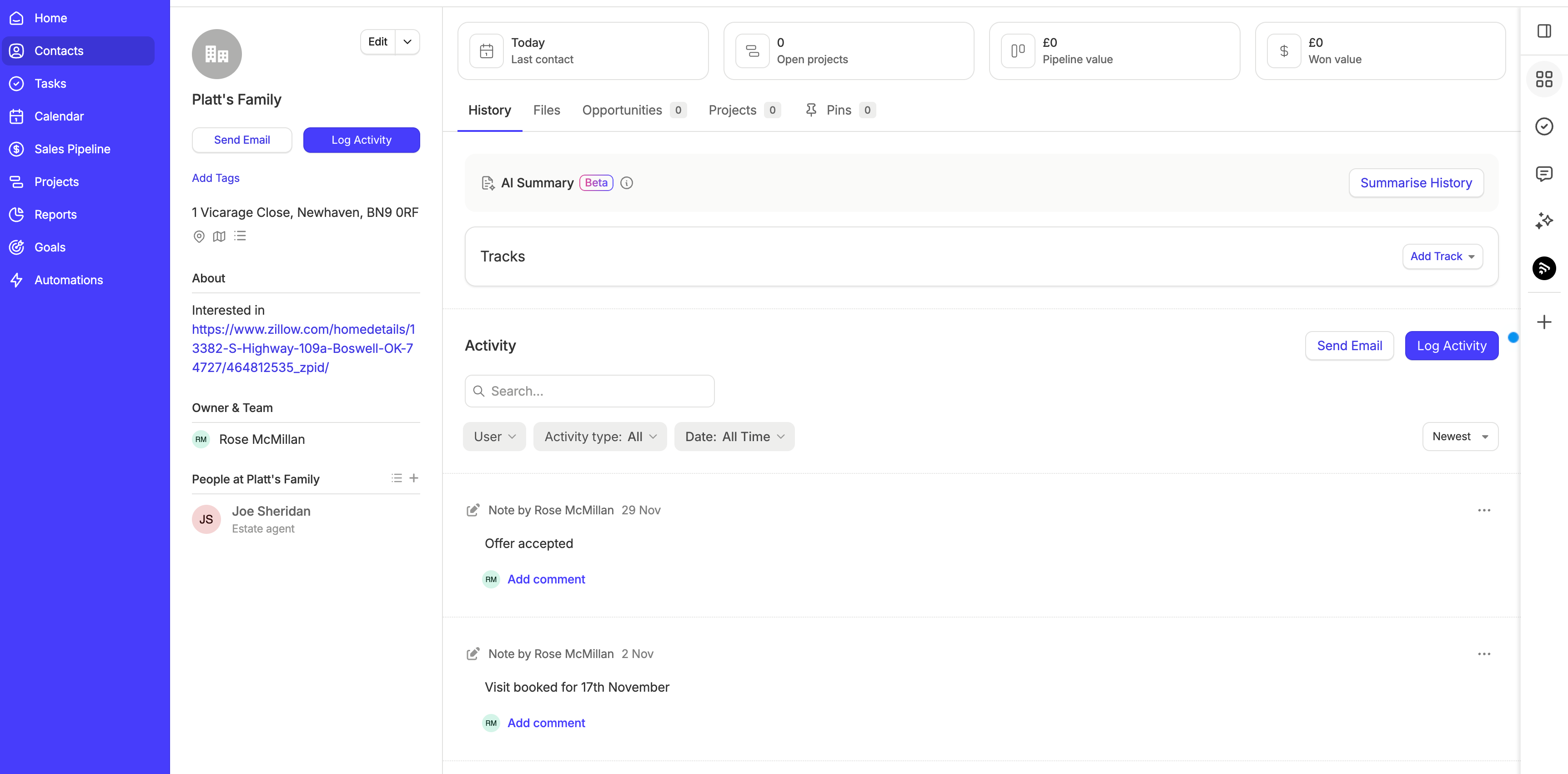
Before you import anything, decide what your main record should be. In Capsule, each person can sit under an Organization, and you can use that in a couple of ways:
- Organization as the client: a company, family or investor group, with each person you deal with listed underneath.
- Organization as the property: everyone with an interest in a building, from the landlord to prospective tenants, grouped in one place.
Pick the structure that matches what you look up most often. Then add tags such as landlord, investor, seller, past client or referrer, so you can pull up any group in seconds.
Once your contacts are in, connect your email so every conversation is stored against the right person. You'll know what's been said and sent, and to whom, without relying on memory. You can also add a link to a listing on Rightmove, Zillow or your own website, so the details are one click away.

Step 2: Give every property its own Project
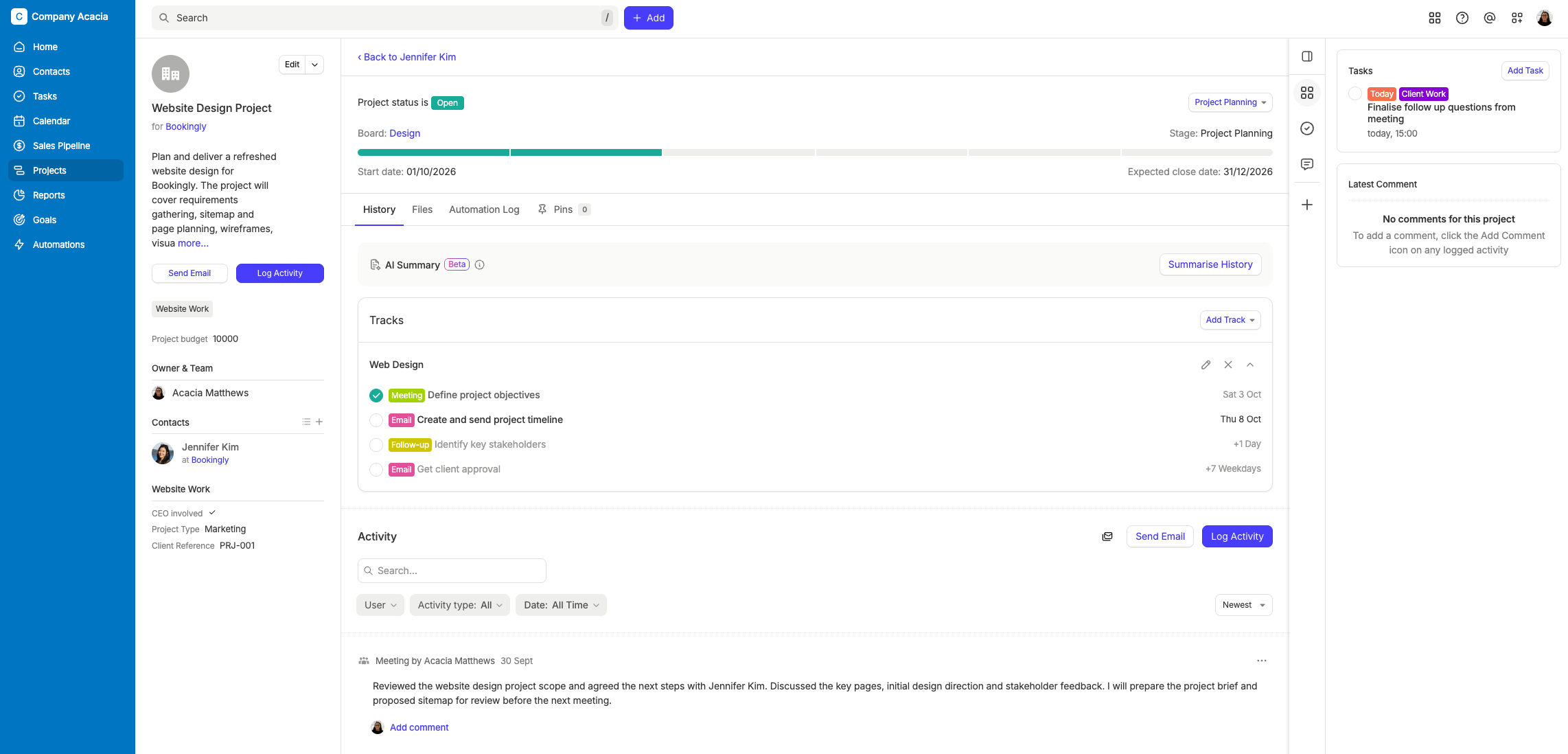
In Capsule, Projects store everything about a piece of work in one place, separate from your sales pipeline. That makes them a natural fit for properties. Create a Project for each property and attach the people involved, along with emails, notes, documents such as ID and contracts, and tasks. It becomes one folder for each property that the whole team can see.

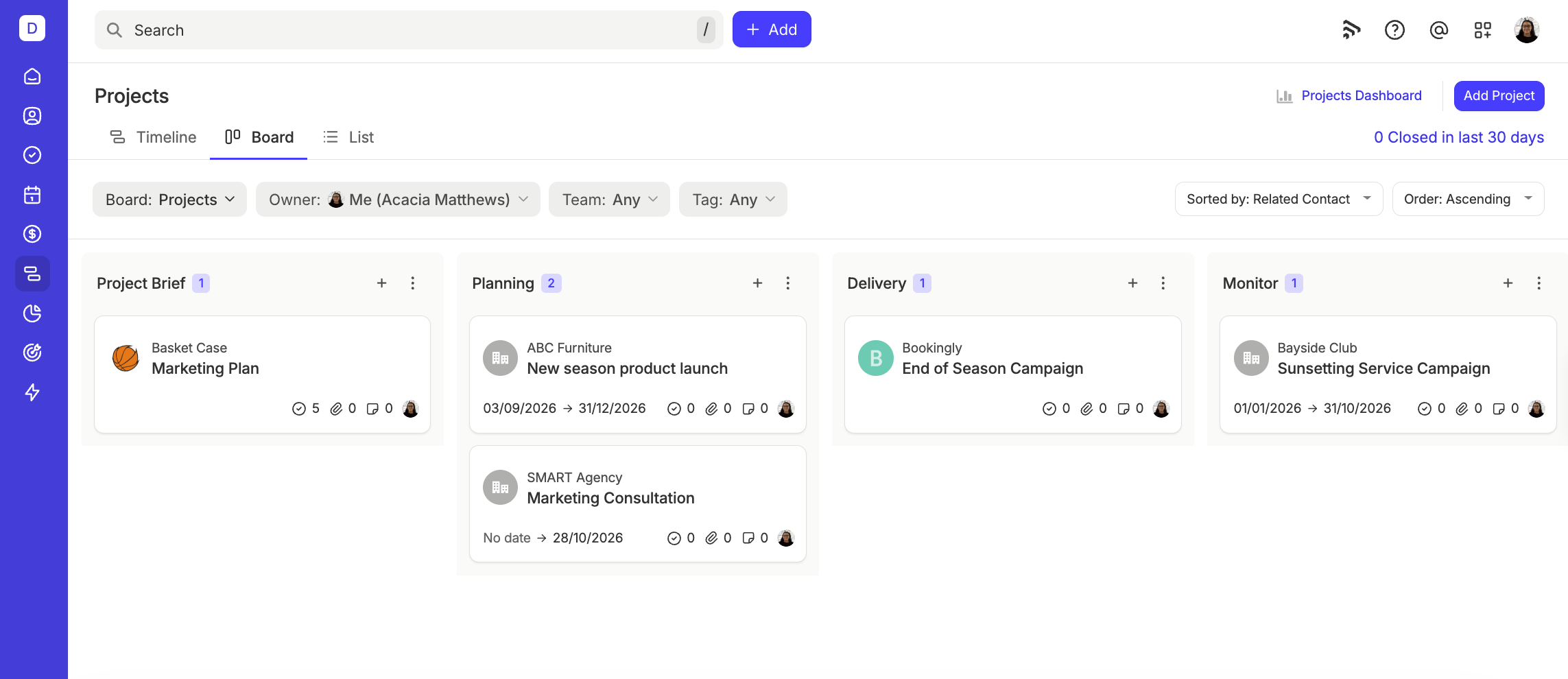
You can move Projects through stages on a Board, for example new, on the market, under offer and closed. Add custom fields for the details you need, like asking price, square footage or lease end date.

Step 3: Set up your pipeline
Use the sales pipeline to track deals rather than properties: a sale, a letting, a lease renewal or a new client you're pitching to. Customize the stages so they match how deals actually move in your firm. You'll see at a glance what's close, what's stuck and what needs attention.
Capsule also flags stale opportunities that haven't been worked on for a while, so no deal sits forgotten. Pipeline reports show where deals slow down, which helps you compare performance across agents or offices.
Step 4: Put follow-up on a schedule
A lot of real estate business comes from people who weren't ready the first time you spoke: the landlord who said “not this year”, the investor waiting for the right deal, the past client who might sell again. The hard part is remembering to get back in touch.
Tasks help here. When a client asks a question at a viewing that you can't answer yet, add a follow-up task from the mobile app and assign it to a colleague if needed.
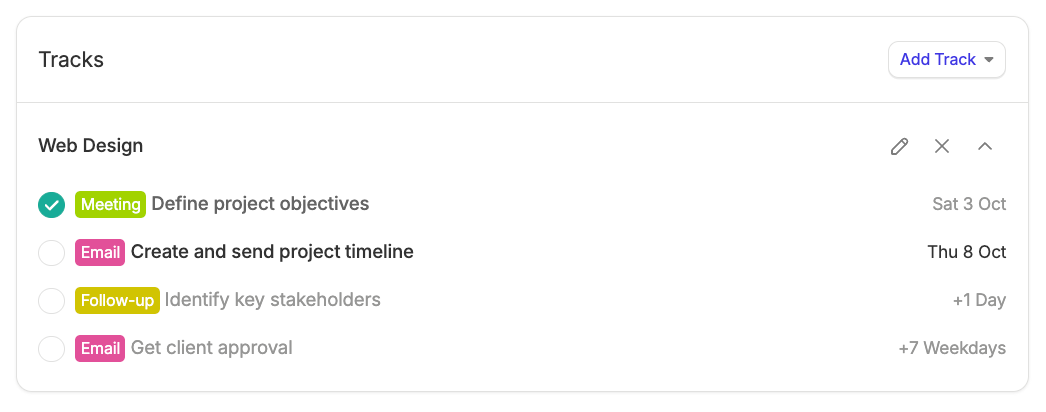
For processes you repeat, use Tracks: a set of pre-defined tasks you can apply to a contact, opportunity or Project in one go. A “not yet” Track, for example, could set check-in reminders at three, six and twelve months, so every client gets the same level of attention and nothing gets missed.

Step 5: Report on what's working
Once your data lives in one place, reporting gets much easier. Activity reports show the work done across contacts, opportunities and Projects, and pipeline reports show what's moving and what isn't.
That insight is useful when you're pitching for new business. You can show a seller or landlord how you work and how long things typically take, with the data to back it up.
If you need reports beyond what's built in, you can connect Capsule to Looker Studio on the Growth plan and above.
Getting started
You don't need to set everything up at once. Start with your contacts and tags, add your live properties as Projects, then build your pipeline and follow-up Tracks as you go. To see how Capsule fits real estate firms, take a look at CRM for real estate.
Ready to try it? Start your free 14-day trial. Simple to set up, no card required.