
Sales teams usually record a reason when an opportunity closes. A buyer chose another vendor, pricing became an issue, timing changed, budget disappeared, or the deal simply stopped progressing.
Those labels are awesome for reporting, but they rarely explain the full decision.
A deal marked as lost on price may actually have been lost because the buyer did not see enough value to justify the price. A competitor loss may have more to do with implementation, internal approval, or how well the sales process addressed the concerns of several stakeholders. Wins can be equally misleading when the CRM tells you who bought but not what influenced the final choice.
Win-loss analysis adds that missing layer. It combines CRM data with buyer feedback and looks across several deals for patterns that sales, marketing and product teams can act on.
What is win-loss analysis?
Win-loss analysis is a structured review of won and lost sales opportunities designed to understand what influenced the buyer's decision. It goes further than looking at win rate or counting Lost Reasons because it combines quantitative deal information with qualitative feedback from buyers.

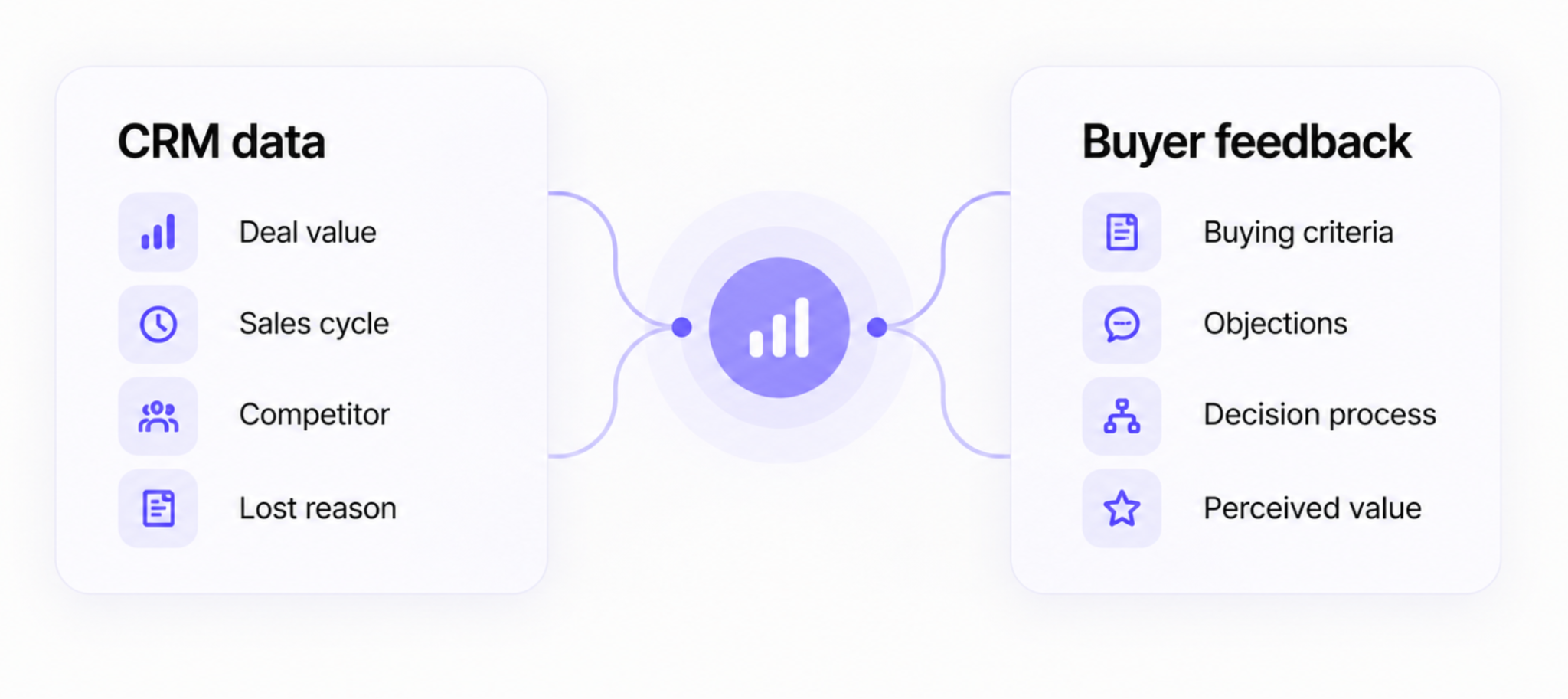
The CRM provides one side of the picture. Opportunity value, source, sales cycle length, pipeline history, owner, and Lost Reason can reveal where patterns are emerging. Buyer interviews add context that may never appear in a CRM field, including how the customer compared alternatives, which concerns carried the most weight, and what happened inside the buying organization.
Neither source is enough on its own. CRM data can show that five deals were lost to the same competitor without explaining why. Buyer feedback can produce interesting comments without showing whether the same issue appears across segments, reps, or deal sizes.
A stronger win-loss analysis connects the two, helping teams identify recurring patterns that can improve future qualification, messaging, sales conversations, and product decisions.
Our guide to understanding why you’re losing sales is a good starting point for teams that don’t yet record why Opportunities are being lost.
How to conduct a win-loss analysis
Start with a specific question that gives your review of closed deals a clear direction.
A company may want to understand why one competitor has started winning more often, why larger Opportunities are taking longer to close or why win rate has fallen in a specific segment. A narrow question makes it easier to select the right deals and decide which buyer feedback to take into account.
Then collect the CRM context before speaking to customers. For each Opportunity, review information such as:
- outcome;
- deal value;
- customer segment;
- lead source;
- sales cycle length;
- pipeline stage history;
- competitor, where known;
- Lost Reason;
- owner;
- expected and actual close date;
- major gaps in activity.
You can learn more about analyzing pipeline performance, lost reasons and customer behavior in our CRM analytics guide. That data gives the interview process a stronger starting point because the researcher can ask about patterns already visible in the pipeline.
The sample should include enough variation to avoid learning only from the loudest win or most painful loss. Include won and lost deals, different account sizes, several sales reps and more than one customer segment where volume allows. You’re looking for themes that repeat across deals rather than trying to turn one interview into a company-wide conclusion.
For example, imagine you're reviewing three recently closed Opportunities. The first was a 32-day sales cycle with a small business that eventually chose Competitor X. The CRM lists price as the Lost Reason, and you've already interviewed the buyer.
The second Opportunity was a mid-market deal that your team won after 54 days, despite competition from another provider. The buyer interview is complete, giving you an opportunity to understand what worked in your favor.
The third was another mid-market deal, lost to Competitor X after 71 days. The CRM points to a feature gap, and the buyer has also provided feedback.
Looking at these deals together gives you a starting point for further investigation. Did Competitor X win for different reasons, or are the CRM labels hiding a common problem? What helped your team win the second deal? Comparing the interviews with the sales history can reveal patterns that wouldn't be obvious from the outcomes alone.
Win-loss interview questions to ask buyers
Structure the interview around how the buyer reached their decision. People are more likely to share useful feedback when the conversation feels open and there's no pressure to justify their choice or reconsider the sale.
Ask about the full journey: what triggered the search, which alternatives made the shortlist, who influenced the decision and which criteria became more important as the evaluation progressed. Include questions about the sales process to understand how it shaped the buyer's overall experience.

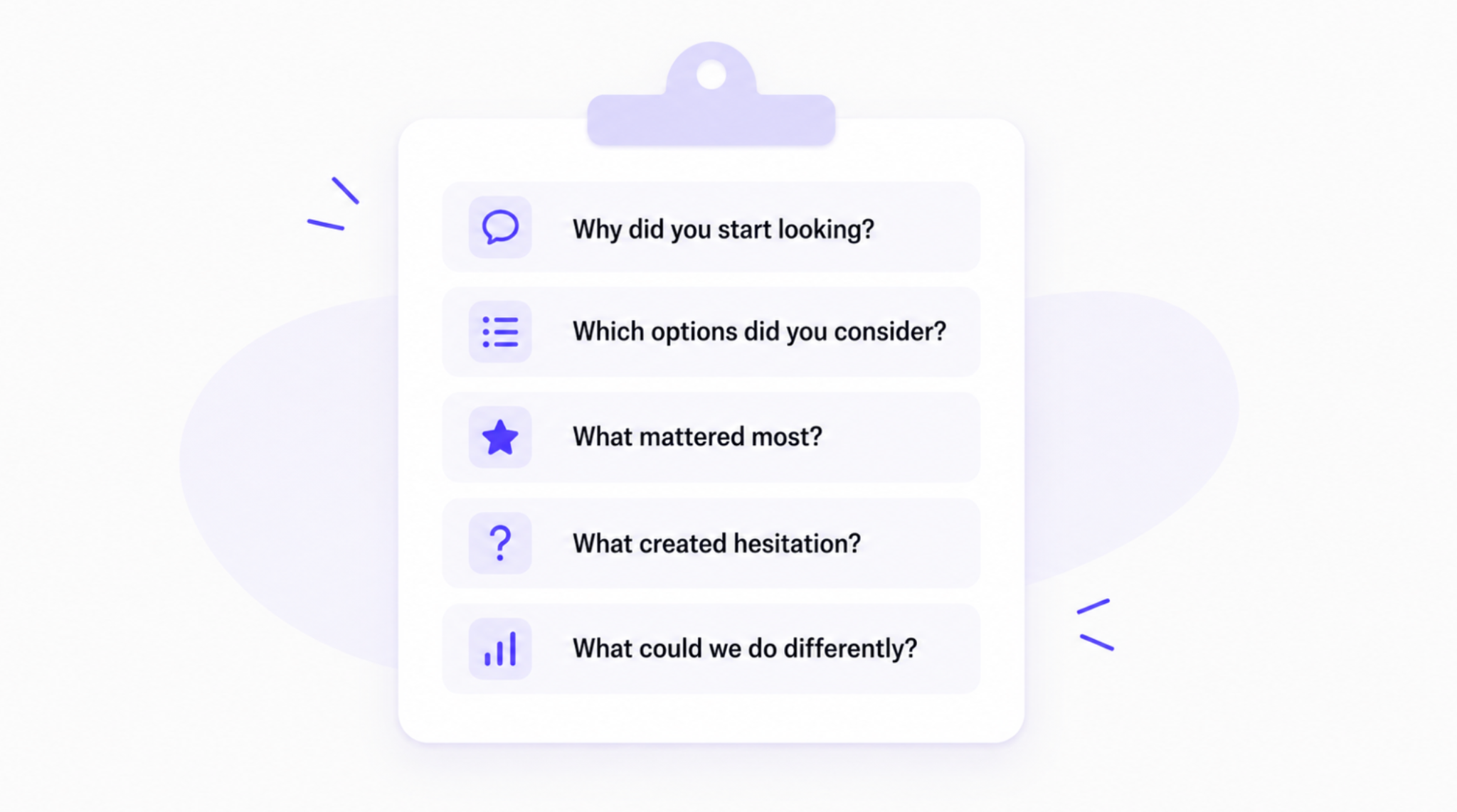
Questions worth adapting include:
- What prompted you to start looking for a solution?
- Which alternatives did you seriously consider?
- Which criteria mattered most when you compared them?
- Did those priorities change during the buying process?
- What gave you confidence in the option you eventually chose?
- What created hesitation or uncertainty?
- Who else influenced the final decision?
- How did our sales process affect your view?
- Was anything missing from the product, offer or information we provided?
- What could we have done differently?
Use similar questions with won deals. A customer who bought may reveal strengths the sales team has been underestimating, such as responsiveness, implementation speed or a part of the product that rarely appears in marketing.
How to analyze win-loss data
Interview notes become far more valuable when the feedback can be compared with actual deal data. Create a manageable set of themes and apply them consistently across the sample.
The categories will depend on the business, but common themes include pricing, product fit, integrations, implementation, internal approval, trust, competitor positioning, sales experience and timing. Avoid creating a new category every time a buyer phrases the same issue differently because the analysis becomes too fragmented to show patterns.
The most interesting findings often appear when buyer feedback and CRM data disagree.
A CRM may show a cluster of Opportunities lost on price, while interviews suggest that buyers struggled to justify the business case internally. A sales team may believe a competitor wins because of one feature, while buyers repeatedly mention easier onboarding instead. Those differences change the action the company should take.

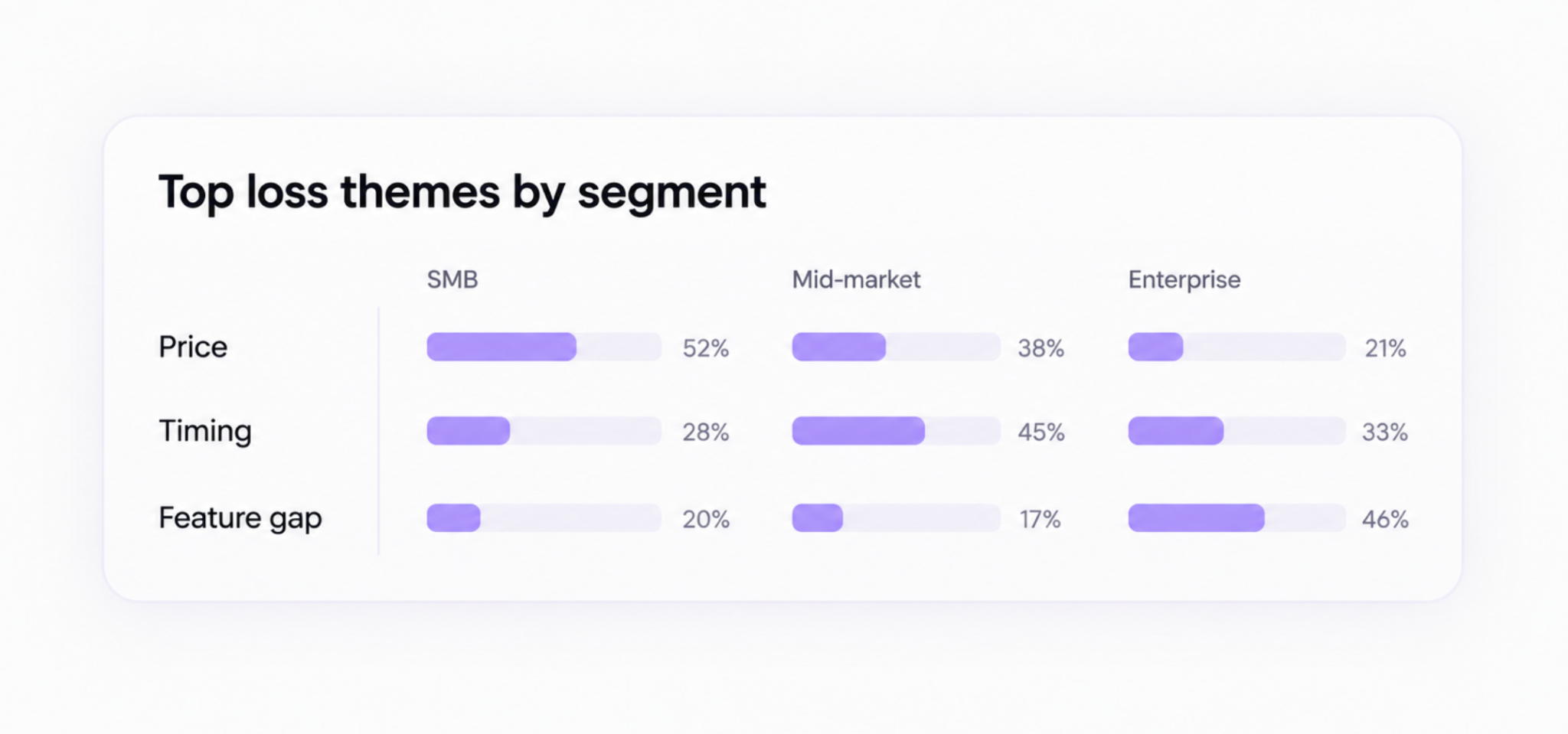
Segment the findings where there is enough data to support it. Rather than creating separate subsections for every possible cut, compare the analysis by:
- customer segment;
- competitor;
- deal size;
- sales rep;
- pipeline stage;
- sales cycle length;
- lead source.
Capsule reporting can help identify where won and lost Opportunities differ before buyer feedback is layered on top. The combination makes it easier to distinguish a broad sales problem from something concentrated in one segment or competitor.
A win-loss analysis template
The analysis should lead to concrete changes in how the team works.
Instead of ending with a presentation full of percentages and quotes, connect each repeated finding to an owner and a decision. Some findings will belong with sales, while others should go to marketing, product, or customer teams.
For each finding, record the evidence behind it, the action you want to take, who's responsible and how you'll measure progress. You can keep everything in a shared document or spreadsheet without building a complicated reporting system.
Here's what that might look like in practice.
Buyers struggle to justify your pricing. Six interviews point to the same concern, and your CRM shows a growing number of price-related losses. Sales and marketing could work together to strengthen ROI evidence and give prospects a clearer business case. Track price-related losses in future deals to see whether the changes have an effect.
Poor-fit leads are reaching late pipeline stages. Longer sales cycles and buyer feedback suggest that qualification needs attention. The sales team could review its qualification criteria and monitor stage conversion rates to see whether unsuitable Opportunities are being identified earlier.
A competitor keeps winning because of an integration gap. Four lost deals mention the same missing integration. Product should review the gap and assess whether it's worth prioritizing. Future losses to that competitor can help show how significant the issue remains.
Customers value fast onboarding. Five interviews with buyers who chose your product highlight onboarding speed as a reason for their decision. Marketing could bring that strength into product messaging and sales materials, then continue collecting feedback from new customers to see whether it resonates.
The important part is keeping every proposed change tied to evidence. That way, the team can return to the same findings later and evaluate whether its decisions made a difference.
Any changes you make should reflect what the analysis reveals. Discounts won't fix poor qualification, better messaging won't solve a missing integration and sales coaching won't bring back a budget that was cut for reasons outside the buying process.
Review the results again after changes have had time to influence new deals. Win-loss analysis works best as a feedback loop rather than a one-time research project.
How often should you run win-loss analysis?
The right cadence depends on deal volume and how quickly the market or product changes. A high-volume sales organization may review closed Opportunities every month and run buyer interviews continuously. A smaller B2B team may have enough data for a quarterly review instead.
Focused research can also be triggered by a specific change. If one competitor suddenly appears in more Lost Reasons, win rate drops in a key segment or sales cycles become noticeably longer, there is little reason to wait for the next scheduled review.
Avoid forcing a cadence that produces tiny samples. Interviewing two buyers every month may create noise where reviewing eight to ten deals each quarter would show clearer patterns. Give yourself enough data to spot trends before deciding what needs to change.
Older data comes with its own challenges. Waiting too long can leave the team analyzing a version of the product, pricing, or sales process that has already changed.
Do you need win-loss analysis software?
Dedicated win-loss analysis software can help companies manage interviews, feedback and larger research programs, particularly when many opportunities are being reviewed at once. Some platforms also specialize in buyer interviews or competitive intelligence.
Smaller teams can usually start with what they already have. CRM data, recorded Lost Reasons, buyer interviews, and a simple spreadsheet can provide enough information to identify patterns in why deals are won or lost. The key is to use consistent categories and keep each finding connected to the original opportunity.
As the number of interviews grows, keeping track of feedback and comparing results across different periods can become harder. That's when dedicated software may be worth considering, especially if several teams need access to the findings.
Use win-loss analysis to improve the next opportunity
Win-loss analysis should help your team make better decisions about the deals still ahead. If poor qualification keeps appearing in lost deals, you may need to revisit your lead criteria. If buyers regularly misunderstand your offering, it's worth reviewing how your sales team explains it. Patterns in competitor feedback can also show where your positioning needs work.
With Capsule CRM, you can track Won and Lost Opportunities, record Lost Reasons and use sales reports to see where deals are slipping away. Reports such as Lost Opportunities by Reason and Leaking Pipeline make it easier to identify recurring problems and decide where to focus your attention.
Combine those findings with what buyers tell you in interviews, and you'll have a clearer picture of what influences their decisions. Keep reviewing the results as new deals close, so your team can see whether the changes are working.
Want a clearer view of why your sales opportunities are won or lost? Try Capsule CRM for free and start turning your sales data into better decisions.