It's July, and half of the year is already gone.
For a sales team, that makes now the moment for a mid-year sales review. According to numerous studies, only 28% of reps hit their annual quota last year, the lowest figure in six years. A mid-year review is your last real chance to change that number before the year closes. Done well, it isn't a guilt meeting, but a clear read on which deals and habits deserve the second half, and which reps need backing to get there. Best of all, it replaces guesswork with a short list of decisions you can make this week. This guide gives you the questions, the method, and a template to copy.
What a mid-year performance review covers
A mid-year review is a structured check on progress toward your annual goals at the halfway point.
For a sales team, it covers two things at once:
- sales performance, meaning the numbers in your pipeline,
- and rep performance, meaning how your people are tracking against their own goals and targets.
A mid-year performance review folds both into one conversation. Treated as a real performance review, it gives every rep a clear read on their actual performance against target, with time left to do something about it.
It's the smaller cousin of the annual review. The annual review is the verdict at year-end; the mid-year assessment is the course-correction with time to act on it. Run it as an opportunity to evaluate progress and make necessary adjustments, and you avoid surprises at the end of December.
Many teams treat it as a box to tick. A review that exists to tick the box helps no one. Conducting mid-year reviews well is less about the form and more about the follow-through: the version worth running turns past performance into a plan for the remainder of the year.
What to pull before the review
Good reviews start with data instead of opinions. Before the meeting, pull the performance data that tells the real story. The aim is to make data-driven decisions, so gather the numbers first and the anecdotes second. Clean the data as you go, because a review built on stale records makes confident, wrong calls.
The short list to pull from your CRM:
- Revenue closed against your H1 target, by rep and by segment.
- Win rate and average deal size, compared to the beginning of the year.
- Sales cycle length and pipeline coverage for the second half.
- Activity data: calls and meetings logged per rep.
- Deal aging and lost reasons for everything that slipped or died.
Track these KPIs the same way every quarter, and the review almost writes itself. Set last year's mid-year numbers beside this year's where you can. A baseline turns a flat number into a trend, and a trend is what makes the meeting worth holding. Gartner found that up to 50% of forecasted deals end in no decision, so your lost-reason data matters as much as your wins.
9 questions that expose the real story
Nine questions, grouped into four lenses. Work through them in order. These are the top questions a mid-year review should answer, and the review questions that turn a vague check-in into a real diagnosis.
Pipeline truth
These three questions test if the number you're forecasting is real or hopeful.
- Are we on pace to hit the annual number, based on pipeline coverage we can defend? Healthy coverage runs 3 to 4 times the remaining gap; anything thinner is a wish dressed up as a forecast.
- Which deals are moving, and which are just sitting in the pipeline? If a deal hasn’t advanced in 30 days, it needs a reason, or it needs to be re-staged.
- What's our win rate this half, and how does it compare to the last half? A falling win rate on steady volume points to a qualification problem upstream.
Customer truth
These two ask where your time pays off and where it leaks.
- Which customer segments are closing fastest, and which are quietly draining time? Slow-moving segments often look busy, but convert at a lower rate.
- What do our won deals this half have in common that our lost deals lack? That shared trait is your sharpest scoring signal for the second half.
Activity truth
These two separate efforts from results.
- Is sales activity translating into a pipeline, or are reps busy in ways that don't move deals? High activity with a flat pipeline is motion mistaken for progress.
- Where are reps spending time that a process or tool could give back? Reps sell in only a fraction of their week, so every reclaimed hour counts.
Process truth
These two find the gaps you can fix before Q4.
- What patterns or recurring reasons show up in our lost deals? The same loss reason three times is a fixable process gap.
- Which part of the sales process slows every deal down, and what would it take to fix it? Name the single biggest bottleneck and the second half gets easier.
Score each answer against your overall performance for the half, and you'll quickly identify areas for improvement worth carrying into the second half. Write the answers down, too. A record you can compare to last year's notes is how you spot progress towards goals over time. None of the nine is a trick question. Each one points at a decision the second half depends on, which is what separates a useful review from a status update.
How to separate bad luck from bad process
A single lost deal is a story, but the same loss reason five times is a system. The job of a mid-year review is to tell one from the other.
If a deal died because a buyer's budget got frozen, that's bad luck. If three deals died at the proposal stage because nobody confirmed the decision-maker, that's a process gap you can close. Look for patterns or recurring reasons across the half, and treat one-offs as noise.
A quick example?
Say five deals slipped out of Q2. Two stalled because a champion left mid-deal, which is bad luck you can't coach away. The other three stalled at pricing, all because the rep never reached the budget holder. That's a sales process gap, and it's the one worth fixing for the rest of the year. Sorting losses this way keeps the review honest and the feedback constructive, because the rep hears a fix instead of a verdict. Over a few cycles, this habit builds a library of loss reasons you can act on, and it stops the team from blaming the market for problems they can fix.
Common mistakes that waste a mid-year sales review
A review goes wrong in a handful of familiar ways.
- Making it a guilt meeting. The fastest way to lose a team is to open with blame. Lead with the data and the plan, and the hard conversations land better.
- Reviewing numbers and ignoring people. The pipeline tells half the story; rep performance and morale tell the rest.
- Skipping the follow-up. A review with no second-half plan is a meeting you'll repeat in December with worse results.
- Comparing reps to each other instead of to their own goals. Fair beats flattering, and it protects employee engagement.
Avoid these four, and the review process earns its place on the calendar.
How often should you run sales reviews?
A mid-year review works best as one beat in a steady rhythm instead of a once-a-year event. Pair it with lighter monthly or weekly check-ins on pipeline and you catch problems early. Build the review process into your calendar now, and the mid-year version becomes a deeper take on a habit the team already knows.
Effective mid-year reviews lean on that rhythm, and a successful mid-year review is rarely the first time anyone looked at the numbers that year. Steady check-ins also make the conversation routine, so the deeper review feels like a checkpoint instead of an exam. Quarterly check-ins plus one mid-year deep dive is plenty for a small team; more than that and the reviews start eating the selling time they're meant to protect.
Rep performance reviews: best practices for a small team
The numbers tell you what happened, yet the rep conversation decides what happens next. For a sales manager running a small team, a mid-year performance review works best as a two-way check-in, beyond a one-way verdict.
A few best practices keep these reviews useful:
- Tie feedback to specific examples. "Your discovery calls improved" lands harder as "your last three discovery calls each booked a next step."
- Separate effort from outcome. A sales rep can do everything right and lose to a frozen budget; reviewing their performance fairly means crediting the work.
- Point to one or two development opportunities at most. Real employee growth comes from one focused change a quarter.
- Agree the next steps together. Shared ownership beats a handed-down list.
The best mid-year reviews feel like a conversation between managers and employees with a shared goal.
A sales leader who treats mid-year evaluations as coaching, beyond grading, gets more from the same hour. If a rep keeps losing at the same stage, name the skill to build and make it the quarter's one development opportunity. Done this way, a review supports employee performance and employee engagement at once.
Recognition isn't soft; it's retention math. Employees who feel recognized are 45% less likely to leave within two years, and 80% say constructive feedback lifts their productivity. For a small sales organization, that retention is the difference between a steady second half and a scramble. Build training and development into the plan where a rep needs it, and the performance review process becomes part of a culture of continuous improvement instead of a yearly formality.
Shape the review into a second-half action plan
The value of a review is in what you decide to do afterward. Turn each finding into a single action with an owner and a due date, and then give each one a success metric so you know later if it worked.
For example, if your win rate slipped because reps skip discovery, the action might read: standardize a short discovery checklist, owner the sales manager, due by mid-July, with the win rate back to target as the success metric. One finding, one owner, one number to watch.
Keep the plan short. Up to 5 priorities for the remainder of the year beats a list of 20 nobody revisits. For each one, decide what to stop and what to start. Then standardize whatever already works so it happens by default, no meeting required. Tie every action back to your individual and company goals so the team sees how their work ladders up to organizational success.
A mid-year review exists to make informed decisions about the rest of the year, with two quarters still left to act. Keep every action actionable and owned, and share the plan so everyone knows their next steps. Make the necessary adjustments now, and the annual review in December becomes a celebration, beyond a post-mortem.
How to run your mid-year review in Capsule
Every number in the review above lives in Capsule already, so prep takes minutes instead of a lost afternoon.

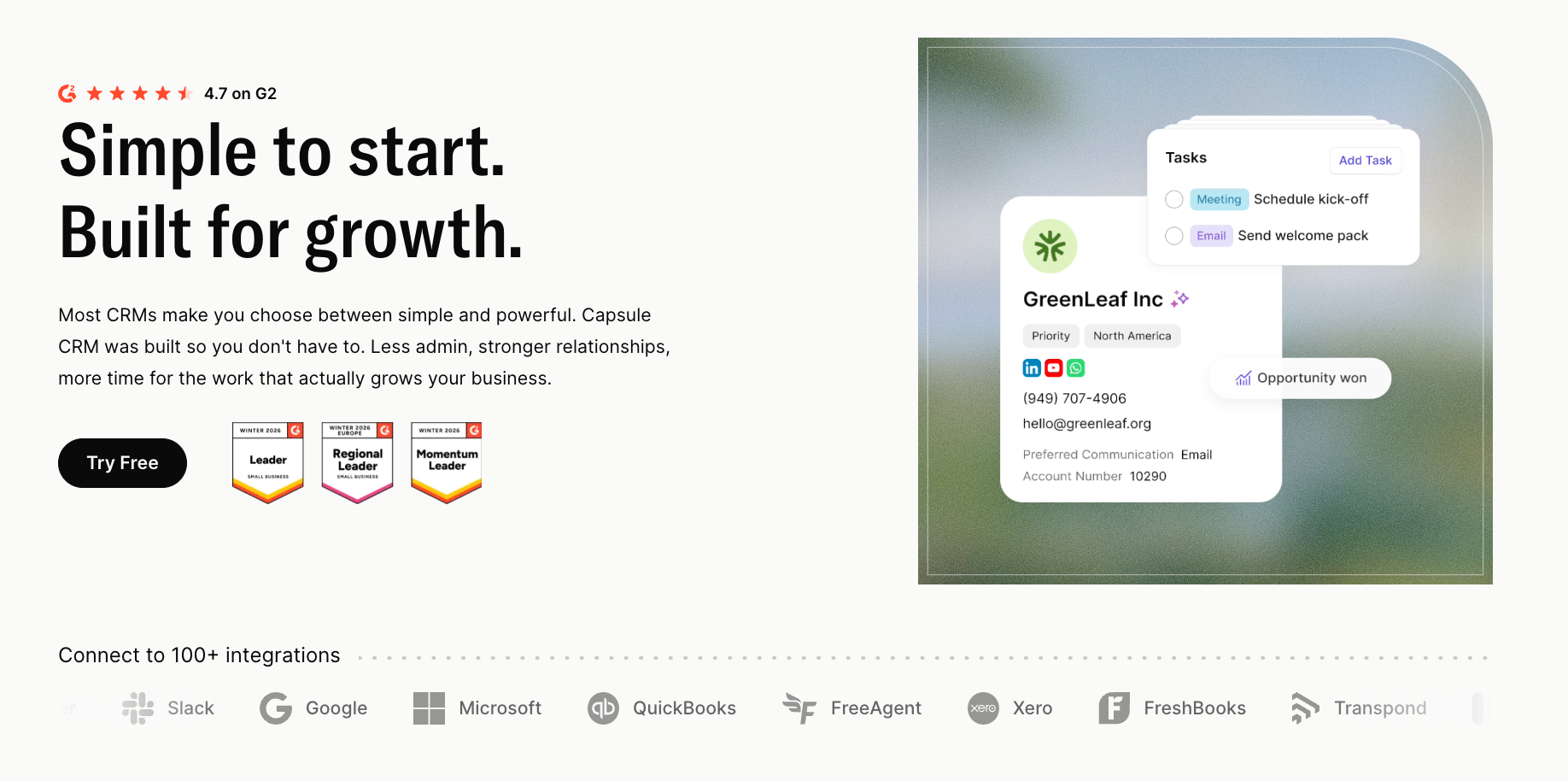
Start with the sales pipeline. Capsule's pipeline view shows every open opportunity by stage, value, and expected close date, so you can see at a glance which deals are real and which have aged past hope. That's questions one and two answered before the meeting starts.
Pull the trends from reporting. Capsule's sales reports break down win rate and activity by user and stage, which turns "how did H1 go?" into a chart instead of an argument. Add lost reasons to every closed deal and the report shows your most common patterns, so the process gaps name themselves and you can make data-driven decisions on the spot. Filter by rep or segment and the review becomes a working session instead of a slideshow.
Score the people's side with custom fields. A simple numeric field per rep, updated each quarter, gives you a fair performance assessment you can track over time. The data lives beside the deals it came from, so the conversation stays grounded in actual performance. Over a couple of quarters, those scores become a simple trend line for each rep, the fairest input a performance conversation can have.
Then bank the plan as Tasks and Tracks. Every action from your second-half plan becomes a task with an owner and a due date, and Tracks can fire the recurring check-ins so the plan survives past week one.
Capsule's free plan covers two users and up to 250 contacts at no cost, and the paid plans add a 14-day trial if you want the AI features on top.
Your mid-year sales review template
To make this repeatable, copy the mid-year sales review template that goes with this guide. It's a simple spreadsheet you can duplicate every six months and use to check in on progress towards goals.
https://docs.google.com/spreadsheets/d/16-qVeKBu7C0es6gZJ5H-PdQHOHY13KgXyHjG1bIoJEA/copy
It has five tabs:
- A mid-year scorecard that compares your H1 targets to actual results and flags what's on track.
- The nine questions, with room to answer and to mark each finding as bad luck or bad process.
- A rep review sheet for a fair, side-by-side performance assessment.
- A second-half action plan with an owner and due date for every action.
- A short instructions tab so anyone on the team can run the review.
Duplicate it, fill in your numbers, and you have a record you can compare against the next mid-year assessment. The template doubles as a set of review examples your team can learn from year over year. Hand it to a new sales manager, and they can run a credible review in their first week. Pair it with your CRM, and the prep work mostly disappears.
A mid-year review you’ll be glad you did
A mid-year review is worth the hour when it changes what the team does next.
The best ones don’t stop at “how did we do?” They turn the first half of the year into a plan for the second: which deals need attention, which habits are holding the team back, and which reps need more support.
That’s why July is the right time to do it. There’s still time to change the outcome, not just explain it later.
Capsule gives small sales teams one place to run that review properly: a live pipeline to check, reports to pull, custom fields to score what matters, and tasks to keep the plan moving.
Pull your numbers and book the review this week.