
The UK is home to 5.7 million SMEs, which make up 99.9% of all private-sector businesses. Many of them still run on spreadsheets and overflowing inboxes, where a hot lead goes cold because nobody remembered to follow up. A CRM fixes that by giving you one tidy home for every contact and every deal. Today, we’ll compare seven options for small businesses, with pricing in pounds and an eye on the realities of trading in the UK… and it starts with a homegrown option.
There are hundreds of CRM tools on the market, so finding the right fit can feel impossible. The right CRM is the one your team reaches for before turning to a spreadsheet. You don’t want the tool with the longest feature list, you need something that fits how you already work. Adoption beats specification every time, especially for a small team with no IT department to lean on.
What is a CRM, and why do UK small businesses need one?
Customer relationship management software, or a CRM, is a single place to store and act on your customer data. Instead of hunting through email threads and a colleague's memory, you get every contact's history in one view: calls, notes, quotes, and the next step.
For a UK business, that matters for more than tidiness.
Under UK GDPR and the Data Protection Act 2018, you're responsible for how you hold and process personal data. A proper CRM keeps that customer data access-controlled, and lets you export or delete it on request, which is far safer than a shared spreadsheet anyone can copy. Good CRM data also sharpens your business performance, because you can finally see which leads convert and which marketing spend pays off.
The day-to-day wins are simpler. A CRM helps you streamline business processes like chasing quotes and booking follow-ups. It automates the admin that eats your evenings, too. Done well, it becomes one of the essential business tools that hold a growing company together, alongside your accounting tools and email. The trick is matching CRM capabilities to what you'll really use, so you're not paying for an enterprise suite to run a five-person shop.
For UK business owners, a good CRM platform pulls these threads together.
A strong CRM keeps the “who, what, and next” together, instead of leaving the team to piece it together from old messages. Modern CRM systems plug into your other business applications too, from email to invoicing. Think of it as the system for small businesses that finally retires the spreadsheet, and a tool that grows as the work does.
The best CRMs for small business in the UK
We've ranked seven options by how well they fit a small UK team that wants results with less faff. For each one, we note who it suits, what stands out, and current pricing.
1. Capsule
Capsule is the CRM we'd point many UK small businesses to first, and not only because it's based in the UK. It's a clean, focused tool you can learn in an afternoon.

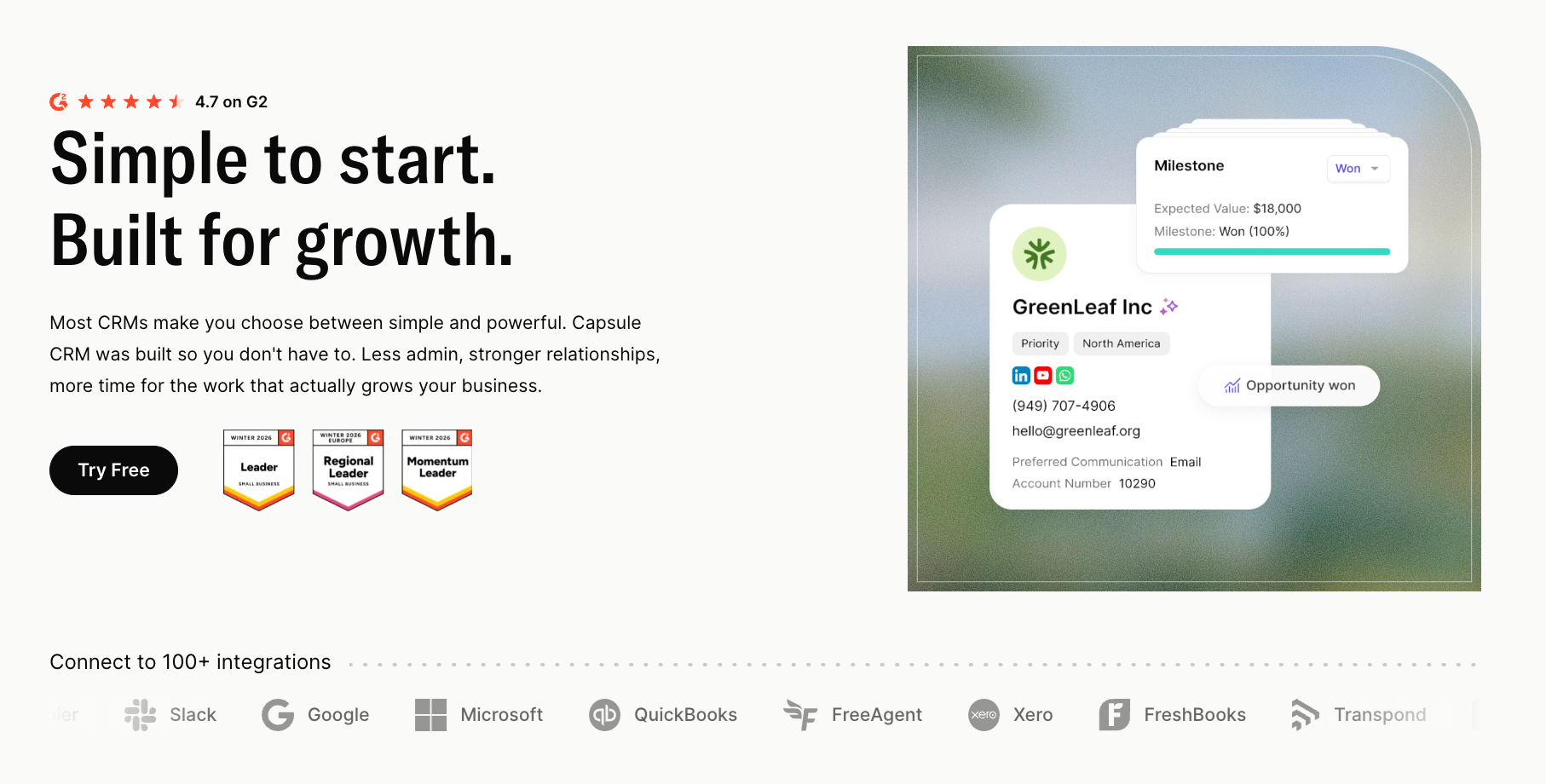
Best for: UK sole traders and small teams who want a client management system with no learning curve.
Capsule is built by Zestia, a company based in Manchester and trading since 2009. It bills in pounds, so your subscription never moves with the exchange rate, and its support runs on UK time. For data protection, holding your customer records with a UK provider keeps things simple under UK GDPR. And if the ICO ever comes knocking, knowing your records live with a UK firm is one less worry.
Key features: a drag-and-drop sales pipeline, 360-degree contact records, smart reminders, and Tracks for repeatable processes. The paid tiers add AI Summaries, AI Email Assist, and an AI Pipeline Generator. Capsule connects to 60+ apps, and the integrations UK firms ask about first are here: Xero, QuickBooks, and Sage for your books, plus Mailchimp and Google Workspace.
Pricing: the free plan is £0 for up to 2 users and 250 contacts. Paid plans start at around £14 per user per month, with the next tier up at around £28, all billed in GBP.
There's a 14-day free trial of the paid plans.
You get a proper CRM for your small business with none of the enterprise weight, at a price a micro-business can stomach. For freelancers and sole traders across the UK, that free starting point alone makes it worth a look before you spend a penny.
2. HubSpot
HubSpot offers the most generous free tier on this list. The HubSpot Smart CRM gives small teams a real product to start with, then scales into a full sales and marketing platform.

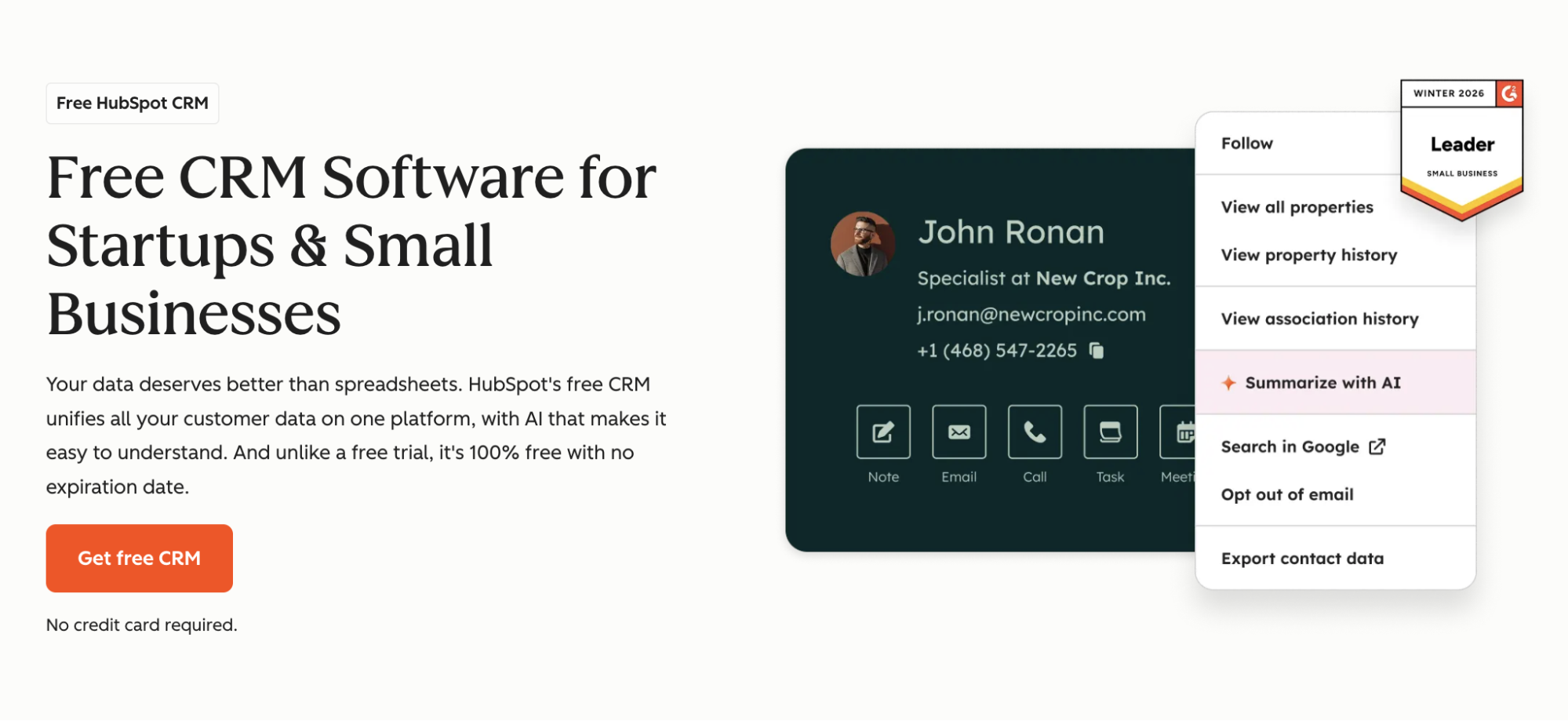
Best for: teams that want a free tier now and room to grow into marketing later.
Key features: the HubSpot CRM covers unlimited users, contact management, a visual pipeline, and a basic reporting dashboard. Paid tiers add email sequences, lead scoring, and a deep marketing suite, and the app marketplace is enormous.
Pricing: free to start, with paid Sales Hub plans in the UK running from around £15 to £40 per user per month. Costs climb quickly once you add marketing seats.
Few tools match the free tier, and the upgrade path is clear. Keep an eye on the bill as you scale, since the jump between tiers is steep.
3. Pipedrive
Pipedrive is a sales-first CRM built around a visual pipeline reps enjoy updating. It was founded in Europe by salespeople tired of complicated enterprise software, which shows in how quickly you can set it up.

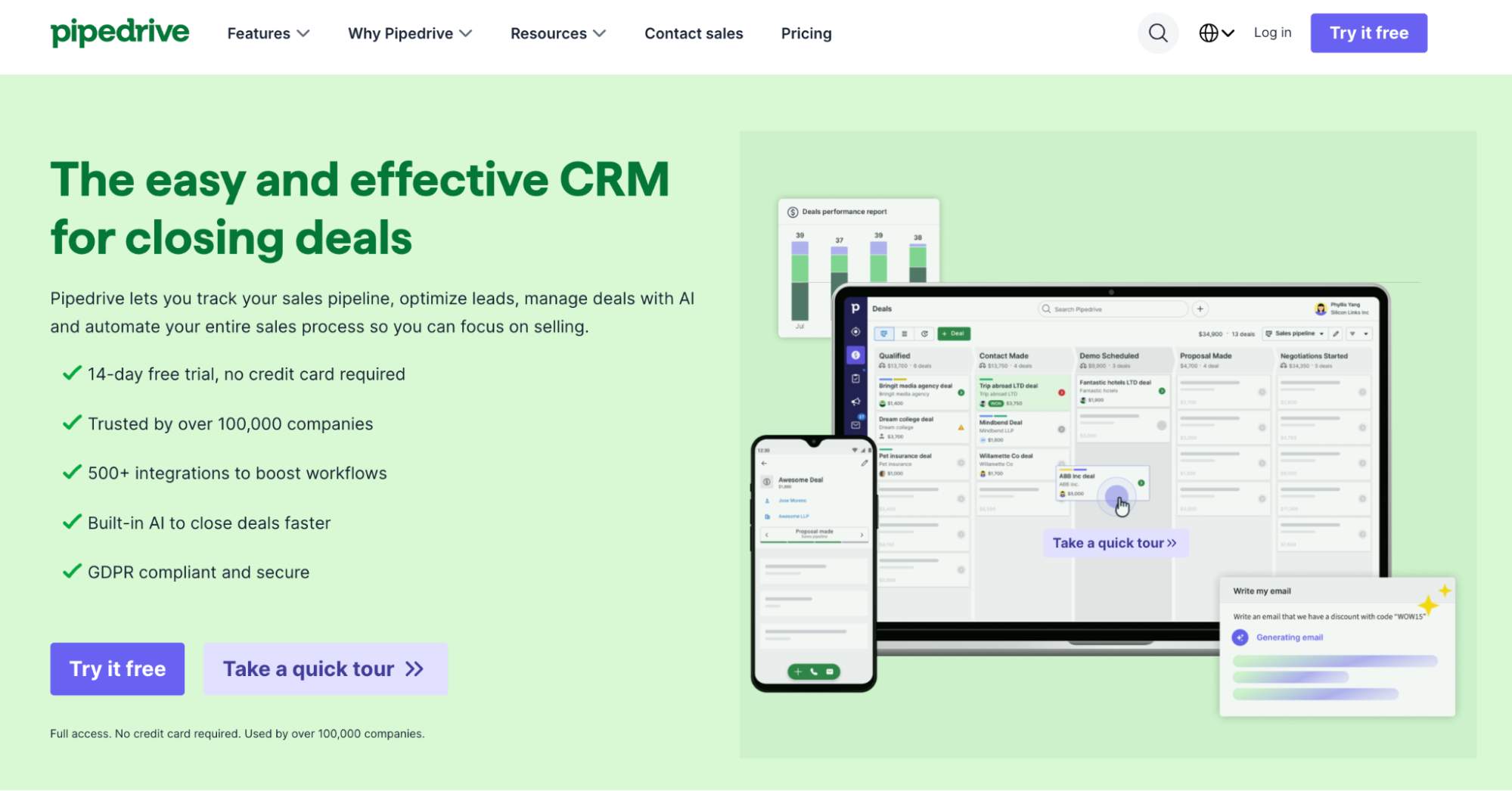
Best for: UK sales teams that live by the pipeline and want speed over breadth.
Key features: drag-and-drop deal stages, activity tracking, and customisable pipelines, with solid automation on higher tiers. Its mobile CRM app is one of the better ones for reps working on the road between site visits. The sales metrics reporting is clean and focused.
Pricing: no free plan, only a 14-day trial. UK plans run from around £14 per user per month (Lite) up to roughly £79 (Ultimate).
If all you need is a pipeline you can run from your phone, few tools are faster to adopt.
4. Zoho CRM
Zoho CRM packs an enormous amount into a budget-friendly package, and it lives inside a suite of 45+ business apps you can switch on as you grow.

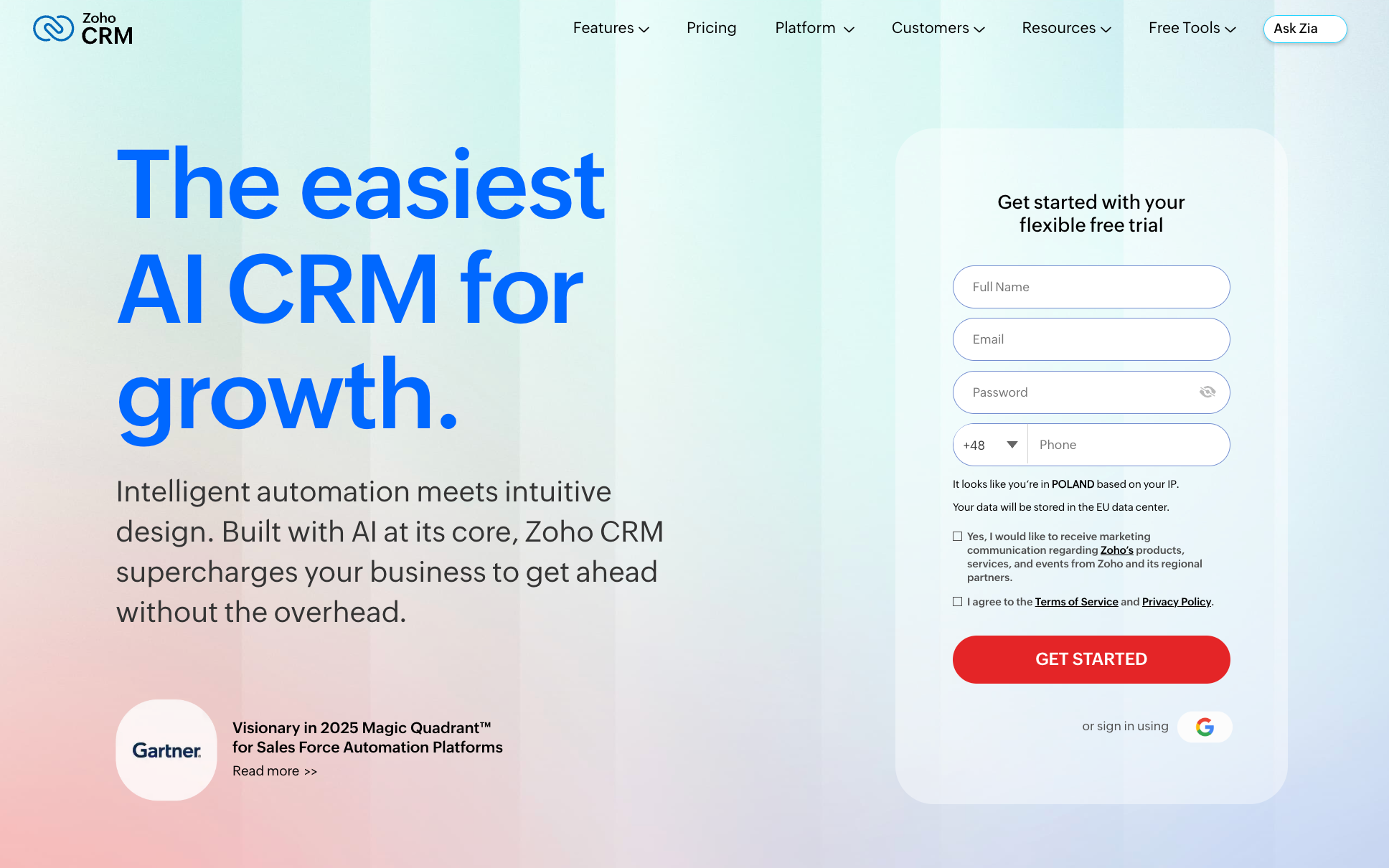
Best for: value-conscious teams that want one vendor for sales and marketing.
Key features: multichannel contact management, Zia AI for suggestions, and deep analytics through Zoho's business intelligence add-on. The trade-off is setup: the breadth means more configuration up front. If you want something lighter, Bigin by Zoho strips it back for smaller teams.
Pricing: a free tier covers up to 3 users. Paid plans run from around £14 to £52 per user per month, with Bigin cheaper still.
For the money, little else offers this much. Expect to invest a day or two in setup.
5. Less Annoying CRM
The name is the pitch. Less Annoying CRM strips a CRM down to contacts and pipelines, with one flat price and no upsell maze.

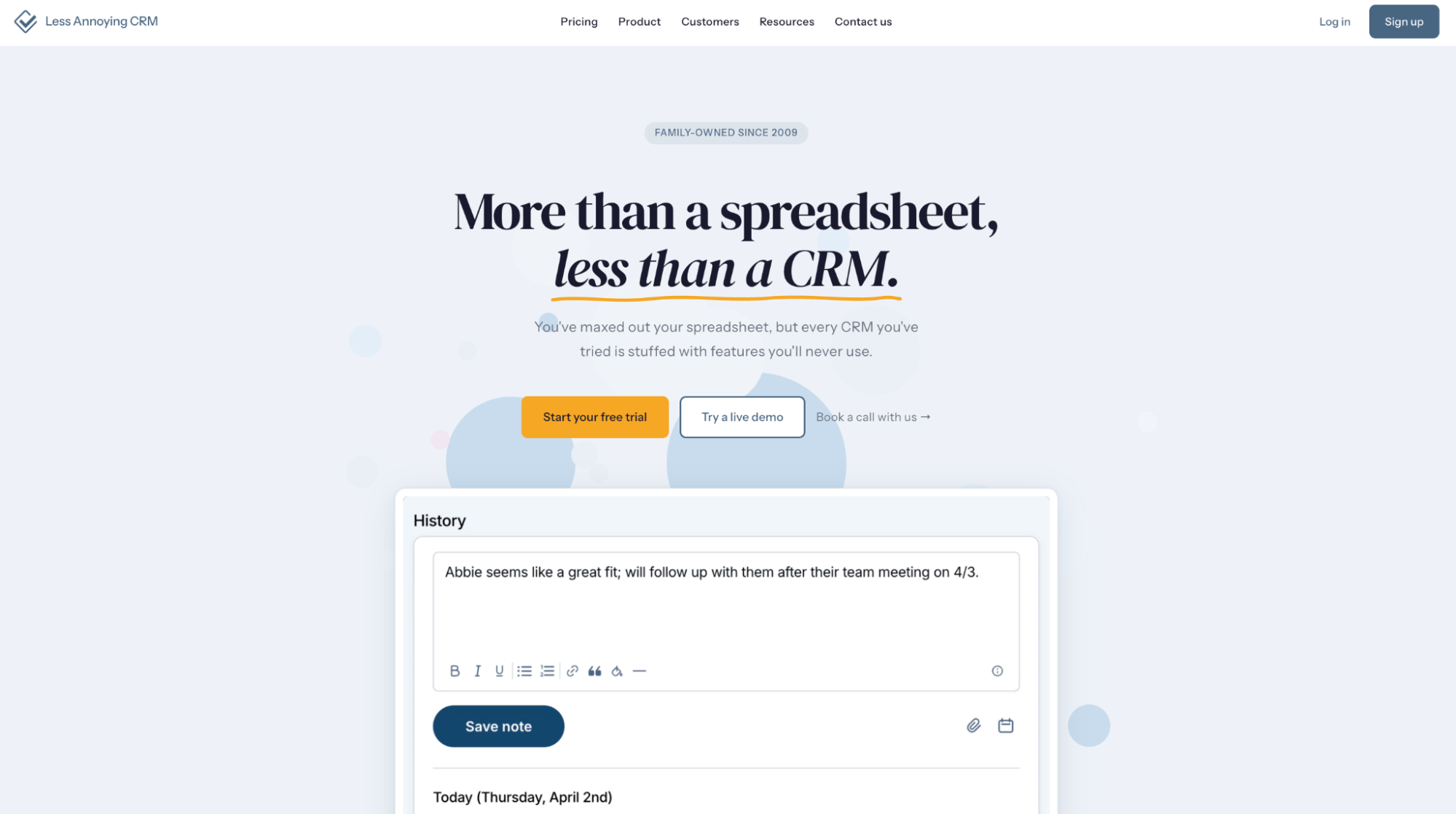
Best for: solo operators and very small teams who want zero complexity.
Key features: simple contact management, a basic pipeline, calendars, and tasks. There's no AI layer and no enterprise tooling, which is the appeal for its audience.
Pricing: one flat plan billed in US dollars at $15 per user per month, around £12, with no tiers.
It's the most stripped-back option here, and for a one or two-person shop that's exactly right. Note the dollar billing if you're watching the exchange rate.
6. Freshsales
Freshsales pairs a clean sales CRM with Freddy AI and a built-in phone, so calling lives inside the tool.

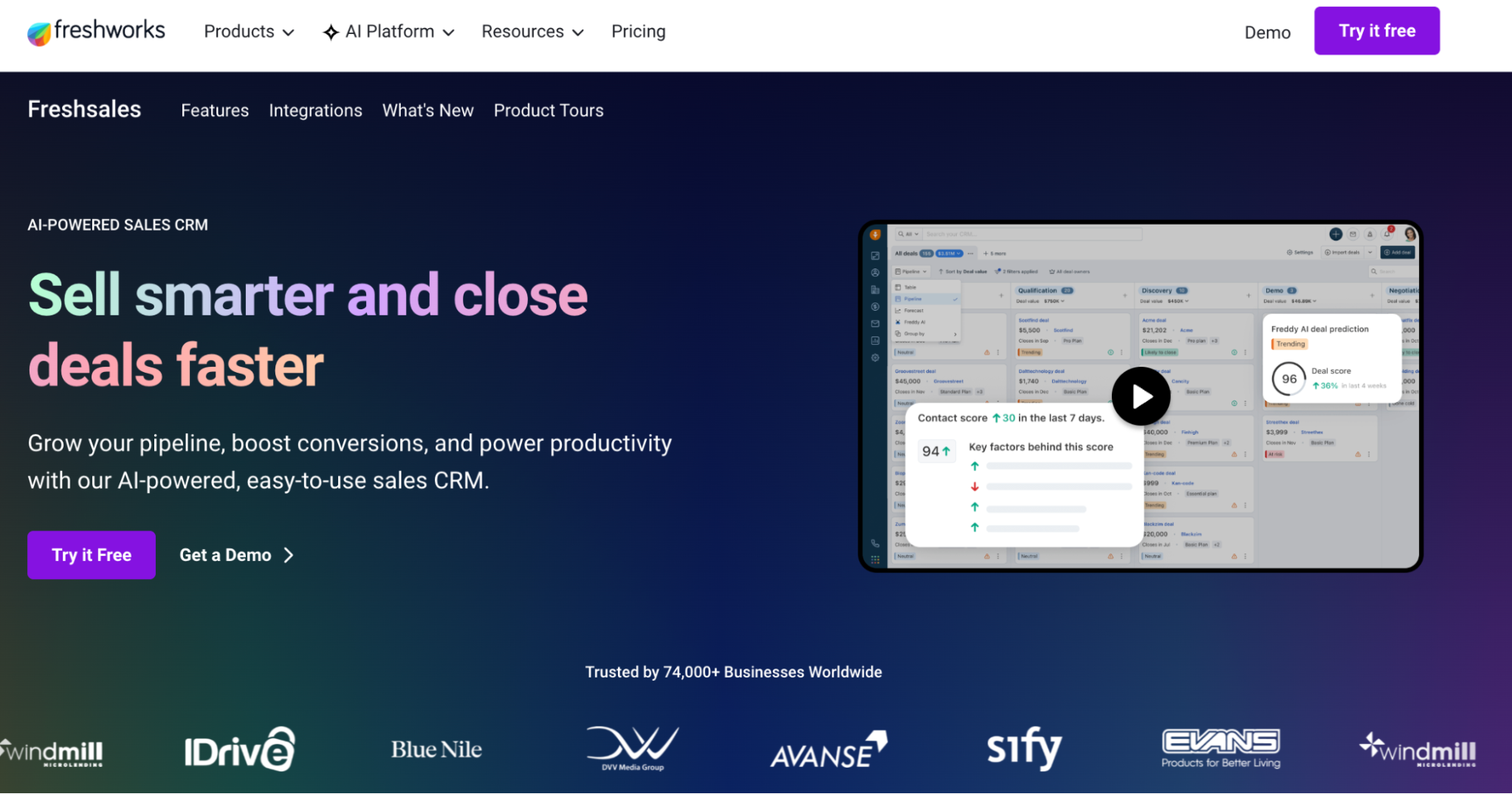
Best for: small teams that want phone and email with AI in one place.
Key features: AI-assisted lead scoring, a built-in phone, customisable pipelines, and sales automation. The free tier gives small teams a real product to test.
Pricing: a free tier covers up to 3 users. Paid plans are billed in US dollars from around $9 per user per month, roughly £7.
Why it works: the telephony and AI are baked in, so there's no extra calling tool to bolt on.
7. monday CRM
monday CRM layers a CRM onto monday's work platform, so deals and projects share one workspace.

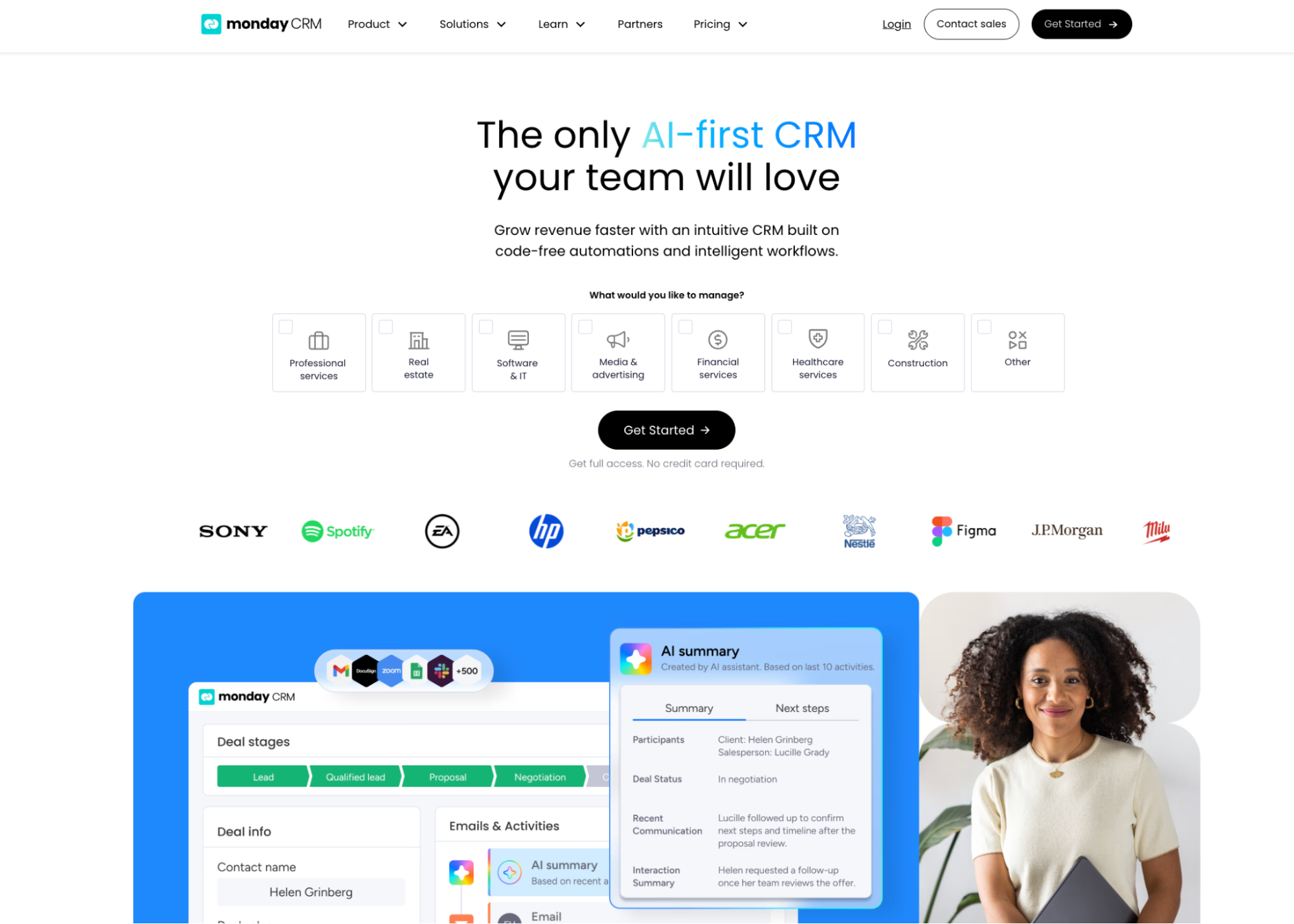
Best for: teams already on monday, or wanting a CRM that doubles as a light project tool.
Key features: visual boards, customisable workflows, automation recipes, and dashboards. Because it's a work platform underneath, you can run onboarding and campaigns next to the pipeline.
Pricing: no free tier, but a trial is available. Plans start at around £10 per seat per month, billed in US dollars.
Why it works: you get the CRM-plus-projects blend in a workspace teams find easy to navigate.
The headline price is rarely the real cost, because add-ons for email and calling can push the figure higher as you climb the tiers. Read the small print on data storage and support too, especially if your customers expect their details handled to UK standards.
Also, weigh adoption above raw power. A cheaper option your whole team uses will beat a heavyweight half of them quietly avoid. Many providers let you trial the software first, so shortlist two and test them with your real data before committing.
How to choose the right CRM for your business
For UK businesses, choosing a CRM comes with a few extra considerations beyond the usual sales features:
- Price and billing. Look at the real monthly cost at your team size, and check the currency. Tools billed in GBP shield you from exchange-rate swings; ones billed in dollars don't. A free plan or free trial lets you test the fit before you commit.
- UK support. When something breaks mid-quote, you want help inside UK business hours, with no overnight wait for a ticket from another time zone.
- Data protection. Under UK GDPR you're accountable for personal data, so pick a CRM with clear data handling, role-based access, and easy export. Check where the CRM keeps your customer data.
- Integrations. Your CRM should talk to the tools you already run. For UK firms that usually means accounting software like Xero, QuickBooks, or Sage, which keeps you tidy for Making Tax Digital and saves hours of re-keying.
- Ease of use. A good CRM should be usable on day one. If a tool needs a training week, adoption stalls and you're back to spreadsheets.
- Room to grow. Pick a CRM that stays affordable as your business grows, so you're not forced to migrate again in a year.
If you're new to CRM, start with a free option, import a slice of your contacts, and see if the team takes to it.
Pick your UK CRM
For a UK small business, a CRM has to earn its place quickly. When customer notes, follow-ups and sales opportunities live under one roof, the whole team can move with more confidence, and fewer deals are left sitting in someone’s inbox or spreadsheet.
Capsule is designed for that everyday pressure. It gives small businesses a nicely organized place to manage contacts, pipelines, tasks and customer history, with AI drafting and summaries ready when they save time. Because it’s UK-rooted, billed in GBP and connects with tools like Xero and Sage, it also fits the local details that matter once a CRM becomes part of how the business runs.
That practical fit counts in a market of 5.7 million private sector businesses, including 5.64 million small businesses. When every lead and customer conversation counts, your CRM should make it easier to act at the right moment.
Trade the spreadsheet for a CRM you’ll keep using.

Frequently Asked Questions
There's no single answer for every business owner, but for many UK teams, Capsule is the easiest switch: it's a UK company, bills in pounds, and you can run it within a day.
Yes. HubSpot offers a free tier with unlimited users, and Zoho and Freshsales both have free tiers for up to 3 users. Capsule's free plan covers 2 users and 250 contacts, which is plenty for a sole trader or a brand-new team.
A reputable CRM is far safer than a spreadsheet. Look for encryption, role-based access, and clear UK GDPR compliance, and check where your data is stored. It's worth asking where a provider's servers are based, since data residency can matter for some UK contracts and public-sector tenders. Choosing a CRM provider that understands UK rules makes your obligations simpler.
Plenty start free for small teams. Paid plans for a client relationship management tool typically run from around £12 to £40 per user per month, though some US-based tools bill in dollars. Capsule starts at £0 and around £14 per user per month after that. Watch for add-on costs, though, since extras like calling and extra storage can quietly lift the monthly bill.
If you're dealing with more leads than you can track in your head, a CRM pays for itself fast. Even a free tier brings order to your follow-ups. The real value of a CRM is keeping customer relationships visible while the team gets on with the work.