
The average car buyer now visits fewer than two dealerships before making a purchase decision, according to Cox Automotive research. More than 80% start with online research, arriving at your showroom already knowing what they want, what it should cost, and which competitors are offering it. By the time they walk through the door – or fill in a form – customers expect a level of personalisation that most dealerships still can't deliver.
The gap between expectation and reality comes down to data. Not a lack of it; dealerships generate enormous volumes of customer data across enquiries, test drives, finance applications, and service visits.
The problem is that data sits in disconnected systems – one platform for inventory management, another for sales reporting, a dealer management system that doesn't talk to either. Nobody has a complete picture of a customer, so nobody can act on one.
A well-implemented CRM eliminates any data silos. Consolidating customer profiles, transaction history, and service logs into a single source of truth equips every department with the context necessary to elevate the customer experience. From the first inquiry to the hundredth oil change, these tools keep your team working from the same page.
Today, we’ll review the top CRM solutions designed to modernize the dealership journey.
Why CRM matters more now in automotive retail
Automotive dealerships face specific pressures that make strong CRM software less optional than it used to be.


Lead volumes are up, but so is the complexity of managing them. Enquiries arrive through multiple channels (third-party marketplaces, manufacturer websites, social media, walk-ins, and phone), and they need to be captured, qualified, and followed up quickly. Leads contacted within five minutes convert at a higher rate than those left for an hour, according to automotive industry data. Most dealerships aren't anywhere near that standard, because their lead management process relies on manual handoffs between disconnected tools.
At the same time, margins on new vehicle sales remain tight. The revenue opportunity in automotive dealerships increasingly sits in repeat business, service reminders, finance renewals, and aftermarket products – all of which require long-term relationship management that a spreadsheet can't sustain at scale.
Dealerships consistently outperforming on customer satisfaction and retention are the ones using contact management tools that give them a full view of each customer relationship. Data-driven decisions about where to focus sales efforts, which customers to re-engage, and which service intervals to act on, require a centralized database that the whole team can access and trust.
What to look for in automotive CRM software
Before choosing between platforms, it's worth being clear about what your dealership actually needs. Automotive CRM software ranges from specialist dealer management systems built for large franchise groups, to lightweight platforms suited to independent dealers. The right choice depends on scale, existing tools, and how much implementation overhead you can absorb.
- Lead management across digital channels. A CRM solution needs to capture more leads from every source and route them to the right person on autopilot. Speed and consistency at this stage have a direct impact on conversion rates.
- Pipeline management by deal stage. A sales pipeline that reflects how automotive deals actually progress gives the sales team and management a shared, real-time view of where every opportunity stands.
- Sales and service alignment. The best automotive CRMs connect sales and service so that a customer who bought three years ago and is now due for a service is visible to both teams. Service reminders, recall notifications, and proactive outreach are all workflow automation opportunities that most dealerships underuse.
- Reporting and data mining. Useful CRM data goes beyond basic sales reports. Advanced analytics that identify sales opportunities in the existing base, and flag the most promising leads, are what separate reactive dealerships from proactive ones.
- Compliance. Finance and insurance processes in automotive retail carry real compliance obligations. Role-based access, audit trails, and proper data handling aren't optional for dealers with F&I operations.
The best CRM tools for car dealerships in 2026
1. Capsule CRM
Capsule sits at the start of this list because it is the most versatile option available – and versatility matters in automotive retail, where no two dealerships run exactly the same way.

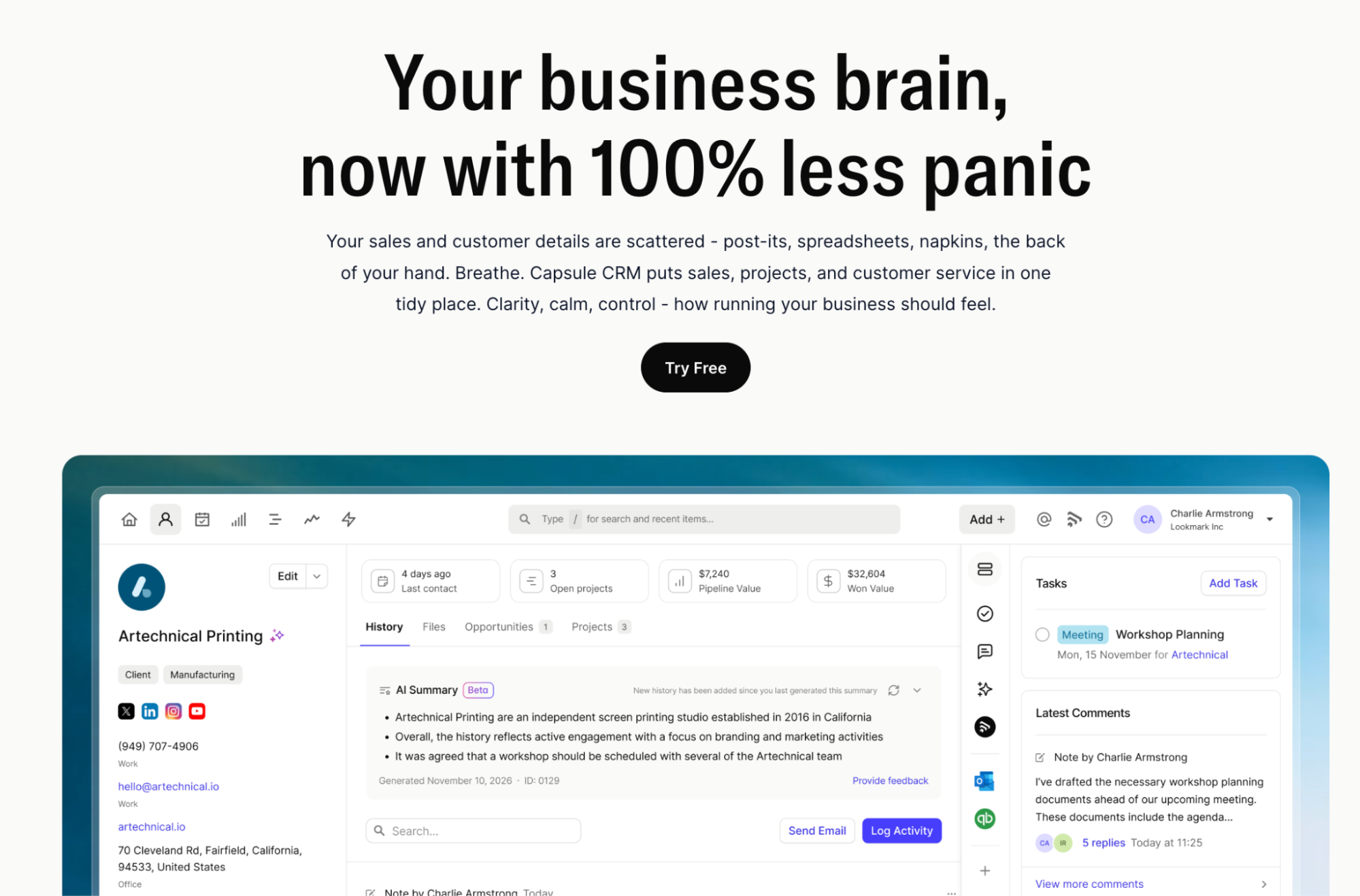
Unlike specialist automotive CRM tools built around fixed dealer workflows, Capsule adapts to the sales process you actually run.
Car dealers like Capsule for:
- Unified customer timelines. Every interaction, deal history, and internal note lives in one shared record. Team members pick up conversations exactly where they left off.
- Vehicle-specific customization. Custom fields track essential data like finance status or trade-in details. This keeps the database relevant to the specific needs of the showroom floor.
- Automated continuity. Customizable Tracks handle repetitive stages of the customer journey. These workflows manage initial inquiry follow-ups and post-sale check-ins automatically.
- Targeted aftersales marketing. The Transpond integration launches service reminders and finance renewal campaigns directly from CRM data.
- Instant Context with AI. AI Summaries condense weeks of cross-departmental communication into a quick brief. Salespeople stay fully informed before a showroom visit or a follow-up call.
- Low-friction implementation: The system adapts to specific sales and service workflows. It works alongside existing accounting and calendar tools rather than requiring a total overhaul.
Independent dealerships and small franchises often favor tools that skip enterprise bloat. The feedback from these operations is clear: a 4.7 rating on G2 across nearly 450 reviews. Most users highlight two specific advantages: intuitive design and high-quality support.
Pricing: Free plan available. Starter from $18/user/month; AI features from $36/user/month. Try free for 14 days.
2. VinSolutions Connect CRM
VinSolutions is one of the most widely used automotive CRM systems among franchise dealerships in the US. Part of the cox automotive group, it integrates directly with Dealer.com, Kelley Blue Book, and a wide range of OEM systems, giving car buyers a connected experience from online research through to the showroom.

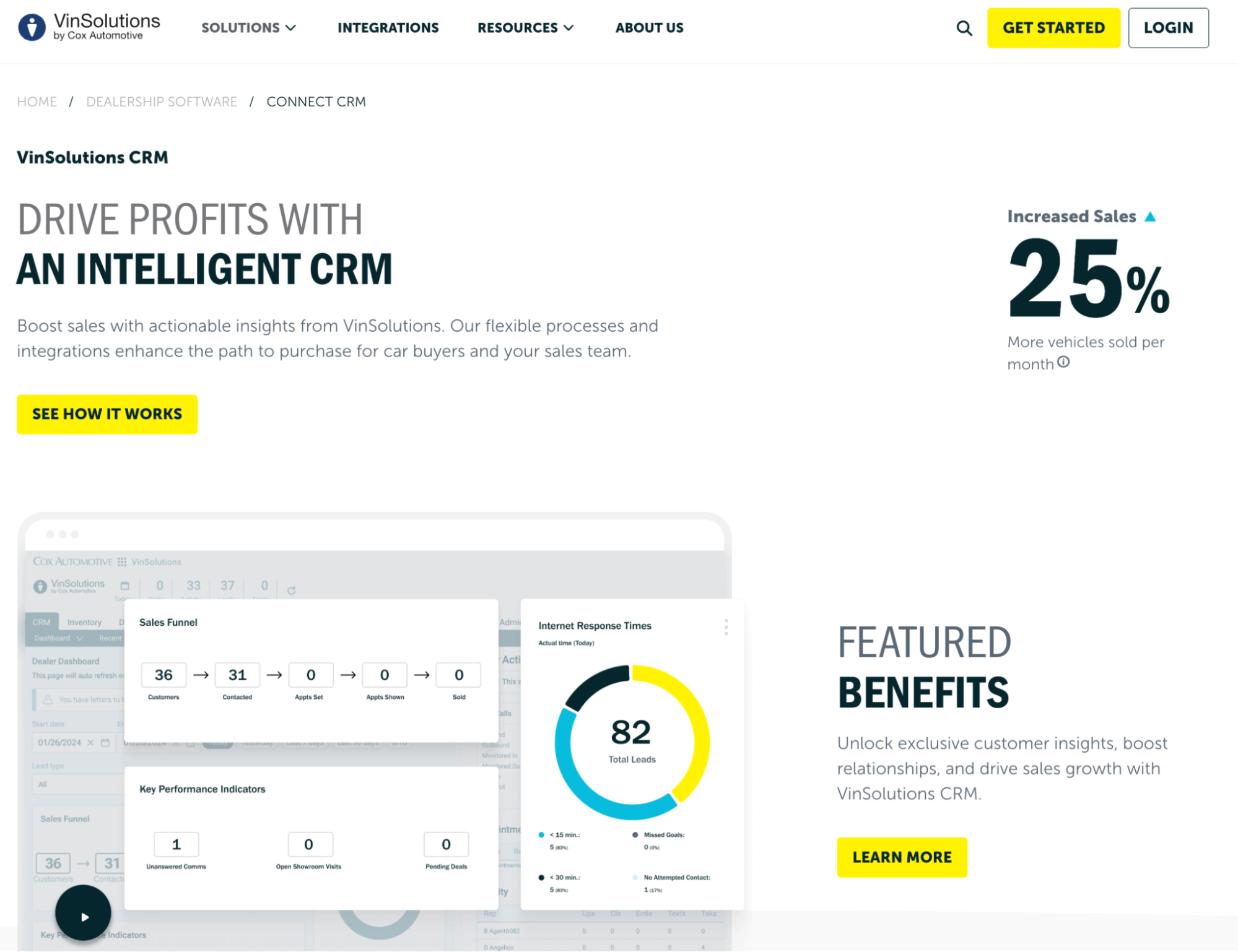
The platform's core strength is data mining. It analyses dealership data to surface customers approaching lease-end, finance renewal, or service intervals, and triggers automated outreach before a competitor does. For multi-rooftop dealer groups, the centralized view of customer behavior and engagement across locations is a huge operational advantage.
The limitation noted by smaller dealerships is complexity. VinSolutions is built for franchise groups with dedicated BDC teams and system administrators, and the configuration required to get full value from the platform is significant. Independent dealers will typically find the overhead disproportionate to their scale.
Pricing: Custom pricing on request.
3. DealerSocket CRM
DealerSocket is among the most established names in automotive CRM software, with a product designed specifically for the needs of automotive dealerships across sales and marketing and service. Its data mining capabilities identify sales opportunities in the existing customer base based on equity position, service history, and customer trends.

DealerSocket functions as a connective tissue for high-volume franchises. It syncs the service bay with the showroom floor, alerting sales staff the moment a frequent service client hits a logical trade-in milestone.
The platform specializes in digital continuity. It logs a shopper's online research and hands those insights to the floor team. This gives reps a clear head start on a customer’s preferences before the first handshake, as they already know which trim levels and price points the prospect viewed.
Massive dealer groups rely on this deep reporting to manage thousands of monthly leads across multiple rooftops. Smaller independents, however, may find the steep setup costs and technical demands outweigh the benefits of such a heavy system. It is a powerful engine, but it requires a dedicated team to keep it tuned.
Pricing: Custom pricing on request.
4. CDK Global
CDK Global combines dealer management systems functionality with an integrated CRM, making it a common choice for franchise dealerships that want to run sales, service, finance, and inventory from a single platform. The marketing suite includes equity tools that show trade-up and service-driven opportunities, and the desking functionality accelerates quote creation and reduces negotiation time on the showroom floor.

AI-powered features flag potential buyers showing purchase intent based on behavioural signals, enabling the sales team to prioritize more leads effectively and focus attention on the most promising leads at any given moment. Massive dealer groups gain an edge through direct OEM syncs and a framework built to handle strict regulatory reporting.
The consistent feedback from users is that CDK requires training investment and that customer support quality has historically been variable. The implementation timeline is worth scrutinizing carefully before committing.
Pricing: Custom pricing on request.
5. Salesforce Automotive Cloud
Salesforce Automotive Cloud serves as the enterprise command center for the industry’s largest players. Unlike basic trackers, it builds a "Driver 360" profile that maps a customer's entire life: their household connections, finance status, and every vehicle they have ever owned or serviced. Such level of data depth allows big groups to treat a thousand-car inventory with the same personal touch as a boutique showroom.

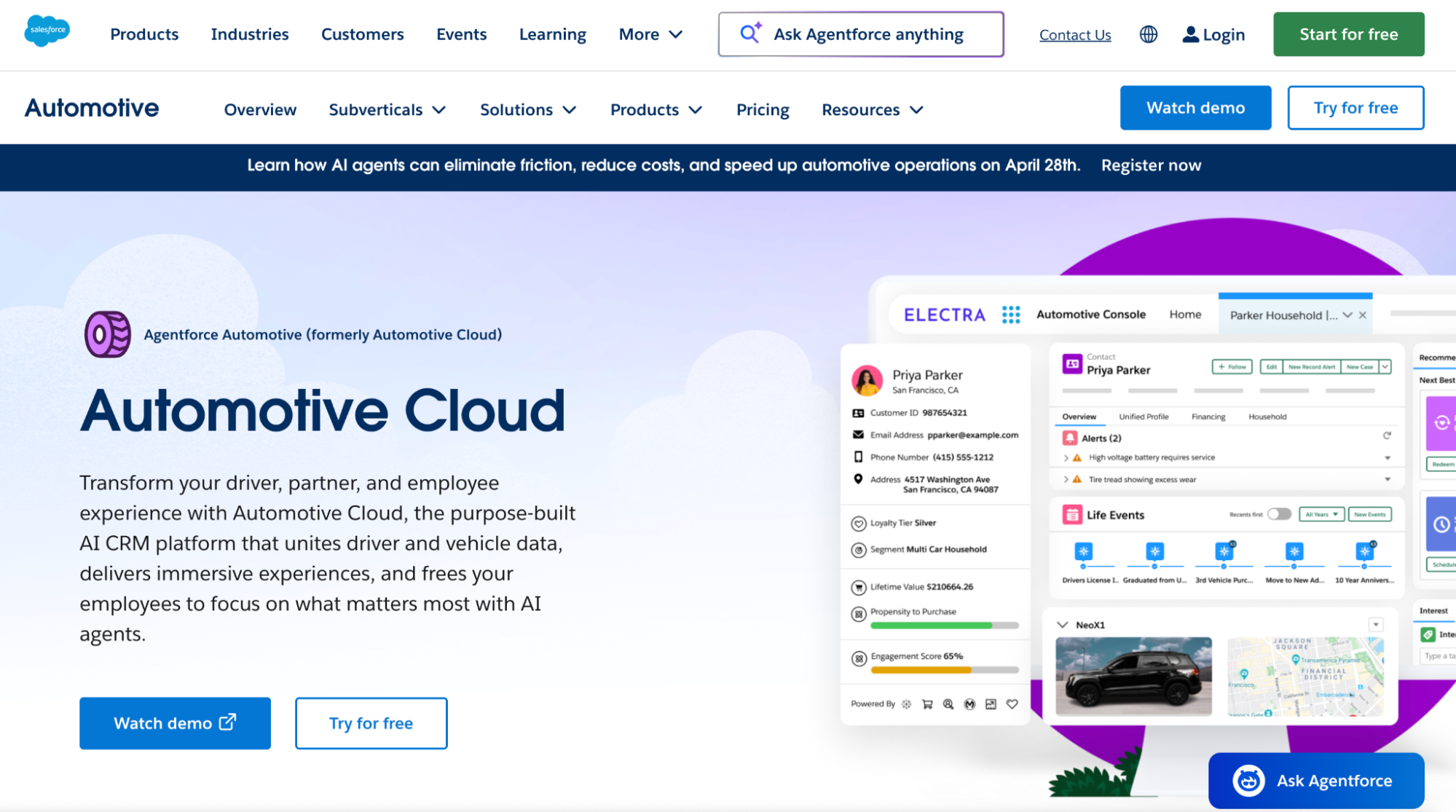
The platform uses Einstein AI to act as a digital scout. It scans lead behavior to predict which buyers are ready to sign and which deals might collapse, letting managers intervene before a lead goes cold. For groups operating across dozens of locations, this creates a single, unbreakable thread of context that follows a customer from their first web click to their final trade-in.
The cost of this power is high. Implementation is a huge project that demands a dedicated internal team to manage. While it offers unmatched scalability, the sheer density of the software makes it an illogical choice for independent dealers who need speed and simplicity over a vast data ecosystem.
Pricing: From $300/user/month.
6. DriveCentric
DriveCentric flips the script on the typical data-heavy CRM. Most platforms prioritize rigid dashboards, but this system focuses on the quality of the conversation itself. It operates on a simple theory: sales happen when engagement is high, not when data entry is perfect.

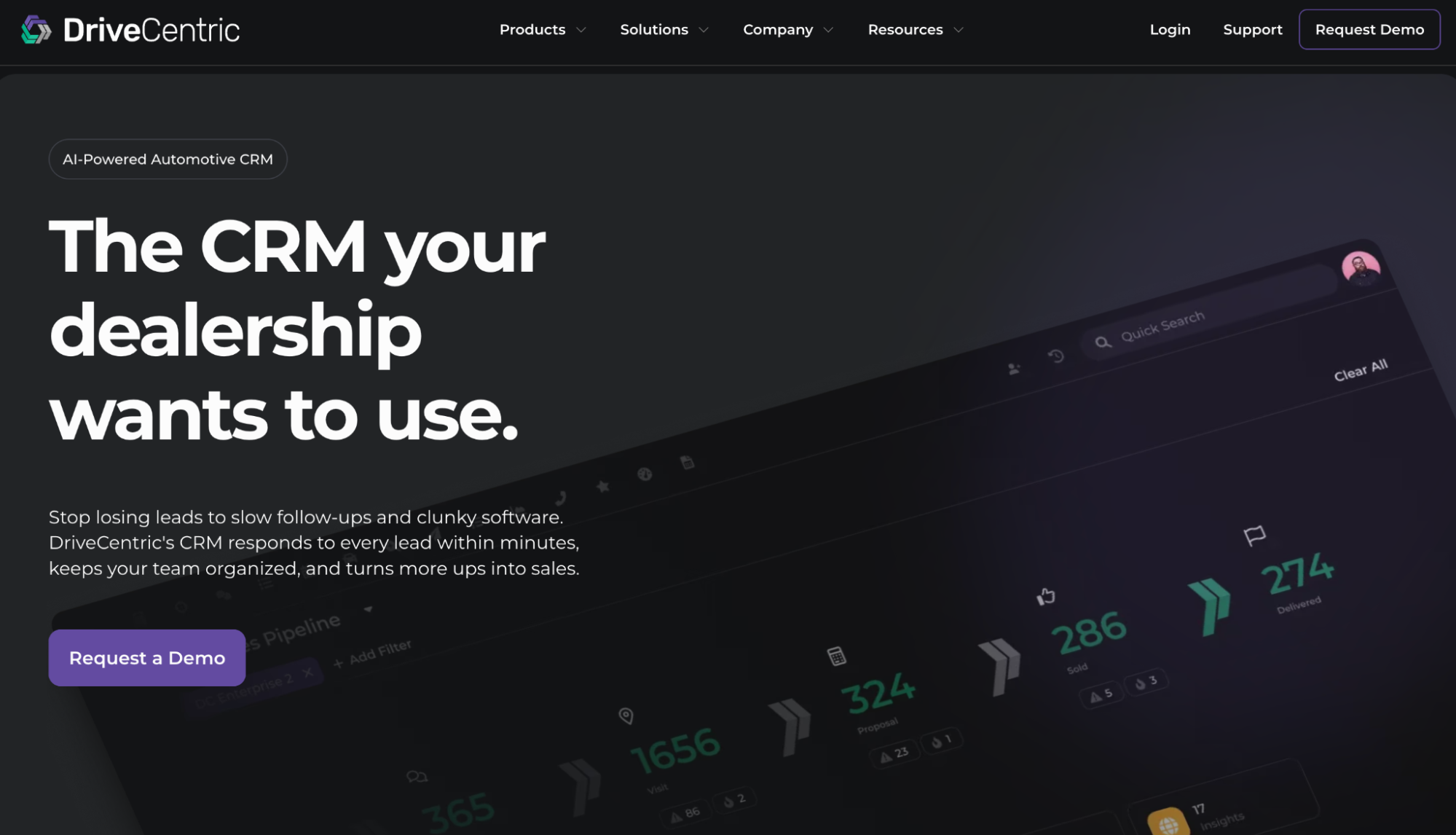
The interface pulls every text, video, and phone call into one shared view to give reps a complete contact history. Because the software is mobile-first, the sales team can manage their entire pipeline from the lot floor rather than being tethered to a desk. Every interaction logs itself automatically, which removes the administrative burden that often leads to team burnout.
A 24/7 AI layer handles the heavy lifting of initial lead follow-ups. It greets new inquiries instantly and refines outgoing messages for a more professional tone, allowing the team to manage a higher volume of prospects without losing a personal touch. In dealerships with busy service departments, the system alerts the sales floor whenever a customer in the service lane reaches a logical point to trade up to a newer model.
While DriveCentric excels at communication, it lacks the deep analytical horsepower found in legacy platforms. Dealerships that live and die by complex reporting might find the metrics a bit thin. However, for operations that prioritize building fast, fluid relationships with car buyers, DriveCentric offers a level of agility that older systems cannot match.
Pricing: Custom pricing on request.
7. Selly Automotive
Selly Automotive carves out a niche for independent lots and used vehicle specialists that enterprise giants often ignore. It provides a lean alternative to heavy dealer management systems, focusing on lead capture and follow-up rhythm.

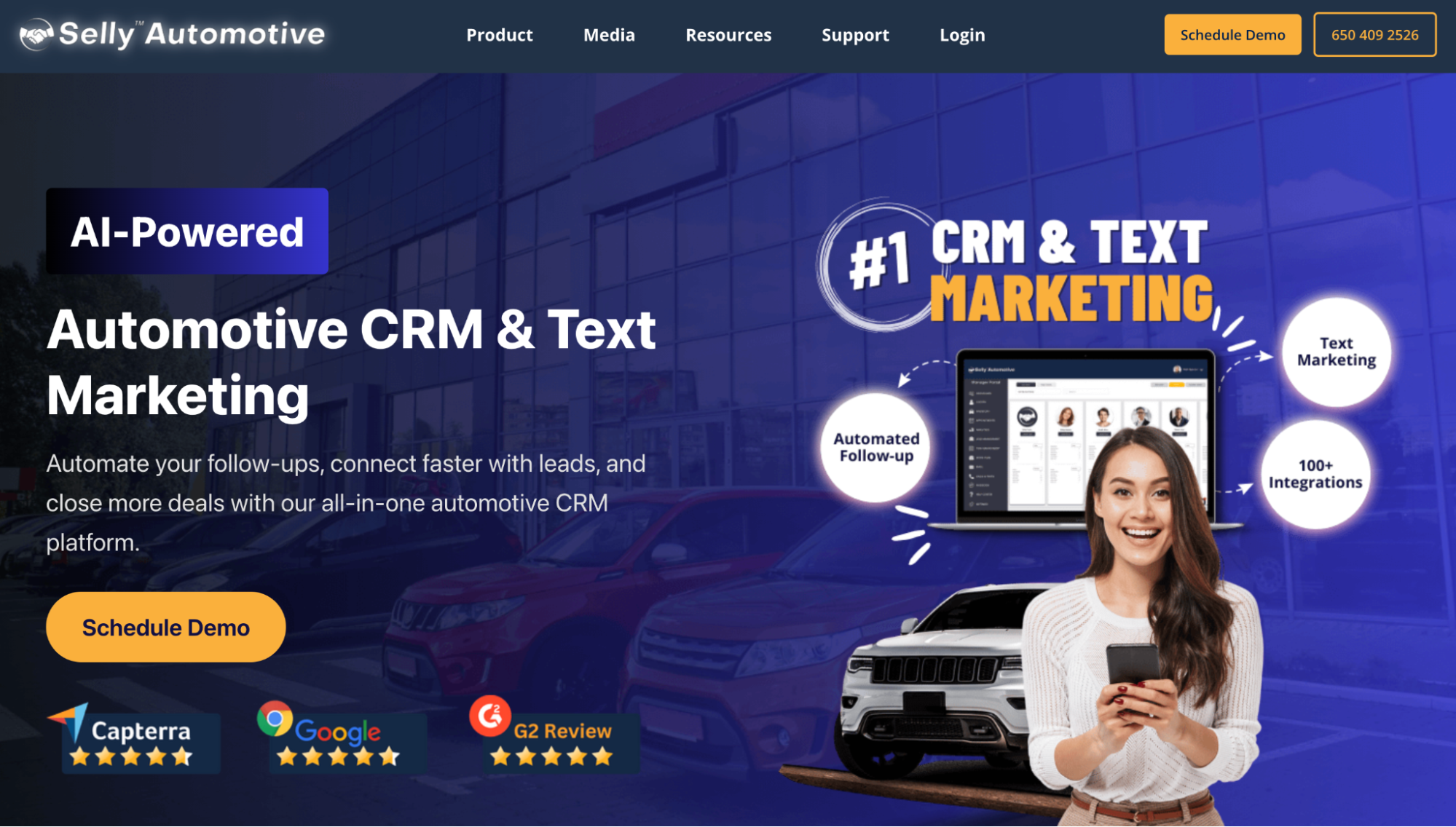
For a small team, it provides just enough structure to keep the sales process visible without drowning the office in technical debt.
The software prioritizes the "lot-first" lifestyle. Its mobile app serves as a portable workstation, allowing a dealer to document a trade-in or respond to a fresh inquiry while standing next to the vehicle. Such agility helps dealership teams compete with larger franchises, as they can engage prospects instantly.
The trade-off is a lower ceiling for data complexity. Selly skips the deep OEM data feeds and the intricate reporting suites that big franchises demand. It is not a tool for mining deep historical trends; it is a tool for making sure every person who walks onto the lot gets a phone call the next day. If your main goal is consistent execution on a budget, it represents a high-value entry point into digital sales management.
Pricing: From $99/month.
The cost of silence
In the automotive world, the most expensive sound is a silent phone. Every lost lead or forgotten service reminder represents a hole in the dealership’s revenue. Most CRM platforms try to fix this by burying the sales team under mountains of mandatory fields and rigid data entry. This creates a hidden tax on your staff's time, forcing them to choose between logging a lead and actually closing one.
For independent lots and scaling franchises, Capsule breaks this cycle of friction.
This simplicity is the engine behind its high adoption rates. While enterprise-grade systems often collapse under their own weight, Capsule remains agile. It can help you track vehicle interests, finance milestones, and service cycles in a way that feels like a shortcut.
Stop losing leads to complexity; start your 14-day free trial with Capsule.