Two sales reps start their Monday morning.
The first opens their CRM and sees a list of contacts, a pipeline with deal stages, and a log of last week's activity. Everything is there, but nothing tells them what to do with it. They spend the first hour working out where to focus and which customers haven't heard from them in too long.
The second opens their CRM and sees a summary of every active deal, a flagged list of contacts whose engagement has dropped, a forecast that's updated overnight based on recent activity, and a suggested next action on each open opportunity. Same data, but completely different experience.
That gap is what separates a passive CRM from an active one.
Passive CRMs are systems of record: they store customer data accurately and make it retrievable. Active CRMs are systems of action: they analyse customer behavior and automate the routine tasks that sit between a sales rep and the work that actually moves deals forward.
The shift from one to the other is what AI-powered CRM platforms have made possible — and what this article is actually about.
Why "AI-powered" means very different things across CRM platforms
Before comparing platforms, it's worth being honest about what the label covers.
In the past two years, nearly every CRM vendor has started marketing their product as “AI-powered,” but the reality behind that label varies widely. The AI capabilities worth paying attention to fall into a few distinct categories:
- Predictive analytics that use historical sales data to forecast future sales trends and flag deals at risk.
- Sentiment analysis that reads customer interactions and analyzes signals about customer satisfaction before they become problems.
- Workflow automation that triggers actions based on customer behavior rather than waiting for a human to notice and respond.
- Generative AI that drafts communications, summarizes long interaction histories, and reduces the data entry burden that kills CRM adoption.
- Machine learning that improves lead scoring and customer segmentation over time as more data flows through the system.
Not every business needs all of these. A small sales team with a simple pipeline and a straightforward sales process needs different AI capabilities than an enterprise with complex sales operations across multiple regions. The platforms below are evaluated on how actively their AI works on behalf of the user – not just what it can do in theory, but how much it does without being asked.
AI-powered CRM platforms worth evaluating in 2026
Capsule CRM
Capsule sits at the accessible end of the AI CRM spectrum, and deliberately so. Its AI features are focused, practical, and designed to work for small sales and service teams with no technical expertise required.

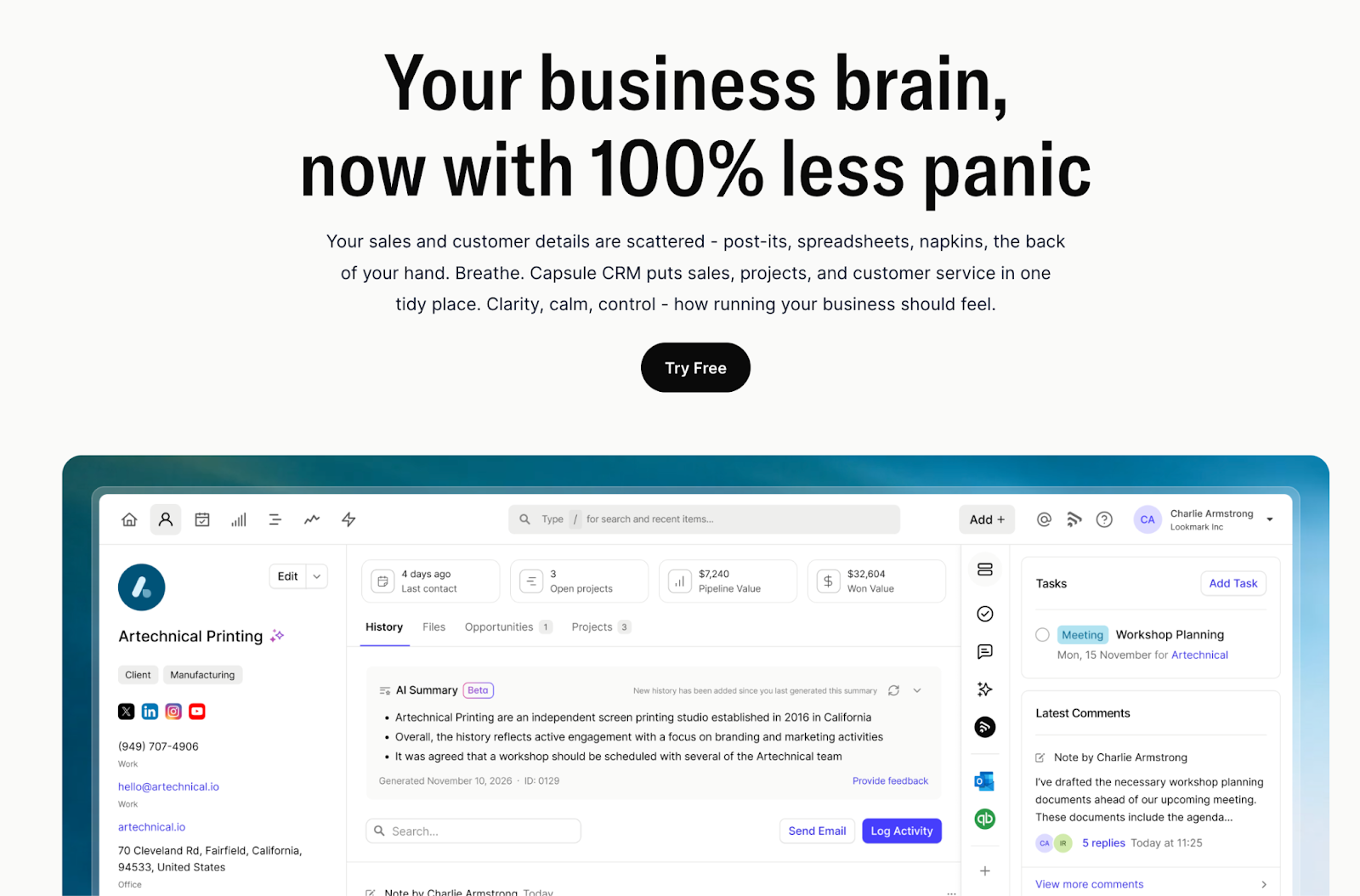
While many other platforms demand organized data pipelines and large setup investment before the AI becomes useful, Capsule's AI starts adding value from day one.
What the AI actually does:
- AI Summaries condense the full history of any customer relationship into a readable brief before a call or meeting. A sales rep who hasn't spoken to a contact in three months arrives at the conversation informed.

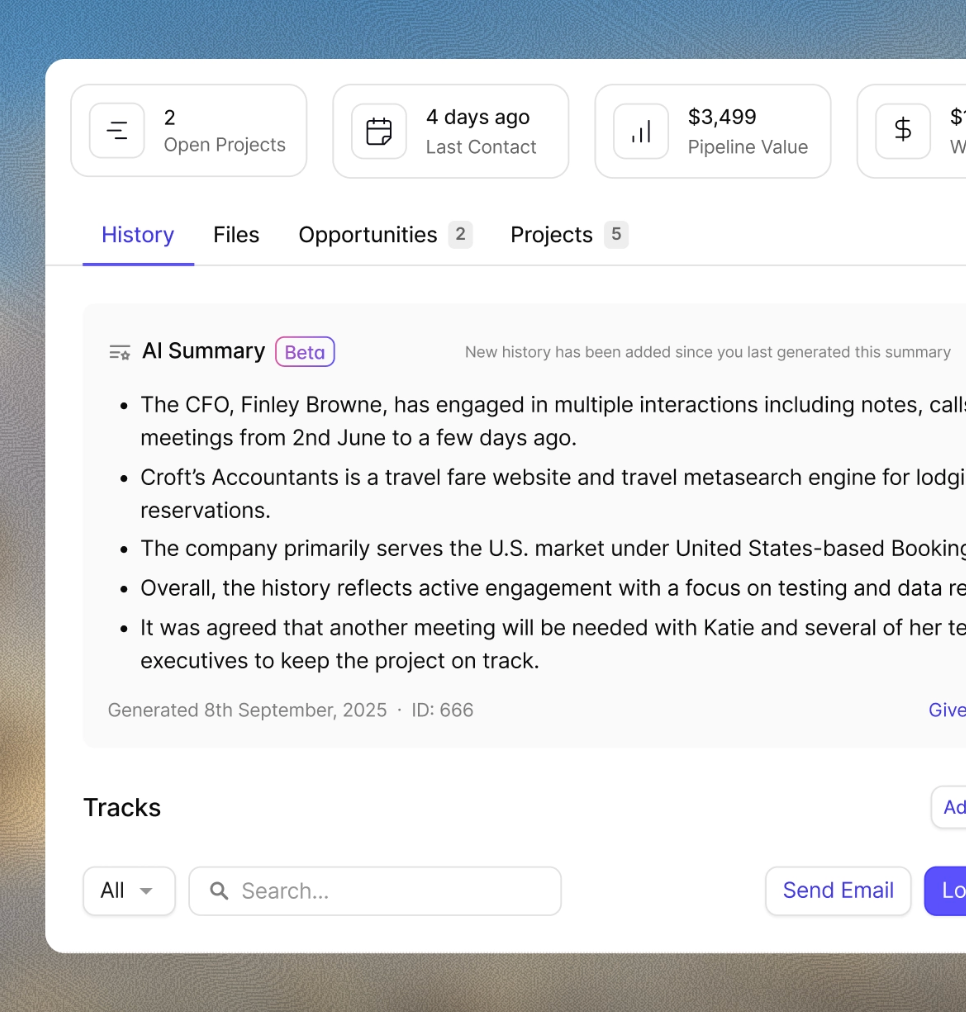
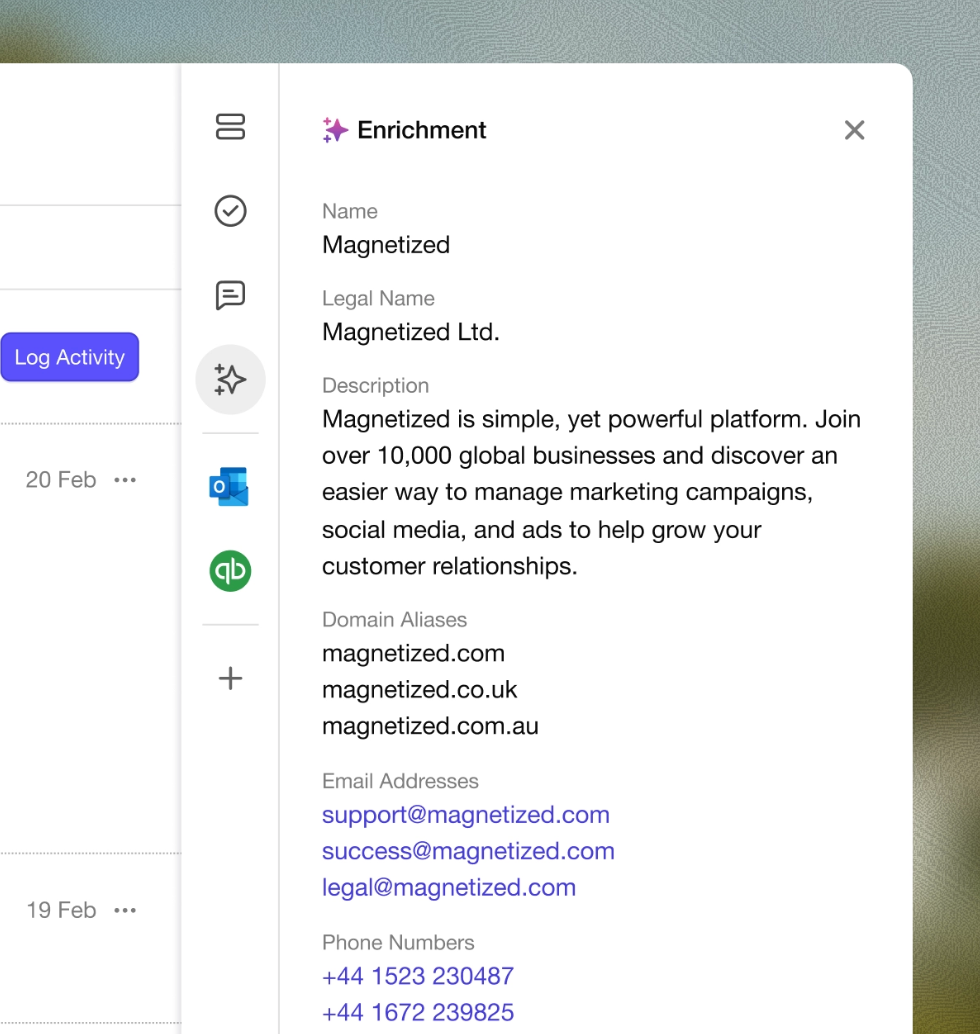
- AI Contact Enrichment automatically fills in company and contact information from public sources for accurate CRM data. Clean data is the foundation that everything else runs on.

- The AI Pipeline Generator builds a customized sales pipeline from a plain-language description of the business, removing the blank-slate setup problem that causes many teams to abandon CRM implementation before it starts.
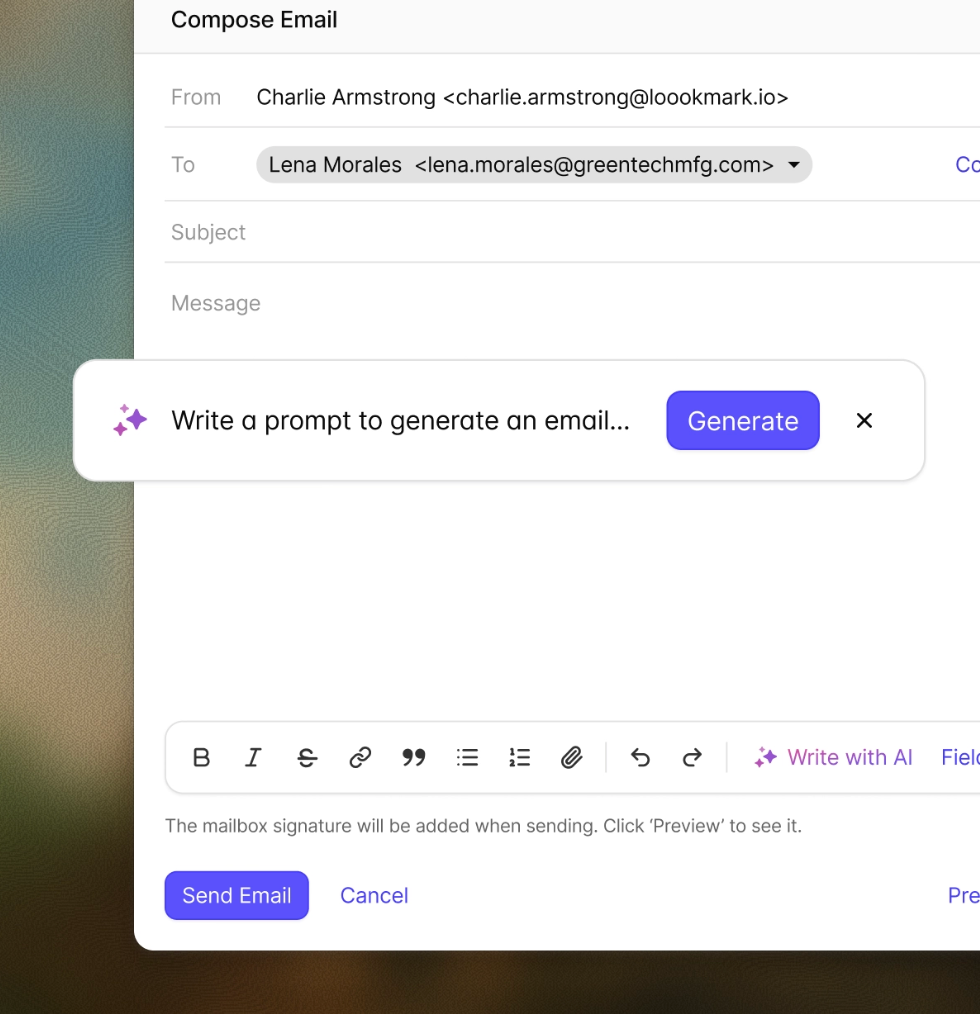
- AI Email Assist drafts responses to customer queries and follow-up messages directly within the CRM, shortening the gap between receiving a message and responding.

- Workflow automation via Tracks automates the repeating processes that sales and service teams run on every deal: onboarding sequences, follow up cadences, or task assignment at each pipeline stage.
Capsule is honest about its limits. It doesn't offer deep predictive analytics, complex sentiment analysis, or the kind of enterprise-grade AI forecasting that larger platforms provide.
What it offers instead is AI that works reliably, requires no configuration expertise, and makes a small team noticeably more productive. For businesses that need a sales-focused CRM that acts on data, it's a strong starting point.
Pricing starts from $18/user/month (Starter), with AI features available from $36/user/month (Growth). Free trial available.
2. Salesforce Einstein
Salesforce is the reference point for enterprise CRM, and its Einstein AI layer is among the most comprehensive available.


Einstein spans the entire customer journey – from sales forecasting and opportunity insights to automated activity capture and AI-driven content creation – delivering a comprehensive set of capabilities throughout.
Where it earns its reputation:
- Predictive lead scoring that improves over time as more sales data flows through the system
- Einstein Conversation Insights analyses sales calls automatically, showing competitor mentions and coaching opportunities
- Generative AI for drafting emails and creating social media posts directly within the platform
- Advanced sales pipeline management with AI-driven forecasting that accounts for rep behaviour patterns
The trade-off is significant. Salesforce requires technical expertise to implement well, considerable investment to license at the feature depth, and ongoing admin to maintain. For enterprise sales teams with dedicated CRM administrators, it's a powerful platform. For small businesses evaluating Salesforce against simpler alternatives, the complexity and cost are real barriers.
3. HubSpot CRM
HubSpot occupies the middle ground between Capsule's accessibility and Salesforce's enterprise depth.

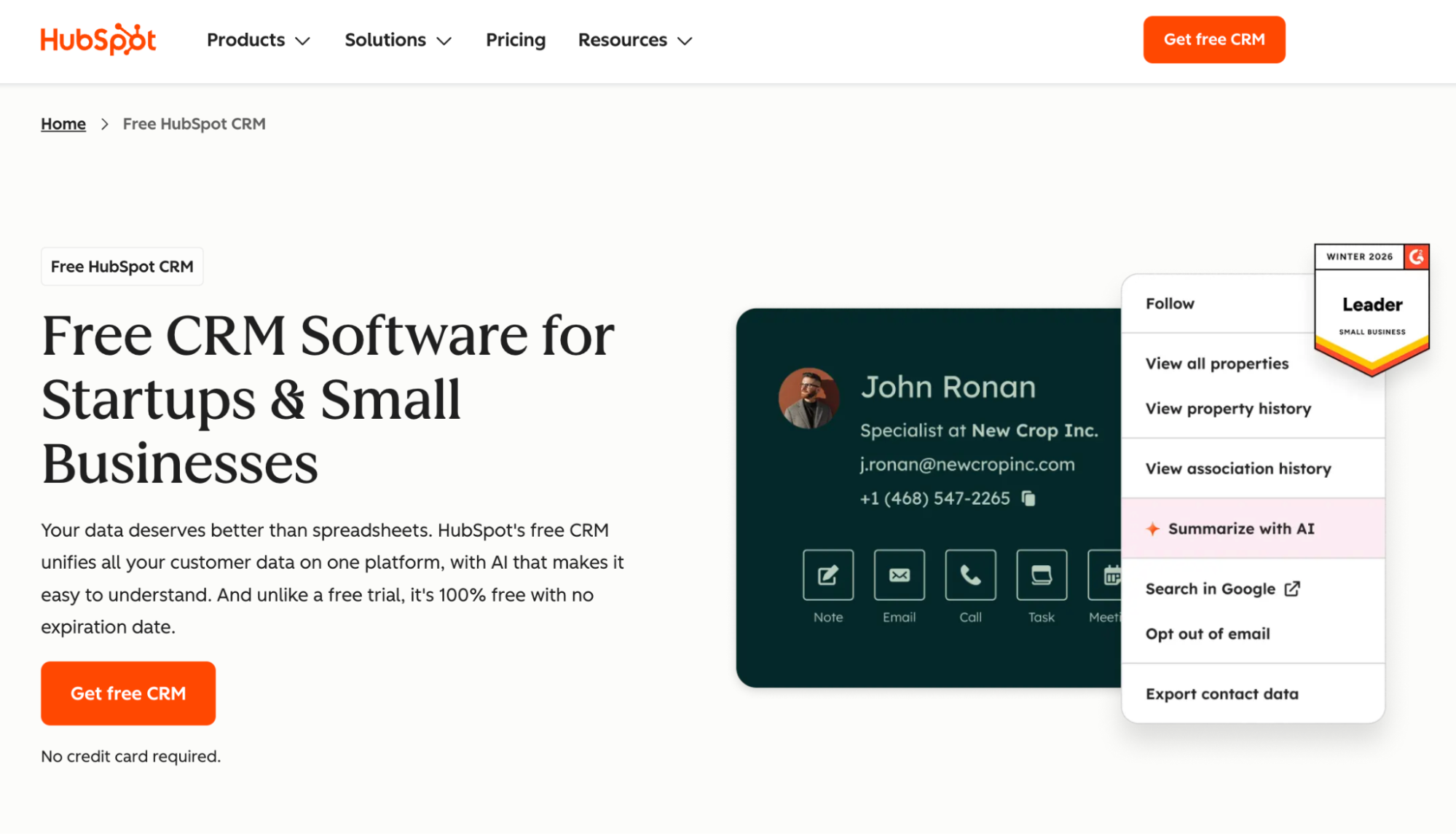
Its AI capabilities cover sales, marketing, and service in a single platform, making it especially well suited to businesses where sales and marketing need to stay aligned.
What makes it active:
- AI-powered lead scoring based on customer engagement signals across sales interactions
- Predictive analytics showing which leads are most likely to close
- Conversation intelligence that provides insights for sales managers
- Automated workflows triggered by customer behavior across the entire customer lifecycle
The AI capabilities and advanced automation sit behind paid tiers that escalate quickly in cost as team size and feature requirements grow. Worth evaluating carefully on pricing before committing – the free entry point and the full-featured paid tier are meaningfully different products.
See how HubSpot compares to Capsule.
4. Zoho CRM with Zia
Zoho CRM's AI assistant, Zia, brings helpful active capabilities to a platform already known for breadth and configurability.

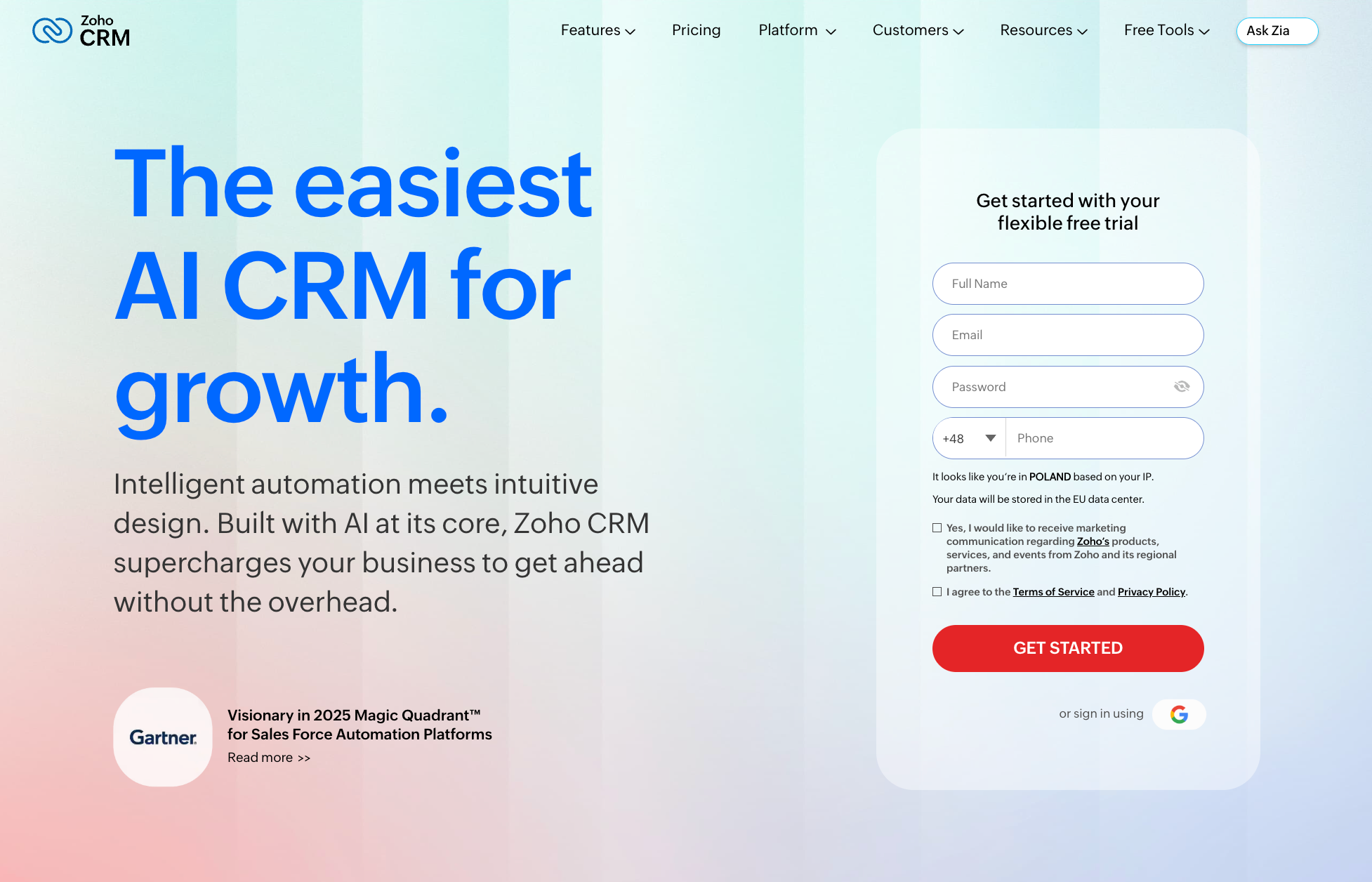
Zia monitors sales data continuously, and can respond to voice and text queries about CRM data – a practical feature for sales reps who want answers, not endless dashboards.
Where Zia adds real value:
- Anomaly detection that flags when sales trends deviate from expected patterns
- Sentiment analysis on customer emails that helps identify unhappy customers early, so you can act before they churn
- Workflow suggestions based on observed patterns in how the team uses the CRM
- Natural language queries that let sales reps ask questions about their pipeline and get data-driven answers immediately
Zoho CRM's strength is the combination of Zia's AI capabilities with the platform's deep customisation options. The trade-off is that getting the most from both requires investment in configuration. Zoho CRM pricing starts from $14/user/month, with Zia available from $40/user/month on the Professional plan.
Full comparison with Capsule available here.
5. Freshsales with Freddy AI
Freshsales is a sales-focused CRM built around Freddy AI, Freshworks' AI engine. Freddy supports deal management, with a clear focus on making AI-driven insights easy for sales reps to use.

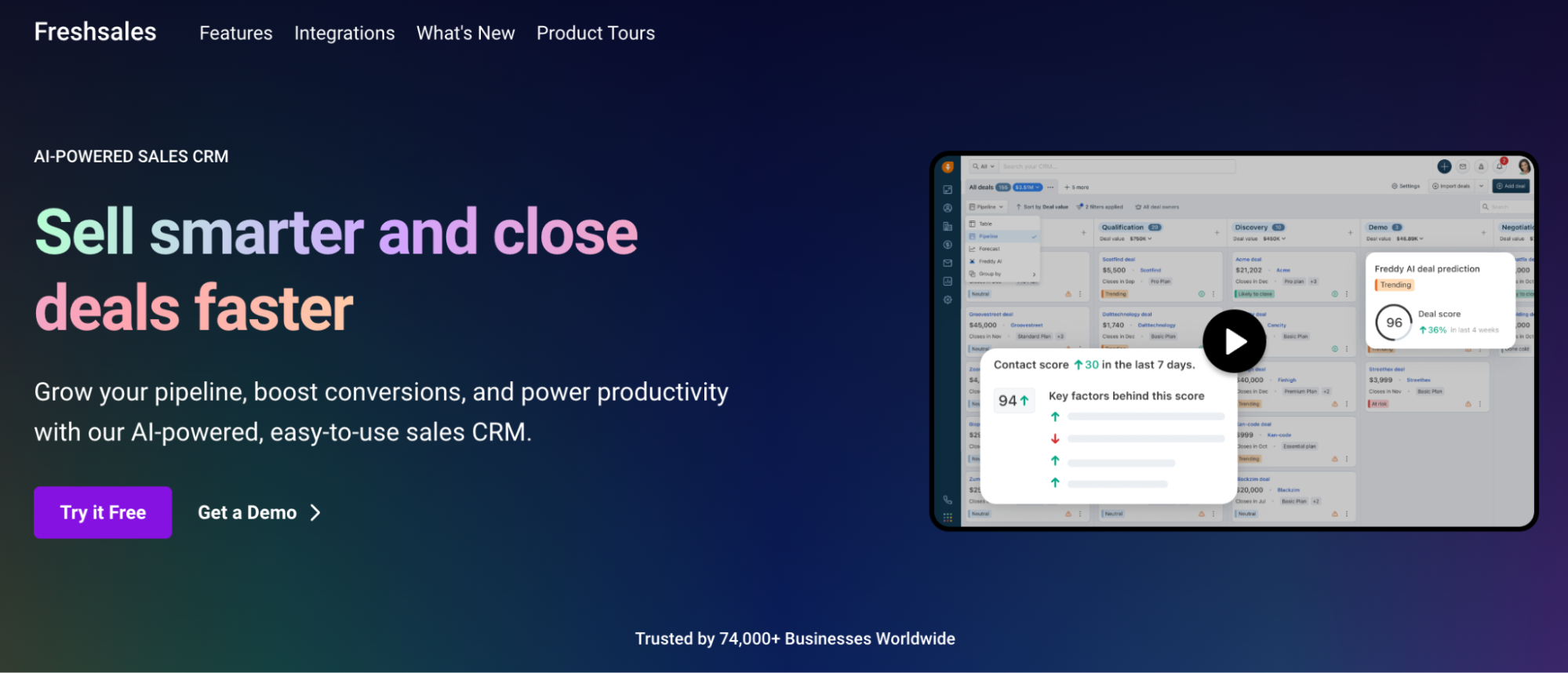
Freddy AI in practice:
- Deal insights that flag stalled opportunities and suggest next actions to progress them
- Freddy Copilot generates email drafts and CRM data updates automatically
- Predictive forecasting that gives a data-driven view of expected revenue against targets
- Auto-profile enrichment with publicly available contact and company information to maintain accuracy
Freshsales sits at a competitive price point relative to HubSpot and Salesforce, making Freddy AI accessible to mid-market sales teams that want meaningful AI capabilities. The platform is less customisable than Zoho and less comprehensive than Salesforce, but for a sales team that wants an AI assistant that actively supports daily selling activity, it's worth evaluating.
Freshsales pricing comparison can be found here.
6. Pipedrive with AI Sales Assistant
Pipedrive built its reputation on pipeline simplicity, and its AI Sales Assistant extends that philosophy: the AI surfaces recommendations and insights.

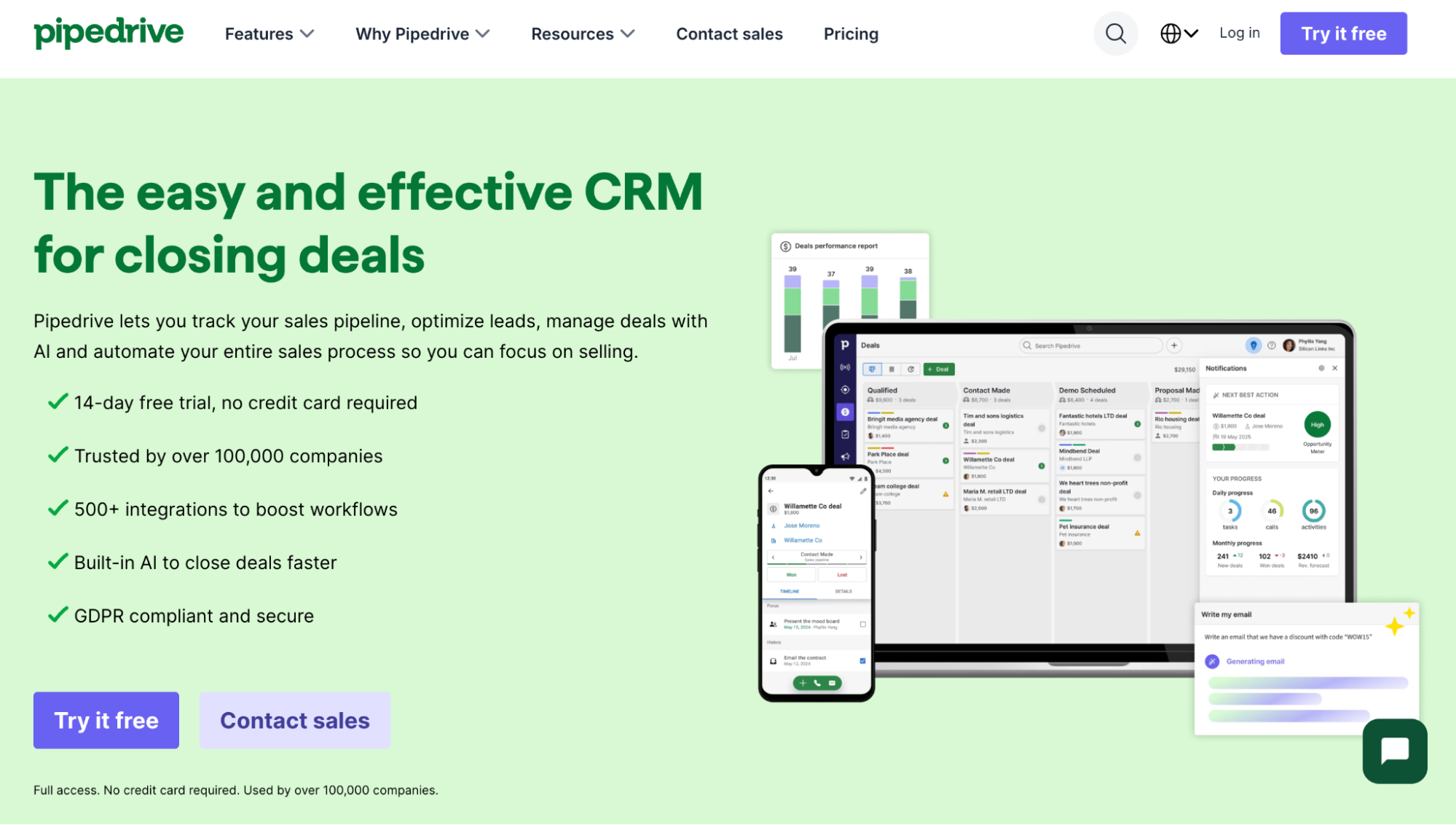
AI Sales Assistant features:
- Deal recommendations based on individual sales rep activity patterns
- Automated workflow triggers tied to deal stage changes and customer interactions
- Integration with over 500 tools for more efficient workflows
- Self-updating contact data that cuts down on manual input for sales reps
Pipedrive's AI capabilities are less extensive than HubSpot or Salesforce but more focused on the daily selling workflow. The result is an AI layer that sales reps actually notice and use rather than one that lives in a reporting dashboard.
Read more about full Pipedrive pricing breakdown and a direct comparison with Capsule.
7. Monday CRM
Monday CRM brings AI capabilities to a platform already known for visual workflow management. Its AI features focus on automating repetitive tasks and generating context, with the added advantage of deep integration with Monday.com's broader project and operations.

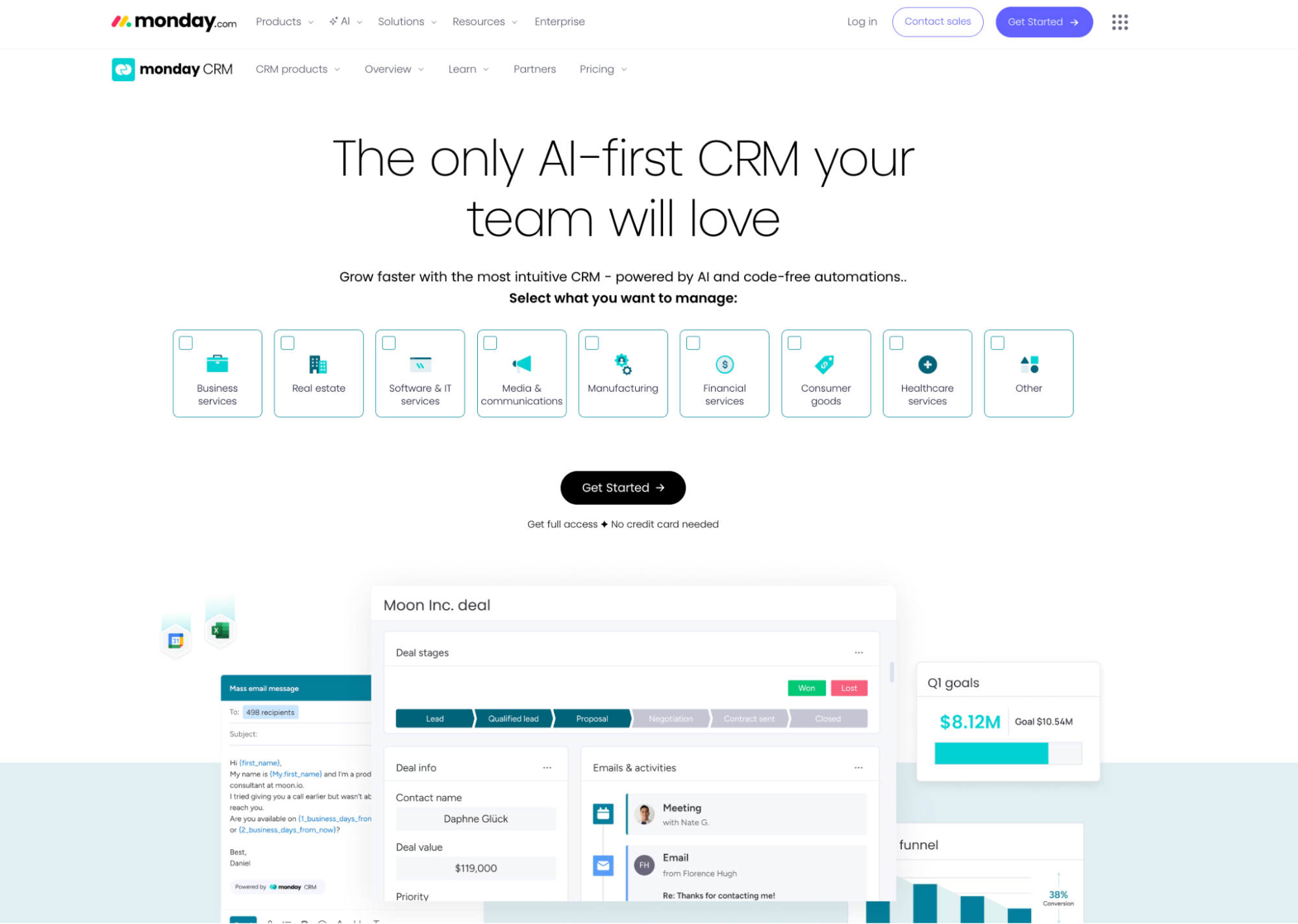
AI capabilities worth noting:
- AI-generated email drafts and communication templates tailored to the deal stage and customer context
- Automated data capture and categorisation of customer interactions
- AI-powered forecasting combining pipeline data with historical performance patterns
- Monday Sidekick – a context-aware AI assistant embedded in the platform, able to take actions across workflows based on real-time context
Monday CRM is best suited to businesses that want CRM and operational workflow management in one platform. For pure sales teams, the breadth can feel like overhead.
Monday Sales CRM pricing here.
8. Attio
Attio is a newer entry in the AI CRM space, built from the ground up around data analysis and flexible data modelling.

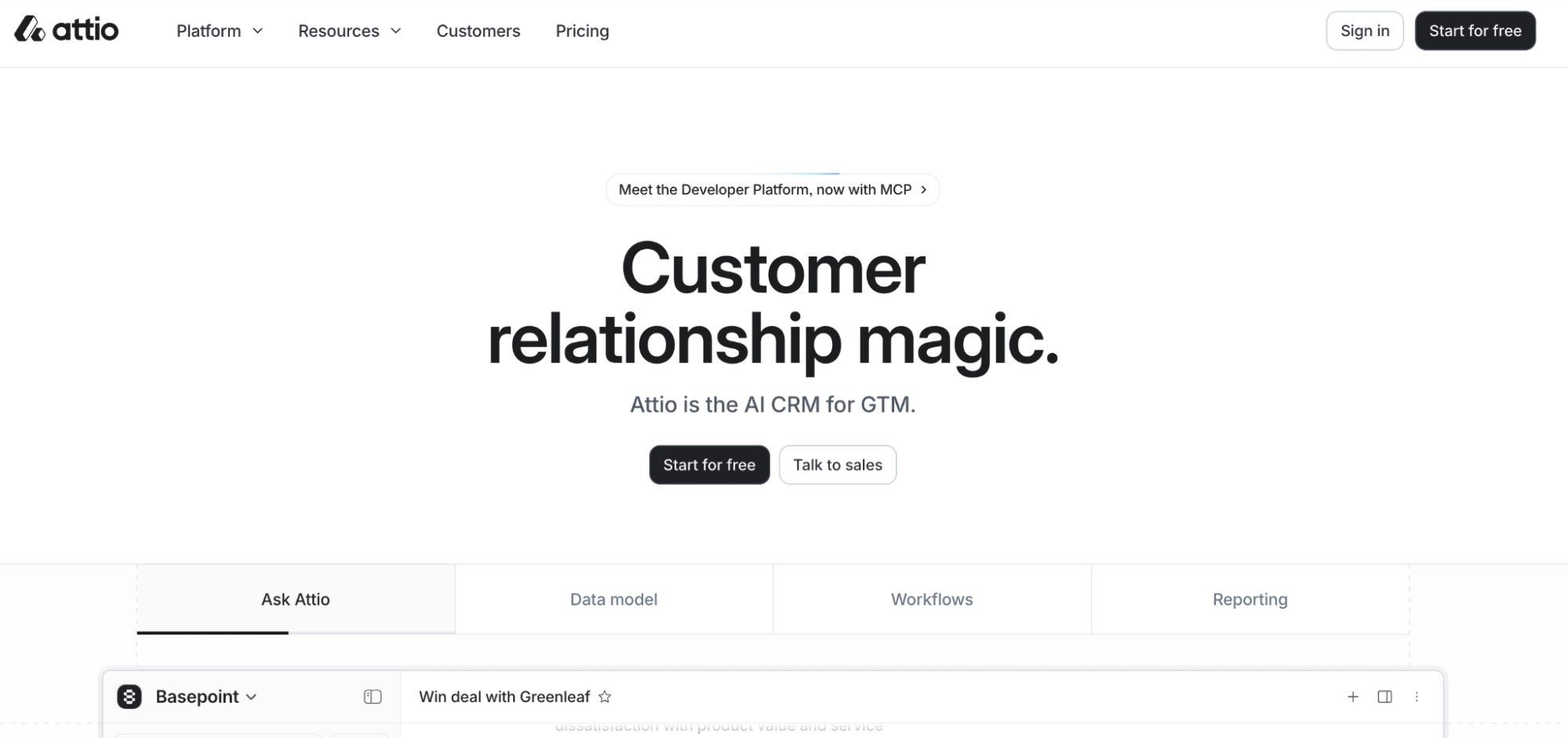
Where most CRMs enforce a fixed structure, Attio lets teams define their own data model and workflows, making it a strong fit for businesses with non-linear customer management processes.
What makes it active:
- AI-powered enrichment that continuously researches, classifies, and updates contact and company records across the database
- Various workflows triggered by real-time customer signals, enabling timely and context-aware engagement
- Advanced reporting and analytics to support data-driven decisions across pipeline performance
- Flexible data modelling that adapts to how a business actually operates
Attio is best suited to tech-forward teams comfortable configuring their own CRM solutions instead of working from a pre-built template. The advanced AI capabilities are real, but they require investment in setup. For businesses that need a smart CRM professional enough to handle complex relationship data at scale, it's worth a close look.
See how Attio compares to Capsule.
9. Close CRM
Close is built with a single focus: helping reps close deals as efficiently as possible.

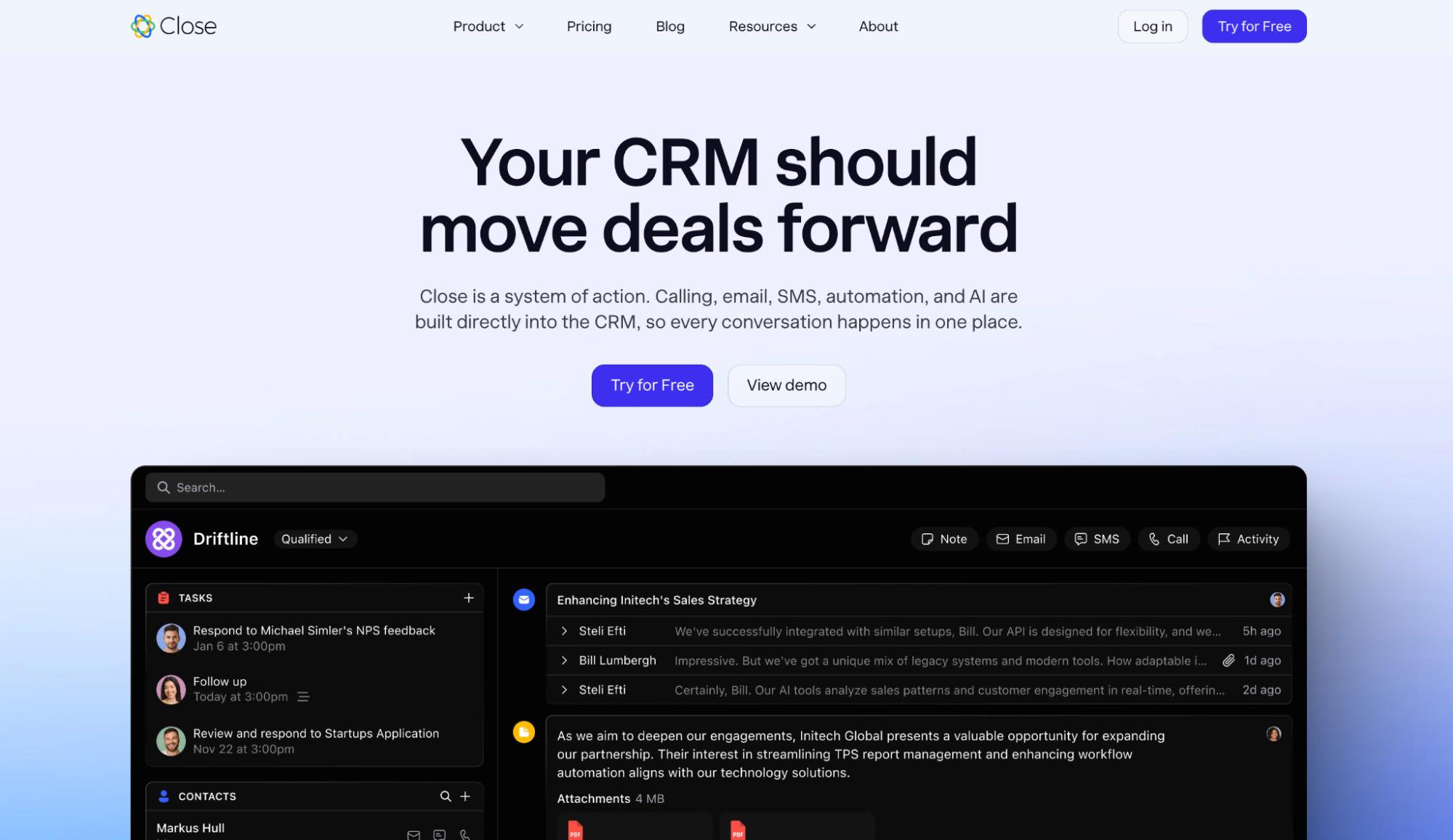
AI features centre on call intelligence that keeps reps consistently in front of prospects at the right moment.
Where Close's AI technology earns its place:
- Built-in calling, SMS, and email with AI that transcribes and summarizes every customer interaction automatically
- Predictive dialling and smart sending that optimize outreach timing based on historical response data, improving connection rates across high-volume sales operations
- AI tools for drafting call scripts and outreach templates that match the tone and context of the specific deal stage
- Sales forecasting that combines pipeline data with individual rep performance patterns to give sales managers a realistic view of likely outcomes
Close is deliberately narrow in scope. It doesn't try to be a full customer relationship management software platform covering marketing, service delivery, and business operations. What it does – streamline sales operations for outbound-heavy sales teams – it does with more focus than most.
Check a full Close CRM pricing breakdown and a direct comparison with Capsule.
10. Salesflare
Salesflare sits in a distinct spot among AI CRM tools: it’s designed for small B2B teams that want strong automation and AI support while avoiding the overhead of more advanced systems.

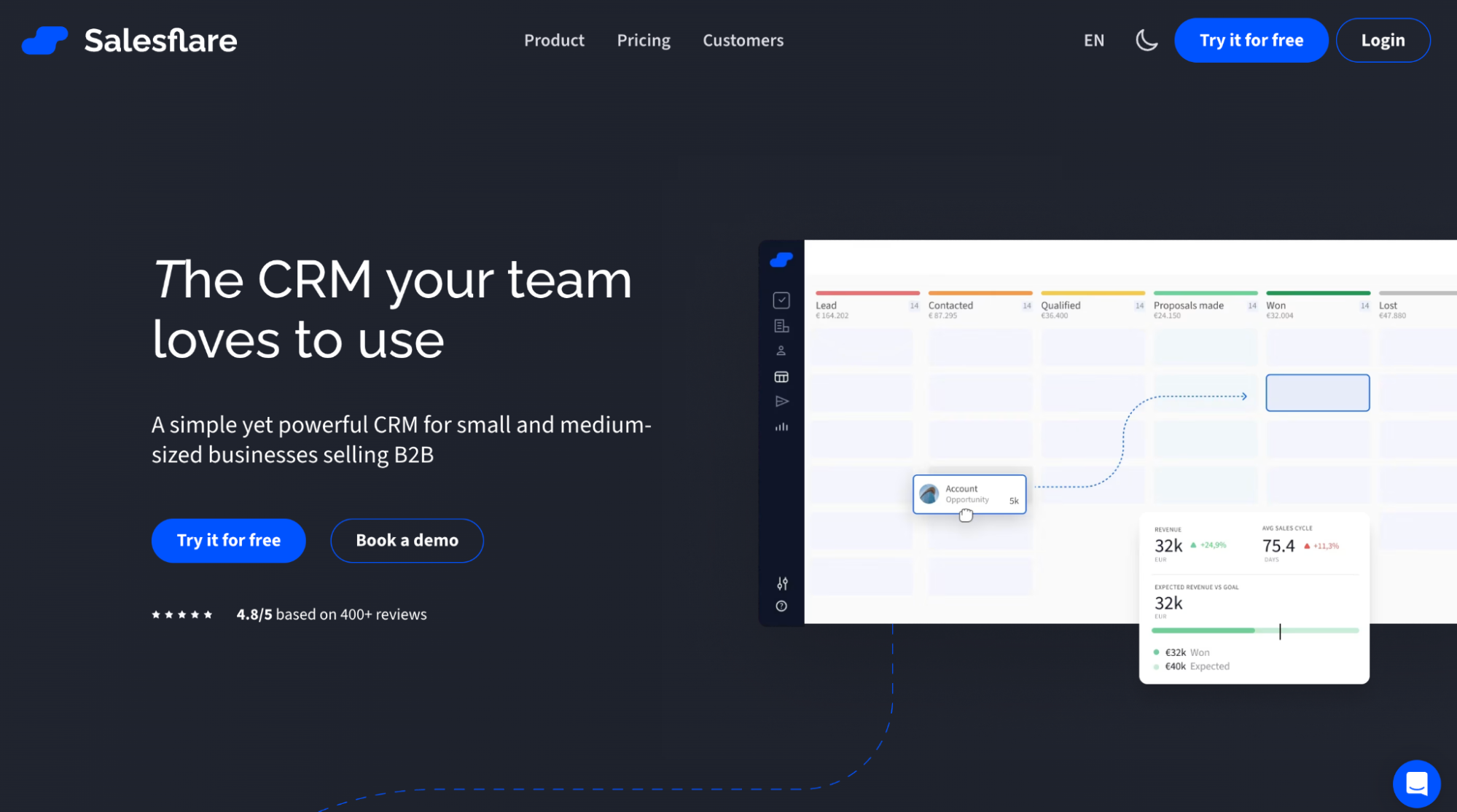
The AI doing the work:
- Automatic data capture from email, calendar, phone, and social media that builds a complete picture of every customer relationship
- AI blocks that identify which contacts need attention
- Automated pipeline updates that move deals forward based on observed activity
- Reporting dashboards that translate raw CRM data into actionable insights about pipeline health
Salesflare’s core features are built around a simple reality: there’s always a gap between what a CRM can track and what reps actually bother to log. For small B2B teams looking for an AI-powered CRM that runs quietly in the background, it’s one of the more credible value propositions on the market.
See how Salesflare compares to Capsule.
The right level of AI for your business
The most advanced AI CRM isn’t always the most useful. For small teams, a system that starts delivering value from day one often outperforms one that depends on months of setup.
The honest question to ask before choosing isn't "which CRM has the most advanced AI?" but "which CRM will act best on the data my team actually has, at the level of complexity my team can actually maintain?"
Built for teams that value consistent customer touchpoints and quick follow-ups, Capsule’s AI delivers practical day-to-day support with no setup required.