
Hiring has always been relationship-heavy work.
Sourcing candidates, tracking conversations across multiple roles, keeping hiring managers informed, following up at the right moment – it's a lot to hold together, especially when a recruiter is managing ten open positions simultaneously. Add in the pressure to move quickly before candidates drop out of the process, and it becomes clear why so much top talent never gets picked up.
Not because the team isn't capable, but because the tools aren't up to the job.
AI recruiting has changed what's possible. The right recruitment CRM with AI shows the right people at the right time and gives hiring managers visibility into where every candidate stands. This article covers what to look for, which platforms are worth your attention in 2026, and why the CRM layer matters as much as the AI layer.
What a recruitment CRM with AI actually does
A standalone applicant tracking system tracks applications.
A recruitment CRM with AI does something more valuable: it manages the entire relationship with a candidate across their lifecycle, from initial sourcing through to placement and beyond, while automating the parts of that process that don't require human judgment.
In practice, this often comes to life through
- AI-powered search to source candidates from multiple channels simultaneously,
- automated follow-ups timed to candidate behaviour,
- AI recruiting agents that can handle initial outreach at scale while preserving personalisation,
- pipeline visibility that gives the entire team a shared view of where every opportunity stands.
That operational clarity is often the difference between a process that scales and one that breaks under volume.
In a competitive talent market, candidate experience is a recruiting advantage.
What to look for before you choose
The recruitment CRM market has fragmented as AI capabilities have expanded. Before evaluating specific platforms, it's worth being clear about which problems you're actually trying to solve:
- If sourcing qualified candidates is the bottleneck, you need the ability to reach candidates across multiple channels from a single platform.
- If lead management is the issue, the priority is workflow automation and visibility.
- If your team is spending too much time on administrative work, the key capability is agentic AI – systems that can take actions autonomously.
The platforms below address different combinations of these needs. No single tool does everything equally well, and the right choice depends on where your current process breaks down.
Seven recruitment CRM platforms with AI worth evaluating
1. Capsule CRM
Capsule isn't purpose-built for recruitment the way some platforms on this list are, but it's a strong fit for recruitment agencies and in-house teams that want an easy-to-use and configurable CRM for recruitment.

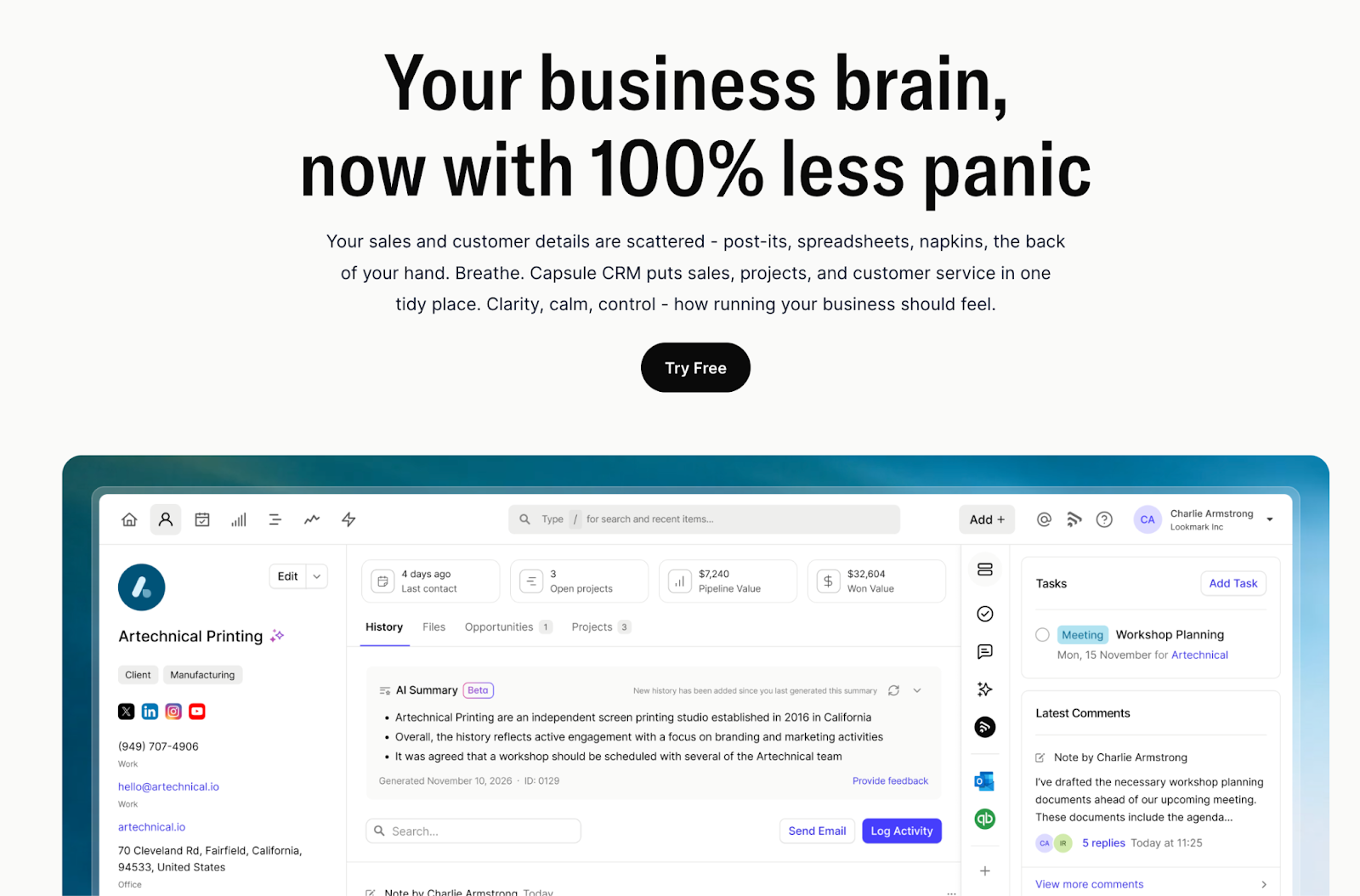
What makes it relevant to hiring teams specifically is the combination of AI Contact Enrichment – which can pull in contextual information about candidates and companies automatically – and AI Summaries, which condense the full history of a candidate relationship into a readable brief.

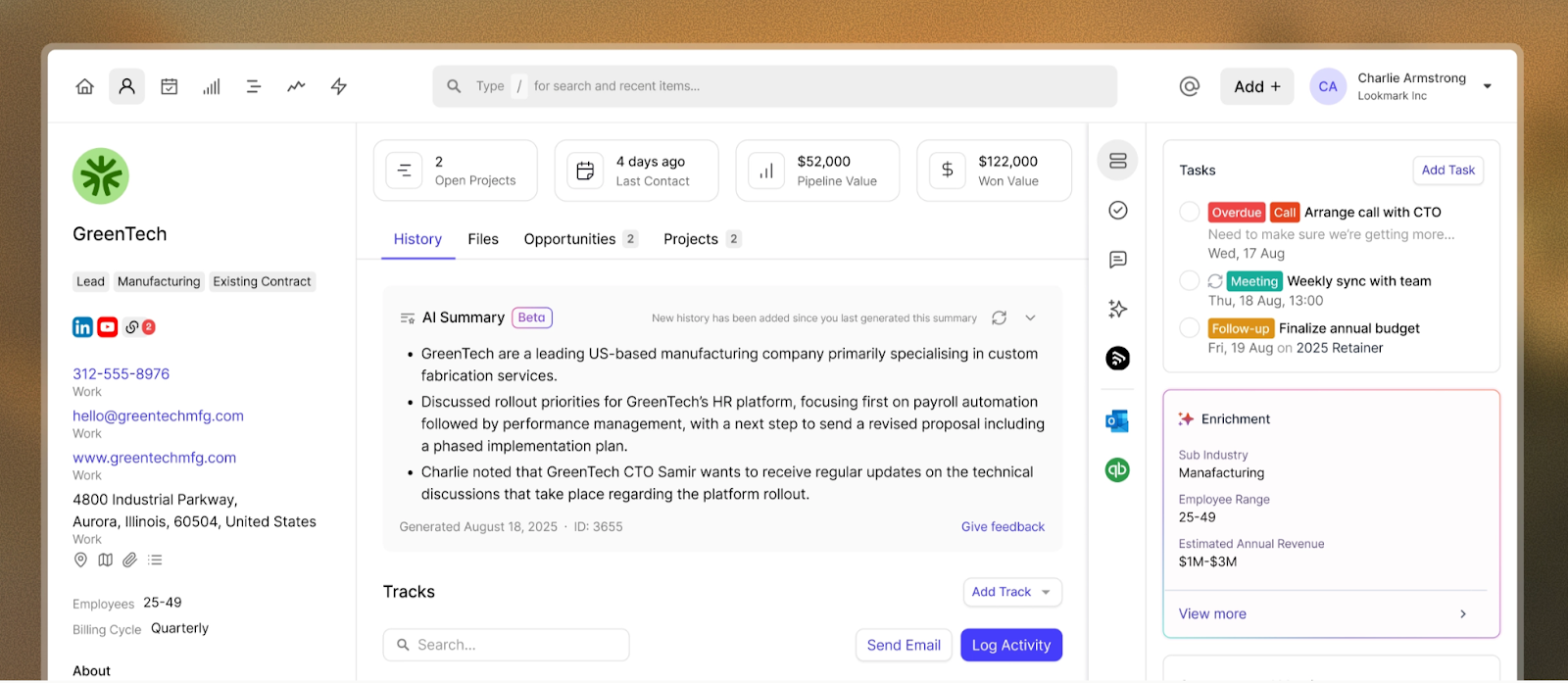
Capsule's Tracks handle the structured workflow side: onboarding a new candidate, progressing them through stages, assigning tasks to the right person at each step. Custom fields let teams capture the candidate data that matters to their specific process (skills, availability, salary expectations, interview notes).
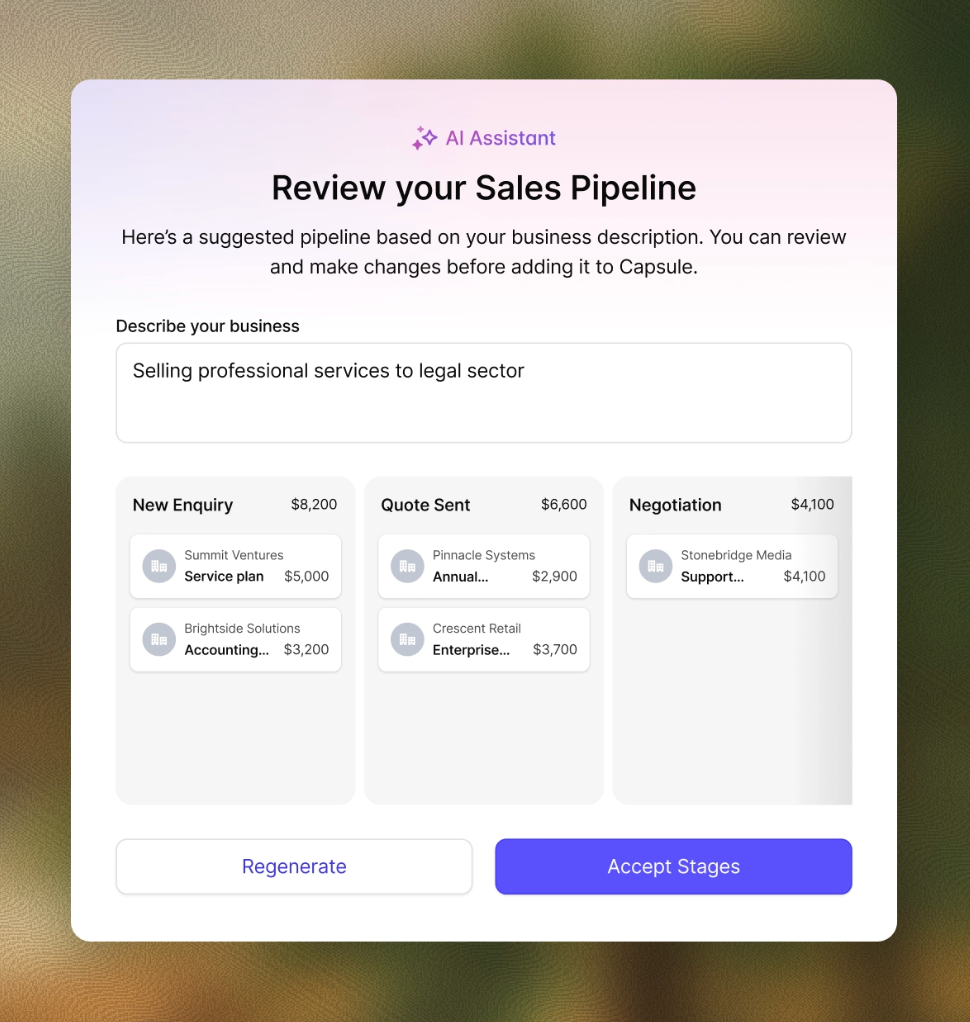
The sales pipeline can double effectively as a candidate pipeline, with multiple pipeline support, meaning executive search, volume hiring, and contract roles can each have their own workflow running in parallel.

Pricing starts from $18/user/month on the Starter plan, with AI features available from Growth ($36/user/month). Free trial available.
Capsule is best suited to agencies or in-house teams that want a highly intuitive CRM with solid AI features, rather than a platform built exclusively for high-volume applicant tracking.
Read how teams use it in Capsule's customer stories.
2. Bullhorn
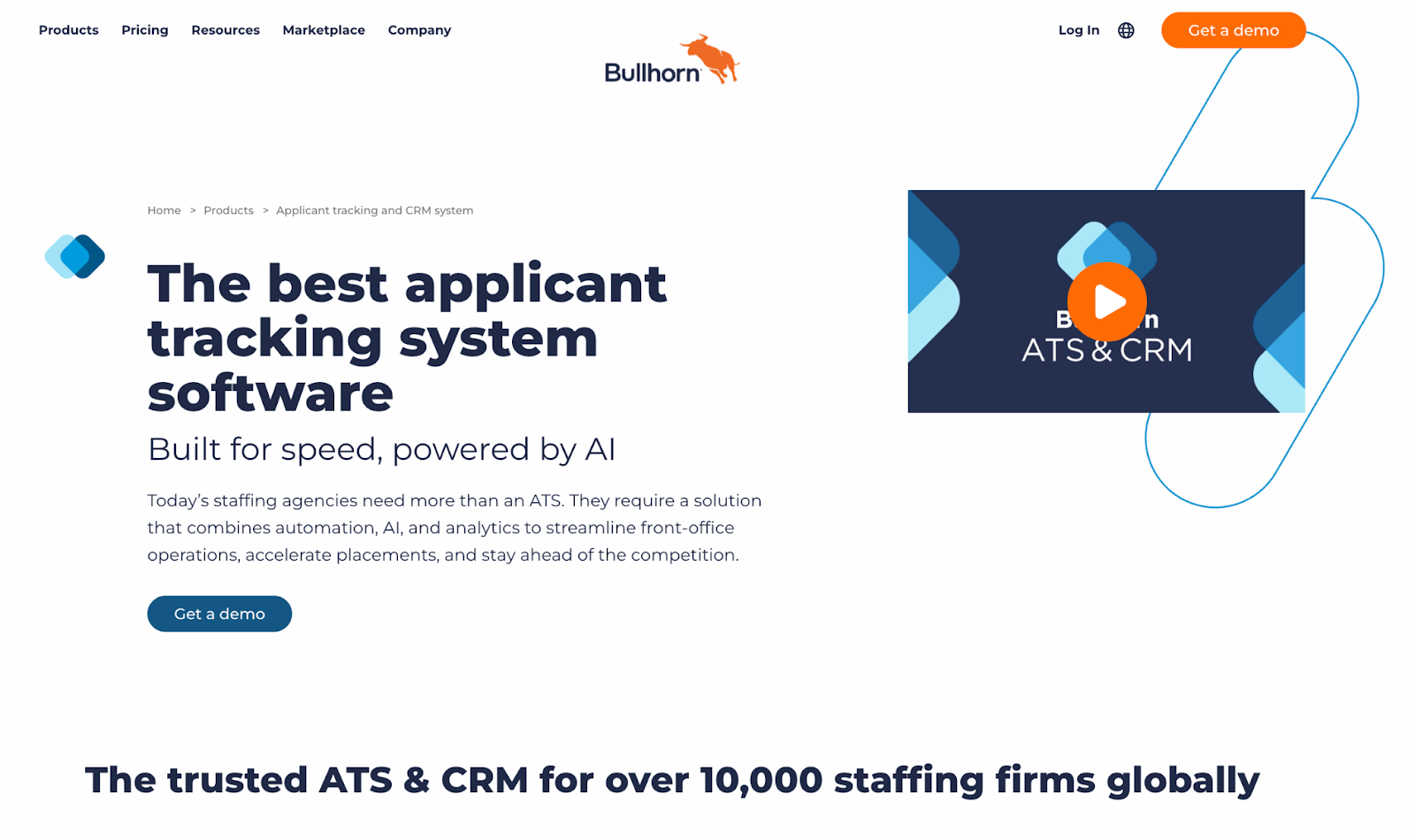
Bullhorn is one of the most established names in recruitment CRM software, built specifically for staffing and recruitment agencies rather than adapted from a general-purpose sales tool. Its AI capabilities have expanded significantly in recent years, with automated candidate matching, AI-powered search across job boards and internal databases, and workflow automation that covers the entire recruiting process from sourcing to placement.

Where Bullhorn earns its position is depth of integration: it connects with the major job boards, background check providers, and payroll systems that staffing agencies rely on.
The trade-off is complexity. Bullhorn has a steeper learning curve than most tools on this list, and pricing reflects its enterprise positioning. Worth evaluating carefully for large agencies with complex workflows; less suited to small teams or those new to dedicated recruitment software. Bullhorn pricing information is available here.
3. Loxo
Loxo markets itself as an AI-native recruiting platform, and that framing is reasonably accurate.

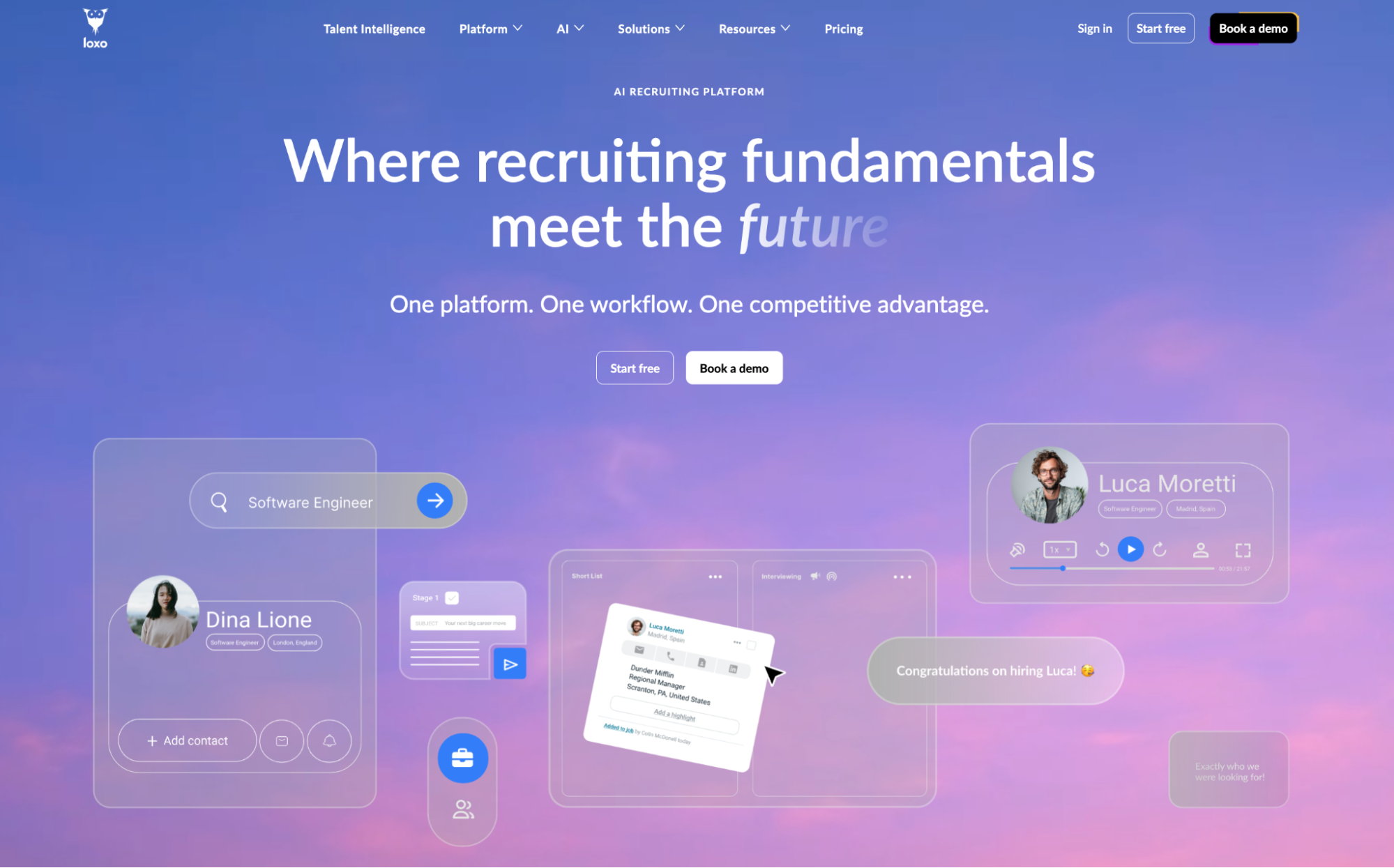
Its AI-powered sourcing pulls candidate profiles from across the web and scores them against job requirements, reducing the time recruiters spend on searching for qualified candidates. The outreach tools enable personalized candidate communication at scale, with automated sequences that adapt based on candidate engagement.
The candidate management layer is solid, with a clean pipeline view for the entire team. Loxo works particularly well for executive search and specialized roles where finding the right candidate is more about intelligent sourcing than volume processing. It might be less ideal for high-frequency, high-volume contingency recruiting where speed of throughput is the primary constraint.
4. Zoho Recruit
Zoho Recruit sits within the broader Zoho ecosystem, which is either an advantage or a constraint depending on how much of the Zoho stack you're already using.

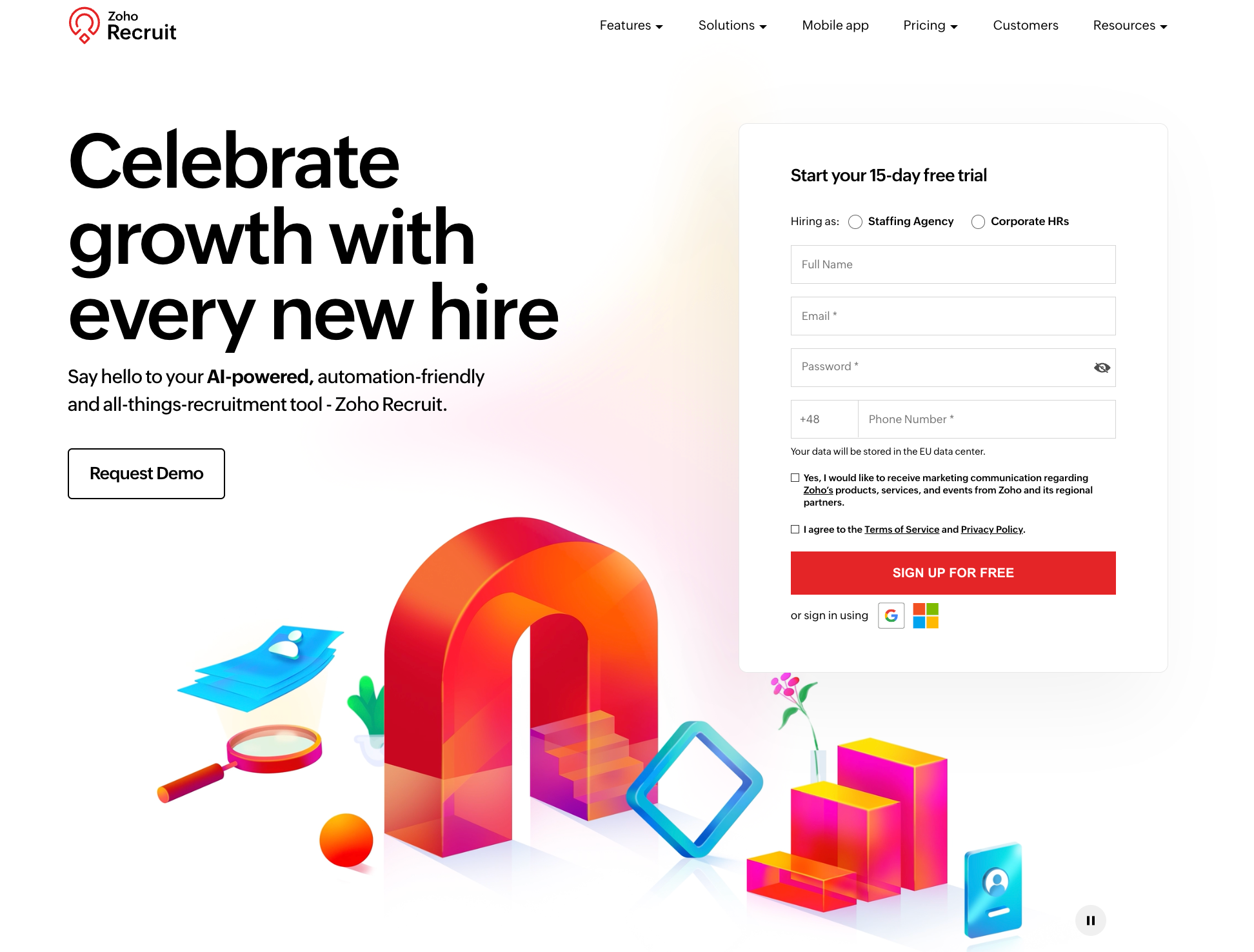
Its AI capabilities – candidate scoring, resume parsing, and automated job matching – are solid, though not best-in-class. The value proposition is breadth: Zoho Recruit covers both agency recruiting and in-house talent acquisition within one platform, at a price point that makes it accessible to smaller teams.
Integration with Zoho CRM means candidate and client data can be managed side by side, which matters for recruitment agencies that need to track both sides of a placement relationship. A reasonable choice for teams already invested in the Zoho ecosystem; less compelling as a standalone recruitment tool for those coming in fresh.
See how Zoho CRM pricing compares.
5. Gem
Gem was built around sourcing and candidate relationship management, and its AI capabilities reflect that original focus.

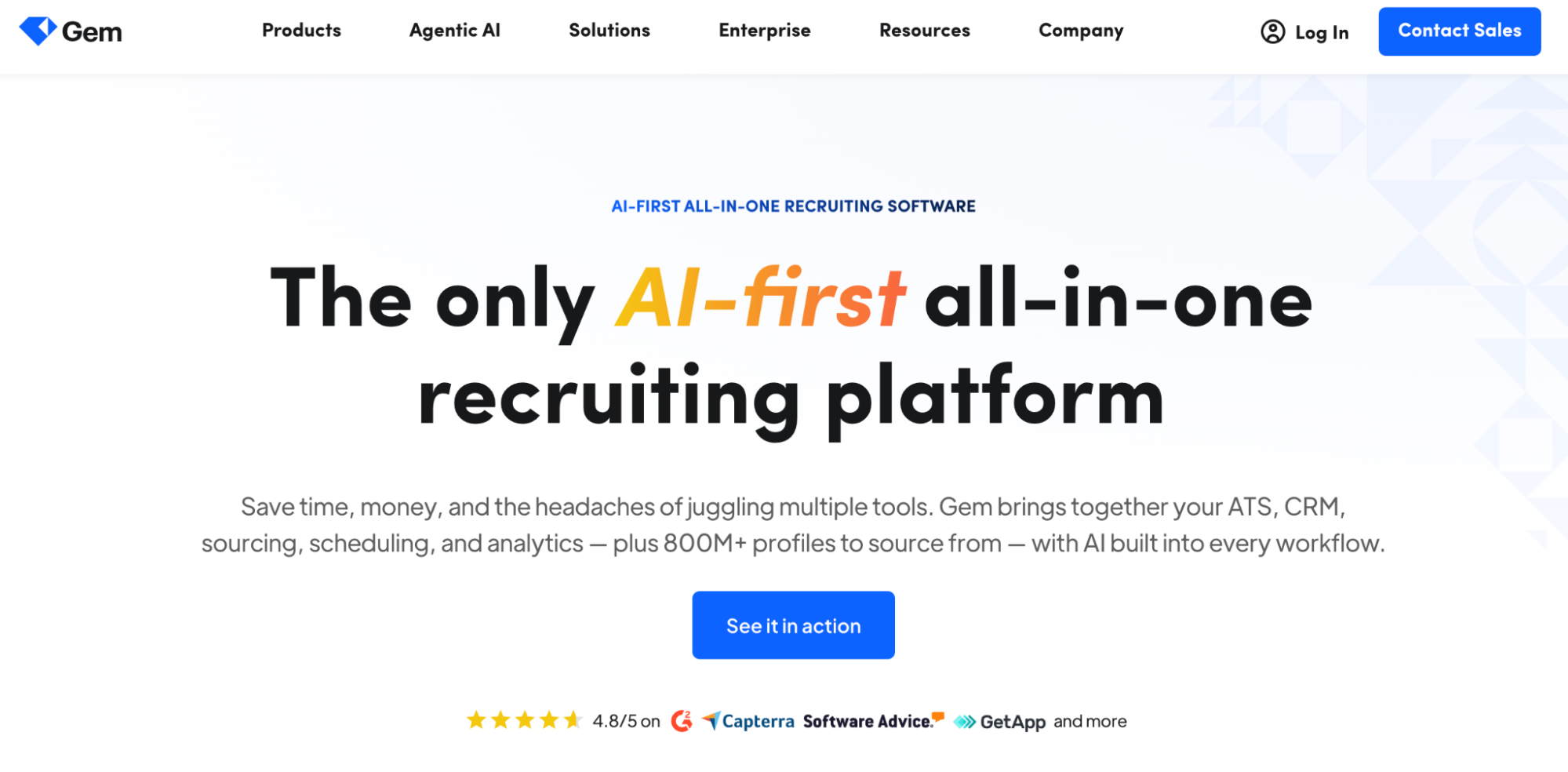
Its AI-powered search is among the strongest available, with the ability to source candidates from LinkedIn and GitHub.
Where Gem stands out is candidate experience: the platform tracks engagement signals and adjusts outreach timing accordingly, reducing the ghosting that plagues high-volume recruiting. Its analytics capabilities are particularly well developed, too.
Gem gives recruiting teams detailed visibility into source quality and time-to-hire data that most CRMs don't surface clearly. Pricing is enterprise-focused, so it’s more accessible to larger in-house talent teams than to independent recruitment agencies.
6. Ashby
Ashby has built a reputation for being the recruitment platform that engineering and technical hiring teams genuinely want to use.

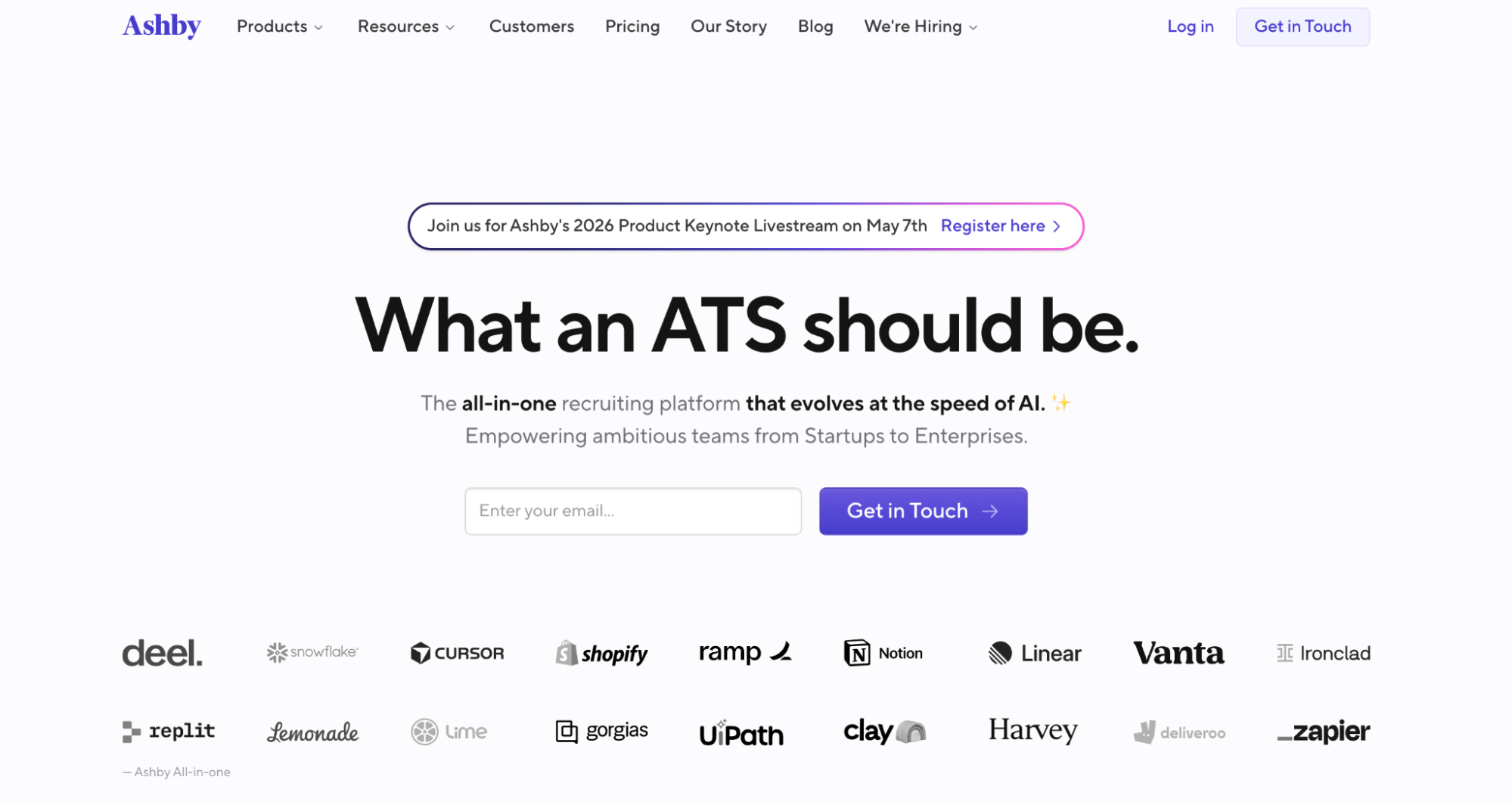
Its AI automates data entry, structures interview feedback into consistent signals, and delivers clear, up-to-date visibility across the hiring pipeline. Ashby also puts analyst-level hiring funnel insights directly into your hands.
The platform covers the full recruiting process from sourcing through offer, with customisable workflows that adapt to different role types. It's particularly well-suited to fast-growing tech companies that need a system capable of scaling while maintaining process fidelity.
7. Manatal
Manatal is a purpose-built recruitment CRM with AI features that punch above its price point.

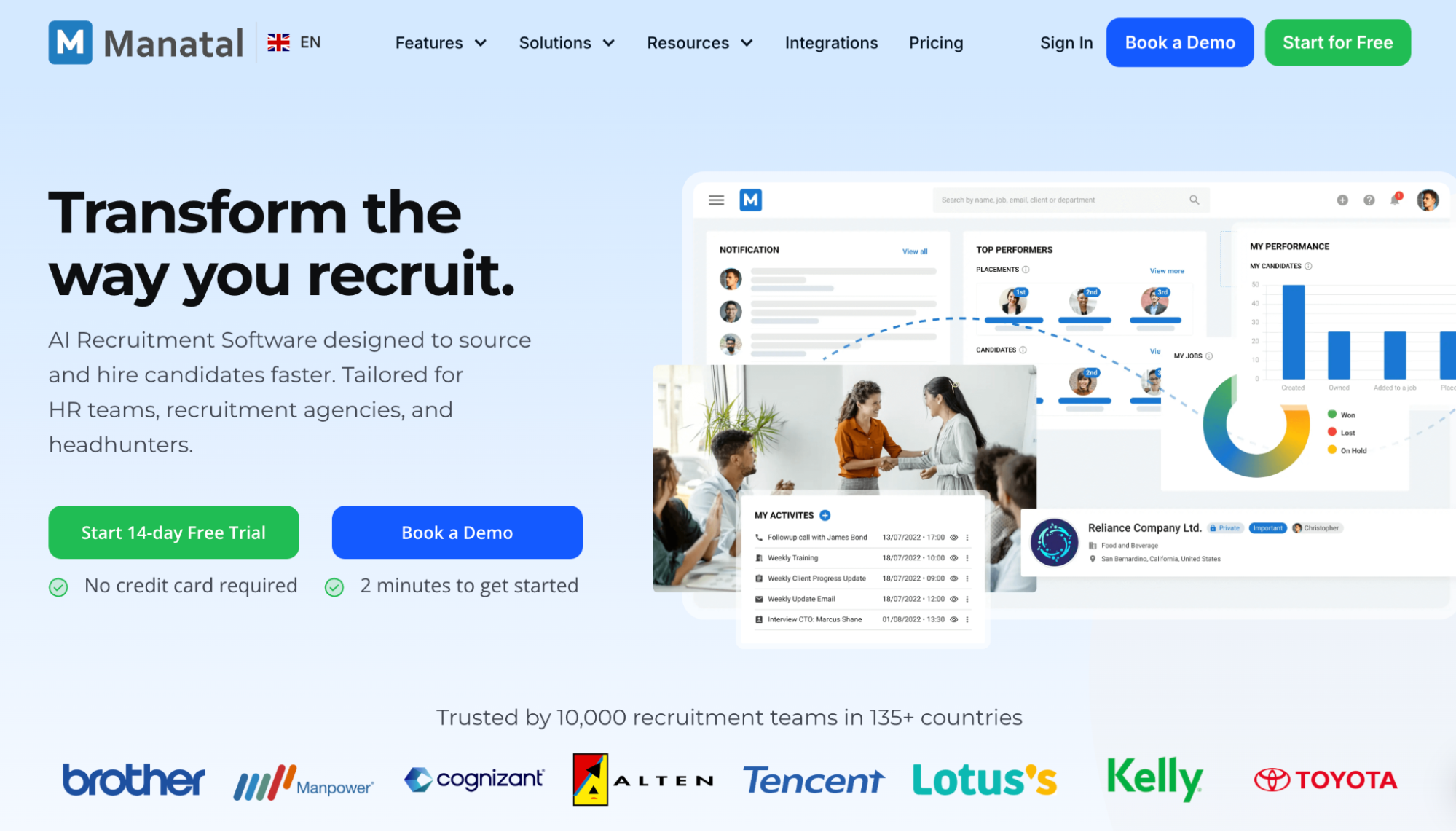
The platform scores candidates against job requirements automatically, while AI augments candidate records with data from social and professional profiles behind the scenes. Because the interface is easy to use, adoption is typically faster than with more complex enterprise tools.
Manatal suits small-to-mid-size recruitment agencies and in-house HR teams that want meaningful AI capabilities at a price point that doesn't require a large budget commitment. However, the sourcing tools are less powerful than Bullhorn for highly specialized search. For teams whose primary problem is candidate management rather than sourcing intelligence, it's worth a close look.
The CRM layer that most recruiting tools miss
A recurring problem with purpose-built ATS and recruiting platforms is that they handle candidate management well but client relationship management poorly. For a recruitment agency, the client side (tracking relationships with hiring managers, managing job briefs, following up on placements, generating repeat business) is just as important as the candidate pipeline.
This is where a general-purpose CRM with recruitment capabilities, like Capsule, has a structural advantage.
The same system that manages candidate relationships also handles client communication history, tracks the commercial relationship, and surfaces follow-up reminders that keep client relationships warm between placements. For agencies where the cost of losing a client relationship is high, that visibility matters.
Capsule's security and permissions model means sensitive candidate data can be shared with the right people on the team, with role-based access rather than an all-or-nothing approach. And because Capsule integrates with the tools most recruiting teams already use, the adoption barrier is lower than with platforms that require a wholesale process change.
How to choose the right AI recruiting platform for your team
The recruiting platform that works for a 200-person staffing agency with a dedicated IT team is unlikely to be right for a two-person boutique doing executive search. Before committing, work through these questions:
- How much recruiter productivity are you currently leaving on the table? The boring workload is where most teams are wasting money and time. A platform that automates these tasks doesn't just save time in a given week; it compounds into a competitive advantage in how many placements your team can manage simultaneously.
- How much do you want the tool to act autonomously? AI recruiting agents that take action independently are a game changer for high-volume processes, but they require trust in the system. CRM-based approaches give recruiters more control, with AI in a supporting role, not a decision-making one. Neither is inherently better; the right answer depends on your process maturity and team size.
- What's the realistic adoption risk? The best recruitment solution is the one your team actually uses consistently. Factor in CRM training time and implementation complexity as real costs. A tool that sits half-empty delivers no productivity or performance gains regardless of its feature set. Look at customer stories from teams similar to yours before deciding.
- What does it actually cost to run? Beyond the per-seat price, consider integration costs, data migration, and the ongoing admin of maintaining the system. For smaller teams, the money saved by avoiding enterprise-tier complexity often outweighs the feature gaps.
- What are the security requirements? Candidate data is sensitive. Any platform handling personal information at scale needs clear data protection practices, role-based access controls, and compliance with relevant regulations. Verify this before you join any platform, not after.
For teams looking to streamline candidate management and the broader HR and recruitment workflow, Capsule's free plan covers two users and 250 contacts – enough to run a lean operation and test whether the CRM approach fits your process before moving to a paid tier.