
A $300 marketing budget can disappear in a week of ads. The same $300 could cover months of email software, a domain, and several small experiments.
Price alone tells you very little.
For a small business, marketing costs come in two forms: money leaving your account and hours leaving your week. A free social channel can become expensive if it takes six hours every Friday. A $200 ad campaign can look cheap if it brings in a few profitable customers.
So, instead of another list of “free marketing ideas,” this guide compares 5 low-cost marketing ideas for small business owners based on what they cost to start, how much time they take, and how quickly you can expect to learn if they’re working.
The prices below are planning ranges: software prices, ad costs, and freelance rates change. Your market can shift the numbers, too.
What counts as low-cost marketing?
Low-cost marketing gives a small business a realistic way to reach customers without committing thousands of dollars before knowing what works.
Sometimes the cash cost is zero. Google Business Profile, referrals and organic social media can all start without an advertising budget. Your time is still part of the bill.
That’s why it helps to look beyond the price tag. Before adding a tactic to your small business marketing plan, ask how many hours it needs every month, how soon it can generate a signal and how you’ll connect any leads back to the activity that produced them.
If you’re still deciding where marketing fits into the rest of the business, our guide to small business marketing covers the wider planning side.
Low-cost marketing ideas compared
Each of these five marketing ideas has a different balance of cost, effort and speed. Here's what to expect before choosing one.
Google Business Profile: Free to use, with relatively little ongoing maintenance. Results may take some time, but it's a strong starting point for local businesses that want to appear when nearby customers search for their services.
Customer referrals: Free unless you offer a reward, and require very little ongoing work. Referrals can generate leads quickly, particularly if you already have satisfied customers willing to recommend your business.
Micro-influencers: Costs depend on whether you're offering free products, paying a creator or sharing commission. Finding the right people takes some research, but you can often learn whether a collaboration works after a single campaign.
Simple business website: Budget around 10–30+ per month for a basic setup. Once published, maintenance can be minimal. A website gives potential customers a place to learn about your business and contact you, although attracting traffic may take longer.
Content marketing: Free if you do the work yourself, although writing and research can take several hours. Results tend to develop slowly, making it a better fit for businesses whose customers research options before making a purchase.
It’s worth noticing that the cheapest option isn't automatically the right one.
A B2B consultant may get more from four targeted referral conversations than four weeks of Instagram posts. A local plumber may get far more from local search than from writing a weekly blog.
Start where your customers already look.
5 low-cost marketing ideas and what they really cost
1. Optimize your Google Business Profile
- Cash cost: $0
- Setup time: Around 1–2 hours
- Ongoing time: Around 30 minutes a week
- Best for: Businesses serving a local area
For a local business, Google Business Profile is one of the first places to spend time because the cash cost is zero and the search intent can be strong.

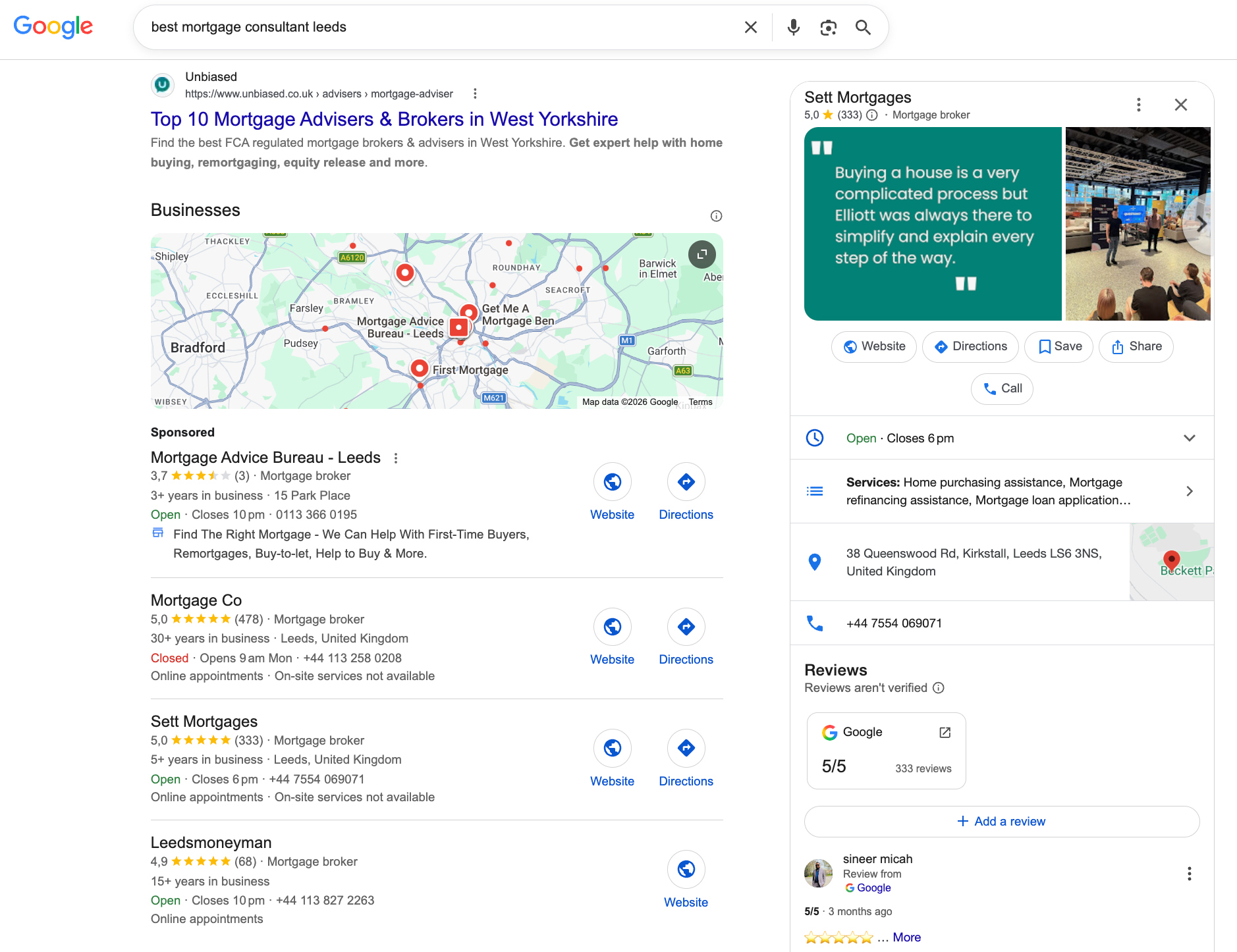
Imagine someone nearby needs exactly what you sell. They open Google, type in the service they need and start comparing the businesses that appear on the map.
At that point, your Google Business Profile can do a lot of the early marketing work for you. Before a potential customer ever reaches your website, they may already have seen where you are, when you're open, what other customers think, and what your business looks like.
And unlike many marketing channels, getting started doesn't require an advertising budget!
If your profile has been sitting untouched for a while, start with four things.
1. Make the basic information reliable. Check your opening hours, contact details, website, and service area. Choose the most accurate business category too. A customer shouldn't have to visit your website just to work out what you actually do.
2. Show people the real business. Add recent photos instead of filling the profile with stock imagery. A café can show its space, a contractor can show completed work, and a consultant can add a professional team photo.
3. Build a simple review habit. Don't wait until you suddenly decide you need 20 new reviews. Ask happy customers regularly, ideally soon after you've finished the work. A quick follow-up message with the review link is often enough.
4. Keep the profile alive. Check it every week or two. Reply to new reviews and update anything that has changed. Half an hour spent here can be more beneficial than constantly looking for another new marketing channel.
Google Business Profile is free to set up, can be maintained with short weekly checks, and is visible at exactly the moment someone is looking for a nearby provider. We’ve published a full local SEO checklist if you want to take the next step.
2. Build a simple customer referral program
- Cash cost: $0 without a reward; variable with an incentive
- Setup time: About an hour
- Ongoing time: Low
- Best for: Businesses with happy existing customers
Referral marketing often sounds more complicated than it needs to be. For a small business, it can be as simple as making it easier for happy customers to recommend you.
Think about a landscaper who has just finished a garden renovation. The customer is happy with the work, and their neighbor notices the new garden and asks who did it.
At that point, the referral is already halfway there.
The landscaper doesn't need a dedicated platform or a polished referral scheme; they just need to make the introduction easy. That could mean leaving the customer with a direct booking link, following up with a short message they can forward or simply asking them to pass on the business name if somebody asks.
The best moment to ask for a referral is usually when the value of your work is still obvious: just after a positive review, or a customer telling you they're pleased with the result.
You also don't have to attach money to every referral. Many customers will recommend a business because they simply had a good experience. An incentive can help, but it should make financial sense. If a new customer is worth $1,000 to the business, a $25 credit may be easy to justify. With a much smaller average sale, the numbers need a closer look.
You should focus on a repeatable habit instead of hoping referrals happen on their own. Decide when you'll ask, make the introduction simple and track which customers are sending new business your way.
Your existing customer base can also support broader customer outreach when referrals slow down.
3. Test micro-influencers
- Cash cost: $0-$300 for a small test, depending on product cost or creator fee
- Setup time: Several hours of research and outreach
- Ongoing time: Variable
- Best for: Businesses with a clear niche audience
Micro-influencers have become a mainstream part of influencer marketing. For a small business, though, the interesting part isn't their popularity. It's how cheaply you can test the idea before paying for a larger campaign.
Doe Beauty is a good example. Founder Jason Wong launched the beauty brand with around $500 and told Shopify that influencer marketing became its “bread and butter.” Rather than chasing huge accounts, the company focused heavily on micro-influencers with fewer than 100,000 followers. It would reach out and offer products for creators to try, without making a post a condition of receiving the gift.

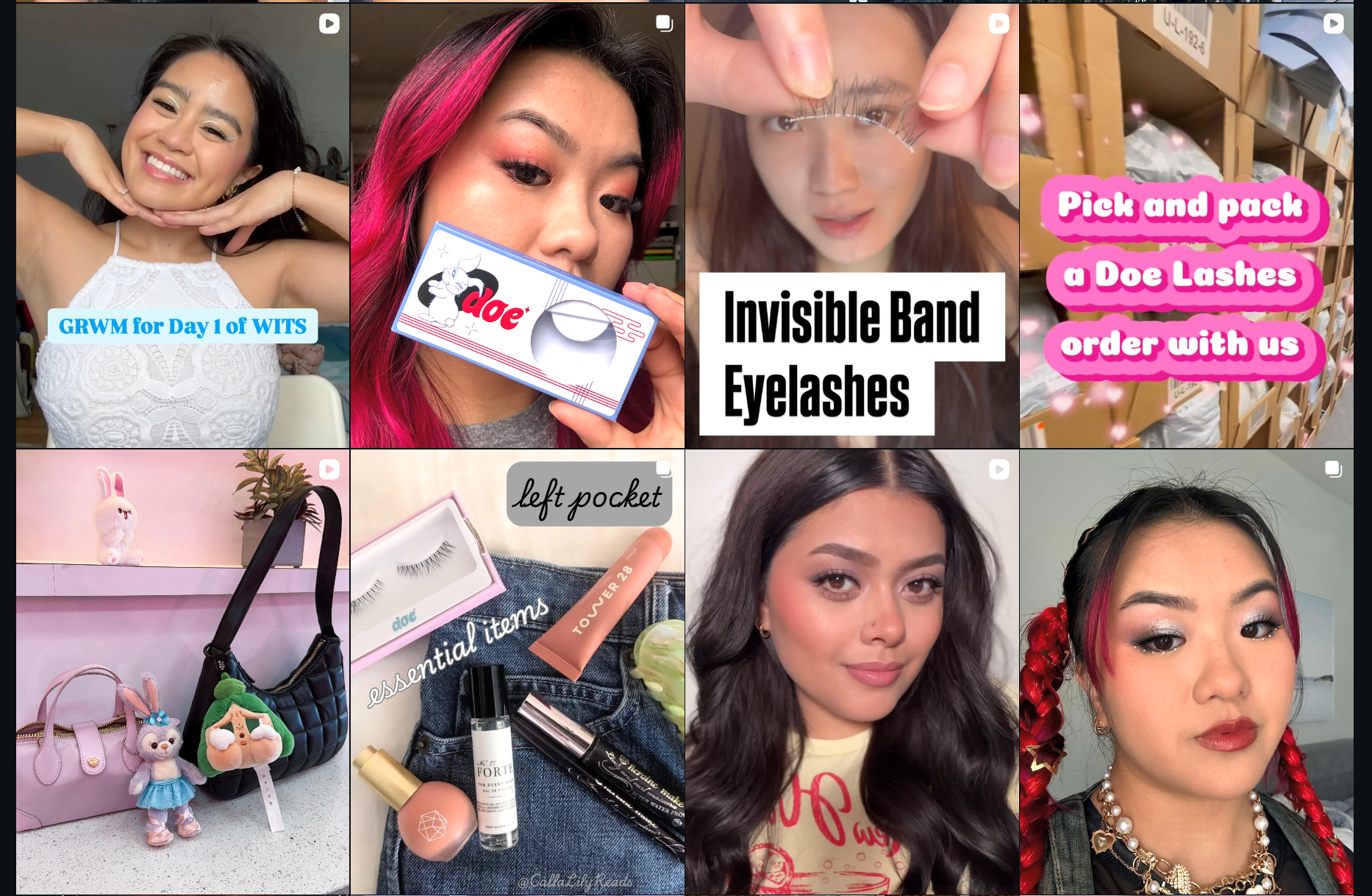
Influencer marketing is much more accessible to a small B2C business. You can send the actual product, cover the postage, and see who likes it enough to talk about it. Doe eventually grew into a multi-million-dollar business, and Shopify later reported that organic social and influencers together accounted for 60% of its revenue.
How does it work for B2B businesses, then? Well, they don't need something physical to put in the mail. A SaaS company could give a relevant creator extended access to its product. If you're selling expertise, not software, you might offer a consultation or another feature of your service. The principle is the same: let someone relevant experience what you sell before spending heavily on sponsored content.
Follower count shouldn't be the first filter. Look at what the creator normally talks about and who actually pays attention. A smaller audience made up of potential customers can be much more valuable than a much larger but loosely related following.
If the first experiments work, you can move into paid collaborations or affiliate deals. Until then, keep the test small and track what happens after each creator mentions you.
Our collection of marketing campaign examples can also help when you're planning the creative side.
4. Build a simple website you control
Cash cost: Roughly $10–$30+ a month for a basic setup, depending on provider
Setup time: As little as 10–15 minutes for a simple first version
Ongoing time: Low
Best for: Almost every small business
A website doesn't need to start as a big project.
For many small businesses, the first version only needs to answer a few basic questions: what do you do, who is it for, why should someone trust you and what should they do next? A clear homepage with your offer, some proof and an obvious way to get in touch can already do the work.
The easiest way to start is often with the brief, not the builder.
These days, you can ask ChatGPT to help you create a website prompt first. Tell it what your business does, who your customers are, what tone you want and what you want visitors to do. You can also ask it to suggest the right pages and structure before you build anything.

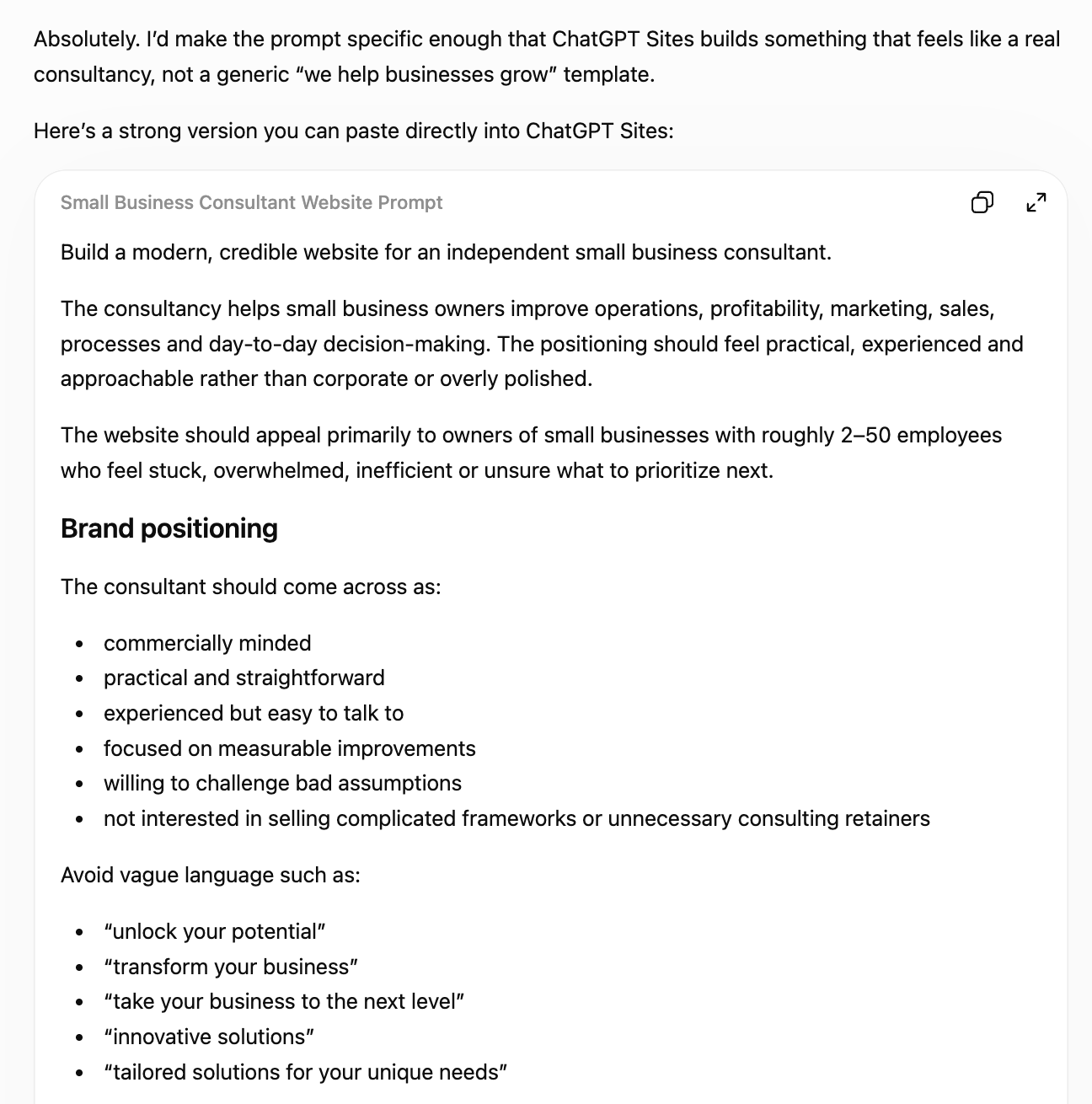
Once the brief feels right, you can turn it into a website. ChatGPT now has ChatGPT Sites for eligible users. Go to chatgpt.com/sites, paste in your brief and ask it to build the first version. You can then review the site visually and request changes in plain English.

For example, you might ask it to make the homepage less corporate, shorten the services section, add a booking page or change the navigation. You don't need to open a theme editor every time you want to adjust something.
For a very simple small-business site, getting a usable first version online in 10–15 minutes is realistic. You can improve it later, once you know what customers need from it.

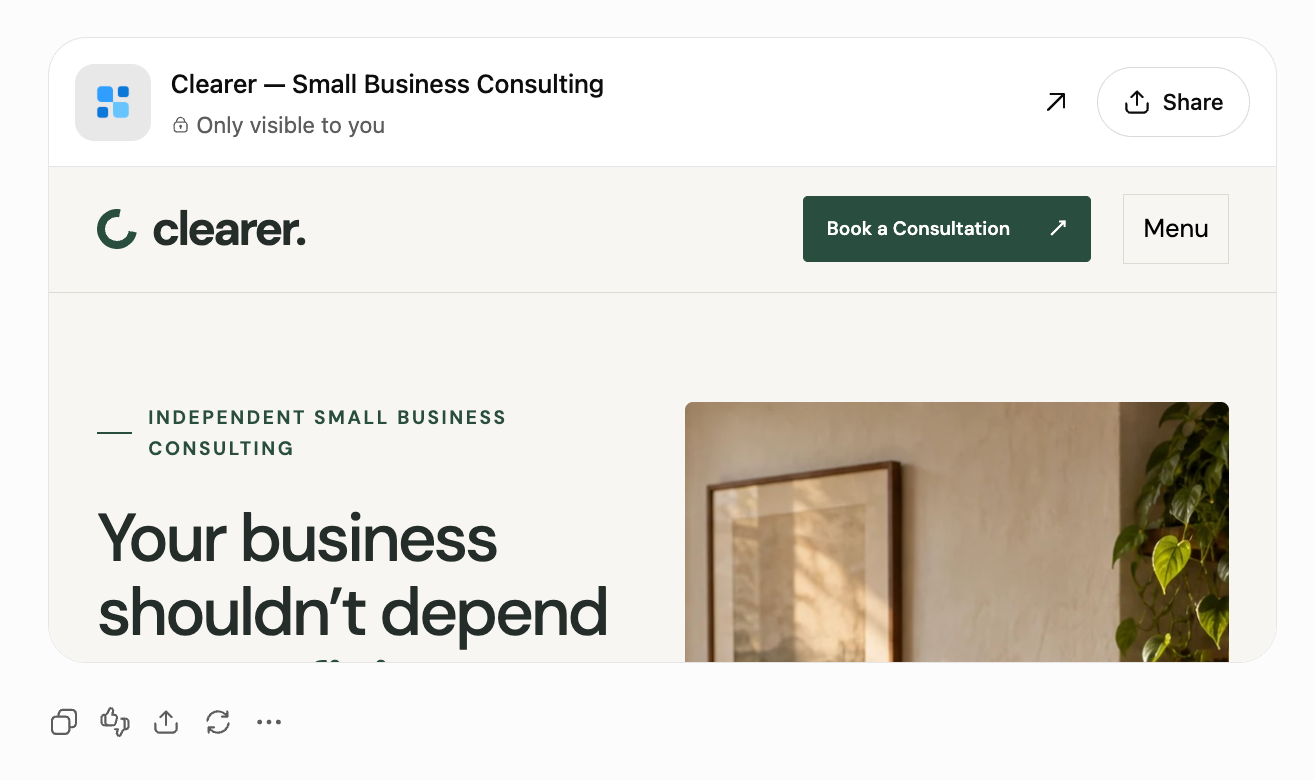
It’s important because the hidden cost of a cheap website is often the time spent tinkering. A few weekends spent changing fonts or moving sections around is still expensive marketing, even if the software itself only costs $15 a month.
A local dog groomer, for example, doesn't need 30 pages before taking bookings. A simple homepage with services, prices, real photos and a booking button can start doing the job immediately.
Get the first working version live first. Then let customer questions, sales conversations and real traffic tell you what to add next.
If you're still building the wider business from scratch, Capsule's guide to starting a small business covers the systems that sit around the website too.
5. Answer customer questions with content
- Cash cost: $0 if you create it yourself; freelance costs vary
- Setup time: Around 30–60 minutes to find your first topics
- Ongoing time: From 30 minutes for a short answer to several hours for a detailed article
- Best for: Businesses where customers research before buying
Content doesn't have to start with a keyword spreadsheet – a much easier starting point is answering questions potential customers are already asking.
Take a small marketing agency in Manchester. It probably hears some version of the same questions again and again: How much should a small business spend on marketing? Is SEO worth it for a local company? Should we hire an agency or someone in-house?
Those questions are already content ideas. And you can find more of them for free.
1. Check your own emails and sales conversations – about 10 minutes
Open your inbox, CRM or recent call notes and look for questions prospects asked before deciding whether to work with you.
For our Manchester agency, one recurring question might be: How much does a marketing agency cost in Manchester?
That's already a helpful article, so answer it properly. Explain what affects the price, what a small business can expect at different budgets, and when hiring an agency may not make sense at all.
The advantage here is that you're not guessing what customers care about; they've already told you.
2. Let Google show you the follow-up questions – about 15 minutes
Search one of those questions in Google and pay attention to the suggestions that appear as you type, the related searches, and the People also ask box.
Searching for something like SEO for small business Manchester might reveal more specific questions about local SEO, monthly costs or how long results take.

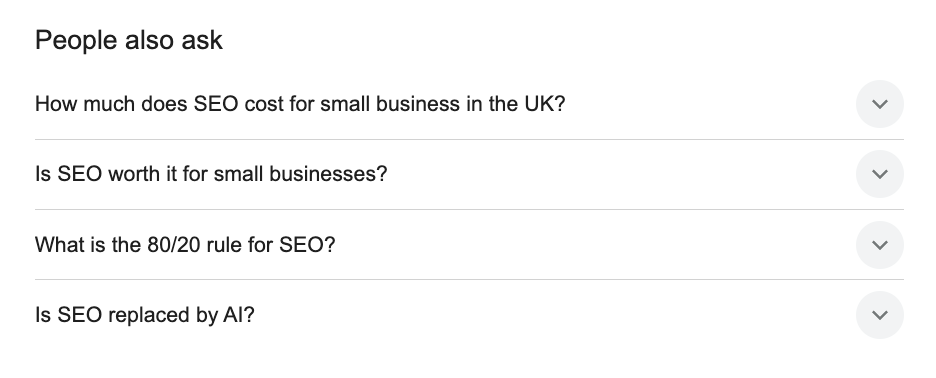
Open a few of them and note the ones your agency could answer from real experience. You don't need 50 ideas. Finding three or four strong questions is enough to start.
3. Look where business owners ask less polished questions – about 20 minutes
Search Reddit, Quora or relevant local business communities for the same topic.

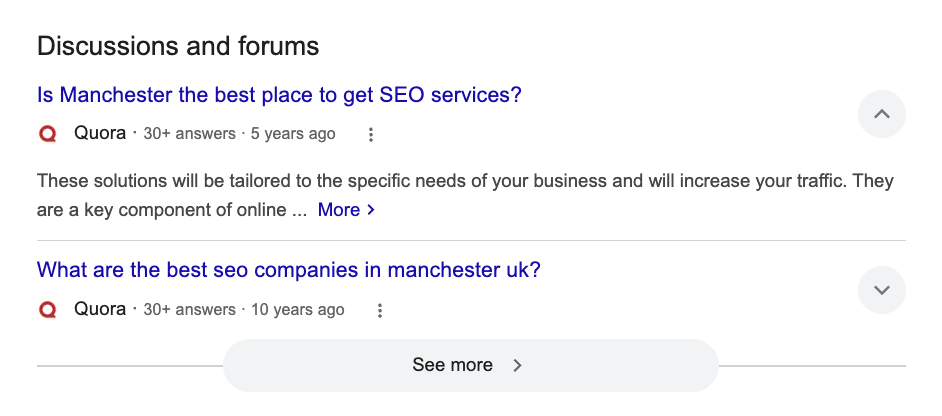
Instead of polished search terms, you'll often find questions closer to how people actually think: My Manchester business gets no leads from Google. What am I doing wrong? or Is £500 a month enough for SEO?
Those can make particularly good content because they give you the language customers use before they ever speak to an agency.
Once you've found a question, don't overcomplicate the format. A valuable answer could be a short article, a LinkedIn post, or a two-minute video. If the question keeps coming up, turn the strongest version into a permanent page on your website!
One good answer can keep working long after you publish it. A prospect might find it through search today, your sales team might send it to a lead next month and you may later reuse the same idea in an email.
How to know if low-cost marketing is paying off
The easiest way to waste money on cheap marketing is to measure the wrong thing.
A post getting 4,000 views can look successful, and so can 80 website visits from a local directory. But if neither brings in paying customers, those numbers don't tell you much about the return on your investment.
For a small business, tracking doesn't need to be complicated. Start by creating a field in your CRM called “How did they find us?” and complete it whenever a new lead comes in. You can add the same question to your website forms. It won't give you perfect attribution, but it will help you understand which channels are bringing people to your business.
From there, keep a simple monthly scorecard for each marketing activity. Record what you spent, including the time you invested, how many leads came in, how many became customers and how much revenue they generated.
Say you spent two hours maintaining your Google Business Profile last month. It brought in seven leads, three of whom became paying customers worth $2,100 in total. That's a promising result for two hours of work, especially if those customers are likely to return or recommend your business.
Now consider a small marketing agency in Manchester. Its LinkedIn activity might generate plenty of conversations, while referrals bring in fewer enquiries. If those referred prospects are more likely to sign a contract or purchase larger projects, the agency may be better off investing more time in its referral network.
This is where a CRM becomes particularly valuable. A spreadsheet might tell you that LinkedIn generated 12 leads last month, but a CRM can show what happened to those opportunities. If four became customers and generated $4,200 in revenue, you have a much clearer picture of the channel's performance.
Capsule can help you follow that journey from the first enquiry through to a closed deal. If spreadsheets are becoming difficult to manage, explore our guide to CRM lead management or compare contact management software for small businesses.
Set aside 15 minutes at the end of each month to review your results. Look at the channels that brought in customers, the time and money they required, and whether the returns justify another month of investment. You might decide to spend more time asking for referrals, reduce your posting frequency on a social platform or continue a promising experiment for another month.
You don't need an elaborate reporting system to make better marketing decisions. A consistent record of where your customers come from and what they're worth is a good place to start.