A good introduction email creates a strong first impression and makes the next step easy to say yes to.
If you’re writing to a potential client, a partner, a new contact, or a new colleague, the way you introduce yourself shapes the whole conversation.
Too formal, and the message feels stiff.
Too vague, and the reader has no reason to reply.
Too long, and you overwhelm the reader before they get to the point.
This article walks through how to introduce yourself in an email with a sales-first mindset.
What is a self-introduction email?
A self-introduction email is a message you send to someone who doesn’t know you yet, or doesn’t know why you’re reaching out. It explains who you are, why you’re writing, and what you’d like to happen next.
In sales, an introduction email often starts the relationship. It can open doors to new opportunities, but only if it respects the reader’s time.

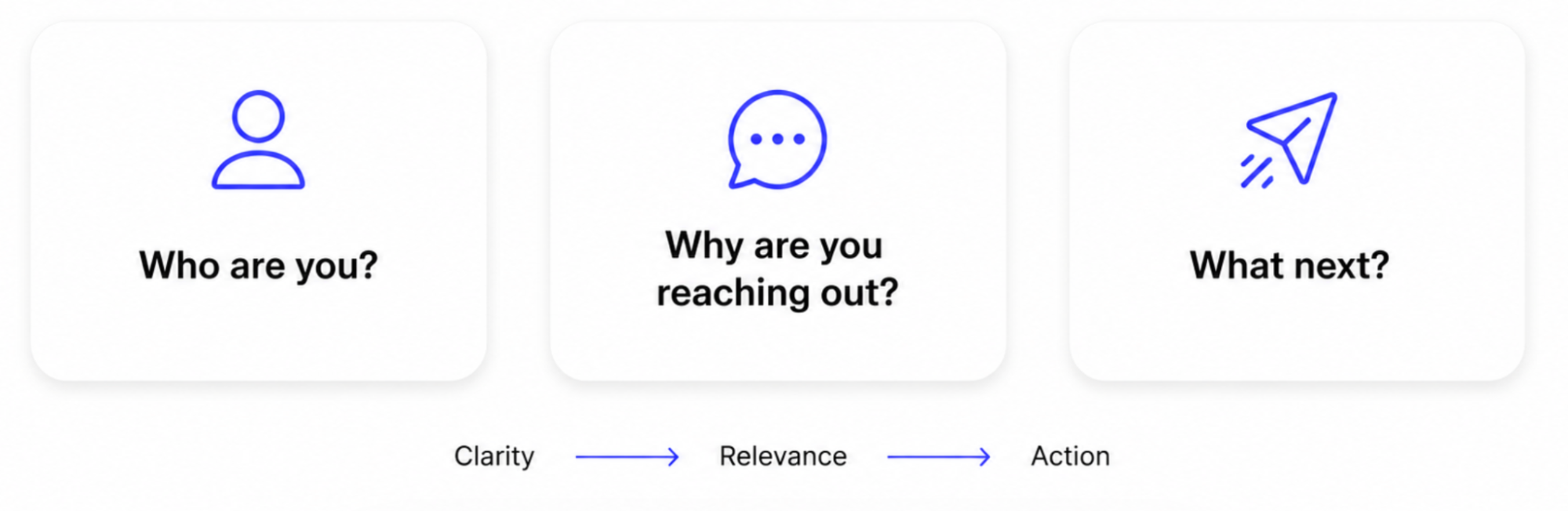
A good introduction email should answer three questions fast:
- Who are you?
- Why are you contacting me?
- What do you want me to do next?
That sounds simple, but many introduction emails miss at least one of those points. They start with “My name is…” and keep going, yet the reader still can’t tell why the message matters.
A better email introduction connects your role to the reader’s situation. For example, instead of saying you work in sales, explain the specific problem you help with. Or, instead of listing professional services, show why the message belongs in their inbox today.

Why the way you introduce yourself matters in sales
First impressions matter because buyers make quick judgments. They look at the subject line, scan the first sentence, and decide if your message deserves attention.
The subject line is the first thing the recipient sees, so it sets the tone before the body copy does. If it feels vague, pushy, or mass-sent, the reader may never open your email. But if it feels relevant, the body gets a chance.
Your opening line does the next job: it shows the reader why you’re in their inbox. When it points to something specific, the email feels considered. It doesn’t need to be a long custom intro. It just needs to make the reason for reaching out feel relevant.
How to introduce yourself in an email
To introduce yourself in an email, start with a clear subject line, give brief context, explain why you’re writing, connect your message to the reader, and end with one simple next step.


That structure works for cold outreach, referrals, event follow-ups, new role announcements, and messages to a new team.
Here’s the basic flow:
- Write a subject line that gives context.
- Open with a relevant first sentence.
- Introduce yourself in one short line.
- Explain why you’re contacting them.
- Make your message useful to the reader.
- End with one clear ask.
- Sign off professionally.
That’s the short version. Now let’s break it down.
Start with a subject line that gives context
Your subject line needs to help the reader place your message.
A weak subject line creates friction:
- Quick question
- Introduction
- Checking in
- Hello from [company]
These are too vague for a busy inbox. The reader has to open the message to understand why it exists.
A stronger subject line gives a reason:
- Introduction from [your name] at [company]
- Idea for improving [specific area]
- Following up from [event name]
- Referred by [mutual connection]
- New contact for [project or account]
The subject line is the first filter. Make it specific enough to feel relevant, but not so detailed that it reads like the whole email.
For sales, the best subject lines usually connect to one of these angles:
- a business problem/bottleneck
- a shared context
- a referral
- a recent conversation
- a clear handover
If a mutual connection introduced you, use that. If you met at an event, mention it. If the reader recently changed role, launched a project, or shared a public update, use that context carefully.
You’re not trying to impress them with research. You’re trying to make the email feel like it belongs.
Open with context before you talk about yourself
Many people start with a version of “My name is…”, and it often puts the least important detail first.
The reader cares less about your name at the start and more about why your message landed in their inbox.
A better opening starts with context:
- “Congratulations on the new role. I saw your team is expanding its partner program, and I wanted to introduce myself.”
- “I noticed your team is hiring more account executives, so I thought this would be a useful moment to introduce myself as your new contact at [company].”
- “[Mutual connection] mentioned you’re reviewing your sales process this quarter, so I wanted to reach out.”
Each version gives the reader a reason to keep reading.
You can still introduce yourself clearly in the next sentence:
“I’m [name], and I work with [type of company] on [specific outcome].”
Keep that sentence tight. A professional email can feel warm and direct at the same time.
Explain why you’re reaching out
After your opening, explain why you’re contacting them. This is where many sales emails lose the reader.
A weak reason sounds like this: “I wanted to introduce our company and see if there’s a fit.”
That asks the reader to do the work; they have to figure out the relevance.
A stronger reason sounds like this:
“I’m reaching out because your team appears to be moving more leads through partner referrals, and we help sales teams track those conversations from first contact to closed deal.”
Now the reader can see the connection.
Your explanation should link three things:
- what you noticed
- what you help with
- why it matters now
You don’t need a long pitch. In fact, keep it as short as possible. The goal of an introduction email is to earn the next conversation.
If you’re writing a self-introduction email for a non-sales context, the same rule applies. Explain why you’re writing in plain language.
For example:
- “I’m writing to introduce myself as the new account lead for your project.”
- “I wanted to take a moment to introduce myself before our kickoff call next week.”
- “I’m joining a new team this week, so I wanted to say hello and share how I’ll be working with you.”
Make your email feel REALLY personal
Personalize the message enough to show care, but don’t turn the first paragraph into a research report.
A useful detail might be:
- a recent company update
- a shared contact
- an event you both attended
- a public project
- a role change
- a specific business challenge
A weak detail feels forced:
- “I saw your company values innovation.”
- “Your website looks great.”
- “I noticed you care about growth.”
These lines don’t help you make a better connection, since they could apply to almost anyone.
A stronger detail feels grounded:
- “I saw your team opened two new locations this quarter.”
- “I noticed you’re hiring for customer success roles, which usually puts more pressure on handoffs from sales.”
- “I read your email about the new partner program and thought this might be relevant.”
The key is to make your email feel like it came from someone paying attention.
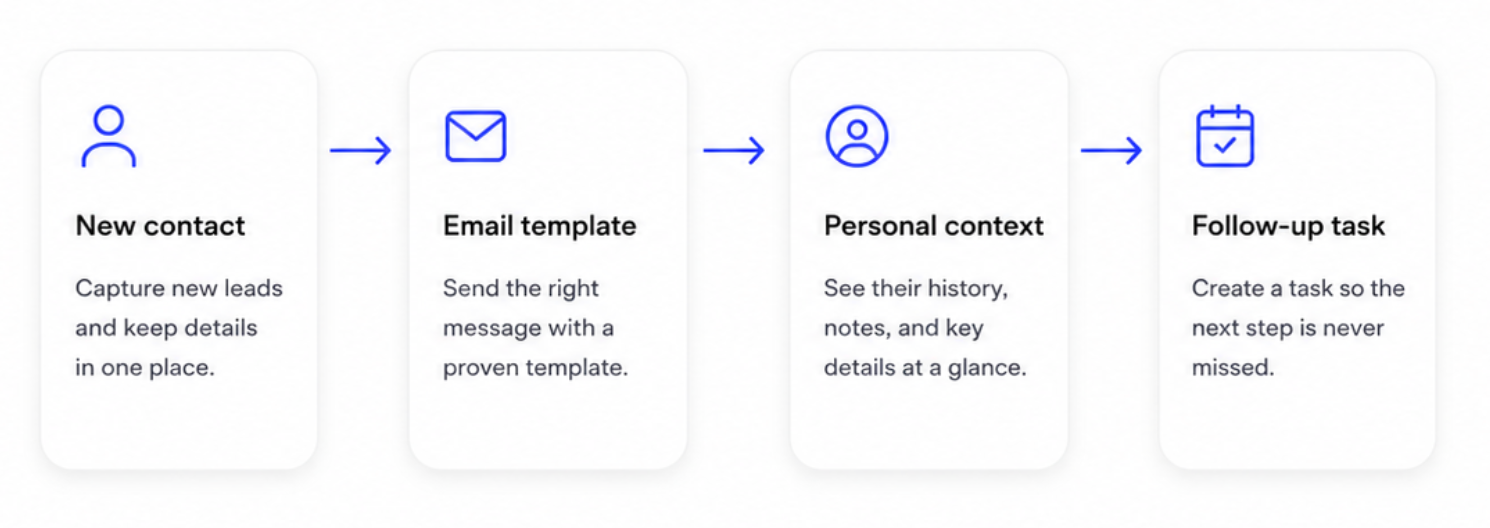
If you use a CRM like Capsule CRM, you can keep useful context in one place: contact notes, opportunity history, previous conversations, and follow-up tasks. That makes it easier to write a personal email later, even when the first conversation happened weeks ago.
Keep the introduction concise
A concise email respects the reader’s inbox. You don’t need to include your full background, company history, service list, and every possible use case.
Use one short line for who you are:
“I’m [name], [role] at [company]. We help [audience] with [specific outcome].”
Then move on.
For example:
“I’m Maya, a partnerships manager at Northline Birmingham. We help B2B teams turn referral conversations into tracked sales opportunities.”
That’s enough. If the reader wants more detail, they can ask. Your job is to make the first email easy to read and equally easy to answer.
A good introduction email usually stays under 150 words. Some situations need more context, but the principle stays the same: every sentence should earn its place.
Match the level of formality to the relationship
The email should match the situation. A cold note to a senior buyer needs more polish than a quick intro to a new colleague. A message after a referral can feel warmer than a first-touch outbound email.
Compare these two openings:
- “Hi Sam, hope this email finds you well. My name is Alex, and I’m writing to introduce our company.”
- “Hi Sam, I saw your team is expanding into the US market and thought it made sense to introduce myself.”
The first one is polite, but it doesn’t say much. The phrase “email finds you well” is common, yet it often delays the real point.
The second one gives the reader something to work with immediately. It feels professional because it explains why the email exists. Friendly openers are fine, but the greeting shouldn’t be the main substance of the message.
For a new colleague, warmth matters more:
“Hi Colin, I’m looking forward to working with you on the onboarding project. I’m joining as the new customer success lead, so I wanted to say hello before our first meeting.”
For a potential client, relevance matters more:
“Hi Colin, I saw your team is hiring more customer success managers and thought this might be a useful moment to introduce myself.”
Same person. Different purpose. Different tone.
Give one clear next step
A sales introduction should never end in a fog.
Weak endings sound like this:
- “Let me know your thoughts.”
- “Would love to connect sometime.”
- “Please let me know if there’s anything you need.”
These lines feel polite, but they don’t guide the reader.
A stronger close gives one clear next step:
- “Would a 15-minute call next week make sense?”
- “Should I send over a short example?”
- “Would it help if I shared how similar teams handle this?”
- “Are you the right person to speak with about this?”
For sales, a light ask often works better than a heavy ask. You don’t need to request a full demo in the first email. You can ask for permission to send a relevant resource, confirm the right contact, or suggest a short call next week.
A simple close also helps your follow-up email later. If you don’t hear back, you can refer to the same ask instead of inventing a new angle.


Introduction email templates
Use these email templates as starting points. Edit the details so each message sounds like you and fits the reader.
Template #1: cold sales introduction
Subject line: Idea for [specific area]
Hi [first name],
I saw [specific context] and thought it made sense to introduce myself.
I’m [your name], [role] at [company]. We help [type of customer] improve [specific outcome], especially when [common challenge].
From what I can see, your team may be dealing with [relevant issue]. I’d love to share one practical idea that could help.
Would a short call next week make sense?
Best,[your name]
Template #2: referral introduction
Subject line: Referred by [mutual connection]
Hi [first name],
[Mutual connection] suggested I reach out because you’re looking at [topic].
I’m [your name], and I help [type of company] with [specific result]. Based on what [mutual connection] shared, it sounds like [specific challenge] may be the priority.
Happy to send a short example if useful.
Best regards,[your name]
Template #3: post-event introduction
Subject line: Great meeting you at [event]
Hi [first name],
It was great speaking with you at [event]. I enjoyed your point about [specific topic].
I’m [your name], [role] at [company]. We work with [type of customer] on [specific problem], and your comment about [challenge] made me think there may be a useful overlap.
Would you be open to a quick conversation next week?
Best,[your name]
Template #4: new role introduction
Subject line: Your new contact at [company]
Hi [first name],
I wanted to take a moment to introduce myself as your new contact at [company].
I’m [your name], and I’ll be helping with [area of responsibility]. I’ve reviewed the recent notes and can see the main priority is [specific priority].
I’m looking forward to working with you. If there’s anything urgent on your side this week, please send it my way.
Best,[your name]
Template #5: new colleague introduction
Subject line: Hello from [your name]
Hi [first name],
I wanted to introduce myself as the new [role] on the team.
I’ll be working on [area], especially [specific responsibility]. I’m looking forward to working with you and learning how the team handles [relevant process].
I’ll join [meeting/project] later this week, but I wanted to say hello first.
Best,[your name]
Template #6: account handover introduction
Subject line: New contact for [account/project]
Hi [first name],
I’m writing to introduce myself as the new [role/contact] for [account or project].
I’ve read through the recent notes and can see that [priority] is the main focus. I’ll make sure future updates stay clear and easy to track.
Could we set up a short call next week so I can understand what matters most from your side?
Best,[your name]
Best practices for writing a professional introduction email
Writing an introduction email gets easier when you stop treating it like a tiny pitch deck. You don’t need to cover every detail, prove every point, or make the email sound impressive. You only need enough context to make the message feel relevant, and enough clarity to make the next step feel simple.
1. Lead with the reader’s context
Start with what connects your message to the reader. A role change, referral, project, event, hiring plan, or business priority gives your email a reason to exist. It shows that the message was written with some awareness of their situation. One relevant detail is usually enough.
❌ Bad example:“I’m Alex from BrightPath Solutions. We help companies improve sales processes with our CRM consulting services.”
✅ Good example:“I saw your team is expanding partner sales this quarter, so I wanted to share an idea for tracking relationship-led opportunities more clearly.”
2. Keep the email focused
Don’t try to explain everything in one message. Pick one reason for reaching out and one next step. The more topics you add, the harder it becomes for the reader to understand what you actually want from them.
❌ Bad example:“I’d love to introduce myself, explain our services, share a few case studies, discuss your current process, and see if there’s a way we can work together.”
✅ Good example:“I’m reaching out with one idea for improving follow-up after partner referrals. Would it be useful if I sent over a short example?”
3. Use plain language
Sales emails often get worse when writers try to sound impressive. Clear beats clever, and specific beats polished. If the reader has to decode the sentence before they understand the point, the email is already asking too much.
❌ Bad example:“We empower growth-focused teams to unlock scalable relationship intelligence across the full customer lifecycle.”
✅ Good example:“We help sales teams keep track of partner conversations, follow-ups, and next steps in one place.”
4. Make the ask easy
A simple ask helps the reader respond. Ask for a short call, a quick confirmation, or permission to send a useful example. The first email usually shouldn’t ask the reader to make a big decision. Give them a low-friction way to continue the conversation.
❌ Bad example:“Can we schedule a 60-minute meeting this week to explore whether our platform is the right solution for your team?”
✅ Good example:“Would it be helpful if I sent a short example of how teams manage partner follow-ups in BrightDark?”
5. Don’t make the email all about you
A self-introduction email still needs to serve the reader. If the first paragraph only covers your title, company, and services, the reader has no reason to care yet. They need to understand why your introduction is relevant to their work, problem, or priority.
You can still introduce yourself, but the introduction should connect back to the reader. Lead with their context, then explain who you are in relation to that context.
❌ Bad example:“I’m Maya, an account executive at Capsule. Capsule is a CRM used by growing businesses to manage contacts, emails, tasks, and sales pipelines.”
✅ Good example:“I’m reaching out because your team appears to be managing more relationship-led sales, and Capsule helps teams keep those conversations and follow-ups organized.”
6. Use a specific subject line
A vague subject line makes the email easier to ignore. Give the reader a reason to open it before they even reach the first sentence. A specific subject line can point to a referral, a business area, a shared context, or the reason for your message.
❌ Bad example:“Introduction”
✅ Good example:“Idea for partner sales follow-up in Q3 2026”
How Capsule helps you write better introduction emails
A strong email involves timing, context, and follow-through. Capsule helps sales teams manage each part in one CRM.

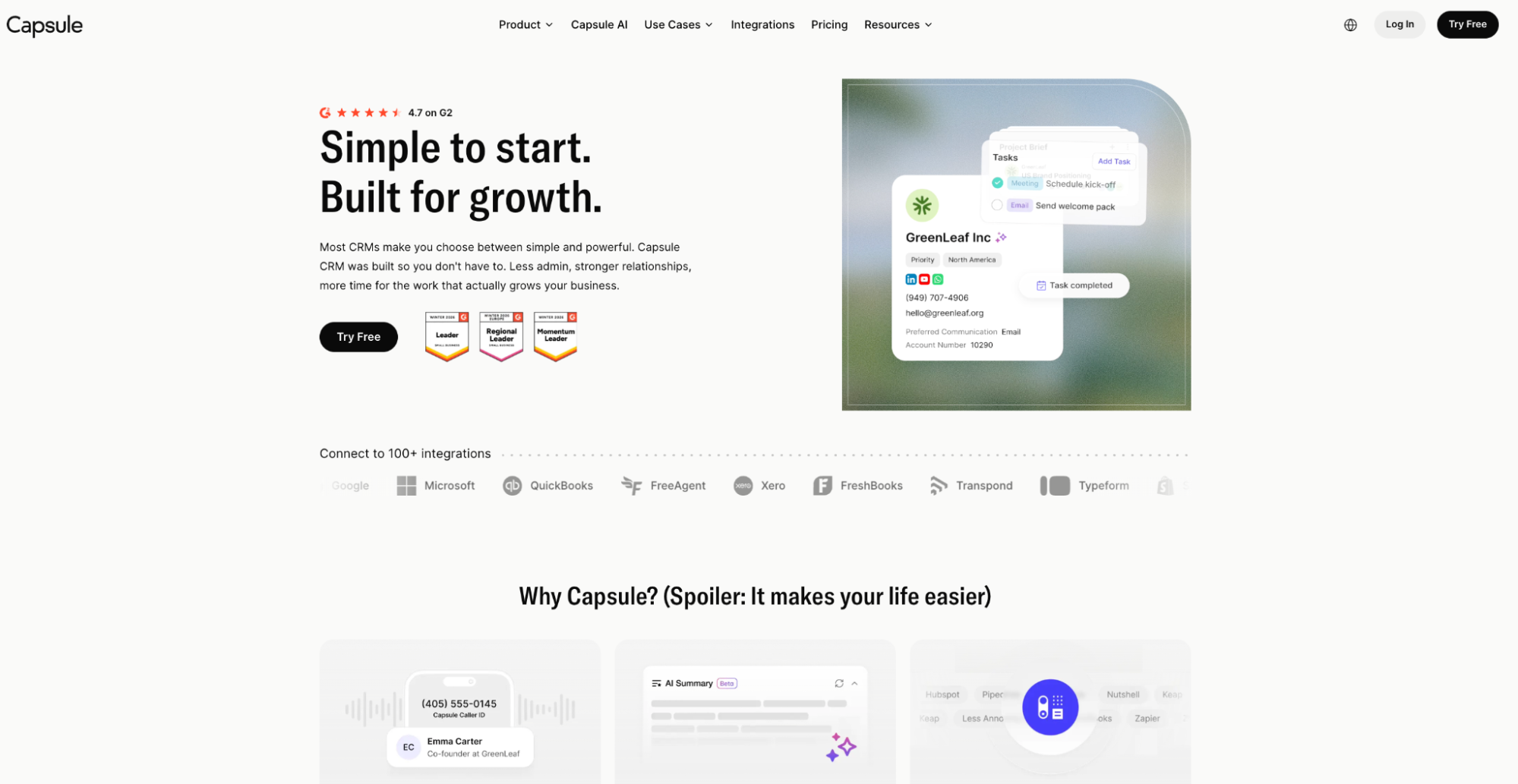
With Capsule CRM, every new contact can carry the details that make the next message better: where the lead came from, who referred them, what they care about, and what happened last time.
That context matters when you’re reaching out to someone new. You can write with more confidence because you’re not guessing from memory.
AI Summaries help condense recent contact, opportunity, and project history. That helps before you write to a buyer – you can revive an old conversation, or introduce yourself as the new account owner.
AI Email Assist helps draft routine customer messages from a prompt. It’s useful when you know the context but need a faster first draft for a follow-up or sales introduction.
AI Pipeline Generator helps create a sales pipeline from a plain-language description. If your team sends introduction emails across multiple sales stages, a clear pipeline makes it easier to decide what should happen after each reply.
Email templates in Capsule help teams reuse proven messages. You can keep the structure consistent, then edit the first line, reason for outreach, and next step for each recipient.
For broader campaigns, Transpond by Capsule connects marketing activity with CRM data.
Checklist: before you send your introduction email
Use this quick checklist before sending:
- Does the subject line give the reader useful context?
- Does the first sentence explain why you’re writing?
- Is your introduction limited to one short line?
- Does the message show relevance to the reader?
- Is the email concise enough to scan in under 30 seconds?
- Does the next step feel easy to answer?
- Did you remove generic lines that add no value?
- Did you sign off professionally?
- Did you save the contact and next step in your CRM?
Over to you
Someone opens your introduction email between meetings, on a train, or while clearing a crowded inbox. In that moment, your message needs to be easy to place. Who are you? Why are you reaching out? What would make sense to do next?
Such clarity is simple in one email, but harder to maintain across dozens of new conversations. Sales teams need a reliable way to keep track of who they contacted, what context mattered, which template they used, and when the next follow-up should happen.
Capsule brings those moving parts together with contact management, email templates, sales pipelines, and follow-up workflows. From the first introduction to the next conversation, your team can keep each new opportunity organized, personal, and easy to act on.
Start with the free plan.
Frequently Asked Questions
Start with context, then introduce yourself in one short sentence. Explain why you’re writing, connect the message to the reader, and end with one clear next step. A professional introduction email should feel useful before it feels impressive.
Use a subject line that explains the reason for the message. Good options include “Referred by [name],” “Introduction from [your name],” “Following up from [event],” or “Idea for [specific area].”
Most introduction emails should stay under 150 words. The reader should understand who you are, why you’re writing, and what you want them to do next in under a minute.
It isn’t always bad, but it often delays the point! A more useful opener gives context: why you’re reaching out to someone, why now, and why the message is relevant.
When joining a new team, keep the tone warm and clear. Share your name, new role, what you’ll work on, and a simple note such as “I’m looking forward to working with you.” You don’t need a long biography here.
Send a short follow-up that refers to your original reason for reaching out. Keep it helpful, add one useful detail if you can, and repeat a simple next step. Don’t rewrite the whole pitch.