
The US Small Business Administration suggests spending about 7-8% of revenue on marketing, which lands around $1,000 to $5,000 a month for most companies under $5M in sales. The hard part is knowing what that money should buy.
A small business marketing package bundles several services, from SEO to paid ads, into one monthly fee, and two bundles at the same price can deliver wildly different work. Our guide breaks down what's included, what each tier costs in 2026, how to choose, and the pieces you can run yourself.
What's included in a marketing package?
Most packages pull from the same handful of services. The difference is how much work sits behind each line item.
"SEO included" might mean someone checks your titles once a month. It might also mean technical fixes, new landing pages and four articles going live.
The label tells you very little on its own.
Search engine optimization (SEO/AEO)
SEO is the work that helps people find you through Google without paying for every click.
For a local plumber, that might mean building service pages for the areas they cover and fixing local listings. For a software company, it could mean publishing comparison pages, improving technical issues, and targeting searches buyers use before they book a demo.
Local SEO is usually narrower. It focuses heavily on local rankings, citations and Google Business Profile visibility. Broader SEO packages can add content, technical work and link building.
This is one area where you want specifics. "Monthly SEO" is vague. "Two new pages, one technical audit and four content updates" tells you what you're actually buying.
Google Business Profile
For a local business, this can do more than a fancy social calendar ever will.
Imagine someone searches "emergency electrician near me" at 8 p.m.

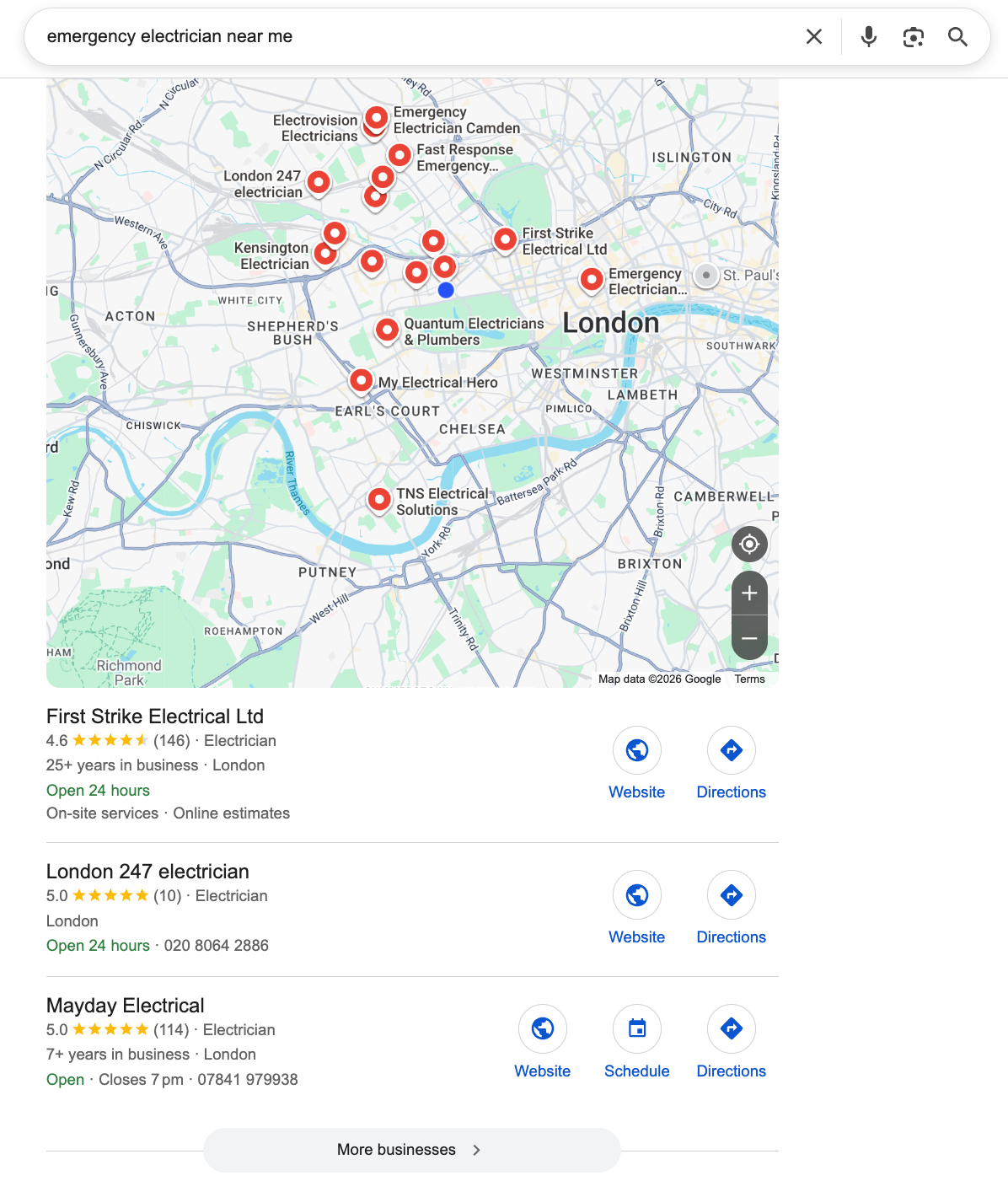
They may never visit three websites and compare About pages. They see the map results, check reviews, opening hours and distance, then call.
Managing your Google Business Profile means keeping that information accurate and making the listing more useful. An agency may update services and hours, add photos, publish posts, answer questions, or help you build a steady flow of reviews.
It sounds small, but for businesses such as dentists, roofers, salons, and restaurants, a weak profile can mean losing customers before they ever reach your site.
Social media management
This usually means keeping your organic social channels alive: planning posts, writing captions, creating graphics and scheduling content.
The problem is that "social media management" can describe wildly different packages.
One provider may schedule eight posts a month using photos you send them. Another may film short videos, turn customer stories into content, reply to comments and test different formats every week.
Say you run a gym. A basic package might post class schedules and promotions. A stronger one could turn trainer tips, member transformations and behind-the-scenes clips into a steady stream of content that actually gives people a reason to follow.
Paid social is normally separate. Running Meta or LinkedIn ads involves targeting, budgets, creative testing and campaign optimisation, so don't assume "social media" includes advertising.
Email marketing
Email can be as simple as one newsletter a month or as involved as a fully automated system.
A small retailer might send a Friday promotion to everyone on its list. A more developed setup could welcome new subscribers automatically, follow up after a purchase, and re-engage customers who have gone quiet.
For a service business, the emails may look completely different. A law firm could nurture enquiries over several weeks. A fitness studio might remind trial members to book their next class.
So check what the package means by email marketing. Are they writing one campaign? Building automations? Segmenting the list? Managing the platform? Those are very different amounts of work.
Content marketing
Content gives SEO, email and social something to work with.
That could mean blog posts and guides, but also landing pages, case studies, comparison pages, customer stories or downloadable resources.

Take an accounting firm targeting small businesses. A generic blog post on "5 bookkeeping tips" may do very little. A useful guide to what expenses a UK freelancer can actually claim could bring search traffic for months and become material for email and social at the same time.
Quality varies enormously here. Four 600-word posts written to fill a quota are not the same product as four researched pieces built around real search demand and your sales process.
If you're deciding how much of this to keep in-house, see when to hire a copywriter.
Paid media
Paid media gets you visibility now instead of waiting for organic channels to build.
Google Ads is often the obvious choice when people already search for what you sell. A roofer can bid on "roof repair Bristol." A B2B company may use LinkedIn to reach a narrow list of job titles. An ecommerce brand might use Meta ads to put products back in front of people who visited but didn't buy.
The agency usually handles setup, targeting, ad copy, tracking and ongoing optimisation.
The important catch: ad spend is almost always separate.
So a $1,500 PPC management package with a $3,000 Google Ads budget really costs $4,500 that month. Creative and landing pages may sit outside the fee too.
Management fees sometimes run around 10-20% of ad spend, although flat retainers are also common.
Reporting and strategy
Almost every package says it includes reporting. The useful question is what that actually means.
A dashboard showing 48,000 impressions may look impressive, but it doesn't tell a business owner much. A useful report tells you that Google Ads brought 34 leads, nine became customers, and one campaign produced most of them. Then someone acts on that information.
Strategy is the part that connects the channels. Maybe SEO is bringing traffic but few enquiries, so the next month goes into fixing landing pages instead of publishing more posts. Maybe email converts better than paid social, so budget moves.
That decision-making is often the difference between buying a pile of marketing tasks and hiring someone to actually help grow the business.
A full-service package can combine most of these services. Smaller bundles might focus on just two: local SEO plus Google Business Profile management, for example, or paid search plus landing page work.
More channels do not automatically make a better package. A focused bundle that does two things properly can beat a "full-service" retainer where every channel gets a few hours of attention.
Package tiers and 2026 pricing
Bundles cluster into three rough tiers. Treat the numbers as 2026 market ranges, never firm quotes, and remember that ad spend is almost always separate.
Starter (about $500-$1,500/month)
Usually one or two channels. A common starter mix is basic local SEO plus organic social, or social media management on its own, with monthly reporting and a basic social strategy. Good for a new local business testing the waters on a tight budget. At this level, the work often comes from junior staff, so set expectations on a single campaign and skip the broad push.
Growth (about $1,500-$5,000/month)
A few channels run together, say SEO and content alongside email and a managed paid-search budget. You get a named contact and marketing plans that adapt to your target market. This tier suits a small business with steady revenue ready to scale its marketing efforts. Most small business budgets for serious growth land here.
Full-service (about $5,000-$10,000+/month)
A full-service engagement acts as your outsourced marketing department: search and social next to email and paid media, with senior strategy and deeper reporting. A true full-service agency ties the channels into one plan, in place of running them in silos. That's demand generation territory – coordinated channels building pipeline together – and it's worth it when revenue and goals justify the spend.
How packages are priced
The pricing model shapes the relationship as much as the monthly number does.
- Flat retainer. One predictable fee each month. Easy to budget, but a loose scope lets a lazy agency coast. Tie it to written deliverables.
- Project-based. A fixed fee for a defined job, like a site build or a campaign launch. Clear endpoints, less flexibility once scope is set.
- Percentage of ad spend. Common for paid media, usually 10-20% of what you spend. It aligns the agency with scaling, but gets pricey at high spend.
- Performance-based. Fees tied to results or revenue. Rare for small accounts because it needs tight tracking and trust, and the marketing agency needs access to your sales data.
A cheap retainer with no scope can cost more than a richer one that ships.
What each piece costs on its own (2026)
Bundling can save money, but it helps to know the going rate for each service so you can judge a quote line by line. These are 2026 market ranges, management fees only – ad spend is extra.
- SEO services: basic local work runs about $500-$1,500 a month, and comprehensive technical and content SEO climbs to $2,000-$5,000.
- Paid search and PPC management: roughly $1,000-$2,500 a month, or 10-20% of ad spend. The spend itself is separate, and $1,500 a month is usually the floor to gather real data.
- Social media: organic management lands at $500-$2,500. Add paid social and management runs $1,000-$4,000 on top of spend.
- Email: $300-$2,000 a month depending on list size and how many emails you send.
- Content and creative: $1,000 a month and up for written work. Short-form video is the premium line at $2,000 and up.
Add a CRM and email tool to the picture too. That stack typically runs $50-$300 a month, the quiet cost most quotes leave out.
DIY, in-house, or agency: which fits?
It comes down to the trade you want between cash, hours, and control.
Do it yourself. Free in cash, expensive in hours. It works at the start and keeps you close to your numbers, but it stalls the moment selling demands your time. The honest fix is planning your week to make time for marketing before the calendar fills, and most owners run this way until a channel starts paying off.
Hire in-house. A single marketing hire gives you dedicated focus and deep knowledge of your brand. The cost is salary plus tools, and one person rarely covers search, paid, content, and email at depth. In-house suits a business with the volume to keep someone busy.
Bring in an agency. A bundle buys a team of specialists for less than a senior salary. You trade some control and pay for coordination, and quality tracks the people assigned to your account. This is the route when a business owner wants reach across channels with no department to build.
Many companies end up blending approaches: an in-house owner of the plan, with an agency for execution and DIY on the side.
Match the package to your stage
Your stage decides more than any feature list:
- A brand-new venture should stay lean. DIY plus a starter bundle on one channel until something converts is more than enough.
- A business with steady revenue and a thin team is the classic fit for a growth tier, paying specialists to run what the founder no longer has time for.
- An established company with aggressive targets is where full-service pays off, since coordinated channels beat scattered ones at scale.
Buying ahead of your stage burns cash, and buying behind it caps your growth. Match the spend to the moment, then step up as the numbers justify it.
How to choose (and what to watch for)
Price tells you little on its own. Weigh the services and the companies behind them on value over headline cost.
- Demand measurable reporting. Good marketing services report on leads and cost per lead, beyond likes and impressions. If you can't tie the work to leads and sales, you can't make marketing decisions with it.
- Match the scope to your needs. A bundle should fit your business and target market, never a generic template. Ask what market research informs the plan.
- Favor flexible terms. The 2026 standard is a 90-day initial commitment, then month-to-month. Avoid 12-month lock-ins with no performance clause.
- Check who does the work. A cheap retainer can mean junior staff or offshore output. Senior people cost more and usually deliver more. A company that hides its team is a red flag, so ask if you're hiring a marketing team or a single overloaded account manager.
- Know what's excluded. Ad spend and creative production usually fall outside the base fee, as do third-party tools. One question saves surprises: what lands on a separate invoice?
Build it yourself: small business marketing ideas
No budget for a package yet? Plenty of effective marketing runs on time more than cash. These ideas handle the basics:
- Own your Google Business Profile. For local service businesses, this is the single best free move. Fill every field and answer customer questions in your service area.
- Build an email list from day one. A simple newsletter to your subscribers is a marketing asset you own outright, unlike rented social audiences.
- Pick one social channel. Better to run one channel well than five badly. Match the platform to where your buyers are.
- Publish content worth finding. Write what your target market is already searching for. That content doubles as a lead generation and brand awareness engine.
These activities won't replace a full bundle, but they build momentum and teach you which channels move the needle. That knowledge makes any future package money better spent. Marketing for small businesses rewards consistency over spend, and many of the most successful programs started exactly here.
Connect your package to sales
Any bundle, agency-run or DIY, generates leads. Where those leads go decides if the spend pays off. A CRM is the layer that connects marketing and sales: it captures every inquiry a campaign produces, tracks which channel sent it, then shows what turned into revenue.
This is where Capsule fits.

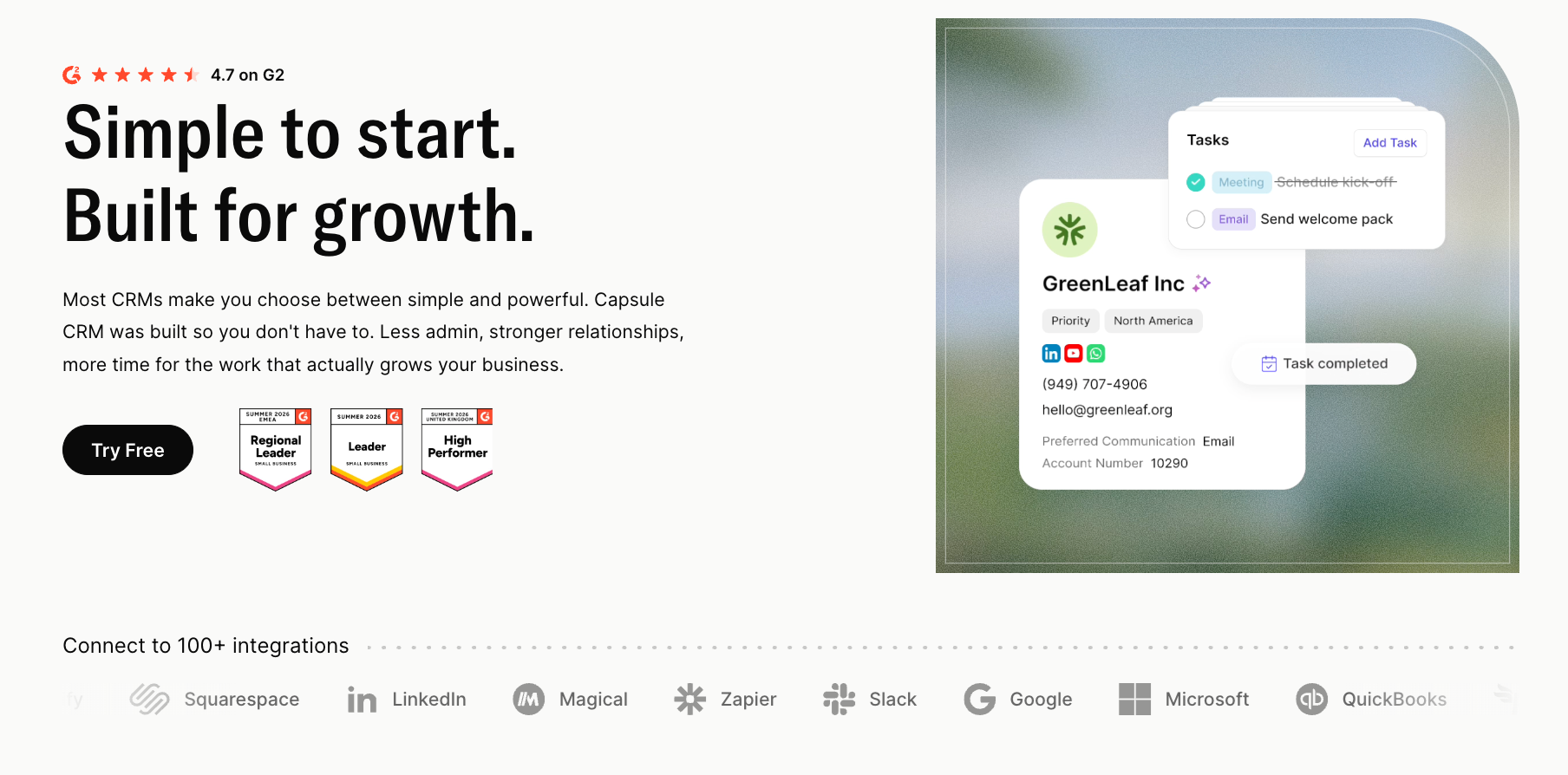
It pulls leads from your forms and inbox into one pipeline and tags them by source, so you can see which marketing channels pull their weight. The full history lives next to each contact, and the reporting turns campaign noise into numbers you can defend a budget with. Capsule connects to 60+ tools, including Mailchimp and Google Workspace, so your email and ads feed straight in. The free plan fits a two-person business with 250 contacts, and paid tiers start at $18 per user per month.
Skip this layer and a package is a leap of faith. Add it and every dollar is traceable to a lead, a deal, or a lesson.
What the first 90 days look like
Results don't arrive on day one, and a good package sets that expectation up front.
Month one is setup: audits, tracking and access, plus a baseline. Little visible output, lots of groundwork. Month two is launch and early data, the first campaigns live and the first leads trickling in. Month three is where signal appears: enough numbers to see what's working and start cutting what isn't.
The 90-day mark is the right moment to judge a retainer, which is exactly why the standard contract runs that long before going month-to-month. Anyone promising a flood of leads in week one is selling hope. Steady, compounding results are the real return, and they show up for the businesses that give the work a quarter to prove itself.
Contract terms and red flags
The fine print separates a fair deal from a trap.
- Commitment. The 2026 norm is a 90-day initial term, then month-to-month with 30 days' notice. A 12-month lock-in with no performance clause is a warning sign.
- Setup fees. Expect 50-100% of the first month as onboarding when an agency does real audits and tracking setup. A fee with nothing behind it is padding.
- Reporting cadence. Monthly at minimum, with leads and cost per lead front and center. Weekly check-ins belong to higher tiers.
- Scope in writing. Get the exact deliverables and hours documented. Vague full-service promises hide thin execution.
- Who's on the account. Senior strategists or junior generalists change everything you get for the fee.
Make every marketing dollar accountable
A package is only as good as the work inside it and your ability to measure it. Match a tier to your budget, demand reporting you can act on, keep the contract flexible – and give every lead a pipeline to land in. The package gets leads in the door. The system tells you which ones were worth it.