
Think about a client who was happy with the results but didn't renew. The work was good, and the deliverables landed on time. And yet something was off, a feeling that they were never quite sure where things stood, or that concerns went unaddressed until they became reasons to move on.
That gap between competence and trust is where most businesses quietly lose clients.
Building trust with clients isn't a matter of doing excellent work. These days, excellence is the baseline. Trust is what gets built – or lost – in the moments between the deliverables. This could be a difficult update or the challenge raised in a meeting, but also the follow-up that either happens or doesn't.
This article works through seven of those moments with concrete scripts, so you have something practical to use the next time you're in them.


1. When something goes wrong before the client notices
This is the scenario most people handle badly, because the instinct often is to wait and see if the problem resolves. However, by the time the client finds out, confidence has already taken a hit, and that’s not just in the issue itself, but in the fact that you knew and said nothing.
Client relationships are tested most clearly in these moments. The businesses that handle them well communicate early, own the situation honestly, and come up with a plan.
What usually happens:
"Hi Sarah, just wanted to flag that the report won't be ready for Thursday as planned. We've hit a few complications. Can we push to next week?"
This is late, vague, generic, and puts the inconvenience entirely on the client.
What builds trust:
"Hi Sarah! I want to flag something before it becomes a problem. We've hit a delay on the data processing side and Thursday's deadline is at risk. I've already [action taken], and my current estimate is [revised date]. I wanted you to hear this from me first so we can plan around it. Happy to jump on a call if useful?"
The difference is transparency paired with ownership. The client is informed before they have to ask. There's a concrete plan, not just an apology. And the message makes clear that their well-being as a client is the priority.
Proactive communication in this context is one of the most effective strategies for building strong relationships over time. Clients remember the person who told them the truth early, and they rarely remember the person who delivered everything perfectly.
2. When a client raises a concern in a meeting
A client says something is off. The timeline feels slow, and the direction doesn't match what they expected. Most people respond by immediately reassuring – something between the lines of "we're on track" and "that's been accounted for" – and moving on.
The problem is that concern doesn't go away; it just goes unspoken.
Active listening is about what happens in the space between a concern being raised and the response. Body language matters here: facing the person, not glancing at a screen, not forming the reply while they're still speaking. Nonverbal cues (a nod, or even a pause before responding) signal that you're processing what they said, not waiting for your turn.
What usually happens:
Client: "I'm not sure the timeline is realistic."
"We're actually on track – we built buffer into the schedule for exactly this reason. I think you'll see it come together over the next few weeks."
What builds trust:
Client: "I'm not sure the timeline is realistic."
"That's worth stopping on. What's driving that feeling: is it the overall length, or something specific in the current phase?"
The second response does something the first doesn't: it asks the client to explain things further. That question does more for the relationship than any reassurance; it creates a personal connection. It also communicates that their concerns are worth exploring, not managing. And often, the answer provides insights that the reassurance would have buried.
It's also worth being aware of what you're signalling before you even speak. Clients pick up on whether you're fully present in a meeting or mentally elsewhere. That attentiveness is something people feel before any words are exchanged, and it shapes the entire interaction.
A good follow-up to this kind of exchange is a short email after the meeting confirming what was heard and what will be done about it. That loop (raising, hearing, confirming) is the process by which mutual respect develops over time. It's critical for making clients feel confident in referring you to other clients.
3. When you need to tell a client something they DON’T want to hear
This is the moment that sorts professionals from people who are merely pleasant to work with.
Reasons can be multiple: a client's idea won't work, the timeframe doesn’t hold up, the budget won't stretch to what they're hoping for, or the strategy they're attached to is going to cause problems downstream.
Most people soften the message until it's lost, wrapping it in so much qualification that the client leaves with a false sense of reassurance.
Others avoid it entirely and let the consequences land later.
And neither approach builds confidence.
Effective communication in this context means being honest about the truth in a way that demonstrates expertise. Clients can hear difficult things when those things are delivered with clarity and an alternative.
What usually happens:
"It could work, though there are a few things to consider: the timeline might be tight and there could be some budget implications depending on how it goes. We'd want to be careful about scope."
What builds trust:
"I want to be direct with you because I think it will save time. Based on what we've discussed, I don't think this approach will get you to [goal]. Here's what I'd recommend instead, and why I think it addresses the same underlying need."
The honest version takes a position. It uses expertise to explain things clearly and respects the client enough to communicate directly. And, on top of that, it offers something concrete in place of the thing being challenged.
Clients who are told difficult things directly, yet are given an alternative, rarely leave. Clients who sense that uncomfortable conversations are being avoided start seeking advice elsewhere. Clear communication in these moments is how honesty becomes a competitive advantage. It's also something that can be trained; it’s a skill the whole team can develop with practice and the right example from leadership.
The benefit of this approach compounds over time. Clients who trust that you'll tell them the truth become the clients who bring you into essential decisions, not just execution.

4. When you haven't heard from a client in a while
A quiet client can feel like a good sign: no complaints, no requests, no news.
In practice, silence in a client relationship often means one of two things: things are genuinely fine, or the client has mentally moved on and hasn't said so yet.
Building trust requires treating silence as a signal worth checking, not necessarily a green light to focus elsewhere. A low-pressure check-in communicates that this person is still a priority even when there's no active work in motion.
What usually happens:
Nothing. The client eventually comes back with a new brief, or they don't.
What builds trust:
"Hi James! It's been a couple of months since we wrapped up the [project]. I wanted to check in and see how things are going on your end, particularly around [specific things they mentioned]. No agenda, just keeping in touch. Let me know if there's anything useful I can send your way."
This message is short and creates no pressure. It names something specific from a previous interaction, which signals that this person is remembered at a deeper level. That detail is what people feel when they say a supplier really understood them and their interests.
A good check-in is also patient. It doesn't nudge toward a sale, and it doesn't manufacture a reason to get in touch. It simply acknowledges that the client's success matters to your company beyond the scope of the last invoice, and that's a distinction that resonates in industries where relationships are long-term by nature.
This is also where many clients feel the difference between a business that is interested in their long-term goals and one that only gets in touch when there's something to sell. That distinction drives future business more than almost anything else in a service industry.
For businesses dealing with many clients at once, consistent outreach like this is hard to maintain from memory alone.

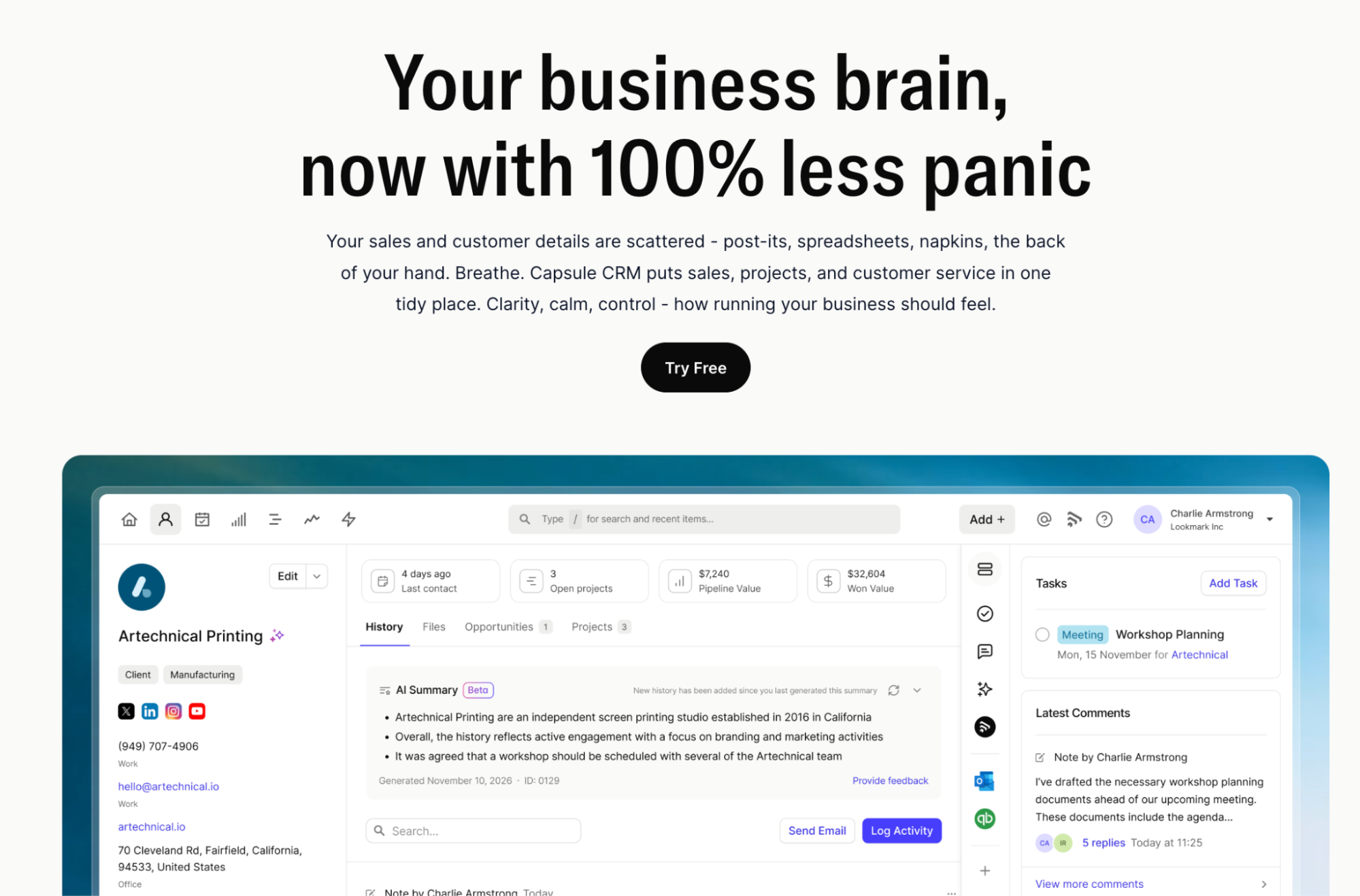
A CRM like Capsule surfaces contacts that haven't been touched in a defined period, so the follow-up happens even when things are busy.
Try it today →
5. When trust has actually dropped and needs to be recovered
Something went wrong.
The client is less engaged, or A renewal that should have been straightforward has gone quiet. Over-apologizing or over-promising at this point almost always makes things worse. It sounds defensive, and promises made under pressure rarely get tracked.
Recovering trust with clients is a process. It requires acknowledgement, a concrete plan, and increased visibility until confidence returns.
What usually happens:
"We're really sorry about how things went. We've taken this very seriously internally and we'll make sure it doesn't happen again. We really value your business and we're committed to making this right."
What builds trust:
"I want to be honest with you about what happened and what we're doing about it. [Specific thing that went wrong] happened because [honest explanation]. Here's what we've changed: [concrete steps]. I'd like to set up a monthly check-in for the next quarter so you have a direct line to me and can see progress in real time. Would that work for you?"
The second version gives the client information, not reassurance. It creates a visible structure (the monthly check-in) so trust rebuilding is something the client can see, not just something they're asked to take on faith.
Clients dealing with a service failure don't really need to hear that it matters to you – they need to see that something has changed. Honesty in this context means being more transparent, not more apologetic.
6. When onboarding a new client for the first time
The first few weeks of a new client relationship set a tone that's hard to shift later. Most businesses treat onboarding as an administrative process: send the contract, schedule the kickoff, and get started. Simple as that.
But this is actually the moment when a new customer is forming their first impression of how the relationship is going to feel, and that impression tends to stick.
Strong relationships are built on clarity from the start. The client should know exactly what to expect:
- the process,
- the timelines,
- who they'll be dealing with,
- and how to proceed if something feels off.
An organisation that communicates this clearly in the first interaction signals that it has done this before, that it takes the work seriously, and that the client's satisfaction is built into the system.
Building strong relationships also means recognizing that a new client is often carrying anxiety from a previous supplier. If something went wrong in a past engagement, they might be hopeful but guarded. Active listening in the kickoff meeting gives you information that shapes how to support them well.
What usually happens:
"Great to get started I've sent over the contract and a brief project overview. Let us know if you have any questions. We'll be in touch once we've had a chance to review everything internally."
Efficient. Impersonal. Yet, leaves the client with no clear sense of what happens next or who owns it.
What builds trust:
"Welcome – really glad to be working together. I want to make sure the start of this goes smoothly, so here's what the first two weeks look like from our side: [specific steps]. You'll hear from me every [cadence] to keep you informed. If anything feels unclear or you'd like to adjust the approach, the best way to reach me is [contact]. Is there anything from a previous project experience you'd like us to do differently?"
That last question is the one most people skip. It opens a conversation about what the client actually needs from this relationship, not just what the brief says. It's a form of training yourself to listen before you assume. And the answer often reveals expectations that would have created friction later if left unspoken.
Onboarding is also where an organisation's internal habits become visible. A shared CRM that captures every early interaction means any team member can provide great support from day one.

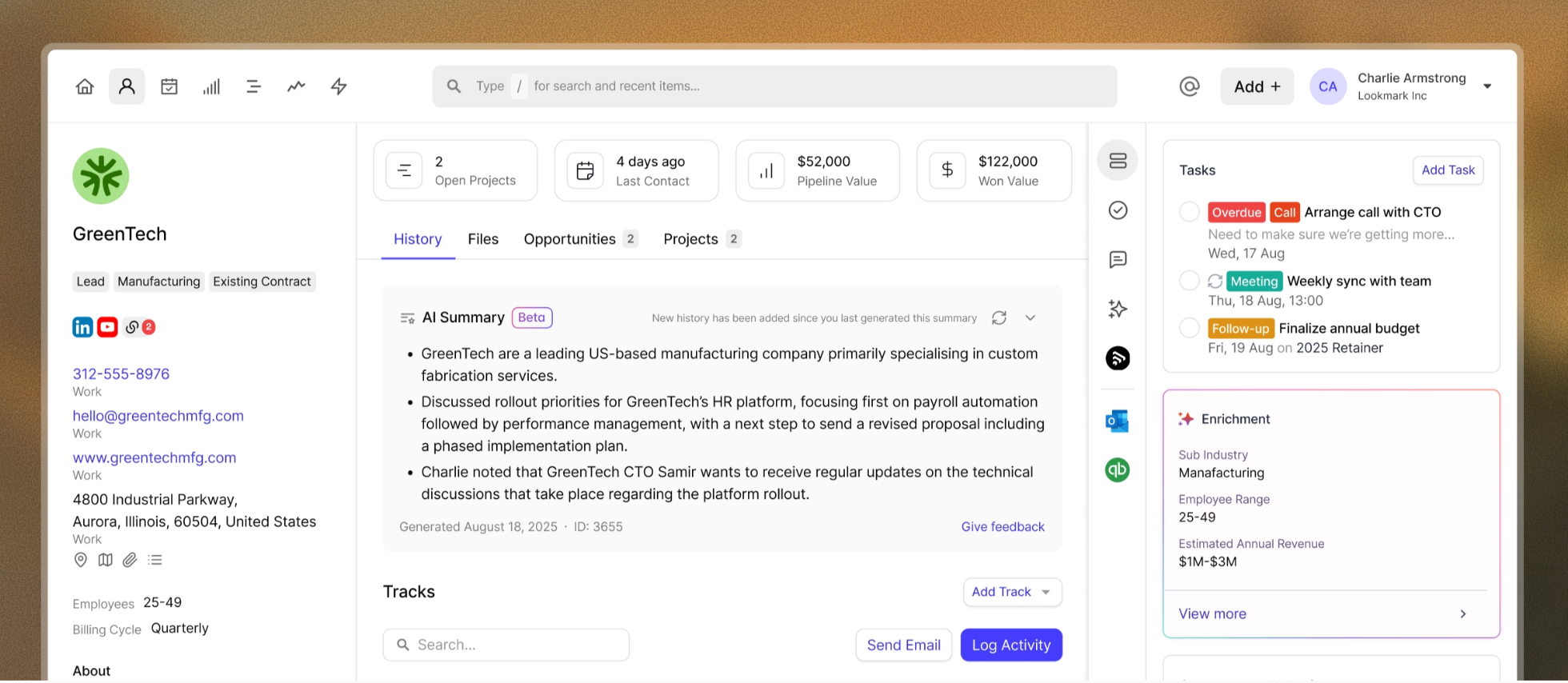
It's the difference between a client who feels looked after and one who has to repeat themselves every time they speak to someone new, which, in the life of a client relationship, is enough to lose confidence before the real work has even started.
7. When a client keeps changing their mind or expanding scope
This scenario is one of the most trust-damaging – in both directions.
The client feels like their changing needs aren't being accommodated.
The business feels like the goalposts keep moving.
Left unaddressed, it quietly poisons the relationship from both ends.
The instinct on the business side is to accommodate silently, absorbing extra work to keep the client happy, or to push back defensively once the scope has grown too large to ignore. Neither approach serves the relationship. Silent accommodation teaches the client that scope can expand without consequence. Late pushback feels like a surprise, and surprises erode confidence even when you're in the right.
What builds trust here is dealing with it early and framing it as a positive conversation, not a corrective one.
What usually happens:
The client asks for quite a large addition mid-project.
"Sure, we can look at adding that in – let me check with the team and come back to you."
This buys time but creates ambiguity: The client doesn't know if it's included, extra, or simply noted; and the team doesn't know either.
What builds trust:
"Happy to explore that! It sounds like a useful addition. Just so we're on the same page: that sits outside the current scope, so I want to be upfront that it'll affect the timeline and budget. I can put together a quick note on what that looks like so we can decide together whether to incorporate it now or treat it as a follow-on piece. Which would be more useful?"
This response does several things at once:
- It hears the request.
- It communicates clearly and transparently about the implications.
- It gives the client a choice, which respects their autonomy and keeps them involved in the process.
The deeper point is that scope conversations are trust conversations. A client who knows that changes won’t be absorbed silently or refused flatly feels secure. They know where they stand. That security is what makes clients comfortable bringing their real needs to the table.
It's also worth noting that businesses that handle these conversations well tend to earn more from existing clients over time. A client who trusts that scope changes will be discussed honestly is far more likely to commission additional work than one who feels they need to be careful about what they ask for.
Trust audit: five questions to run on your current client list
Work through these for the clients you're managing right now.
- Is there a conversation you've been putting off? A task you've sidestepped, a piece of honest advice you haven't given? That's where trust is leaking.
- When did you last make contact with each client? Not a project update! We mean a full check-in with no agenda. Clients you haven't spoken to in 30+ days are worth a message this week.
- Are your clients informed about what to expect and when? Unclear expectations erode confidence steadily. If the answer isn't clear to them, make it clear.
- Have you kept every recent promise? Not just the big ones. The "I'll send that over by Friday" ones. Satisfaction in a relationship is built on small commitments kept consistently.
- If a client raised a concern tomorrow, would you hear it – or manage it? The instinct to reassure is understandable. The habit of actually listening is what develops better relationships over time.
Trust isn’t a destination – it’s built in the moments where honesty feels risky. The strongest relationships come from it: clients hear about issues first, along with the plan to fix them.
Make trust your edge with Capsule
Capsule helps you show up for clients the way you mean to: following up when you said you would, and never losing the thread of a conversation. Every interaction is there, so anyone on your team can step in and respond with context.