
Many client relationships don't end with a dramatic falling out.
They just go quiet.
Someone stops hearing from you, assumes you've moved on, and when the time comes to make a decision, they go with whoever was in touch.
Relationship tracking is the system that stops that from happening – and it matters far more than most small businesses give it credit for.
This guide covers what relationship tracking actually means in a business context, how to build a system that works, and how tools like Capsule CRM make it easier to stay fully connected to the people your business depends on.
What relationship tracking really is
Relationship tracking is the practice of maintaining visibility over every client and prospect relationship, not just the ones in an active deal.

It should include:
- Logging each interaction with a client or prospect
- Keeping notes that capture useful context from conversations
- Tracking how the relationship evolves over time
- Noticing changes in engagement or responsiveness
- Setting reminders so follow-ups happen at the right moment
- Keeping relevant files and past exchanges in one place
It's distinct from pipeline management, which is deal-focused. A deal closes, and the pipeline record ends. But the relationship continues – and often, that's where the real business value lives. The same contact might be a current client, a future buyer, and a referral source at different points in time. Relationship tracking keeps that whole picture in view.
Why client relationships deteriorate
The research on client retention is consistent and a little uncomfortable. Bain & Company's widely cited analysis found that a 5% increase in customer retention can lift profits by 25% to 95%. Yet most businesses invest far more in acquisition than in the relationships they already have.
Another study found that 66% of customers expect companies to understand their needs and expectations, but more than half feel they're treated as a transaction. Most clients who leave do so quietly, and the trigger is usually accumulated distance: too long since anyone reached out with something personal.
For small businesses, this is a particular vulnerability. The clients you take for granted (the stable, uncomplaining ones) are the ones least likely to tell you when they're considering alternatives. By the time a relationship fades, the decision is often no longer yours to influence.
Numerous studies put the cost of acquiring a new customer at five to seven times more than retaining an existing one. Losing two or three long-term clients in a year can undo months of new business development, which is why a structured approach to relationship tracking tends to pay for itself quickly.
The five components of a working relationship tracking system

There's no shortage of advice on "nurturing relationships" that amounts to little more than "stay in touch." What actually makes a system work is specificity – knowing exactly what information you need, where it lives, and how it prompts action.
#1 A single place where everything about a contact lives
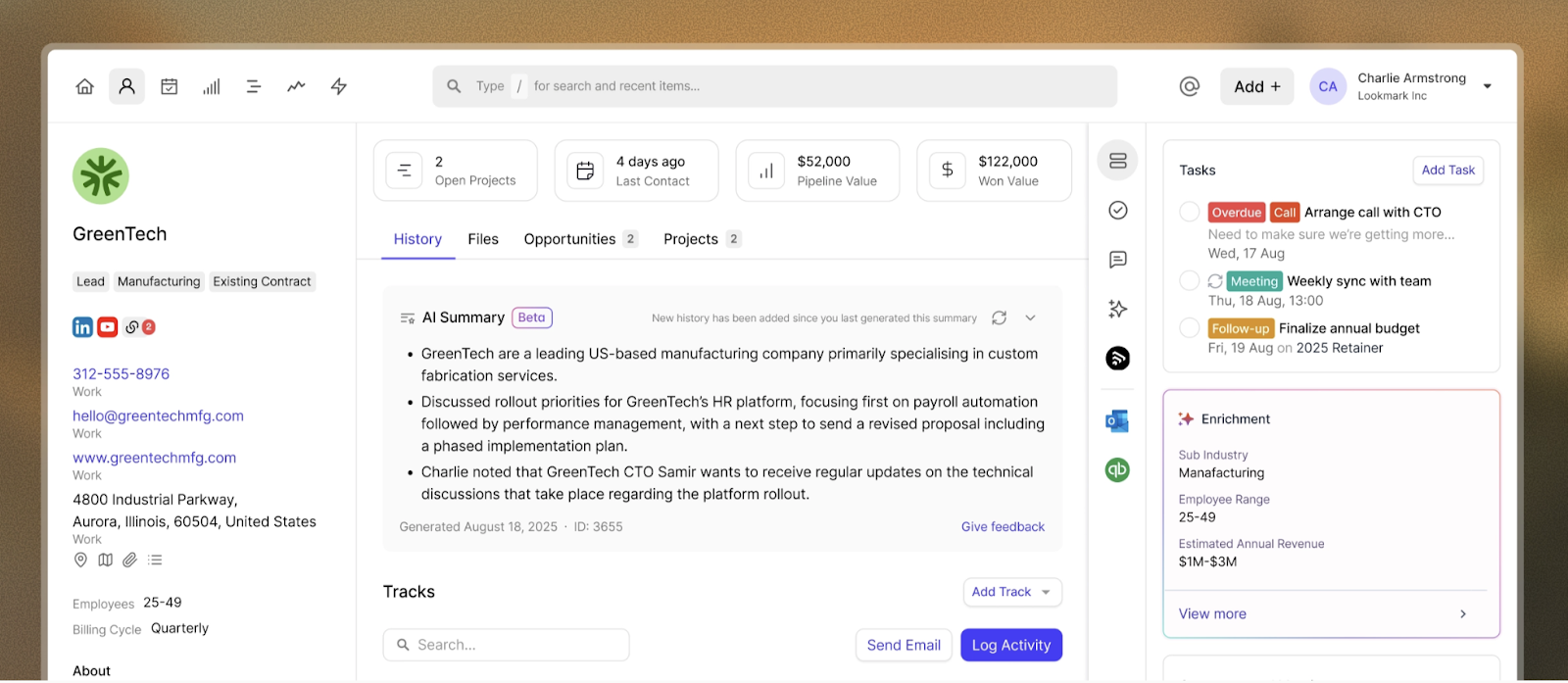
The most common failure mode in small business relationship management is fragmentation. Email history in one place, notes from phone calls somewhere else, deal history in a spreadsheet, and the actual context sitting in someone's head.
When a contact reaches out after six months, you're scrambling. A functioning system means that opening one record tells you everything you need before you reply.

#2 A record of every interaction
This is where most businesses underinvest.
Logging a deal is easy; there's something concrete to record.
Logging a 10-minute catch-up call or a referral someone sent you requires more discipline, but those lower-stakes interactions are what build relationship depth over time.
When you can see that someone has referred clients twice in the past two years without ever asking for anything in return, you know exactly who deserves a proper thank-you.
#3 Time-based alerts instead of deal-stage triggers
Standard CRM reminders are usually attached to pipeline stages: follow up after proposal, check in after demo. That works for active deals. It doesn't account for the client you finished a project with eight months ago and have been meaning to call. Time-based alerts, e.g., flagging contacts you haven't spoken to in 30 or 60 days, are what shift relationship management from reactive to proactive.
#4 Context fields that capture what matters to this person
Name, email, and company are not relationship data. What industry challenge are they currently dealing with? What did they mention about their expansion plans last time? Context separates a follow-up that lands well from one that clearly could have been sent to anyone.
A good CRM lets you build custom fields to capture exactly the information your business needs.
#5 Signals that tell you when a relationship is going quiet
The most valuable function of a relationship tracking system isn't remembering what happened – it's predicting what's about to happen. A contact who used to respond within hours and now hasn't replied to two messages. A client who renewed automatically for three years and hasn't confirmed this year. These are leading indicators, and catching them early gives you time to act.
How Capsule CRM approaches relationship tracking
Capsule was built for relationship-led businesses where the client is the asset.

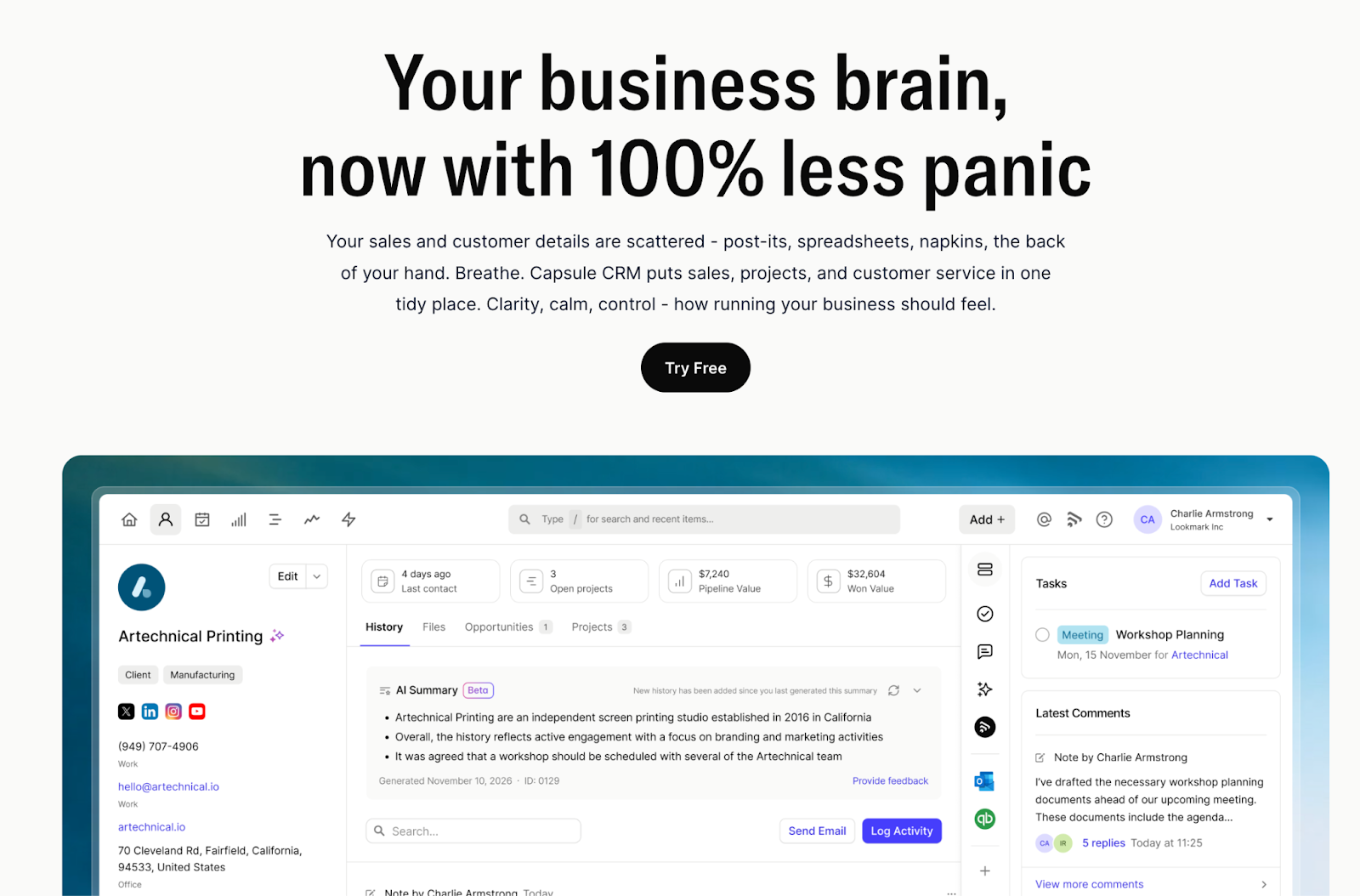
The core of Capsule's relationship tracking is the contact timeline: a full, chronological record of every interaction with a person or organisation, across email, notes, calls, and tasks. When you open a contact record, you see the complete history at a glance – everything that's happened since day one, not just what's currently in progress.
Custom fields and tags let you record context that's specific to your business. If you need to track where a contact sits in a buying cycle, what size of project they typically engage for, or which team member owns the relationship, those fields are easy to set up and consistently visible.
Task reminders work on both deal-stage logic and time-gap logic. You can set a reminder to follow up 30 days after a project closes, or highlight any contact you haven't interacted with in a defined period. Combined with the activity feed, it brings at-risk relationships into view early, while there’s still time to act.
Capsule AI adds a layer that's particularly useful for this kind of work.
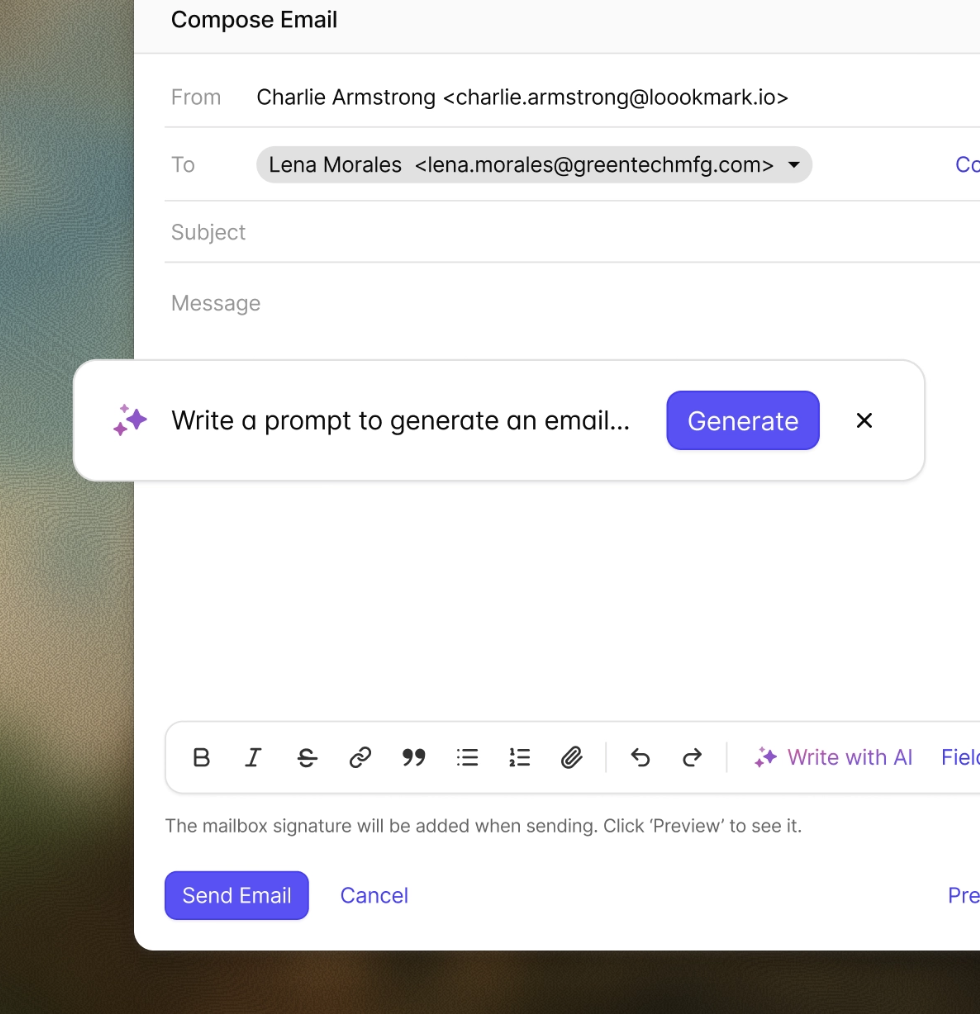
AI Email Assist handles that routine communication, drafting replies from a simple prompt. At the same time, AI Enrichment fills in key context on each contact automatically, adding details like role or company information so every new relationship starts with a clearer picture.

When you’re dealing with hundreds of relationships, the impact adds up quickly. Context is already there when you need it, fewer contacts fade out of view, and follow-ups happen at the right moment.
What relationship tracking looks like in practice
A freelancer with a stable client base. The risk here is the relationship that feels secure right up until it isn't. A freelancer's best clients are often the ones who trust them enough not to check in often, which means any gap in communication goes unnoticed until the client has already started talking to someone else. A basic system – tagged contacts, a recurring task to make contact every four to six weeks, and a note logged after every call – makes a passive relationship an active one.
A small sales team with a shared pipeline. The challenge here is handoffs. When a deal passes between team members, context gets lost. A shared CRM with consistent logging means anyone on the team can continue a relationship coherently. The contact doesn't experience the transition – and that matters more than most sales teams realize.
A service business with recurring annual clients. The risk is treating a long-term client relationship as an administrative process. Clients who feel like a line item on a renewal list will eventually find a supplier who engages with them differently. A relationship tracking system that surfaces these clients 90 days before renewal, and prompts a proper conversation about what's working, turns a routine process into a genuine touchpoint.
Conclusion
Client retention often comes down to consistency, but it’s hard to maintain without a system. Relationship tracking creates the structure that keeps context visible and actions timely, even as the number of clients grows.
If your relationship tracking currently lives across your head, your inbox, and a spreadsheet, it's worth considering what a structured system might change. Capsule CRM offers a 14-day free trial, no credit card required.