
Running a young company can be exhilarating and exhausting.
Founders have to deal with product development, sales calls, partnership discussions, investor pitches, and hiring. All on their own.
A customer‑relationship management (CRM) system acts as your second brain by pulling all those interactions into one place so opportunities don’t slip through the cracks.
In this guide, we explain why founders need a CRM and show you the best options on the market depending on your needs.
Why founders need a customer relationship management tool
A good CRM offers a way to scale your company more predictably.
Here are some concrete reasons why founders should invest early:
- Most startups already use one. Nearly all tech companies (94%) and seven in ten small businesses rely on a CRM to organize customer data and track interactions. Waiting too long puts you behind competitors who have centralised their workflows.
- Increase sales and revenue. Companies using CRM systems are 86% more likely to hit their sales goals, and revenue can jump by as much as 30% after rollout. Keeping every lead and investor conversation in one timeline translates into fewer missed follow‑ups and a healthier pipeline.
- Improve retention and lifetime value. CRM adopters not only close more deals but also see user retention rise by 25% and customer lifetime value increase by 20%. Notes and reminders mean you remember what matters to customers, so they stick around.
- Save time and reduce admin. CRMs shrink manual work by automatically logging things like emails and tasks. Startups using them cut sales cycles by up to two weeks and often reduce customer acquisition costs by 20%. Those hours go back into product and growth.
- Scale without extra headcount. Cloud‑based tools like Capsule CRM are lightweight enough for solo founders. You don’t need an IT team or a six‑month implementation project since most small teams can be up and running within a week.
Adopting a CRM early gives founder‑led teams a structure for tracking prospects and investor relations from the first conversation.
Key features founders should look for in CRM software
Choosing the right CRM can feel overwhelming because vendors promise dozens of features. Founders should focus on capabilities that address real pain points instead of over‑engineered extras.
The criteria below combine needs and common complaints into one checklist:
- Flexible contact and deal tracking. Early‑stage startups talk to investors, beta users, prospects, and partners all at once. Your CRM should track any type of relationship so you never lose context. Each contact record ought to store notes and emails.
- A pipeline that matches your actual process. Startup sales and fundraising rarely have a neat “lead > demo > close” sequence. Look for drag‑and‑drop pipelines you can customise to reflect pilots, investor due diligence steps, or partnership negotiations. Visual boards help you see where opportunities stall and which ones need attention.
- Task reminders and follow‑up nudges. Founders live in chaos. A good CRM pings you to reconnect after a demo, reminds an investor about term sheets, or chases a beta tester before they go dark. Built‑in task lists and reminders replace sticky notes.
- Easy integrations with your existing tools. To avoid “a tool soup,” your CRM should sync with Gmail or Outlook, calendars, accounting software and marketing tools. Integration makes it possible for emails and meetings to be attached to the right contact.
- DIY setup and customisation. Startups pivot fast. Select a platform that lets you add custom fields or stages without coding and offers straightforward data import so you’re productive in minutes.
- Automation and reporting (nice‑to‑haves). Workflow automation can send thank‑you notes after meetings or schedule next‑step reminders automatically. Real‑time dashboards show pipeline health and conversion rates, while mobile access keeps you informed on the go.
Best CRM tools for founders in 2026
The tools below balance simplicity, power, and price for solo founders or small teams.
#1 Capsule: best overall for founders
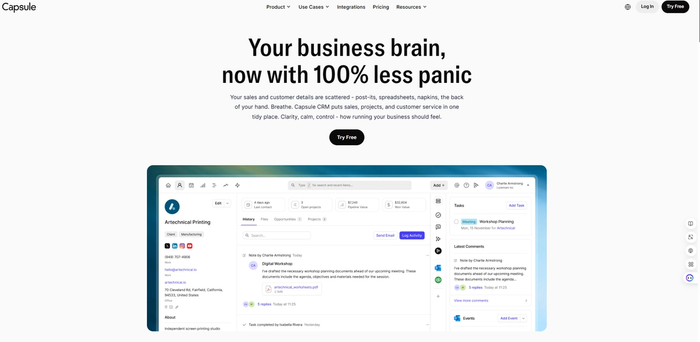
Business-brain simplicity. Capsule keeps sales and projects in one tidy workspace, so your relationships don’t end up split across inbox threads.
Fast, frictionless onboarding. You can import contacts from a spreadsheet or another system in minutes, which makes it easier to commit to CRM implementation instead of abandoning setup halfway through.
Relationship-first records. Every person and company becomes a living profile with contact management, notes, files, and a timeline of customer interactions. It's perfect when you’re switching between prospects and investors all day.
Custom pipelines that match real life. Build deal stages for your sales pipeline (and even fundraising), so your process reflects how you actually sell, not how a template says you should sell. This helps you keep momentum and avoid duct-taping other tools together.
Projects + delivery in the same place. Capsule brings project management next to your pipeline so you can win work and deliver it without paying for a second platform. It's particularly useful once a founder starts running multiple client commitments in parallel.
Tasks that actually get done. Calendar sync (Gmail/Outlook) and built-in task management keep follow-ups visible and timed, so your next step doesn’t disappear when the day gets chaotic.
Integrations that reduce tool sprawl. Capsule works with Gmail, Outlook, QuickBooks, Xero, Slack, WhatsApp, and more. You can also connect niche workflows via Zapier/Make if you need something bespoke across CRM platforms and tools.
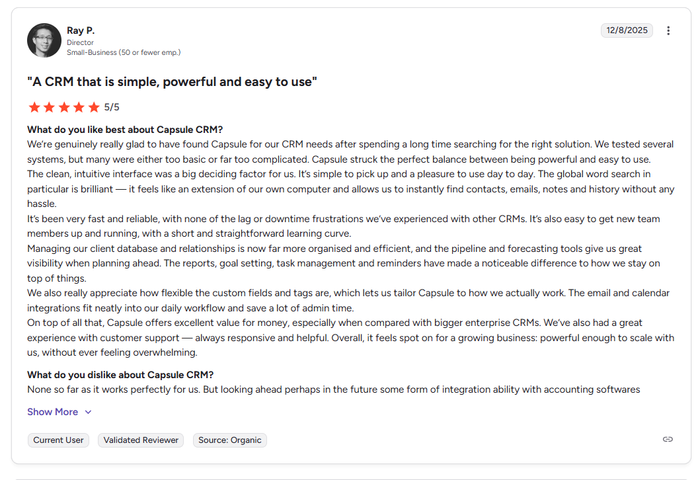
Credibility and adoption signals. With a 4.7 rating on G2 and 400+ reviews, Capsule is the best CRM solution for small teams that want calm control and no enterprise overhead.
Pricing that scales with you. The Free plan supports up to two users, and paid tiers step up as you add user accounts and complexity. As a result, you’re not forced into a big contract before the business has earned it.
#2 HubSpot CRM: generous free tier with marketing extras
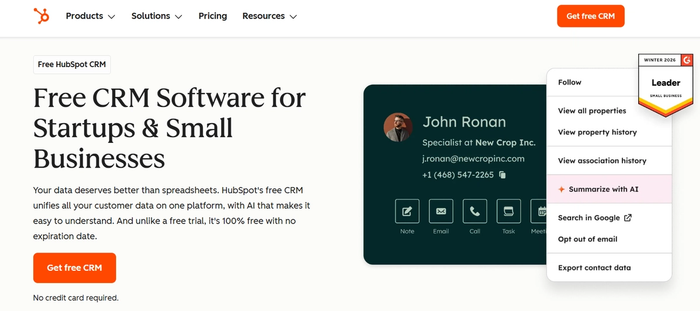
HubSpot’s free CRM includes unlimited users and up to a million contacts. This makes it attractive for founders who need a real CRM without a credit card.
You get email templates, meeting links, live chat, and basic marketing automation, which are great additions if inbound leads drive your growth.
Paid tiers expand into sophisticated marketing and sales hubs. However, the interface can feel crowded, and advanced features like custom reporting sit behind higher‑tier plans. Costs rise quickly as your needs expand, so monitor pricing as your team grows.
#3 Pipedrive: simple visual pipeline for deal‑centric founders
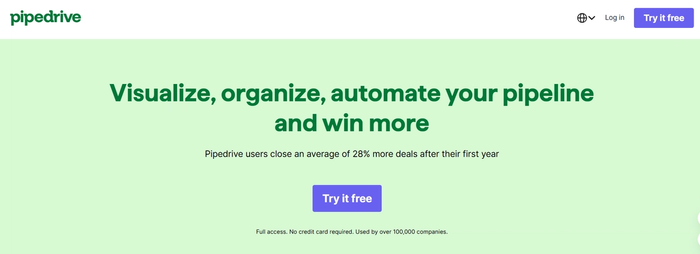
Pipedrive turns your sales process into a visual board. Deals move through stages like sticky notes, giving immediate clarity on who needs attention.
Built‑in reminders keep follow‑ups on schedule, and email templates speed up outreach.
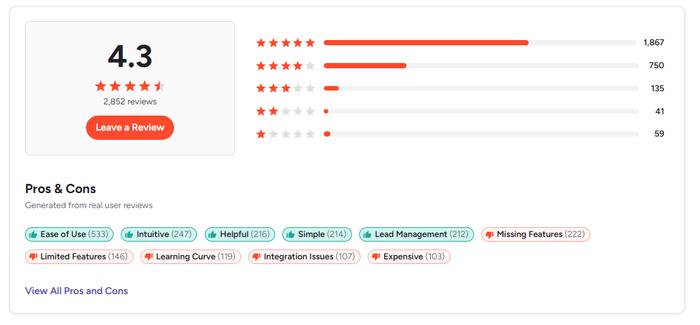
Reporting and analytics are basic compared with more advanced CRMs, and there’s no permanent free plan, only a trial. Add‑ons for automations or web forms can drive costs higher.
#4 Salesflare: AI‑assisted CRM for lean B2B teams
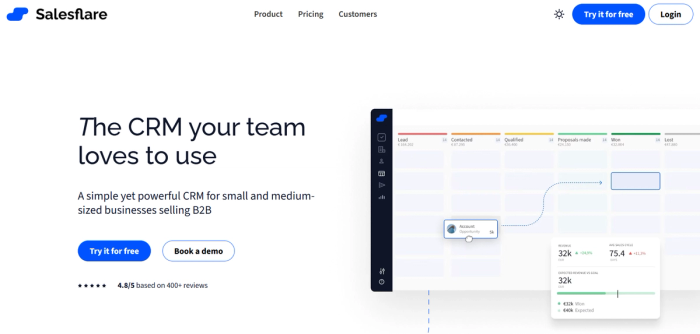
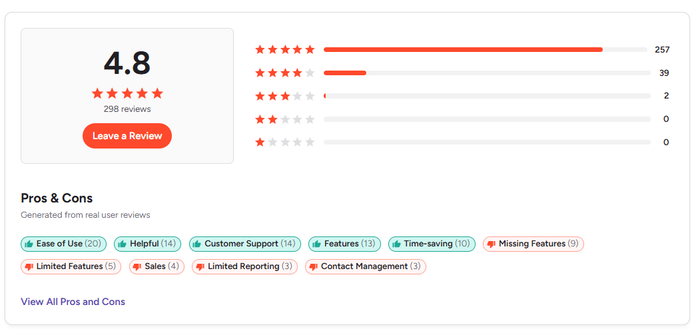
Salesflare pulls contact data from Gmail or Office 365, LinkedIn and other sources to minimise manual input. It automatically logs emails and calls so you can focus on relationship‑building.
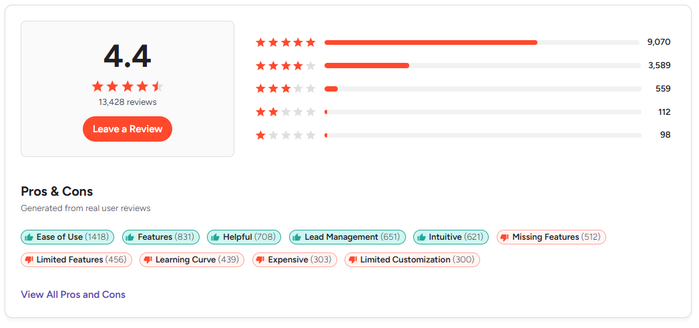
The platform helps small teams follow up leads better by combining CRM, email tracking, and web tracking. Reviews praise it as “great CRM for small businesses with all the essential features at an affordable price”.
However, some companies may be uncomfortable sharing so much data across the team, and advanced permissions require configuration. Salesflare is optimised for B2B sales rather than investor management or complex fundraising scenarios.
#5 Freshsales: sales and support in one workspace
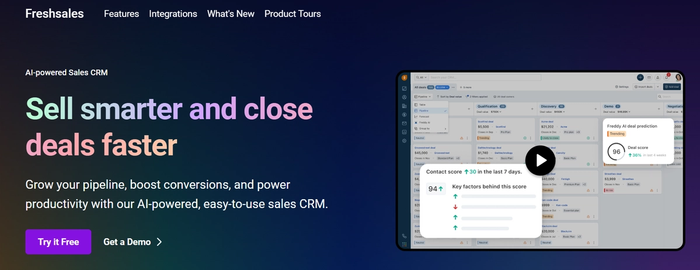
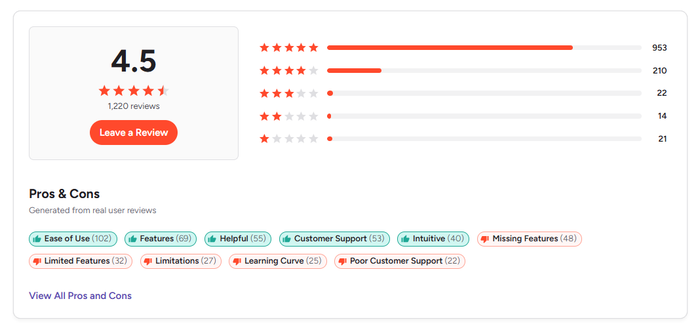
Freshsales by Freshworks combines CRM software with built‑in customer service tools. As a result, it gives founders a single timeline for customer interactions across chat and calls. This helps early teams manage onboarding and customer success without switching between multiple tools.
Automated scoring and smart workflows help teams automate sales follow‑ups and focus on the right opportunities. Thanks to that, it's easy to improve conversion through the sales pipeline.
While powerful, some advanced modules require configuration and may feel heavy for a very small startup business just getting started with CRM.
#6 Copper: Google Workspace‑native CRM for relationship‑driven founders
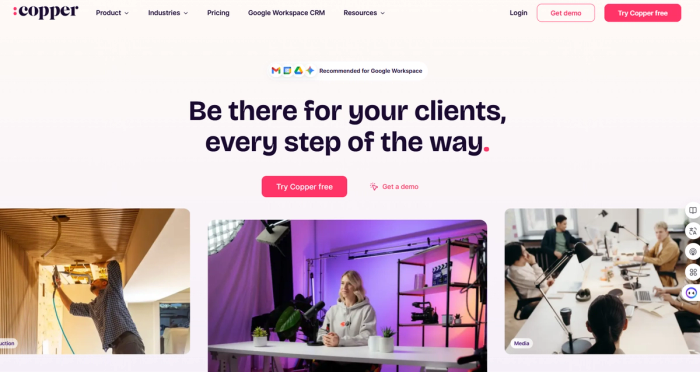
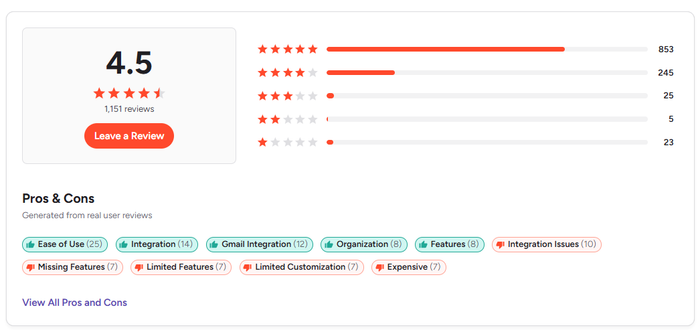
Copper is a fully CRM integrated solution inside Google Workspace, so emails and meetings are captured automatically for easy contact management and context before every call.
The interface feels familiar, which supports fast CRM implementation and strong usage across the sales team without long training cycles.
Reporting and data analysis are lighter than in more complex CRM platforms, which may limit forecasting as the business scales.
#7 Attio: modern, flexible CRM for fast‑growing startups

Attio lets you design custom objects and relationships. It's one of the most flexible CRM tools for tracking partners and venture capital relationships in one system.
Kanban boards, tables, and automation rules support advanced task management, light project management, and clutter-free pipeline reviews.
However, as a newer product, some sales CRM automation features are still evolving compared with more established CRM solutions.
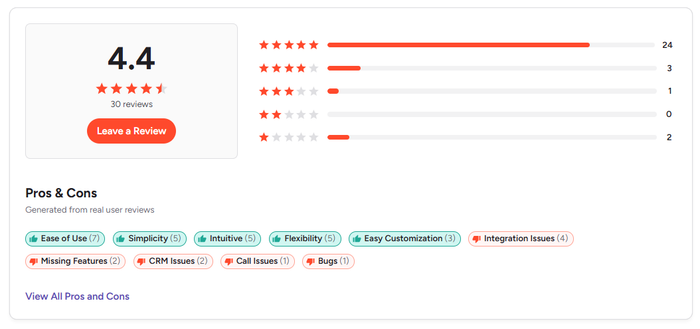
#8 Close: outbound‑first CRM for high‑velocity sales
Close helps teams automate sales outreach with native calling, SMS and email sequences. With Close, you don't need to rely on other tools when it comes to these areas.
Automatic logging and visual boards make it easy to monitor the sales pipeline and coach a growing sales team in real time.
It’s optimised for revenue operations, not fundraising, so it’s less suited to founders tracking investors or trying to raise capital.
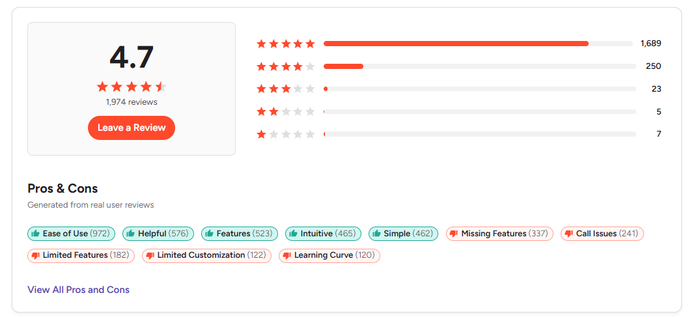
#9 Zoho CRM: broad, budget‑friendly, all‑in‑one platform
Zoho CRM connects sales, marketing, support, and finance modules. Many call it a highly comprehensive CRM platform for founders who want one system instead of many apps.
Workflow rules, AI insights, and dashboards support sales CRM automation, forecasting, and deep data analysis at a relatively low price point.
The breadth of features can introduce a steeper learning curve, and initial setup may take longer than with a lightweight solution.
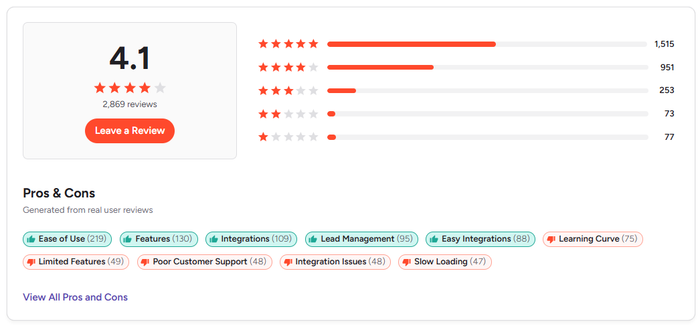
#10 Salesforce: enterprise‑grade foundation for scaling teams
Salesforce brings robust solutions with role‑based access and integrations suitable for companies moving from founder‑led selling to a structured sales organisation.
Extensive automation and app marketplace support complex processes across sales and service, showing why CRM features matter at later growth stages.
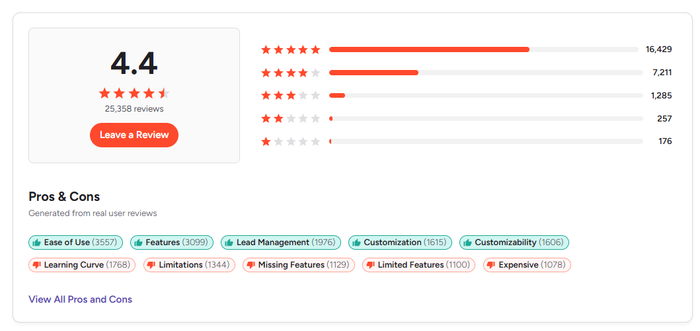
The platform’s depth and configuration options create a steeper learning curve, and setup effort is higher than with founder‑first tools. For many, it’s not the best choice until scale demands it.
Pick the right CRM in 10 minutes
Use this scoring framework to choose a CRM that fits how you actually work today, and how your company will look six to twelve months from now.
In most early-stage scenarios, a lightweight CRM like Capsule will come out on top because it balances speed and simplicity with scale.
Step 1: Score what matters (0-2 points each)
Give yourself a quick score for every category. Add them up to see which platform type fits best.
1) Setup speed and effort
0 = You’re fine with long onboarding and configuration.
1 = You can spend a few days setting things up.
2 = You want to be productive today, with minimal manual effort and no consultant.
2) Relationship and pipeline visibility
0 = You only need a simple list of deals.
1 = You want structured lead tracking and a visual pipeline.
2 = You need full context for customers, partners and potential investors in one timeline.
3) Follow‑ups and execution
0 = You track tasks elsewhere.
1 = You want reminders and basic workflows.
2 = You want built‑in routine tasks and automation to eliminate repetitive tasks.
4) Integrations and data flow
0 = You’re happy copying data between apps.
1 = You need email and calendar sync.
2 = You want your CRM seamlessly integrated with your tech stack, including accounting, marketing, and messaging, plus room for custom integrations as you scale.
5) Reporting and insight
0 = You only need deal lists.
1 = You want basic dashboards and reporting tools.
2 = You care about forecasting accuracy, conversion rates, and eventually advanced analytics.
6) Growth and team readiness
0 = You’ll stay solo for a long time.
1 = You’ll add a couple of teammates soon.
2 = You want role‑based access, strong user adoption, and a clear path from founder use to a full starter suite for a growing team.
Step 2: Match your score to the right CRM category
0-4 points:
You need a very simple tracker or spreadsheet replacement. This works briefly, but it won’t support structured lead tracking or consistent follow‑ups once activity increases.
5-8 points:
A modern, cost-effective CRM with fast onboarding and strong relationship management is ideal. This is where Capsule typically wins, as it reduces manual effort, supports daily workflows, and encourages real user adoption instead of becoming shelfware.
9-12 points:
You’re moving into a stage where deeper automation, product analytics, and sophisticated forecasting matter. Some teams start looking at broader platforms or even enterprise CRMs, especially when selling into large accounts or building complex revenue operations.
Step 3: Apply the “Capsule test”
Ask yourself these three practical questions as a startup founder:
- Can I import my data and be productive in under an hour, with no heavy CRM implementation work or consultants?
- Will my emails, calendar, and key apps be integrating CRM workflows so information is not scattered?
- Can the system grow with me as the business grows and not force a painful migration when we become one of the established businesses in our niche?
If the answer to all three is yes, a relationship‑centric CRM like Capsule is the best choice. It gives you clear pipelines with dependable follow‑ups and reliable reporting without the overhead and complexity that often slow adoption in larger suites.
The best CRM for founders is the one that grows with you
Founders work in constant motion where context matters. A CRM shouldn’t slow you down with complexity.
The right system supports focus today and growth tomorrow.
Capsule is built for exactly that journey. It starts lightweight for solo founders, then scales smoothly as you add users and structure.
If you want a CRM that removes friction now and supports you later, Capsule CRM is the best place to start.